Discount Expectations on Motorine in November and Current Prices

Those who stand at the fuel pump and fill their tank only halfway know it well: the price board is no longer read monthly, but weekly. As we enter November 2026, the question being debated in the Turkish market is this: will the anticipated diesel discount actually arrive, and if it does, for which time will it be clawed back by the SCT schedule? In the industry, a discount of 6.08 TL is projected for the gasoline group as of Friday, November 6; on the diesel side, expectations have not yet become clear. Everything from a forecast drop of 7 TL to reports that no change is expected is being discussed across a wide range. Amid this uncertainty, one fact stands: diesel prices climbed from the 53.60 TL level at the start of the year to 96.60 TL by the end of October, and at Istanbul pumps to levels exceeding 100 TL. For this reason, the discount news is a serious matter not only for individual drivers but also for the logistics and fleet world.
Current pump prices: Where gasoline, diesel and LPG stand
Average pump prices in Istanbul as of November 5, 2026 are as follows: On the European side, gasoline 80.50 TL, diesel 100.50 TL, LPG 50.70 TL; on the Anatolian side, gasoline 80.30 TL, diesel 100.30 TL, LPG 50.10 TL. On the LPG side, differences of a few kurus are seen between sources; different reports point to levels of 51.89 TL on the European side and 51.28 TL on the Anatolian side. Such differences stem from distribution chains and station-based pricing, and are a normal situation.
A day earlier, on November 4, per-liter prices stood at 80.5275 TL for gasoline and 100.505 TL for diesel, and no new increase or discount decision had been announced that day. According to data shared by EPDK, as of October 28, gasoline was around 76.29875 TL and diesel around 96.8025 TL. In short, diesel has already crossed the 100 TL threshold in the first week of the month, and expectations are focused precisely here.
Will there be a diesel discount in November, and how much will it be?
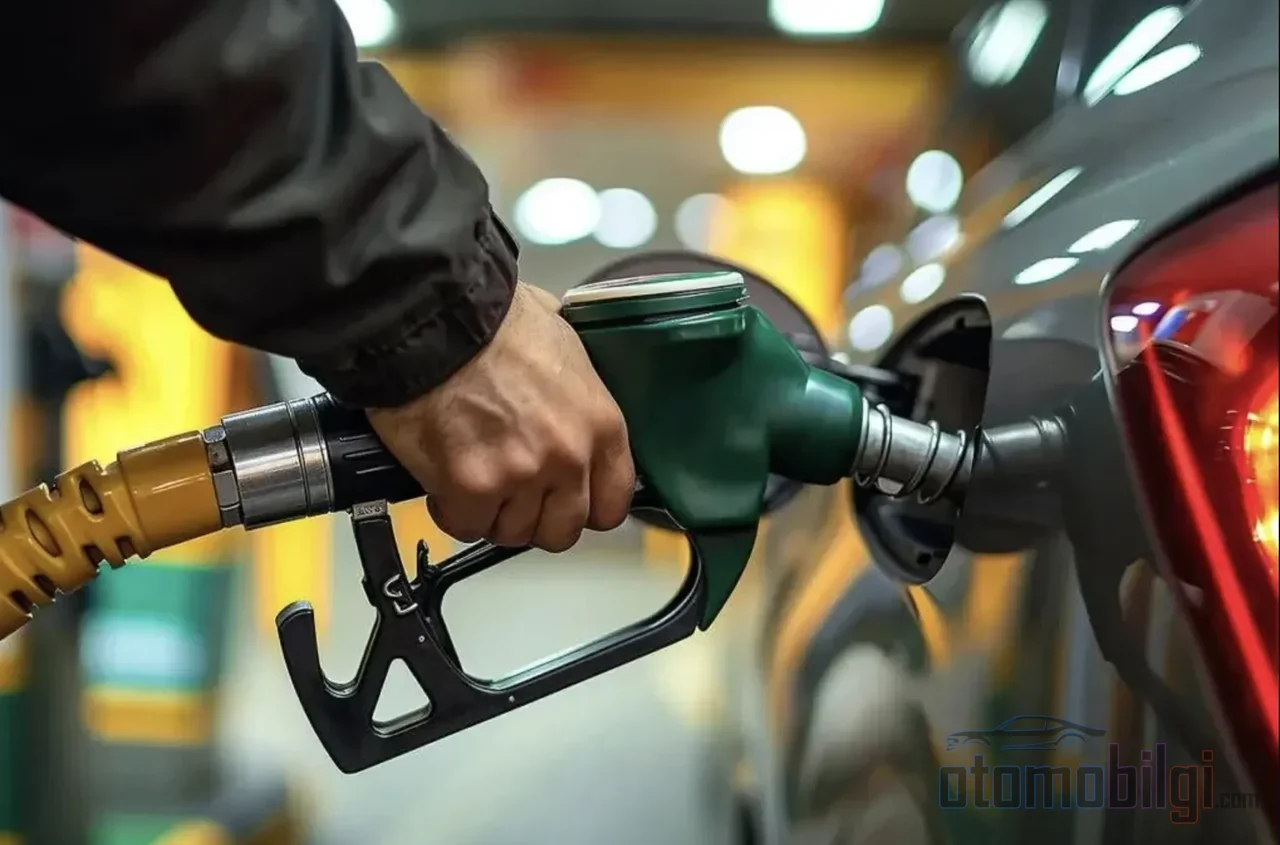
For now, the clear answer to the question is this: the forecast of a 6.08 TL discount on gasoline carries the most weight, while diesel estimates range from 4.95 TL to 7.10 TL, and none of them is finalized. The prominent forecast is that a discount of 7 TL may be applied to diesel starting at 00:01 on the night connecting November 6 to November 7; the same projection expects no change for gasoline and LPG. On the other hand, there are also industry reports stating that no diesel price movement is expected as of November 5. The factor behind the discount signal is the decline in global oil prices; if the drop in international oil continues, it is noted that price easing could also come onto the agenda on the diesel side.
Highlights
- A discount of 6.08 TL is expected on gasoline as of November 6
- The projected diesel discount is 7 TL; estimates range from 4.95 to 7.10 TL
- In Istanbul, diesel at 100.50 TL is near its yearly peak
- The diesel SCT rose from 6 TL to 9 TL per liter on November 1
- A truck's monthly fuel cost has reached 434,700 TL
The year's price trajectory: How did diesel reach 100 TL?
This year's picture alone explains why this discount matters so much. Diesel was at the 53.60 TL level at the beginning of 2026; it rose to 81.06 TL on the first day of September and to 96.60 TL by the end of October. Behind this climb lie both global commodity prices and a gradually increasing tax burden. On September 25, diesel saw an increase of 2.55 TL, a discount of 2.22 TL was applied on October 3, and on November 1 gasoline went up by 4.10 TL and diesel by 3.60 TL.
How does the VAT schedule accommodate the discount?
The mechanism that really deserves scrutiny here is the VAT. The VAT on diesel, which was 6 TL per liter in October, rose to 9 TL as of November 1; the 3 TL tax increase is expected to be reflected in pump prices including VAT. The schedule worked like this throughout the year: 0 TL between August 13-31, 3 TL from September 1, 6 TL from October 1, 9 TL from November 1. In other words, while the decline in global oil arrives at the pump as a discount, the increase on the tax side works in the opposite direction at the same time. The fact that the 4.30 TL discount made on gasoline in early October was effectively reversed within 12 days by the VAT increase is the most concrete example of this contrast. The discount being discussed for diesel in November is under the same risk.
What does the discount mean for fleets and logistics?
Diesel is the backbone of commercial life in Turkiye. When diesel exceeded 96 TL, the monthly fuel cost of a single truck rose to 434,700 TL; the umbrella organizations of the logistics sector warned, based on this figure, that costs were no longer bearable. On a smaller scale, the 3.60 TL increase on September 1 added 3,600 TL in one go to the invoice of a business buying 1,000 liters. By the same calculation, a 7 TL discount means relief of 7,000 TL on 1,000 liters; for fleets consuming tens of thousands of liters monthly, this is a difference felt directly in working capital.
The individual side is not light either. Filling a 50-liter tank costs just over 28,000 lira at the new prices; this amount corresponds to about 18 percent of the 2026 net minimum wage. Since diesel cost is one of the links in the inflation chain stretching from agriculture to food, every penny at the pump can be traced all the way to the supermarket shelf.
Monthly cost difference by fuel type
In a comparison based on average consumption per 100 kilometers, fuel cost stands at 465 TL for gasoline, 444 TL for diesel, and 255 TL for LPG. For a driver covering 1,500 km per month, the picture looks like this: 6,975 TL for a gasoline vehicle, 6,660 TL for a diesel vehicle, 3,825 TL for an LPG vehicle. Diesel has an advantage over gasoline, but it is not the gap of earlier years; LPG stands out as the clearly most economical option.
Diesel vehicle sales and the spillover into the second-hand market
Every movement in fuel prices is also written into demand for new and second-hand vehicles. The pricing situation of diesel models can be read from Ford's November 2026 price list: diesel Ford Focus 1.5L EcoBlue 115PS Titanium Stil automatic on sale with a tag of 2,720,500 TL, Ford Puma 1,998,700 TL, Ford Kuga 2,283,200 TL. It is also known that the brand is running a campaign covering 14 current new vehicles in November; as the year-end approaches, it is inevitable that campaign dynamics will intertwine with fuel price movements.
In the recent past, diesel, at an average of 444 TL per 100 kilometers, still holds an advantage compared to gasoline. However, this advantage is no longer as decisive in the vehicle purchase decision; it used to be said that for years, diesel was a strong bargaining chip in the used car market. Now the monthly fuel difference between gasoline and diesel is squeezed into a band of a few hundred TL. The payback period for the premium paid for a diesel model has lengthened; buyers in the used car market are calculating this too. A permanent cut in diesel could tip this balance back in diesel's favor, while a rollback of the SCT-derived increase would do exactly the opposite.
The regulatory side: EPDK's position
Although EPDK appears to be the address of the price debates, the authority announced that it does not set prices itself and does not directly intervene in cuts or increases. On the other hand, it is reported that it has warned distribution companies about price movements, signaling that intervention may be possible if the cut is not reflected at the pump despite the global decline. The authority also signed a regulation tying the daily storage service fee for gasoline and diesel to the new tariff of 15.13 TL per cubic meter. So the table: global commodities on one side, the tax calendar on the other, and the regulatory authority as the corrective force.
Conclusion: Who benefits from the cut, and by how much?
Let's summarize. The picture projected for the first week of November 2026 is as follows: a 6.08 TL cut in gasoline is strongly likely, a relaxation of up to 7 TL is projected for diesel, but this estimate has not yet been finalized and as of November 5 there is no announced diesel cut decision. Even if the cut materializes, the SCT increase of 3 TL per liter on November 1 erodes part of the gains in pump prices. For a fleet owner, the 7,000 TL relief on 1,000 liters is a real and measurable breath of air; for the individual driver, a difference of a few hundred liras per tank is still meaningful against a tank cost equivalent to one-fifth of the minimum wage. The critical question for the automotive market is whether the cut will be permanent. If the decline in global oil continues, diesel could move away from the 100 TL threshold and the total cost of ownership calculations for diesel vehicles could be rewritten. If it does not, the October scenario repeats itself: the cut comes, the SCT takes it back, and the price board stands still. Looking at midnight before filling the tank is still the most reliable method in this market.
Sources
- A 6.08 TL cut expected in gasoline, fuel prices for November 5, 2026
- Fuel prices for November 5, 2026: Latest situation in gasoline, diesel and LPG
- Expectation of a major cut in gasoline and diesel
- Forecast of a 7 TL discount on diesel (PetrosApp estimate)
- November 1, 2026 price hike and diesel SCT increase
- Logistics sector's fuel cost calculation (Utikad)
- Impact of the diesel price increase on households
- Ford November 2026 price list
- EPDK's warning to fuel companies
- Gasoline, diesel and LPG fuel cost comparison 2026