Engine Swap Culture in Drifting: The 2JZ, LS and RB Battles
Share This Page
Drift engine swap culture is the practice of removing a car's factory engine and fitting another in its place that has become a tradition at the heart of the drift world. The reason is simple: unlike drag, drift wants torque in roughly the 2,000-4,000 RPM band, because what keeps the car sideways is not peak power but low-end pull. Some engines deliver this better from the factory; and that is when cars with one engine badge and another engine under the hood are born. On this page I explain both the technical and cultural sides of the 2JZ, RB26 and LS battle.
Highlights
- Critical range for drift: Torque between 2,000-4,000 RPM
- 2JZ can handle beyond 800 horsepower on stock internals
- RB26's stock bottom block is limited to around 600-650 hp without forging
- In Formula Drift, as long as the chassis fits, any engine can go into any car
- The 2026 Drift Championship final in Türkiye, October 25 at Istanbul Park
Why Does Everyone Put a Different Engine in Their Car?
Think about it: you have a nice chassis, but the engine is either tired or the wrong character for drifting. What do you do? The answer in the drift world is clear: pull the engine, drop in a new one. It is no coincidence that the three most swapped platforms in the drag, drift and time attack worlds are the LS, 2JZ and RB26. Brand loyalty is gradually giving way to practical thinking; the real motivation is power, that is, the pursuit of boost.
So which criteria are decisive? There are four headings. Reliability: a drift engine is under constant stress, and an engine that cannot take it will leave you in the middle of the track. Spare parts availability: being able to find a part that blew up at midnight the next day saves your season. Torque character: as I said, low-end pull is the lifeline of drifting. Build cost: engine + installation + adaptation work is a budget item that grows much faster than you think. There is also a truth that has circulated on forums for years: there is no universally best engine; drifting is the sum of grip, power and weight balance, and reliability depends on maintenance. In other words, engine choice alone does not solve everything - but the wrong engine ruins everything.
Two Japanese Giants Face Off: RB26 or 2JZ?
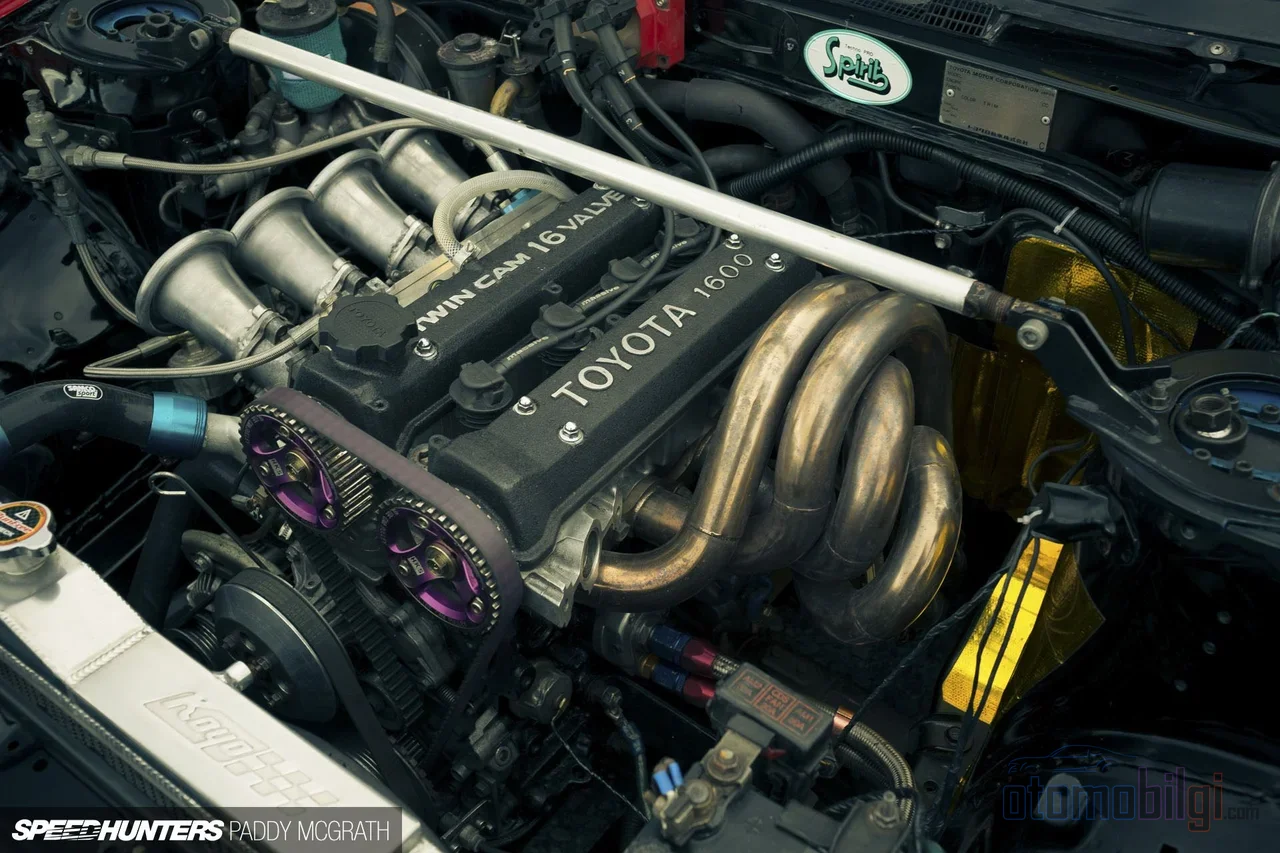
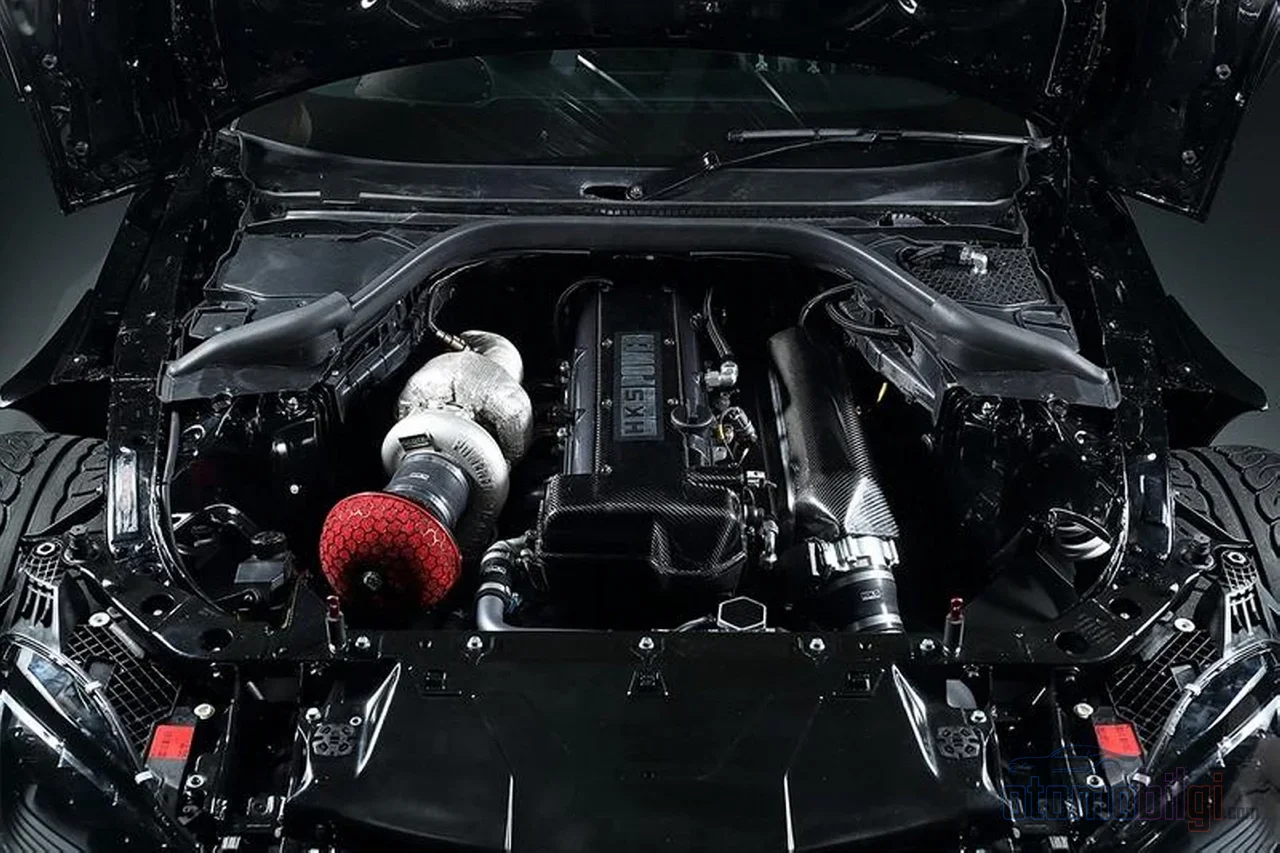
The RB series was produced in Yokohama between 1985-2004, with versions ranging from 2.0-3.0 liters. The legendary member RB26DETT: 2.6 liters, twin cam, injected and twin-turbo. Cast iron block, aluminum head, 24 valves; around 250-275 kg without the turbos and factory output of about 200-325 hp. The 2JZ-GTE, on the other hand, is the 3.0-liter twin-turbo six-cylinder we know from the MK4 Supra. Both come from Japan's real muscle-car era, the 1980s-90s, and offer budget-friendly foundations for 1,000-horsepower goals.
| Feature | RB26DETT | 2JZ-GTE |
|---|---|---|
| Displacement | 2.6 liters | 3.0 liters |
| Standout advantage | Superb throttle response with ITBs, iconic sound | Unbreakable block, 800+ hp on stock internals |
| Weak point | Parts are expensive and hard to find | Heavier, less refined throttle response |
| Stock bottom-end limit | Approximately 600-650 hp | Above 800 hp |
| Used price range | AED 15,000-30,000 | AED 12,000-25,000 |
Let me explain the throttle response with an analogy: The RB26 with ITBs, meaning individual throttle bodies for each cylinder, is like a friend you've known forever when it comes to responding to the throttle - while you're still pressing, it's already on its way. The 2JZ is a bit heavier and less refined, but in return its larger displacement delivers more torque at lower revs. The numbers say so too: The 2JZ produces about 31 lb-ft more torque at 400 RPM lower revs than the RB. In drifting, this difference is felt on the track, supposedly.
There's actually an easy rule of thumb too. If your priority is the authentic GT-R feel and throttle response in the 500-800 hp range, the RB26; if you want maximum power, easier maintenance, or plan a swap into a different chassis, the 2JZ. For targets above 1,000 horsepower, the 2JZ usually works out cheaper, because its stock bottom end already handles that load. On the RB side, there's also a technical warning: the factory oil pump can deliver insufficient volume at high revs, and the rotating assembly is the engine's most vulnerable area.
American Pragmatism: Why Did the LS Swap Spread So Widely?
Now let's turn to the American side of things, because this is culturally very interesting. The LS1 is said to have spawned perhaps the most widespread engine swap culture in history, and the reasons are cost, weight, and a huge aftermarket ecosystem. A concrete comparison: the starting price of a stock JDM 2JZ or RB engine is at least three times that of a stock-modified LS. To put it analogously, the Japanese sixes are the legendary dish of an expensive restaurant; the LS is the recipe for making the same flavor at home much more cheaply. Same result, different wallet.
The cultural impact is a bonus. In America, drifting was initially entirely an imported car phenomenon; the standard setups were turbocharged four- and six-cylinder cars. The arrival of the LS changed that picture. The heavy big block culture on the American side diverges from the Japanese approach through weight and engine choice - this difference isn't just about parts, it's a mindset difference: economy, or performance? On the other hand, there are also reactions. In a poll asking which is the most overdone swap, the answers were striking: 58% of participants pointed to the "LS everything" approach; the 2JZ fitted to drift cars got 24%, the K-series into RWD 10%, and the RB26 for the street 8%. So the LS's power is undeniable, but it can't be said to suit every car.
At the professional level, the picture is even clearer. Formula Drift has long operated with open engine rules: as long as chassis modifications are compliant, any engine can be fitted to any car, and the series has been progressing with ever-increasing horsepower for a full 20 years. In the 2026 season, teams announced their new engine programs and dyno tests; some expert shops are building both naturally aspirated and turbo LS drift engines and supplying them to race drivers. The race format also changed this year: Major updates have been announced, including automatic elimination qualifying. So the swap question has moved out of garage culture and onto the engineering agenda of the top level.
Which Chassis Pairs With Which Engine, and Why?
The engine alone is not the whole story; it takes on meaning when paired with a chassis. In the canonical list recommended for beginners, the Nissan 350Z, BMW E36, Mazda Miata (NA/NB), Nissan S13/S14 and Ford Mustang (S197) stand out. Among the most frequently recommended options for newcomers are the E36 and 350Z; both are reliable, affordable and easy to find tuning parts for. If you lift the budget limits, the picture changes: The Toyota AE86, Mazda RX-7, Toyota JZX-100, Nissan 180SX, Silvia S15 and 370Z move into the top tier of the list.
To simplify the pairing logic: Japanese chassis fit Japanese engines both mechanically and spiritually - mounting, weight distribution and the original parts logic meet less resistance. The LS, on the other hand, is the star of builds that prioritize budget and torque and have no interest in identity debates. The ultimate goal is always the same: bringing grip, power and weight balance together in the right place.
Swaps in Türkiye: Budget, Regulations and the Track
So what is the situation here? There is local content on low-budget drift car ownership in Türkiye, and the practical reality is this: your budget is shaped by the legal process as much as by the engine you choose. On the regulatory side, fitting a diesel engine into a gasoline vehicle, or a gasoline engine into a diesel vehicle, is either unsuitable or subject to additional conditions; an engine swap depends on an installation compliance process. Article 97 of the Highway Traffic Law No. 2918 forms the legal framework of this area, and the project price can vary depending on the project; moreover, as of January 1, 2026, engine registration procedures for the vehicle registration are done at a notary. In vehicle imports, a 10% customs duty plus MTV and VAT charges also come into play. In other words, when doing the swap math in Türkiye, clarifying the cost and processes of the paperwork comes before the engine.
On the track side, we have good news. The 2026 Apex Masters Türkiye Drift Championship opened its season on April 26; it visited Gaziantep Gazi Circuit on May 24, the fourth round was run at Istanbul Park on September 27, and the final was held again at Istanbul Park on Sunday, October 25, 2026 under TOSFED organization. Küçükdumlu was holding on to the lead in the championship; among the sponsors were Spor Toto, Power App and HT Spor. What I mean is, in Türkiye both the stage and the community are ready - what is missing is making a solid decision for your garage and unscrewing that first bolt.
Which Engine Is Right for You? Quick Selection Guide
- If throttle response and the authentic GT-R feel are your priority: The RB26DETT - but keep a wide parts budget.
- If you want maximum power and easy maintenance: The 2JZ-GTE - the most economical route for 1,000+ hp targets.
- If budget and torque are the priority: LS - Power without paying three times the price of a Japanese six.
- If you're just starting out, focus on the chassis first: 350Z, E36, Miata, S13/S14 are proven foundations.
- If you're in Türkiye, sort out the regulations first: the compliance installation process and the business registration paperwork at the notary are part of the project.
Final word: there's no winner in this war, only what suits you. You drive with an RB26 heart, you do the math with a 2JZ, you embrace budget and torque with an LS. If it were you, which one would you swap in? When your answer is ready, you can be sure you'll be holding a restaurant key and a whole lot of bolts.
Sources
- Three Ways to 1,000 HP: LS vs. RB vs JZ Swap Info - Hot Rod
- RB26 vs 2JZ: Which Engine Swap Should You Pick? - Kanzen Motorsports
- RB26DETT Vs 2JZGTE - Which Is Better? - Drifted
- LS swap vs RB26dett/2jz-gte - r/LSSwapTheWorld
- Formula DRIFT Announces Major 2026 Competition Format Changes - PASMAG
- Formula Drift: 20 Years of Increasing Horsepower - Driving Line
- LS Engines Take Over Professional Drifting - LSX Magazine
- Formula Drift Engines For Sale - Golen Engine Service
- Competition Results From 2026 Formula DRIFT Super Drift Challenge - Formula DRIFT News
- 5 Drift Cars That Actually Deliver - SLR Speed
- 17 Best Drift Cars For Beginners - Drifted
- Engine Swap Project - AracProje
- Engine Swap Project - Business Registration - AracProjeCim
- Highway Traffic Law No. 2918 - Mevzuat.gov.tr
- Final of the Türkiye Drift Championship at Istanbul Park - TRF1
- Owning a Drift Car on a Low Budget - Arabam.com