Aprilia's Rebuilding Plan After Márquez
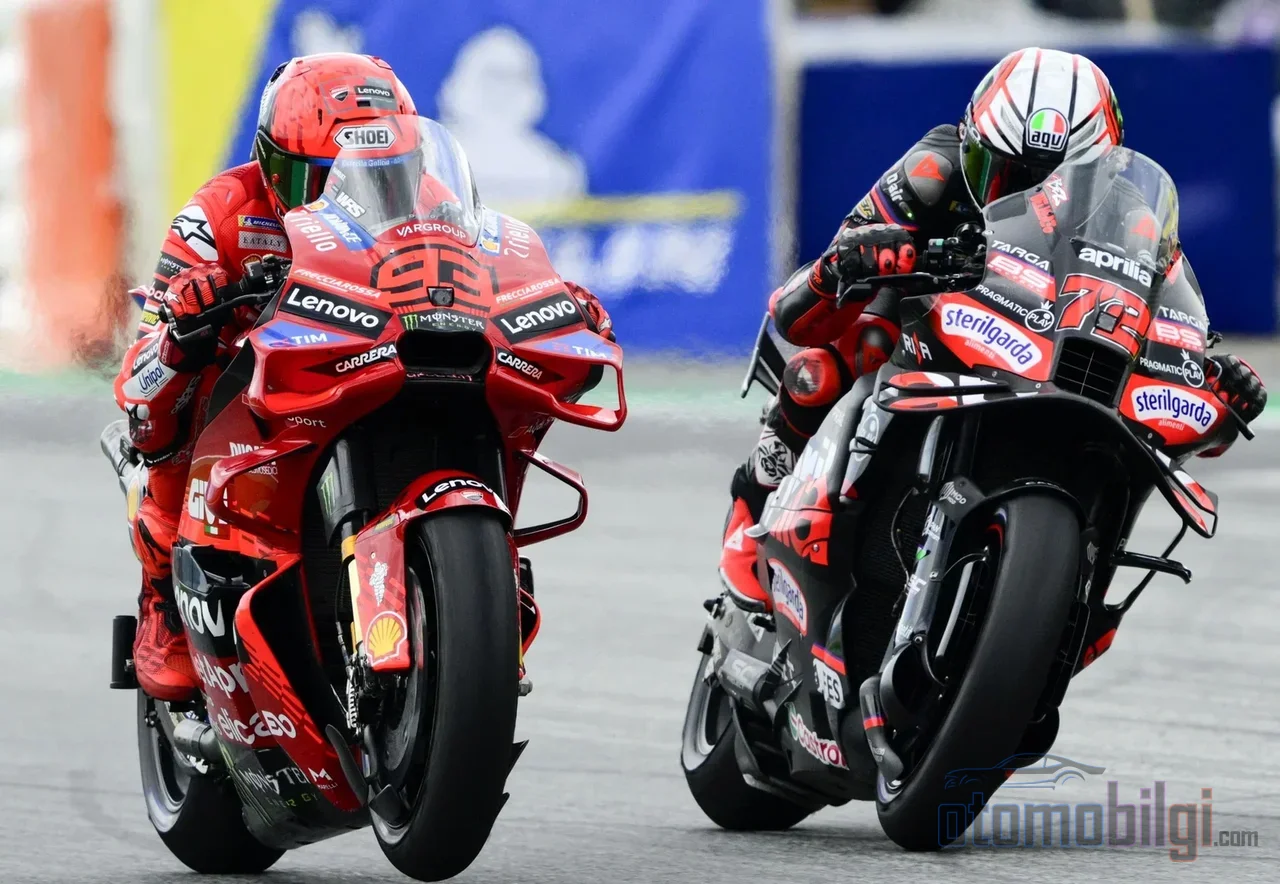
The weekend in which Jorge Martín withdrew from Sepang due to a wrist injury made one single truth clear inside Aprilia's garage: No matter how carefully the 2026 championship calculations are kept on track, it is now a different question that determines the team's future. Martín is moving to Yamaha in 2027, and while the Noale-based squad is enjoying the strongest season in its history, it also has to build next year's team from scratch. This is not a one-season crisis; it is a rare rebuilding process that coincides with a period when MotoGP is switching to 850cc. In short, Aprilia faces two separate equations, and one strains the other.
What Aprilia's Rebuilding Plan Means: Between the 2026 Peak and the 2027 Gap
First, let's set the picture out honestly, because the prevailing public assumption is the exact opposite of this picture. Marc Márquez is racing for Ducati in 2026 and fighting for the championship against Aprilia's riders; meaning it is not Márquez's departure but Martín's departure that is the real loss on Aprilia's agenda. The approach Rivola voiced in February was clear: if Martín leaves, they have nothing to say - Plan B and Plan C are ready. Coming from those days to November, these plans are no longer theory; they have been put into practice.
The 2026 season itself was a historic output for Aprilia. Bezzecchi opened the season by winning the first three Grands Prix, reaching four victories within the first seven rounds. In Austin, Bezzecchi and Martín finished 1-2; at Silverstone, podiums were locked in both the sprint and the main race; in Indonesia, the team achieved the first 1-2-3-4 finish in its history. The gap between the factory team and Trackhouse was effectively closed: while Ogura claimed his first MotoGP victory in the Netherlands, Fernández won the sprint. The RS-GP26 set out with an extremely aggressive design philosophy focused on chassis and aerodynamics, and it bore fruit.
Key Highlights
- Jorge Martín is moving to Yamaha in 2027; Aprilia is building its future around Marco Bezzecchi.
- From April 2026 onwards, Aprilia shifted its development focus to the 850cc project; the new prototype has hit the track.
- Under the 2027 regulations, engine capacity drops from 1000cc to 850cc, and bore size falls from 81mm to 75mm.
- In Indonesia, Aprilia achieved the first 1-2-3-4 in its history.
- On the 2027 grid, Francesco Bagnaia is joining Aprilia Racing, and Enea Bastianini is joining Trackhouse.
Rider Lineup: Bezzecchi at the Center, Bagnaia on the Way
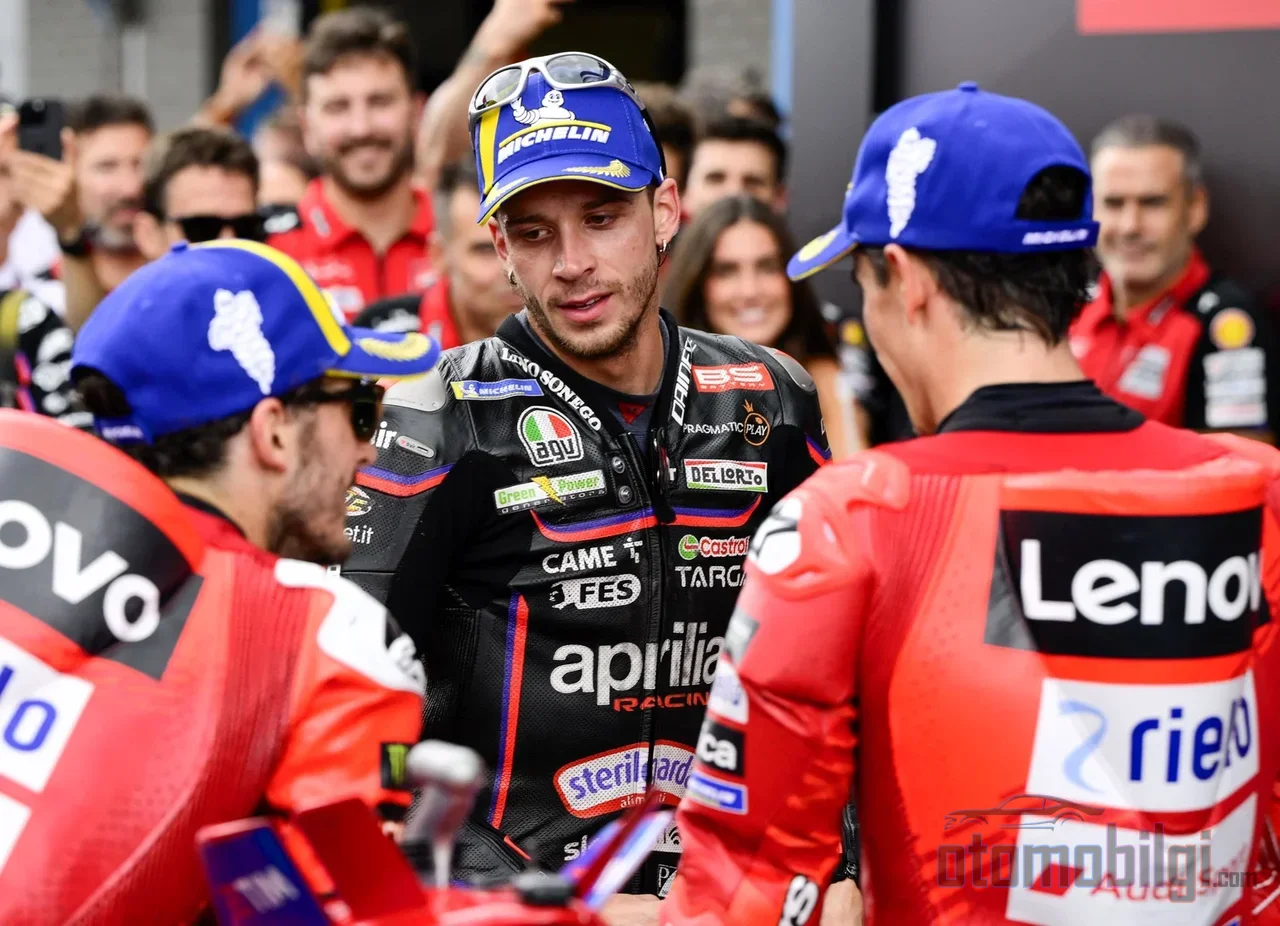
Martín's decision came in the middle of a season that strengthened Aprilia's hand. The people at the top of the team managed the process in two stages: first securing Bezzecchi, then filling the vacant seat. Bezzecchi was third in the championship with 332 points and was placed at the center of the team's future; no signal suggesting otherwise was given. The answer to the second vacant seat came once the 2027 grid had largely taken shape: Francesco Bagnaia is switching from Ducati to Aprilia Racing.
The picture on the satellite side is even broader: Enea Bastianini is going to Trackhouse, Joan Mir to Gresini, Moreira to Honda, and Bulega to VR46. So Aprilia is not just reshuffling the factory roster, it is reorganizing the entire family riding the RS-GP. Trackhouse's form this season - the sprint and race double in the Netherlands, the four riders' mid-field in Indonesia - explains why this structure is taken seriously.
Why is the team orders dilemma part of the rebuild?
There is a subtle management issue here. Technical director Fabiano Sterlacchini openly said that team orders could come into play in order to overtake Márquez; and that internal discussions had been held on the matter. Team principal Rivola, for now, is maintaining the policy that both riders are completely free. Here is the knot: Martín is leaving at the end of the season. Helping him fight for the championship could mean putting an obstacle in front of Bezzecchi's claim, which will be permanent. Bezzecchi is still mathematically in the race. This is a classic choice between sporting ethics and corporate interest; and it is no coincidence that Sterlacchini said the tracks he worries about most are Sepang and Qatar.
Technical Ground: The Sterlacchini Era and the Legacy of the RS-GP26
Fabiano Sterlacchini, brought in in 2025 to replace Romano Albesiano, who left for Honda, brought a philosophy of continuity and targeted improvement to the RS-GP project. The aggressive 2026 aerodynamic package aimed at improvement over the full lap; a development was brought to Aragon against the Márquez threat. The return on this approach was delivered on track - but the real strategic decision was made mid-season.
From 1000cc to 850cc: The shift in direction in April 2026
Aprilia confirmed that from April 2026 onwards it would shift its development focus from the 1000cc engine to the 850cc project, and announced that despite the championship fight it would not deviate from this plan. The new 850cc prototype also made its first appearance on track. This is a bold but necessary choice: Under the 2027 regulations, engine capacity drops from 1000cc to 850cc, maximum bore falls from 81mm to 75mm, ride-height devices are removed, aerodynamics are limited, and the tire supplier becomes Pirelli. While fuel capacity decreases by 9 percent, consumption is targeted to drop by roughly 15 percent. The RS-GP26 is the last Aprilia MotoGP motorcycle built under the current 1000cc rules; meaning Noale is also managing this season like a farewell year.
| Topic | 2026 Regulations | 2027 Regulations |
|---|---|---|
| Engine capacity | 1000cc | 850cc |
| Maximum bore | 81mm | 75mm |
| Ride-height device | Free | Removed |
| Tire supplier | Michelin | Pirelli |
| Aprilia development focus | RS-GP26 (1000cc) | 850cc prototype |
How the Championship Math Broke: From Phillip Island to Malaysia
The cruelest part of the rebuild plan is that it lands on the same calendar as the best season in sporting terms. At Phillip Island, the Márquez brothers took the front row together; Marc Márquez's pole position gap was 1.494 seconds. Worse still was Martín crashing and breaking his forearm. The Australian Grand Prix was cancelled due to bad weather, but the damage had already been done.
At Mandalika came the sprint fiasco: Bezzecchi and Fernández collided at the first corner, both were out of the race, and Fernández broke his fingers. The 1-2-3-4 result on Sunday lifted morale, but Martín could only return to the championship with a 2-point gap. The real blow came in Malaysia: Martín withdrew after the second practice session due to a wrist injury. Márquez widened the gap with a sprint podium and a grand prix victory; after Malaysia, he leads by 19 points. With the race postponed to Qatar (November 8), Márquez can clinch the championship. On the Aprilia front, team manager Bonora explained the plan to be followed for Martín; but a 185-point calculation that could be settled in five rounds is now largely in the rival's hands.
Rivola's Márquez lesson
Aprilia management never underestimated the difficulty of the fight against Márquez. Rivola said that, after the consistency shown at Aragon, beating Márquez is the hardest task they could face, and that the team needs to learn from that consistency. Let me say with thirty years of hindsight: a team's willingness to learn lessons from its rival is not a surrender to defeat; it is the healthiest starting point of the building process. The answer to the question of whether the same man will stand in Aprilia's way again in 2027 has not yet become clear - but it is known that Noale is preparing for both scenarios.
The Cost of Rebuilding: Resources, Chemistry and Time
The most invisible cost of this plan is resource allocation. Giving Martín a championship chance means investing effort in a rider who will not be on the team in 2027; prioritizing Bezzecchi means risking a championship that is still possible. The tension between Sterlacchini's strict allocation signal and Rivola's free racing policy arises precisely from this. It would be no surprise if this debate flares up again in the final two rounds.
The second cost is technical: freezing the 1000cc engine and turning to the 850cc slows the pace of development relative to rivals in the final rounds of the current season. Aprilia consciously accepted this. The third cost is chemistry: how Bezzecchi and Bagnaia will form a pairing, and how the factory-satellite balance will work with Trackhouse's new roster, are still unanswered questions. Martín's abandonment of his intention to move to Honda in 2025, along with assessments that he had compatibility issues with the team even during his winning period, show that Aprilia will be more careful than before in its rider relationships.
Conclusion: How Does Aprilia Enter 2027?
The clear answer is this: Aprilia is meeting Martín's departure to Yamaha with a Bezzecchi-centered roster, Sterlacchini's philosophy of continuity, and an 850cc prototype intensively developed since April; Bagnaia's arrival raises the factory roster to a level that carries a championship claim once again. The team proved its strength in 2026 with results like the 1-2-3-4 in Indonesia; the real test is maintaining that strength in an era where everything from the tire supplier to the engine rules has changed. The RS-GP26 closes an era; Noale's account: to close the closed era in the proudest way possible and to start the new one from scratch, but with a hand that is not empty, rather full. Even if the championship slips away on the Qatar night, the goal of this plan is not 2026; 2027 and beyond.
Sources
- Aprilia Racing 2026 team and RS-GP26 - aprilia.com
- 2026 MotoGP World Championship
- Aprilia evaluating team orders for Martín's championship fight
- MotoGP 2027 rider lineup becomes clear
- Aprilia's stance on team orders
- Aprilia boss: Beating Márquez is the toughest task
- 2027 MotoGP technical regulations
- Aprilia's historic 1-2-3-4 result