Bagnaia: Riders Were Not Consulted About the Australian GP Cancellation
Share This Page
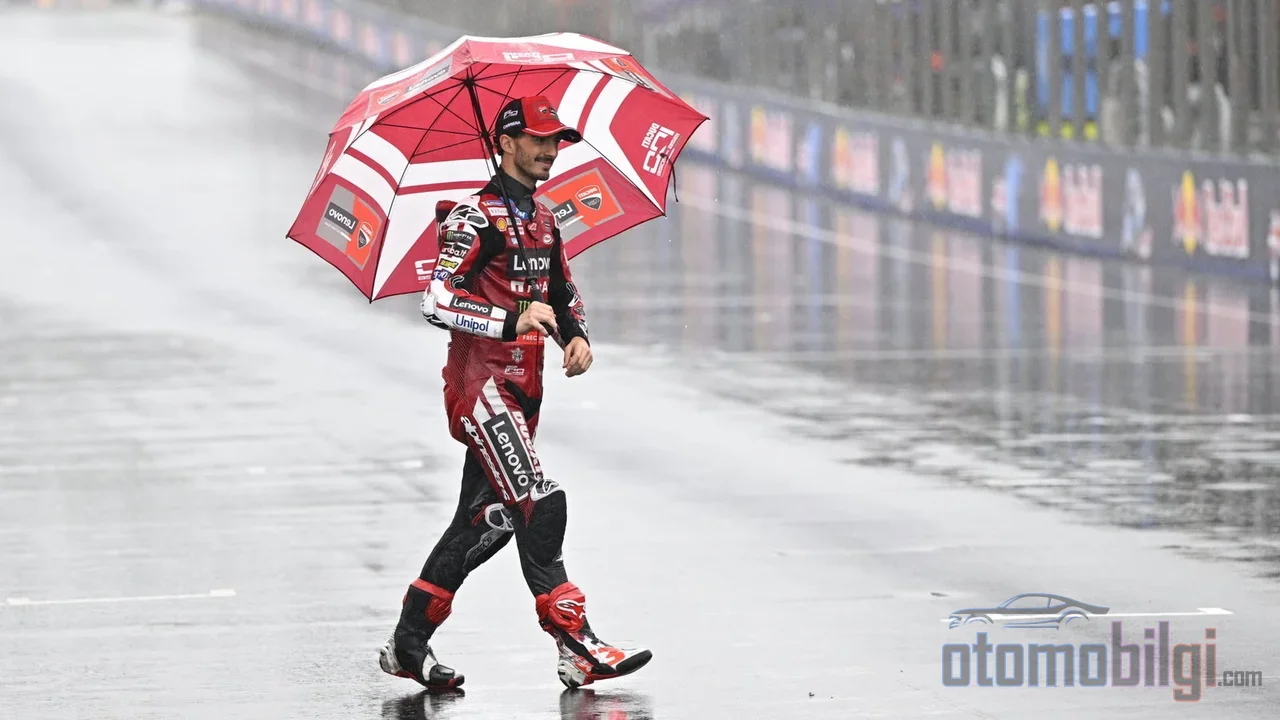
The thousands of spectators waiting for the flag on Sunday at Phillip Island witnessed a farewell instead of a start. The 2026 Australian MotoGP Grand Prix was cancelled due to visibility restrictions caused by heavy rain and wind; MotoGP was set to race on this track for the last time. The cancellation of the race alone did not spark controversy. The real agenda became a detail that Francesco Bagnaia brought to light: The riders had not been consulted before the decision was made.
Why Was the Race Cancelled: It Wasn't the Track - the Sky Decided
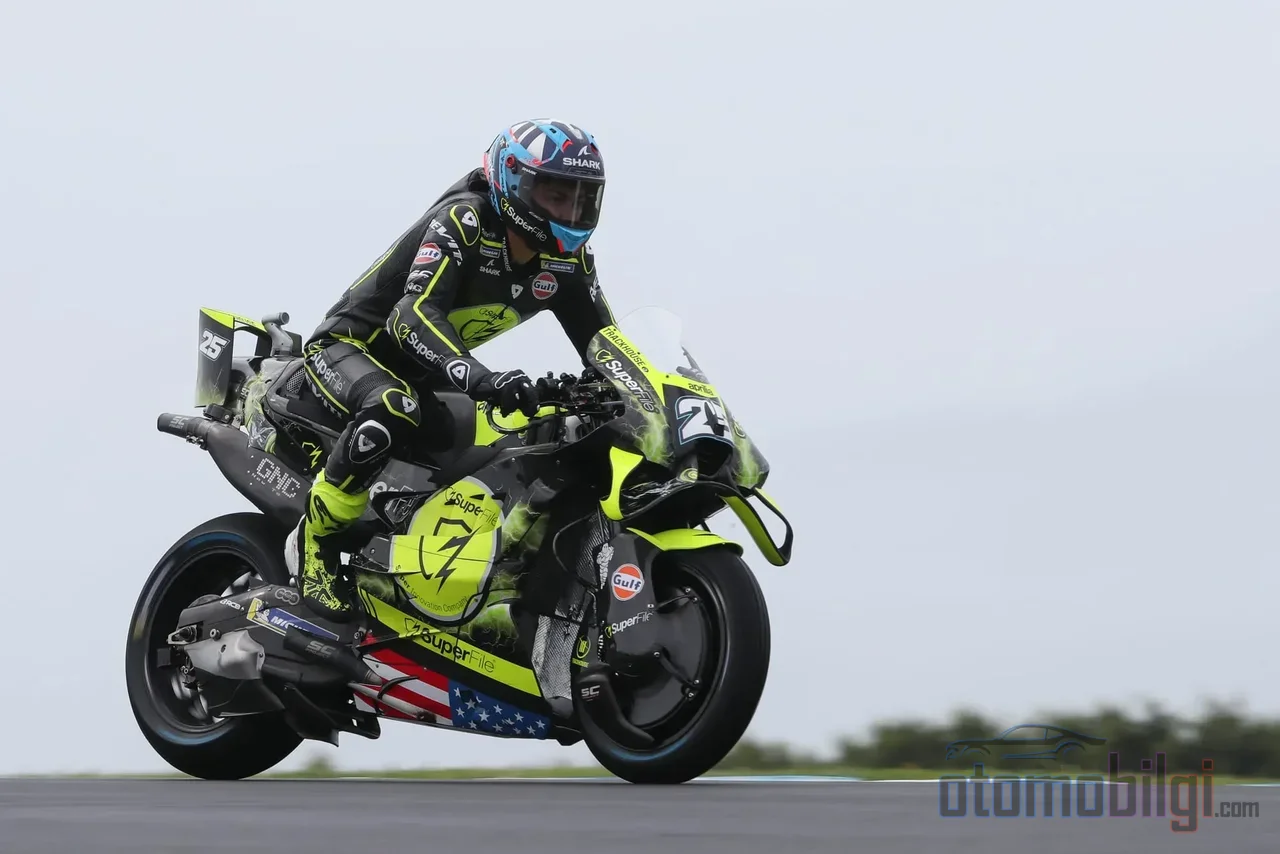
The story of the cancellation is not as simple as it seems. On Sunday at Phillip Island, the track was actually not in bad condition; the puddles were few, and according to most riders, the asphalt was rideable. What brought about the decision was not the track conditions, but visibility - the lack of view. Heavy rain and strong winds made the medical helicopter's safe flight impossible.
Here comes into play an unpredictable but strict rule of MotoGP: The medical helicopter needs a flight window of at least one hour to transfer an injured rider from Phillip Island to a hospital in Melbourne. If the helicopter cannot fly, an alternative must come into play; but reaching Melbourne by road takes more than 45 minutes, and this duration falls outside the limit that race management can accept. So the question was not whether the track could be ridden, but whether the injured rider could reach the hospital in time. When the answer was no, the fate of the race became clear.
Race director Graham Webber explained these requirements and made it clear that the decision had to be made before conditions worsened. For the sport's seasoned executives who have long been through this, this logic is familiar: In the past, weather-related decisions were made based on the track; now, even if the track is good, if every link in the logistics and medical chain is not solid, there is no race. The link broken at Phillip Island was the visibility in the sky.
Highlights
- The Australian MotoGP was cancelled on Sunday, October 25, 2026 due to poor visibility; the track was in rideable condition.
- The reason for the decision was that the medical helicopter could not fly: The road route to Melbourne takes longer than 45 minutes.
- Bagnaia stated that the riders' opinions had not been sought before the cancellation decision.
- This was the last MotoGP race at Phillip Island; the grand prix is moving to Adelaide from 2027.
- In the championship, Marquez's advantage over Martin rose to 10 points; there are four races remaining.
Bagnaia's Objection: With Whom Was the Decision Made?
When Francesco Bagnaia spoke on air, he brought the real issue to the table with the question that was asked: Were the riders consulted when the cancellation decision was made? His answer is short and clear; no. According to the Ducati rider, in such situations management's decisions must be respected, and he did not hesitate to emphasize that he respected a decision made for safety reasons. But respect and participation are not the same thing, and Bagnaia draws this distinction knowingly.
The interesting part was that the Italian rider openly stated that he wanted to race. The conditions were tough and very cold, yes; but as he said, they had raced in far worse conditions than this. That is why the real loss was not being on track in the final race, and being forced to stay in the garage on this circuit and close the book. He said how special the races Phillip Island produced were, that the battle that took the stage the previous day was proof of it, and expressed his hope to return in the future.
Bagnaia's position is that of a rider who thinks out loud: He does not reject safety, he questions the process. The decision may be correct; but for someone who has been watching this scene for thirty years, it is also an unsettling picture that those who bear the greatest risk when the decision is made have no seat at the table. And this unease does not only happen to him.
Those Who Stayed on Track: Marquez's Sorrow and Agius's Disappointment
Bagnaia was not alone. Marc Marquez described the cancellation as a heartbreaking farewell; he stated that the conditions were acceptable, but the medical helicopter had unfortunately gone wrong. For the championship leader, this assessment is on the same axis as Bagnaia's: No objection to the decision, but attention is drawn to the limits of basing the justification on track conditions.
A harsher voice came from the host nation's soil. Australian Senna Agius, who races in Moto2, said the cancellation crushed him; he expressed that after Moto2 was cancelled, MotoGP also not running was additionally saddening. What makes his observation important is that someone on the ground saying there was no serious standing water on the track, that the race looked technically feasible. Agius adds that he understands the bigger picture; but he insists that for the fans and the sport, it is a great loss. He is among those who believe the last Phillip Island race did not receive the enthusiasm it deserved.
The scene after the cancellation, however, remained in memory: The riders greeted the circuit by lapping it behind the Safety Car. There was no race, but there was a farewell. The crowd applauded knowing they would never again see in this calendar a circuit that has beaten at the heart of the Australian motorcycle calendar for more than thirty years.
Ducati's Assessment: Why Was Aprilia Unlucky?
In the shadow of the cancellation there was another story: Aprilia's weekend. Ducati Team Manager Davide Tardozzi argued that the Italian team was unlucky due to the changing weather. Marco Bezzecchi entered the race in fourth place on a dry track and finished fourth, and according to Tardozzi this result said more than expected; the rider has the potential to win each of the remaining races.
The really sensitive issue was Jorge Martin's fall on Saturday. The Aprilia rider crashed on the eighth lap of the sprint race, and a fracture was detected in the radius bone of his arm. The X-ray scan showed that the fracture had not shifted; surgery was not necessary, and it was stated that Martin may try to race in Malaysia, at Sepang. Tardozzi described Martin as a rider expected to make a heroic and quick comeback, emphasizing that before the crash he was in a head-to-head duel with Marc Marquez until the very end.
Tardozzi's comment on the championship was also measured: Bezzecchi being 50 points behind the leaders is not the best situation for Ducati, but it is not a bad one either. It is not common for a team manager to mount such a detailed defense of his rival; but this season, the equation reads differently, because Ducati and Bagnaia have officially parted ways at the end of the season, and it has been formally announced that Bagnaia will move to Aprilia. Today's rival is tomorrow's host.
Where the Championship Stands: Four Races Remaining
Since the race could not be run at Phillip Island, no points were awarded, and the table shows an indirect winner of the cancellation. Marc Marquez's advantage at the top grew to 10 points; since Jorge Martin's injury did not mean a missed race, the Spaniard did not give up the chase. Bezzecchi, meanwhile, is riding from 50 points back, knowing he is still mathematically in it.
| Title | Status | Note |
|---|---|---|
| Leader | Marc Marquez | 10 points ahead of second place |
| Second | Jorge Martin | Aiming to race at Sepang with a broken arm |
| Third | Marco Bezzecchi | 50 points behind the leader |
| Races remaining | 4 | The next stop is Qatar, on November 8 |
Some say the cancellation gave Martin a bit of relief after his injury; not having to race again with a broken arm may be the only item easing the bill for the Aprilia camp. Heading to Qatar, everyone has a different calculation in their pocket: Marquez plans to protect his 10-point cushion, while Martin intends to bounce back quickly in the first race.
Where the Riders' Voice Comes In: The Safety Commission Crisis
Bagnaia's objection is not an isolated outburst of anger; it is the most visible form of a long-standing problem. The Italian rider had previously made a stronger call for participation, saying that only a portion of MotoGP riders attended the Safety Commission meetings and that only three people went to that meeting at Le Mans. On top of that, he has openly voiced his view that an independent rider representative or a union should be established.
There is an old story behind this demand. In 2022, Fabio Quartararo said that riders were not truly being heard in the safety commission meetings; Aleix Espargaro criticized that attitude. The same debate flaring up again at Phillip Island four years later shows the problem was never solved. In a sport where safety is critical, the transparency of decisions and communication have been the subject of a reckoning that has gone on for years; the cancellation decision is the latest entry in that account.
The official side's position is clear: The decision was made because conditions were not safe for the race, and safety comes before everything else. That is true. But what was shown at Phillip Island is that the process being technically correct does not mean it was shared with the participants. The track was rideable, the riders were willing, and the conditions were debatable; while the ones making the decision at the table numbered zero riders.
The Close of an Era: From Phillip Island to Adelaide
This was MotoGP's final race at Phillip Island, and the calendar says the grand prix will move to Adelaide from 2027 onward. What was quietly hoped for as a farewell to a circuit was a packed Sunday, a sharp duel, and a final flourish that brought the grandstands to their feet. Instead, a parade lap was run, capped heads kept quiet, and the image of the medical helicopter became the final frame of the Australian MotoGP.
Bagnaia's open-ended hope was that one day this track could return to the calendar. If the change of venue is permanent, then Phillip Island's relationship with MotoGP officially ended in that lap behind the Safety Car. In motorsport, farewells are rarely beautiful laments; but this one sits heavy because nobody wanted it.
Was the Decision Right: The Real Question Is Transparency
Summary and verdict: The 2026 Australian MotoGP was cancelled even though the track was rideable, because the medical helicopter could not be given the at-least-one-hour flight window it needs for safe transport to Melbourne; the road route exceeded 45 minutes, so there was no alternative. The decision can be considered correct on safety grounds; but the picture Bagnaia laid out is that the riders were not involved in this decision at all. The real remaining issue is not the cancellation itself, but how much the riders' voice is heard in safety decisions. Qatar, with the return to racing on November 8, will deliver the test both athletically and procedurally.
Sources
- Francesco Bagnaia: MotoGP riders not consulted over Australian GP cancellation – Motorsport.com
- Pecco Bagnaia: MotoGP riders not consulted on Phillip Island cancellation – Crash.net
- MotoGP's final Phillip Island race cancelled, replaced with parade lap – The-Race
- Explained: The "60 minute" rule that forced MotoGP to abandon final Phillip Island race – Crash.net
- MotoGP Race Director on Australian GP cancellation – MotoGP.com
- Ducati: Aprilia got "unlucky" in Australian GP – Yahoo Sports
- Francesco Bagnaia: Only three MotoGP riders go to Safety Commission – Yahoo Sports
- Francesco Bagnaia and Ducati will part ways at the end of the 2026 season – Ducati.com