What Actually Determines a MotoGP Rider's Seat?
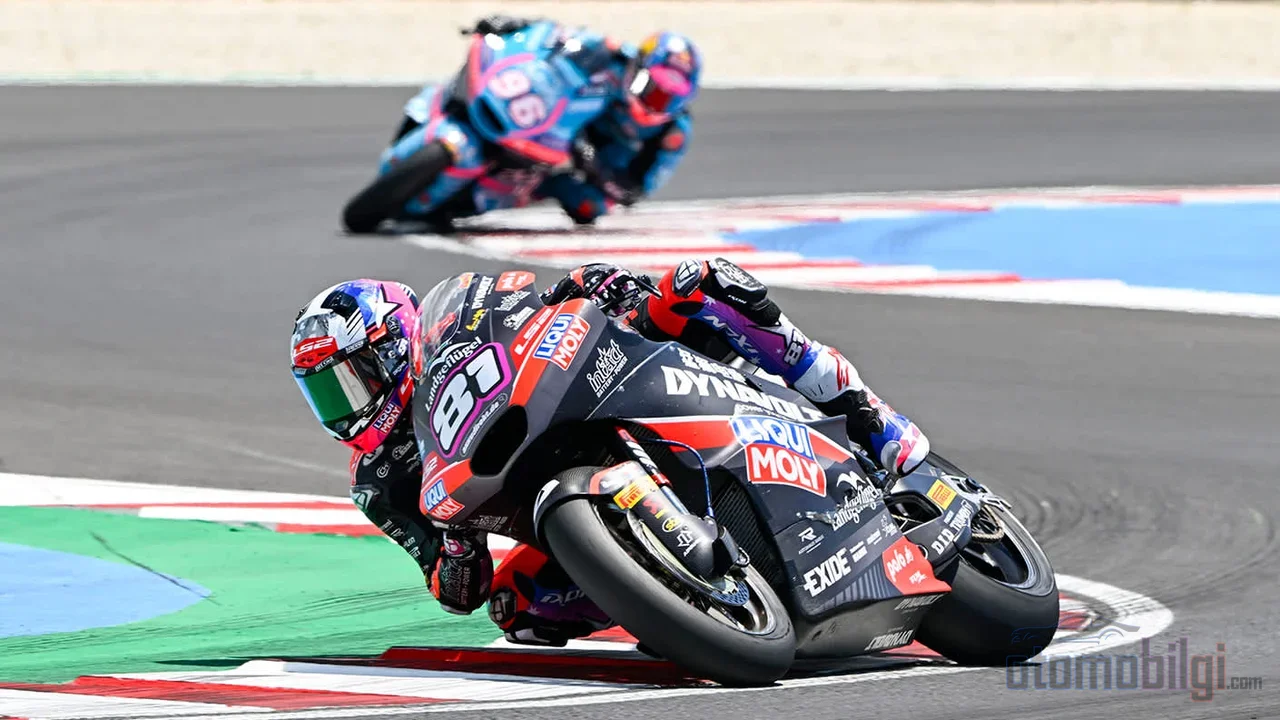
Share This Page
In MotoGP, what determines a rider's seat is not speed but the contract structure with the manufacturer, satellite team agreements, academy connections and sponsor accounts. On-track performance is of course important; but the commercial and political chessboard behind the scenes decides the owners of the seats much earlier than the championship itself.
Highlights
- Of the 22 riders on the 2026 grid, only 4 had official contracts extending beyond 2026.
- Total amount the 11 teams will pay for rider salaries: approximately 101.9 million dollars - the highest payroll ever.
- MotoGP Group signed a 2027-2031 agreement with the five manufacturers on January 20, 2026.
- In 2024, Jorge Martin became the first rider to win the championship while racing for a satellite team.
- On the 2027 grid, at the start of the season, of the 22 seats 16 were already filled.
What Is the Actual Difference Between a Factory Team and a Satellite Team?
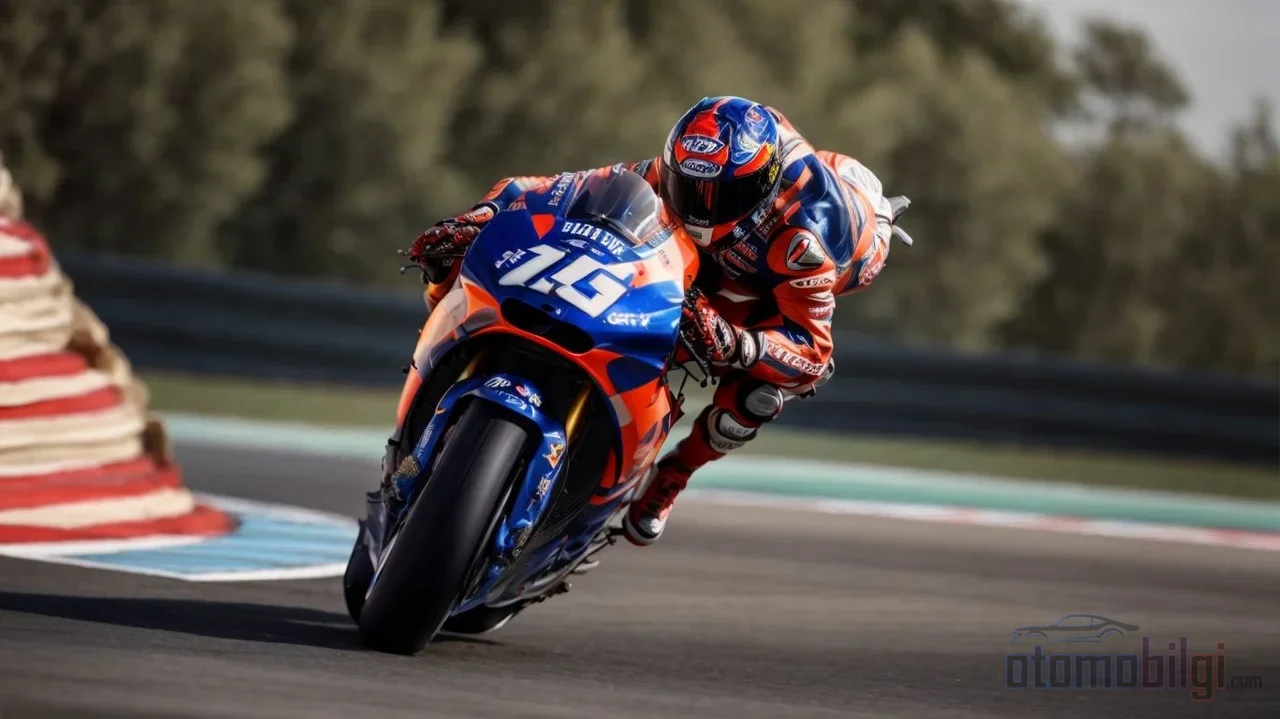
Let me explain this with a simple analogy: a factory team is like the manufacturer's own child at home. Teams such as Ducati Lenovo or Honda HRC Castrol are managed and financed directly by the manufacturer; factory riders in theory have access to the most up-to-date motorcycle, the newest technology and the best engineers. A satellite team, on the other hand, is an independent team that leases or buys the motorcycle from the manufacturer - LCR Honda, VR46 and Gresini are classic examples of this model.
But here is the interesting part: this distinction is not always clear-cut. The support a satellite team receives varies across a wide spectrum, from the basic customer package to support close to factory level. Satellite teams with intense manufacturer support are even called "semi-works". By rule, satellite teams generally use the previous season's motorcycle and receive updates after the factory; but in 2024, Prima Pramac used the same GP24s as the factory Ducati. In 2026 as well, Ducati expanded its allocation of the current GP26: VR46's Di Giannantonio and Gresini's Álex Márquez each have one GP26. So do not memorize the equation "satellite = old motorcycle"; look at the agreements.
Behind the Scenes of Seat Distribution: Who Do the Contracts Bind?
Here is the part that really requires some thought. In MotoGP, the rider market resembles football's "silly season" but is even more aggressive. Since the 2026 season is the final year of the 1000cc engine era, the grid was relatively quiet; nevertheless, the 2027 market started moving very early. So early that some agreements had been signed before the season even started, in January, no less.
So how did the picture take shape? These are the key moves:
- Marco Bezzecchi signed a two-year extension with Aprilia before the Sepang test; in the same period, Aprilia also added Francesco Bagnaia to its roster.
- KTM officially announced that it had reached an agreement with Gresini rider Álex Márquez for 2027.
- For VR46's vacant seat in 2027, talks were being held with a list of four candidates.
This early movement was found so disturbing that MotoGP now has a transfer window in the style of football's transfer window is seriously evaluating the model: deals made outside the window could be deemed invalid. There is also this criticism on the table: the fact that the 2027 negotiation is happening so early causes it to be overshadowed by the 2026 championship battle. Is there some merit to it? I think so - would you fight with the same intensity for your team when you, as a rider, have already signed a contract with them for the next season? This is exactly why the window idea is growing rapidly.
Manufacturer Loyalty and Big Money: Who Is Saying What to Whom?
Rider seats cannot be considered independently of manufacturers' relationship with the championship. MotoGP Group signed an agreement covering 2027-2031 with Aprilia, Ducati, Honda, KTM and Yamaha on January 20, 2026. In addition, during the Austin meeting with Liberty Media as part of the 2027 Concorde Agreement negotiations, an amount of approximately 9 million euros per team and rider agreements came to the table. In other words, seat decisions are the output of not only team principals but also manufacturers and the championship's commercial architecture.
Money is also circulating at the table: the 11 teams are expected to pay a total of approximately 101.9 million dollars in base rider salaries in 2026. This is the highest rider payroll in the sport to date. Seeing this picture, the question "why are seats so valuable" answers itself.
Does Performance Really Not Affect Seat Decisions?
It does, but not as directly as you might think. In 2016, Dorna standardized the ECU software for the entire grid; in 2019, IMU and CAN software also began to be provided centrally. The aim was to prevent gaining traction and braking advantages through software manipulation. After this standardization, satellite teams' podium battles visibly increased. The best proof is 2024: Jorge Martin, beating the factory Ducati riders with Prima Pramac, became the first rider to win the championship racing with a satellite team . Bagnaia finished second, and satellite rider Marc Marquez finished third. Additionally, Dorna made changes to the concession points system for parity between teams - counting factory teams already under concession (such as KTM) in the independent standings is also a confusing but logical detail.
The Marc Marquez Example: Is the Satellite Route the Road to the Factory?
Marc Marquez's story summarizes how this market works in a single sentence. He left factory Honda and moved to satellite Gresini in 2024, proved the Ducati on track, and then returned to the factory bike in 2025 - you know the result, he became the 2025 world champion. For a rider seeking a seat, the most effective resume can sometimes be a single season racing with a satellite team. Don't you think this shows that career planning does not work at all on the "fastest wins" logic it is assumed to run on?
Young Talent Programs: Is the Academy a Seat Guarantee?
In today's MotoGP, academies are the most hidden yet most powerful elevator of the rider ladder. The best-known example VR46 Riders Academy: This structure, founded by Valentino Rossi in Tavullia, is represented today by four MotoGP riders - Pecco (Bagnaia), Franky (Morbidelli), Bez (Bezzecchi) and Maro (Marini). Cele races in Moto2, and Gaba is on track on behalf of the academy. The academy founded by Rossi is not merely a training institution; it also operates like a management structure - that is, it not only develops the rider but also manages his career.
The Aprilia side also appreciates this model: Aprilia Racing CEO Massimo Rivola had said that Rossi's academy is very helpful for manufacturers who have not been able to maximize their young rider programs. In 2026, Aprilia is fielding 2024 champion Jorge Martín along with Bezzecchi, third in the 2025 championship; the bridge between academy-backed talent and factory seats has never been shorter. KTM is playing the same game: Pedro Acosta's promotion to the factory team is the most concrete example of the manufacturer's own talent policy.
And there is an interesting detail: The VR46 team explicitly stated that for 2025 it does not want to be limited to academy talent alone and is open to signing "a top-level rider." So even academy loyalty is negotiable - it is not a seat guarantee. This shows both the power and the limits of the academies at the same time.
Sponsorship: The Invisible Partners of the Seats
In MotoGP, sponsorship sells four different assets: the rider, the team, the Grand Prix or the championship itself. Brands make their choice according to the cost-risk-target balance. The prices? As of 2026, entry-level packages start at around 75,000 Euro while factory team title sponsorship climbs to much higher levels. Red Bull becoming the title sponsor of the 2026 Australian MotoGP (Phillip Island) shows how much money is involved even at Grand Prix level.
VR46 is the textbook example of this relationship: The team established a global partnership with Mooney in 2022, then moved to Pertamina Enduro title sponsorship. A sponsor change is not just putting on a logo; it has a direct effect on the team's budget, growth capacity, and therefore the figures it can pay in rider contracts. So how secure is a rider's seat? Partly in the answer to this question: Who is the sponsor behind the rider's team?
Türkiye's Seat: Toprak Razgatlıoğlu from Superbike to MotoGP
There is big news on the Türkiye side of this mechanism too: Toprak Razgatlıoğlu has moved to MotoGP in 2026 at Pramac Yamaha, replacing Miguel Oliveira. Pramac Yamaha is described as "a second factory team within the Yamaha program" - a structure that pushes even the boundaries of the classic satellite team definition. Toprak's transfer is also a good lesson: It is reported that Yamaha did not allow the MotoGP move for 2025, and with the project going better than expected, the move later came onto the agenda. In other words, seat decisions are sometimes shaped not by the rider but by the manufacturer's timing. A Turkish rider taking a seat on the MotoGP throne on this chessboard is, in my opinion, the paragraph of this article I enjoyed the most.
Ducati's Eight Motorcycles and Other Debates
Now let's take a look at the debates, because the seat distribution doesn't please everyone. One of the most talked-about topics: is it fair for Ducati to run eight motorcycles on the grid? Does having one manufacturer represented with so many seats narrow the development space for other manufacturers, or does it enrich the championship? The debate continues. Another opposing view concerns technical standardization: it was predicted that excessive rule standardization would "convoy-ize" the races, turning them more into parades than real racing. So far this hasn't happened; on the contrary, the races have gotten closer. In response to the criticism that early transfer deals cast a shadow over the 2026 championship, the fact that MotoGP is evaluating an official transfer window model is a sign that this balance is being preserved.
In short: What Guarantees Your Seat?
There is no such thing as a seat guarantee in MotoGP; even if there were, it would be discussed like a chess move. Sign a contract but the market moves early, come up through the academy but stay open to signing a top-level rider, find a sponsor but keep the title sponsorship. Speed on track is always the strongest card; but Marc Márquez's Gresini route, Martin's satellite championship, and Toprak's late transfer show that how the card is played matters as much as the card itself. So do you think MotoGP's planned transfer window will cure this chaos? I think yes - but for the most expensive seats in the world, the competition will never end.
Sources
- MotoGP Satellite vs Factory Teams: all you need to know for 2026
- Satellite team - Wikipedia
- MotoGP Group and Aprilia, Ducati, Honda, KTM and Yamaha sign 2027-2031 agreement
- MotoGP 2027 rider line-up: the official announcements so far
- Journey - VR46 Riders Academy
- VR46 Racing Team - Wikipedia
- VR46 "open" to snaring top MotoGP rider
- The four contenders for Rossi's team's 2027 MotoGP seat
- MotoGP's ridiculous rider transfers are bad news for the 2026 championship battle
- The Full List Of 2027 MotoGP Rider Contract Announcements
- MotoGP Riders Salaries & Contracts
- MotoGP may set an official date for rider transfers
- The 2027 MotoGP grid is taking shape: 16 of 22 seats filled
- Transfer efforts for 2027 in MotoGP
- How Much Does MotoGP Sponsorship Cost: 2026 Price Levels
- Red Bull to title sponsor 2026 Australian Motorcycle Grand Prix
- MotoGP | Aprilia Racing