How Much Does a MotoGP Motorcycle Cost? Costs and Team Budgets
Share This Page
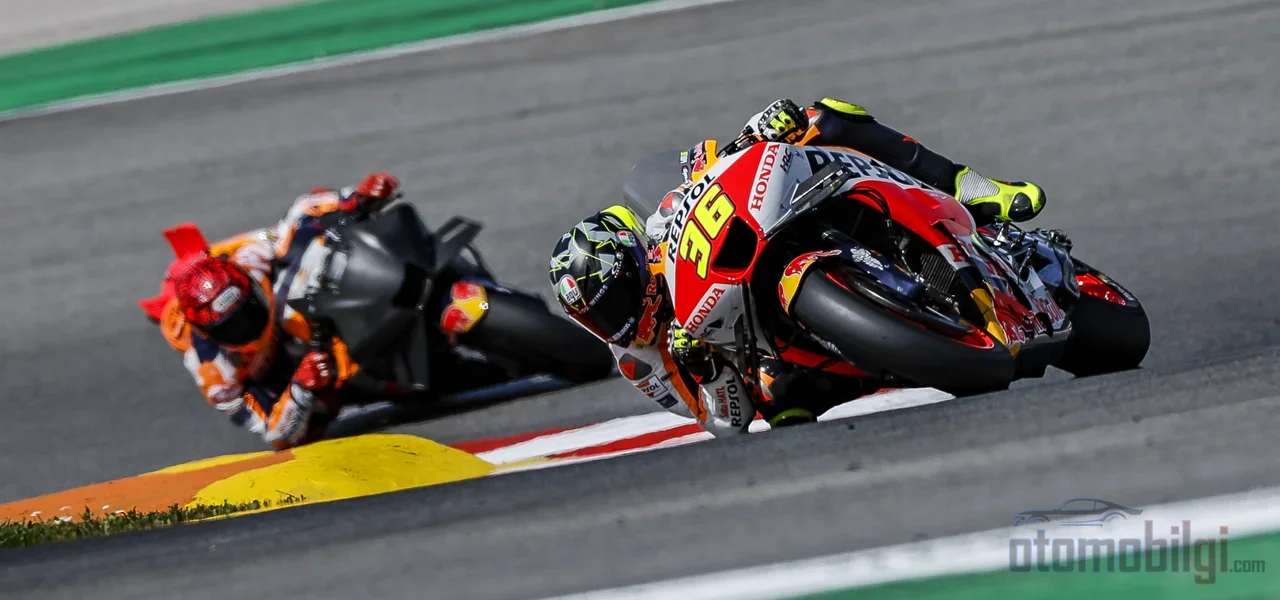
There is no single official figure for the price of a MotoGP motorcycle; while its base cost is around 1 million dollars , when R&D and development expenses are included, the total value of a factory bike is estimated to be able to exceed 3 million euros . So what do we get in return for this money? A prototype that is not sold to the public, is banned from the road, and whose every part is worth its weight in gold. Let's dive into these figures, because let me warn you: your eyes may stay above the mortal realm when you see the numbers!
Highlights
- A factory MotoGP motorcycle, including R&D, can go up to 3 million euros .
- A top-class engine alone 200,000-250,000 euros; with development it can reach 1 million dollars.
- Marc Marquez's salary is estimated at 17-18 million dollars; Ducati pays its two riders about 24.5 million dollars a year.
- Running a team for an entire season requires a minimum of 10 million euros ; factory teams spend far more.
- A crash damaging critical parts can cost up to 500,000 euros .
Why Is a MotoGP Motorcycle So Expensive?
Let's make one thing clear first: a MotoGP motorcycle is a different creature from the bikes we know. It is not sold in stores, has no license plate, and is banned from the road. In other words, we are talking about a machine you cannot simply buy at a showroom and that even your favorite dealer could not order for you. These are prototypes built purely for racing; each one is the peak of human craftsmanship and engineering brilliance within that season's rules.
There are several reasons why it is so expensive. First, production volume is very low: some factories produce only a few dozen engines per year, so the entire development cost is divided among a small number of motorcycles. Second, materials: carbon fiber costs exactly 10 times the price of steel per gram (about 2 euros/100 grams compared to 0.2 euros/100 grams for steel). Third, workmanship: nearly every part is assembled by hand, and each motorcycle is tailored to the rider's height, weight, and riding style. Do not think of it as buying a normal motorcycle; think of it more like a tailor-made suit, but one on wheels that goes 360 km/h.
Engine, Brakes, and Electronics: Part-by-Part Price List
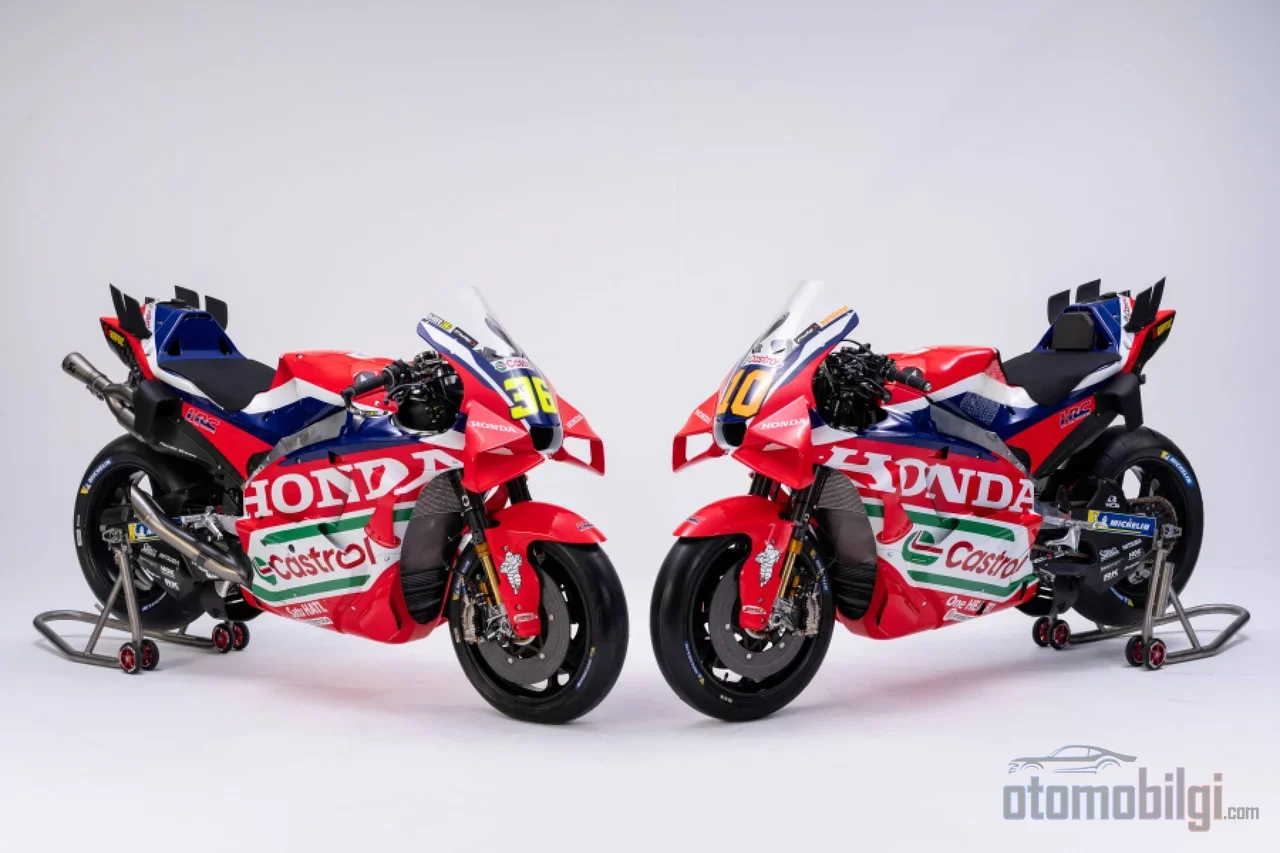
Let's break the motorcycle down into its parts and look at each one's price tag. Ready? Here we go, because the table is a bit daunting:
| Part | Approximate Price |
|---|---|
| MotoGP engine (top class) | 200,000-250,000 euros |
| Factory engine (including R&D, developed) | up to 800,000 dollars 1.2 million dollars |
| Electronics system (total) | above the 100,000-euro mark |
| Dashboard | 2,500 euros |
| Front brake kit (FIM cap, excluding taxes) | 70,000 euros |
| Magnesium wheel (single) | 4,000 euros |
Let's go into a few details. On the braking side, the FIM has capped the price of the front brake kit at 70,000 euros ceilinged - and inside this shell there are 3 pairs of calipers, 3 cylinders, 10 carbon discs and 28 brake pads. So with money that could buy you a house, we buy carbon brakes just to go in a straight line! As for electronics, there are no 1,000-euro parts; you have already seen that the dashboard costs 2,500 euros. It is like replacing your entire phone in one day, except each phone costs a month's salary.
There is also an interesting point about the engines: a fully developed factory engine is estimated to reach 800,000 dollars, even 1.2 million dollars, including development costs. Moreover, the season does not end with a single engine; 7-10 engines are needed per rider throughout the season, for both racing and testing. 2026 is a year when engine development is frozen: in 2027 the motorcycles 850cc from today's 1000cc and 75 mm cylinder bore while this year the engines are frozen. The rules require 4 cylinders and 6 gears in the engine, and turbo or supercharging systems are banned. For example, the 2026 Honda RC213V with its 1000cc V4 engine has a top speed of over 360 km/h.
The Price of a Crash: How Many Euros per Tumble?
Now there is a question you need to answer: what happens if you enter a corner at 300 km/h on a 3-million-euro motorcycle and fall? Of course, the answer comes in the form of an invoice. Accidents are classified among themselves and each class has its own price tag:
- Minor crash (side scrape): 15,000-20,000 euros - nearly the price of a second-hand motorcycle!
- A tumble, meaning the motorcycle flipping over: approximately 100,000 euros - tires, brake disc, suspension, radiator and sensors are gone.
- Critical part damage (swingarm, chassis, internal electronics, tank, engine): up to 500,000 euros - from here on, the kind of numbers that would make you unable to look your mother in the face at the garden gate.
So riders are managing not just speed, but in fact a budget in the hundreds of millions that plays with the laws of physics. Losing a tenth of a second in a lap is great; but when you remember the price of a swingarm lost in the wrong place, it becomes clear how expensive a gamble that tenth of a second is.
Factory Team or Satellite Team? How Big Is the Budget Difference?
There are two types of teams in MotoGP and their budgets come from practically different planets. Factory teams are the manufacturer's main team: the newest parts, the largest staff and the biggest budget are theirs. Satellite teams, on the other hand, are squads that race by leasing motorcycles from the manufacturer and work with more limited resources. Since MotoGP has no cost cap like F1, factory teams can spend far more than independent teams.
The numbers are as follows: running a MotoGP team at all requires a minimum of 10 million euros . Satellite teams operate roughly around 11-13 million euros per season, while factory teams' budgets can reach up to a gross 70 million euros . When you see the size of the difference between the two, you understand much better why the same two or three brands always run at the front of the grid, don't you?
Leasing a motorcycle for a satellite team
So what keeps a motorcycle afloat for a pilot who wants to race in a satellite team? Teams charge a rental fee of up to 2 million euros per season per rider, including two motorcycles and development work but excluding spare parts. For a competitive factory package, that figure can climb to 4 million euros. In other words, a rider running in a satellite team pays more than the price of an apartment in a big city just for the right to hop on a bike. Just imagine: the motorcycle sitting in your living room costs as much as a house for sale.
Rider Salaries: The Biggest Earners on the Grid
Now we come to perhaps the most eagerly awaited part: how much do riders earn? At the top of the 2026 grid sits Ducati's star, Marc Márquez, with a salary estimated at 17-18 million dollars. Right behind him, Yamaha's Fabio Quartararo follows with roughly 13-14 million dollars. Ducati's other star, Francesco Bagnaia, meanwhile earns around 6.8-7 million dollars. What a top three these three make - a junior motorcyclist looking at their salaries would need to finish his coffee first and then set off on a world tour.
In the mid-field are names like Johann Zarco (4-4.8 million dollars), Maverick Viñales (4.3 million dollars), Jorge Martin (4.2 million dollars) and Jack Miller (3.2 million dollars). Ducati pays its two riders roughly 24.5 million dollars in total, meaning the grid's highest rider payroll once again belongs to the Italians. Big moves are already being discussed for next season: Márquez's Ducati salary is expected to rise to 12 million pounds in 2027. And here's some good news: from 2027 onward, a minimum salary of 500,000 euros is being prepared for all full-time MotoGP riders - the aim is for the young riders at the back of the grid to earn what they deserve as well. Meanwhile, Türkiye's pride Toprak Razgatlıoğlu will race in MotoGP with Pramac Racing in 2026; for us, that's the most valuable line on the list!
Per-Race Operating Costs: From Tires to Accommodation
And then the race weekends themselves are a cost input. One of its most striking items is tires: Michelin spends more than 1.2 million euros on tire supply at every GP - including the tires themselves, plus technical and support staff. Imagine spending that much money just on tires! In addition, travel costs of about 1,200 euros per GP are calculated per team member; a 30-person team pays roughly 700,000 euros for this over a 19-race season. Add to that the cost of the hospitality crew, that is accommodation and catering: above a threshold of 600,000 euros per season, excluding transport.
When all these items combine, the per-race expense exceeds 2 million euros. So the teams aren't just chasing motorcycles and salaries; every race weekend, they manage a small company budget in its own right. Why do you think some factories are pushing for "a cap on spending like F1"? Some manufacturers worried about Honda's restructuring power support this idea, while others think a cost cap would kill the spirit of the series. The debate is running at full throttle.
Sponsorships and Who Pays for All This Money?
So where does this money come from? The answer is sponsors. In 2026, title sponsorship in MotoGP is in the range of 5-15 million euros per year. In F1, the same slot is 60-110 million dollars; so MotoGP is a more "affordable" showcase for sponsors, but still a serious investment. The massive budgets of factory teams are fueled by manufacturers' main resources, marketing budgets, and sponsorship deals. The goal is simple: going for victory to add trust and prestige to the sales of street motorcycles. In short, MotoGP is both a sport and a very large marketing machine.
The real beauty is this: all those millions of euros come back to us as breathtaking races on the track on Sundays. A motorcycle's price tag may have shocked you, but behind that label lies the purest form of the trio of engineering, courage, and passion. Do you think these expenses are worth it? Or would MotoGP be healthier if a cost cap came in? I look forward to your opinions in the comments!
Sources
- How much does a MotoGP cost?
- Everything you need to know about MotoGP engines for 2026
- RC213V | MotoGP - Honda.Racing
- How much does it really cost to run a MotoGP team?
- Why these racing motorcycles cost $2 million
- MotoGP Riders Salaries & Contracts
- MotoGP Rider Salaries 2026: Every Seat on the Grid
- MotoGP 2027 rider salaries
- Minimum Rider Salary in MotoGP 2027
- MotoGP Riders
- MotoGP - Wikipedia
- Factory vs satellite teams in MotoGP
- MotoGP vs F1 sponsorship
- Why A Budget Cap In MotoGP Is A Terrible Idea