Why Are the 1000cc Engine and Gearbox Rules in MotoGP So Strict?
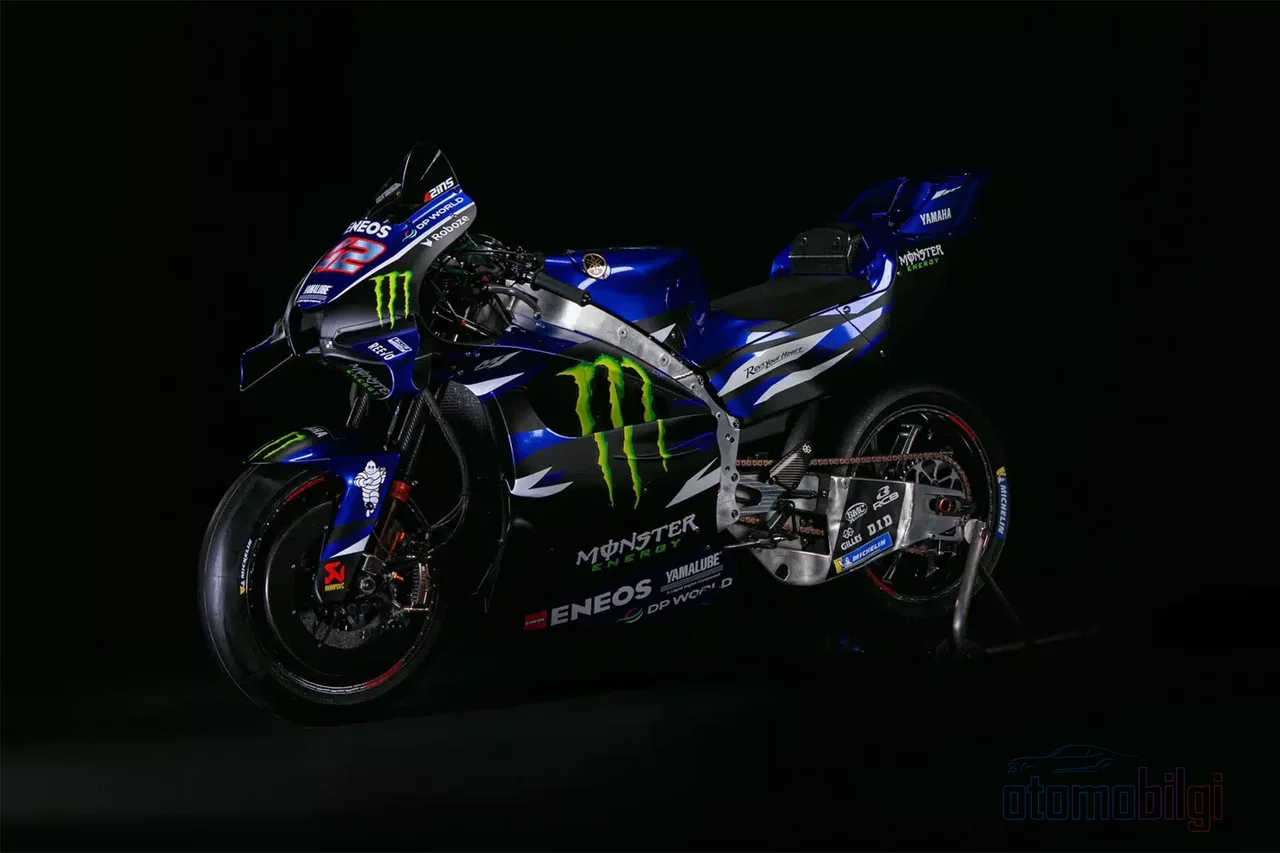
Share This Page
MotoGP engine regulations limit the displacement of prototype motorcycles to 1000 cm³, the number of cylinders to four, and the number of gears to six; the cylinder bore cannot exceed 81 mm. The purpose of these limits is not to leave engine power unbounded, but to keep costs under control while preserving safety and to ensure all manufacturers compete under similar conditions. So why so strict? Let's break it down step by step.
Highlights
- MotoGP engines are limited to a maximum of 1000 cm³, four cylinders, and 81 mm cylinder bore
- The gearbox is limited by rule to just 6 gears; the entire grid uses seamless (non-interruption) transmissions
- Per rider, per season, 7 engines are allocated, and the minimum weight is 157 kg
- MotoGP prototypes produce around 250 hp ; the championship's top speed record is 366.1 km/h
- From 2027 onward, engine displacement drops to 850cc, with cylinder bore limited to 75 mm
What Does the Rulebook Say? Core Engine Limits
Every motorcycle racing in the MotoGP premier class is a prototype; that is, not a stripped-down version of a road bike you could buy in a store, but a pure racing machine built from scratch. But being a prototype doesn't mean everything goes. Engine displacement is limited to a maximum of 1000 cm³, a maximum of four cylinders, and each cylinder's bore may be at most 81 mm. On the transmission side, only 6 gears are allowed.
The displacement calculation is actually very simple: cylinder bore times stroke length times number of cylinders. Manufacturers design their engines by playing with these three variables, and the 81 mm bore limit directly determines which direction they can turn that equation. The motorcycle's minimum weight is 157 kg, and the engine specification is homologated at the start of the season; meaning you can't suddenly introduce a brand-new engine mid-season.
To see just how impressive these numbers are, let's make a comparison: while a MotoGP engine produces around 250 hp, a massive-displacement Harley-Davidson production motorcycle sold on the road stays at 114 hp despite its 1900cc engine. Despite the strict rules, these machines operate with incredible efficiency, and the top speed record climbs to 366.1 km/h. Sounds crazy, doesn't it?
Why Only 6 Gears?
While production motorcycles now have gearboxes exceeding 8 gears, MotoGP makes do with 6. There's a simple reason: more gears mean more cost, more development races, and smaller power differences on track. The 6-gear limit ensures manufacturers focus on optimizing the engine's power and character instead of constantly redesigning the gearbox.
The gear pattern is standard too: highest gear at the bottom, 1st gear at the top. Multi-clutch systems are banned. So the rider really has to know what they're doing with every gear change; the machines aren't doing the work for them. This makes the pilot's skill more visible.
Seamless Transmission: A Journey Without Gear Interruption
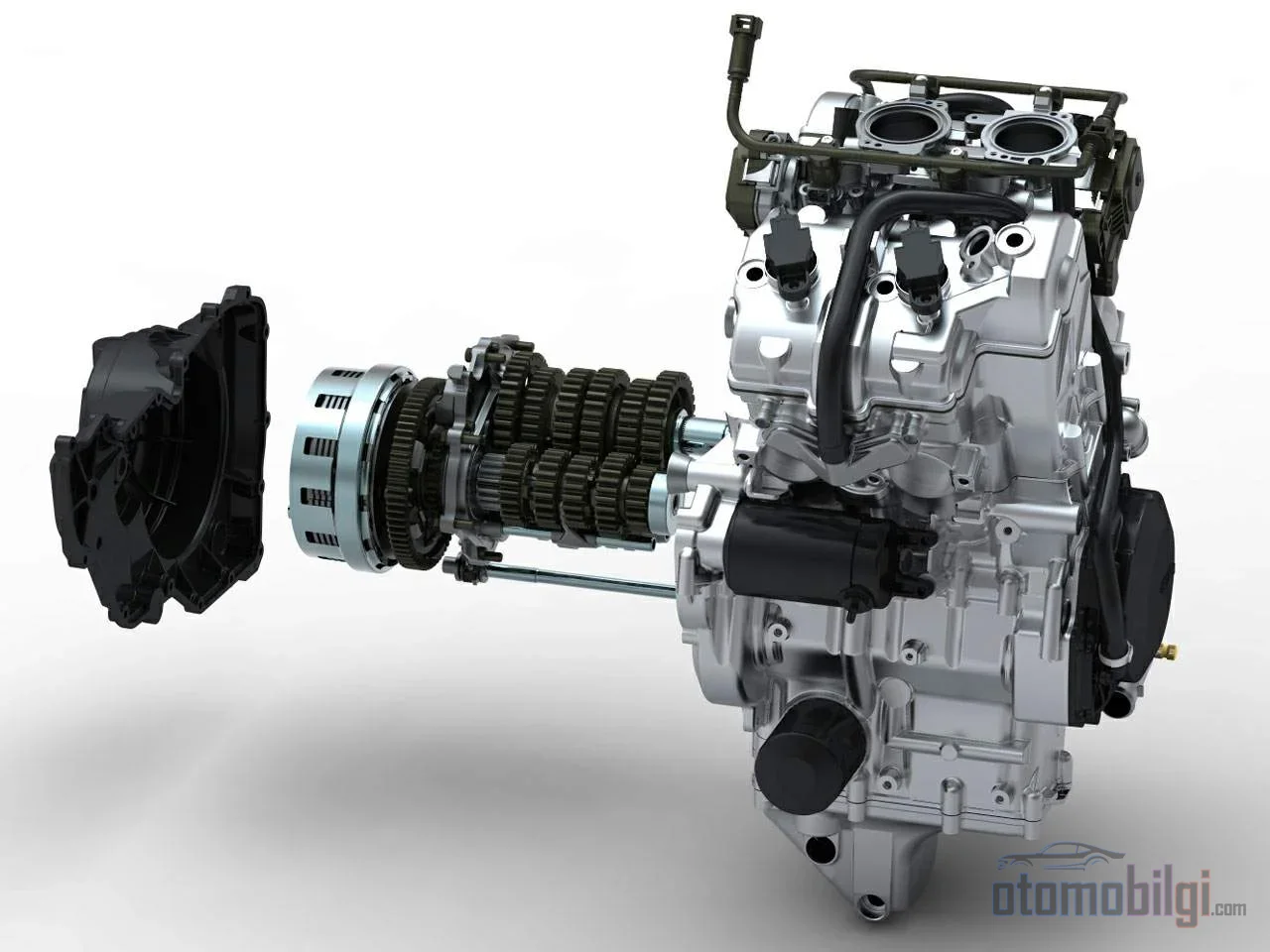
Despite the 6-speed limit, transmission technology is secretly seething. The entire grid now seamless-shift, meaning seamless (power-interrupt-free) transmissions. In a conventional gearbox, the power flow is interrupted for a moment when shifting gears; at a speed like MotoGP, this interruption can destabilize the motorcycle. The seamless transmission eliminates this interruption, and the motorcycle keeps accelerating smoothly while the rider shifts gears.
The factory that led the way in this technology was Honda ; Yamaha , meanwhile, remained the only factory on the grid without a seamless transmission for a long time. So this is a fine example of how differently manufacturers can take paths even within the engine rules. An interesting detail: Ducati has been working on patents to bring the seamless transmission to road motorcycles; technology from the race track can reach all the way to the showroom.
Where Did the 1000cc Limit Come From? A Short History Lesson
Today's rules were not written overnight. The premier class raced with 500cc engines from 1949 to 2001; four-stroke engines were used until the 1970s, after which two-strokes became dominant. The last 500cc engines produced about 190 hp.
In 2002, the modern MotoGP era began and the switch was made to four-stroke 990cc engines; the last two-stroke race was held in 2003. Power immediately jumped to 230 hp and electronic systems like traction control, ECU, and fuel injection spread rapidly. Then safety concerns came into play: speeds were growing uncontrollably, and from 2007 to 2011 the engine displacement was reduced to 800cc. During this period, launch control and special electronics were developed.
On December 11, 2009, the Grand Prix Commission announced that the 1000cc limit would be adopted starting in 2012. The aim was more power and torque, easier overtaking, and better racing. In 2016, the switch was made to standard (universal) ECU software; both to reduce costs and to bring competition closer. As you can see, displacement is constantly shifting according to the balance of safety and competition; 1000cc is not an end, just the current stop.
Engine Freeze: What Does Freezing the Engine Accomplish?
Now let's get to the most interesting part: engine freezing. For the 2026 season, the engine specification has officially been frozen. That means factories cannot develop their engines this season; whatever the current design is, that's it. It sounds restrictive, but it has two smart purposes: to control costs and to create a more level playing field before the switch to 850cc in 2027 . Additionally, the freeze allows factories to direct their resources toward the new engine designs for 2027; instead of spending their energy fine-tuning a finished engine, they are investing in the future.
The Concession System: Not the Same Rule for Everyone
There are exceptions to the freeze, too. The concession (privilege) system ranks manufacturers by constructor points from A to D ratings, with each rank granting different rights: things like test days, wildcard rights, engine counts, and freezing exemptions. For example, a Rank D manufacturer, meaning one with concessions, is given a larger engine allowance; Yamaha can use 9 engines per rider per season (if the number of rounds is 21-22, this figure rises to 10). A manufacturer moving up from D to C gets a reduced engine allowance and has its specification frozen. The logic is very clear: breathing room for those behind, discipline for those ahead.
What Will Change in 2027? The 850cc Era at the Door
The next big test of the engine rules comes in 2027. From that season onward, engine capacity drops from 1000cc to 850cc; that's a reduction of roughly 15 percent. The bore limit, meanwhile, goes down from 81 mm to 75 mm. There's an interesting detail here: while capacity drops by 15 percent, the reduction in bore is only around 7.4 percent; in other words, the bore limit has been left relatively more generous, opening up a design space that makes the engines better suited to the road.
The changes don't end there. The engine allowance per rider drops from 7 to 6, fuel tank capacity goes down from 22 liters to 20 liters, and from 2027 onward, races will be run on 100 percent non-fossil fuel. Significant changes are also coming to the aerodynamics, concession, GPS data, and holeshot/ride-height device rules; the ban on holeshot and ride-height devices is one of the most talked-about topics in Turkish motorsport circles too.
Why are they downsizing? The main driving force is safety: lower top speed means safer racing. But simply reducing capacity isn't enough; the bore limit is frequently emphasized as critical. Efficiency and range are also in play; with a 20-liter tank, they have to cover the same race distance with less fuel per engine. The result will be smarter, more fuel-efficient engines.
Honda, Yamaha and Ducati: Same Rules, Different Philosophies
Even though the rules are the same, the manufacturers' engine approaches differ greatly from one another. The Honda RC213V and Ducati Desmosedici GP25 both use a 1000cc liquid-cooled V4 engine. Honda, as the factory that first introduced the seamless gearbox, has always been a pioneering name in technology transfer.
Yamaha, on the other hand, traditionally prefers the inline four-cylinder layout. The technical rules allow a maximum of four cylinders but don't restrict the configuration; meaning the choice between a V4 and an inline-4 is up to each factory. And this is exactly where the debate lies: it's still unclear whether the 2027 rules will force Yamaha to switch to a V4, and this transition could seriously change the balance of power among the manufacturers. The perception that Ducati's engine is strong on the straights but struggles a bit more in the corners is an opinion that has long circulated around the tracks; but if you consider how finely balanced V4s actually are, remember that this is an impression, not a definitive verdict.
The Full Picture Compared to Moto2 and Moto3
To better understand MotoGP's engine rules, it is very helpful to look at the lower classes, because the entire championship is structured like a ladder:
- Moto2: In 2010 it replaced the 250cc class; a 765cc three-cylinder Triumph engine, 138 hp, 6 gears, a minimum of 217 kg (motorcycle + rider), top speed over 300 km/h.
- Moto3: In 2012 it replaced the 125cc class; 250cc single cylinder, around 60 hp, 6 gears, a minimum of 152 kg, top speed of 245 km/h.
As you can see, the 6-gear rule is common across all three classes; but displacement and power grow step by step according to each class's level. The reason the 1000cc limit is strictly maintained in MotoGP is hidden in this table: it is already at the top of the three classes, with power playing at record levels. If you freed it up, the only difference from Moto2 and Moto3 would be speed; thanks to the limits, each class has its own character and its own learning ladder.
Cost Control and Competitive Balance: The Real Purpose of Strict Rules
At the heart of all these limits are two words: cost and competition. Engine displacement, cylinder count, bore limit, 6 gears, 7 engines per rider (6 from 2027), engine freeze, and standard ECU; they all lead to the same goal. If things were left free, manufacturers could pour billions of dollars into engine development without regard to profit-and-loss calculations, and teams with smaller budgets would be pushed out of racing. Strict rules create a level playing field where all manufacturers can compete with a reasonable budget.
Still, not everyone is happy. It is said that before 2027 some manufacturers want a Formula 1-style budget cap; there is concern that without cost control, Honda could establish domination again in the new era. The single-motorcycle rule debate is another front: Ducati and Aprilia support the idea on cost grounds, while KTM opposes it, arguing it would slow development speed. As you can see, engine rules are not just a technical matter; they are also at the heart of the championship's economic and strategic game.
So the 1000cc limit and the 6-speed rule are not arbitrary numbers; they are a carefully designed system built on the balance of safety, cost, competition and sustainability. I can't wait to see how that balance will change with 850cc engines in 2027. Which manufacturer do you think will be best prepared for the new era? See you in the comments!
Sources
- What is MotoGP™ Engine Displacement?
- What are the MotoGP™ Rules? – A complete overview
- What new engine freeze means for MotoGP
- MotoGP's 2027 rule changes puts safety ahead of speed
- Everything you need to know about MotoGP engines for 2026
- MotoGP Gearboxes Explained
- Ducati plotting MotoGP gearbox for the road
- Yamaha MotoGP – Where's the seamless shift gearbox?
- Grand Prix motorcycle racing
- MotoGP 2027 rules: The biggest challenges awaiting the teams
- About MotoGP