Anatomy of Manufacturer Rivalry in MotoGP Through Ducati's Manufacturer War
Share This Page
What truly shapes the championship in MotoGP is not just the riders; it is the manufacturer war behind them. We explain how Honda, Yamaha, Ducati, Aprilia and KTM battle it out with their factory and satellite team systems, and how the engine freeze and cost cap have changed the rules.
Highlights
- Ducati leads the 2026 constructor standings with 481 points, Aprilia only 3 points behind.
- In 2026, engine specifications were frozen; the exception applies only to safety fixes and manufacturers in Rank D.
- In 2027, 850cc engine rules and Pirelli tires are coming; the 1000cc + Michelin era is ending.
- Liberty Media aims to remove the factory/satellite distinction by 2027 and introduce an F1-style budget cap.
- Toprak Razgatlioglu, as the first rider from Türkiye to move up to MotoGP, is on the grid with Prima Pramac Yamaha.
The most striking picture in MotoGP right now is this: between the top two positions in the constructor standings there are only 3 points. Ducati has 481, Aprilia 478. That overwhelming dominance that for years made people say "even when Ducati wins, nobody's upset" is no longer what it used to be. While KTM waits in third place with 300 points, Honda with 161 and Yamaha with 90 are struggling in the lower ranks. In other words, there are two different stories at the two ends of the grid: at the top, a fight to the death, head to head; at the bottom, a deep crisis for two giants. On this page, we will talk more about the machines beneath the riders and the brands that build those machines than about the riders themselves. If you're ready, let's begin!
Factory Team or Satellite Team? MotoGP's Two-Tier System
Let's start with the basics, because understanding the manufacturer competition depends on knowing this. In MotoGP, every manufacturer has a factory team that it runs itself; they are also the ones developing the motorcycles. Alongside them are the satellite (independent) teams: these teams do not just buy or lease motorcycles from the factory - what do they do? Exactly that: they buy or lease the motorcycle and race in their own colors. Each team runs 2 riders, and how many teams each manufacturer can have is limited by the rules.
So are satellite teams at the same level as the factory teams? This is where things get interesting. Although these teams have competitive motorcycles, they do not always receive factory-level equipment. Think of it like "the same phone, but a cheaper package" on your phone: the core is the same, but when you look at the spec sheet, the differences show up.
The most discussed example of this system has been Ducati. In 2024, Prima Pramac Racing competed with GP24s equal to those of the factory Ducati team, and Ducati at that time had as many as eight motorcycles on the grid. Eight motorcycles means eight different riders scoring points with Ducati engines, which fuels the fairness debate. In short: the more motorcycles a brand has on the track, the greater that brand's constructor chances become.
How Are Points Distributed? What Do Manufacturers Win in Each Race?
We all know the riders' championship: the race winner gets 25 points. But the manufacturers' battle works differently. Points are awarded to the top 15 in the main race (25-20-16... down to 1), while the sprint race awards points to the top 9 (12-9-7... down to 1). In the constructors' standings, each brand earns the points of its own rider who finished in the best position in that race. So if your satellite team wins, those points go straight into the manufacturer's pocket. Now you understand better why Ducati running eight motorcycles looks so advantageous, right?
Engine Freeze: Is Everyone Racing the Same Engine in 2026?
The most critical rule of the 2026 season is the engine freeze. The FIM froze engine specifications this season; in other words, manufacturers cannot develop their engines. Let me give you an everyday analogy: your phone's operating system has been locked for a year, no new updates. What's the goal? So that teams can transfer all their engineering resources to the brand-new 850cc engine rules starting in 2027 . In fact, 2026 is the final season for the 1000cc engine and Michelin tires; in 2027, the switch to Pirelli tires takes place.
The freeze doesn't apply equally to everyone, of course. There are exceptions: safety and reliability fixes can be made, and manufacturers in Rank D, the lowest tier of the concession system, can continue engine development. Honda was included in this freeze from the first race of the season and thus became subject to the same rules as Ducati, Aprilia, and KTM. So there's no escaping it anymore; everyone is bound to the same baseline.
The concession system: A helping hand for the rest
What do we mean by concessions? Simply put, it's the incentive package given to manufacturers left behind. Concessions concern test days, the number of test riders, wildcard appearances, and engine development rights. Yamaha is currently in Rank D, which is why its engine development is open, and it also has more wildcard rights. But note: in the frozen specification, only a single aerodynamic upgrade is allowed. So the rules say, "okay, you can develop, but step by step." Whether Honda has slipped back into this system is a matter of debate; while some news reports say Honda has recovered, some analyses claim the brand has regressed to the lowest concession tier and lost its incentive for 2026. In short, it's not yet clear whether this season will turn into a comeback season for Honda.
The 2026 Championship: Is Ducati Really Still the Best Motorcycle?
The constructors' standings actually summarize most of the season. Take a look at the table:
| Rank | Manufacturer | Points | Status |
|---|---|---|---|
| 1 | Ducati | 481 | Leader but the gap has eroded |
| 2 | Aprilia | 478 | Nearly closed the gap |
| 3 | KTM | 300 | The wins have come |
| 4 | Honda | 161 | Partial recovery |
| 5 | Yamaha | 90 | In the midst of restructuring |
But the really interesting part is the riders' side: the lead changed hands many times throughout the season. The battle lived between Jorge Martín (Aprilia) and Marc Márquez (Ducati), and after 11 rounds only 24 points margin remaining; this is the closest championship battle in MotoGP's modern era. Marco Bezzecchi opened the season as the winner of the first three GPs with Aprilia; Martín won in France; Trackhouse (Aprilia) finished sprint and race 1-2 in the Netherlands, making Ai Ogura the first Japanese MotoGP winner since 2004. Pedro Acosta, meanwhile, brought KTM its first win since Thailand 2022 in Austria. Marc Márquez took the lead with double victories in Aragon, San Marino and Japan, Martín took it back in Austria, Márquez won again in the Mandalika sprint in Indonesia, and the lead changed once more. As you can see, this isn't a team show, it's an all-out manufacturer war!
While some commentators say "Ducati is still sweeping everything," a significant segment now believes Aprilia and KTM have closed the gap, and Ducati is no longer the only one on track! Jorge Martín has already described Aprilia's 2026 motorcycle as "incredible" and compared it with the legendary GP24. Aprilia's rise is so clear that comparing 2016 to today, we see Aprilia moving ahead in the constructors' standings after the first race. In short, Ducati still has plenty of satellite teams on the grid like Gresini and VR46, but the title of "best motorcycle" has now entered contested territory.
Yamaha's V4 adventure
On the Yamaha side there is a historic change: both Yamaha teams used a V4 engine for the first time in 2026. Because the legendary YZR-M1 had been using an inline-four since 2002! But the transition wasn't painless; it is said the new V4 suffers from a lack of power. Fabio Quartararo warned that the overhaul "could take months or longer," while Yamaha fell short of expectations at the Thai season opener. Honda, on the other hand, is showing slow but clear improvement; enough to give Joan Mir his first session-leading time in 4 years.
Cost Cap and Aerodynamics Wars: Where Are the Rules Heading?
So what is the economics of all this commotion? A standard MotoGP engine costs roughly 200,000-250,000 € (about 215,000-270,000 $). And that's the price of a single engine! Add the aerodynamic development race on top, and small teams can barely breathe. Even the first ban on winglets was linked to complaints about the rising costs created by aerodynamic development.
Now the rules of the game are changing. Under Liberty Media ownership, MotoGP is planning an F1-style budget cap and aims to eliminate the factory/satellite divide by 2027 . Teams are demanding engine development limits, aerodynamic restrictions and reduced testing for this. The 2027 rules also aim to significantly reduce aerodynamics (including moving the nose body back) and eliminate wildcard entries. In other words, a radical page will be turned in MotoGP history next season. Meanwhile, a small but interesting 2026 rule: restarting the motorcycle on track or in the run-off area after a crash is now banned. A sprint-including new weekend format is also coming from 2027 onward.
From Track to Road: Is MotoGP Technology Heading to the Showroom?
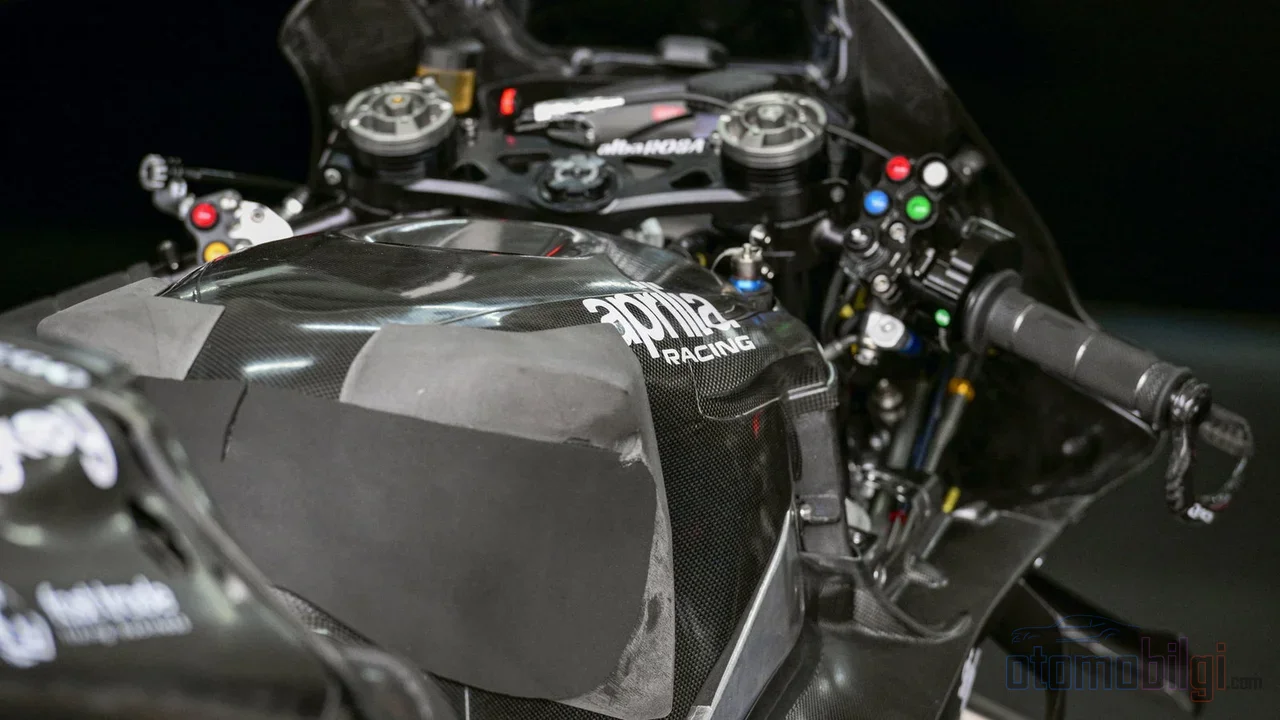
This battle has its reflection not only in the points table but also in the garage and at the dealers. Ducati's Desmosedici is a four-stroke V4 racing motorcycle built for MotoGP; its naming follows a GP + two-digit year scheme. Released in 2006, the Desmosedici RR is a road-legal replica that brought MotoGP engineering to the street: a V4 engine, carbon fiber body, race-derived electronics, and over 200 hp of power. Even the aluminum swingarm geometry is derived directly from racing.
The same idea continues today: Desmosedici Stradale engine was developed to combine racing performance with road use, with a larger displacement than the MotoGP engine. Ducati Corse Sporting Director Paolo Cabatti also explains how technology developed in MotoGP is transferred to road motorcycles. In short, that battle on the grid also shapes the motorcycles waiting for you at the dealership. Nice thought, isn't it?
Toprak Razgatlıoğlu and Turkish Riders' Place in MotoGP
There is big news on the Turkish side of this ecosystem: Toprak Razgatlıoğlu has moved to MotoGP in 2026 with Prima Pramac Yamaha, becoming the first MotoGP rider from Türkiye. Toprak, a three-time WorldSBK champion, took the seat vacated when Miguel Oliveira's contract was ended a year early; Oliveira, in turn, replaced Toprak at BMW WorldSBK. Kenan Sofuoğlu had previously put the odds at 50% and said the following:
Honda and Yamaha are MotoGP's most established teams; we became factory riders at the most established team.
Toprak made his first test with the V4 Yamaha at the Valencia post-season test; it was said he would even surprise the paddock. In the first half of the season, though, the picture is modest: after the first 17 laps 21st place with 18 points; there were reports of a technical failure at the Dutch GP. But remember, with a satellite Yamaha it's a new bike, new tires and a new grid; the adaptation process naturally takes time. In my opinion, a Turkish pilot racing in MotoGP is the most special story of this season's manufacturers' war.
Who Do You Think Will Be on Top in 2027?
Let me sum it up: 2026 is the last dance of the old order. Engines are frozen, tires are Michelin, seats are one-make; everyone has turned their minds to the 850cc and Pirelli's future in 2027. While the Ducati-Aprilia battle continues at the top, KTM is trying to close the gap, and Honda and Yamaha are rebuilding themselves through the concession system. The way I see it, the real excitement is starting now: new engine rules, the budget cap, and the removal of the satellite/factory distinction could rewrite the whole picture from top to bottom. So what do you think? Will Aprilia take the throne in 2027, or will Ducati leave its mark on the new rules too? Let's discuss in the comments!
Sources
- 2026 MotoGP World Championship
- MotoGP™ World Standings | 2026
- Standings - MotoGP™ World Standings | 2026
- Yamaha Factory Racing | MotoGP Standings
- What are the MotoGP™ Rules? – A complete overview
- MotoGP Satellite vs Factory Teams: all you need to know
- Your guide to MotoGP 2025 teams - News.GP
- Satellite team
- MotoGP takes another step toward F1 to eliminate team disparities by 2027
- Concession upgrade pushes Honda into stricter MotoGP rules for 2026
- MotoGP™ engine specification frozen for 2026 - epartrade
- MotoGP Announces Engine Freeze For 2026 - Visordown
- About MotoGP - Yamaha Racing
- Ducati may have parity - but it's no longer the best bike - Autosport
- MotoGP 2026 - Championship standings after the British Grand Prix
- MotoGP 2026 results and standings for top drivers and teams
- MotoGP Standings Table - Crash.net
- Fabio Quartararo warns Yamaha MotoGP rebuild could take months or longer
- Yamaha: '2026 MotoGP bike not performing badly but...' - Yahoo Sports
- Has Honda given up on its 2026 MotoGP season? - The Race
- Could Honda return to the front in 2026? - News.GP
- Monster Energy Yamaha MotoGP - Thailand Sprint - Yamaha Racing
- Ducati Desmosedici - Wikipedia
- Desmosedici Stradale - Ducati
- How Ducati technology is adapted racetrack to road - Lenovo News
- 2006 Ducati Desmosedici RR - Motorcyclist
- Ducati Desmosedici RR - Classic Trader
- Toprak Razgatlıoğlu - Wikipedia
- Kenan Sofuoğlu responded to Toprak Razgatlıoğlu and MotoGP rumors - tr.motorsport.com
- Sofuoglu: "Toprak will surprise the MotoGP paddock too" - tr.motorsport.com
- World Champion Toprak Razgatlıoğlu's statement on MotoGP - beIN Sports TR
- Pushing aero to the limit: The evolution of winglets - Yahoo Sports