What Is the Difference Between a Factory Team and a Satellite Team in MotoGP?
Share This Page
In MotoGP, a factory team is the official squad directly managed and funded by the brand that builds the motorcycle, while a satellite team is an independent privateer team that rents or buys that motorcycle from the manufacturer. The factory side gets priority on the newest machine, the latest parts, and the highest budget, whereas satellite teams usually race with one-year-old specifications but offer a door of opportunity for young riders.
Highlights
- There is no cost cap in MotoGP; a factory team can spend around 15 million dollars per year.
- Satellite teams do not buy the motorcycle but lease it; for a competitive factory package, figures of 4 million euros are mentioned.
- In 2024, Jorge Martín became the first rider of the MotoGP era to win the championship with a satellite team.
- In 2027, the factory/satellite distinction is being completely removed; all teams will receive the same financial support.
- Toprak Razgatlıoğlu is starting in MotoGP in 2026 with Yamaha's satellite team Pramac.
What Exactly Is the Difference Between a Factory Team and a Satellite Team?
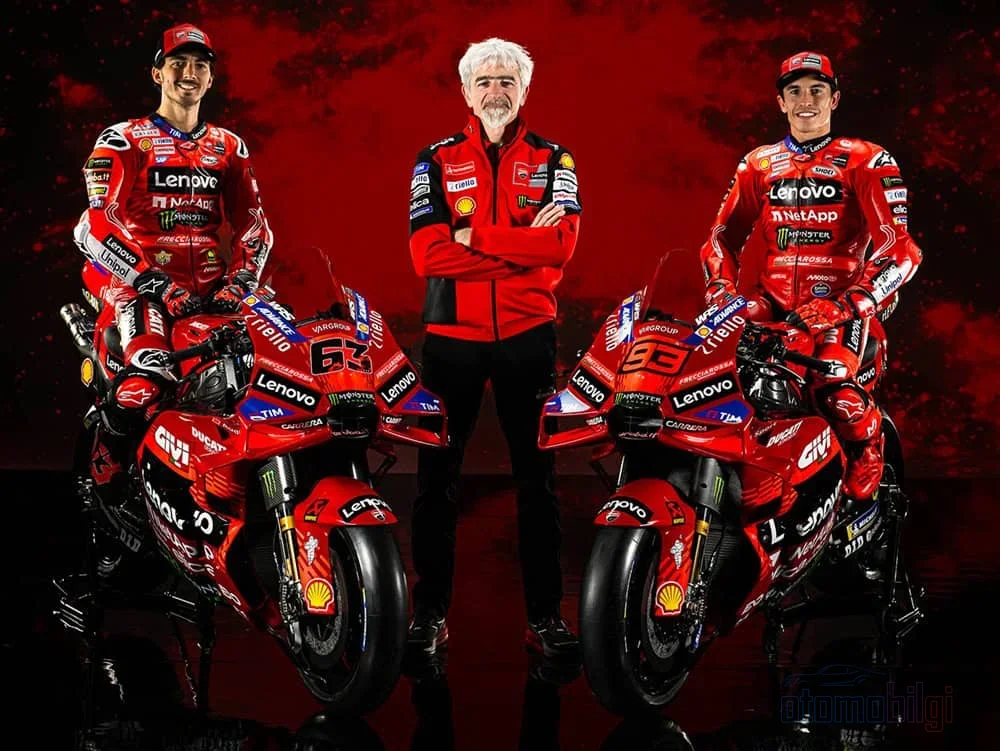
Think of it this way: while doing a school project, one person works at the class teacher's house with access to all resources and the best materials; the other works from home with what they have, but the project they finish still enters the same competition. The difference in MotoGP is roughly this. A factory team (the "works team") is the brand's own team that builds the motorcycle: Ducati, Yamaha, Honda, Aprilia, and KTM each have their own official team. They develop the motorcycle at the factory, the factory chooses the riders and mechanics, and the factory pays the salaries.
A satellite team, on the other hand, is an independent squad that leases the motorcycle from this manufacturer. It has its own staff, its own garage, and its own sponsors; but it gets the machine from the manufacturer. If it receives factory support, there is even an intermediate status called "semi-works". And here is the interesting part: satellite teams' bikes are generally not even for sale; they are leased. So there are two distinct types of teams on the grid, and both compete in the same race.
Factory and Satellite Teams Side by Side: Where Are the Differences Hidden?
Let us compare the two team types in the clearest way. Each row in the table represents an advantage or disadvantage that shows up on the track in practice:
| Feature | Factory Team | Satellite Team |
|---|---|---|
| Who runs it? | The manufacturer itself | Independent private team |
| Motorcycle | Latest specification, day one | Usually one year old; updates later |
| Parts and upgrade priority | Factory always first | Varies by agreement |
| Budget | Highest, up to ~15 million dollars per year | Lease + operations, smaller scale |
| Rider roster | Stars, high salaries | Young talents, riders on their way up |
| Support staff | Technical, PR, physical, and psychological support | Limited, depending on the team's resources |
Let's not skip a detail: there is a small but interesting difference in the engine rule as well. On factory teams, both riders must use the same engine specification; on a satellite team, however, the two riders can take to the track with motorcycles of different specifications. It may sound like a minor detail, but it means serious flexibility in terms of strategy.
How Much Does This Business Cost?
Here comes the brutal part. In Formula 1, teams operate within a 140 million dollar cost cap, but MotoGP has no such upper limit. This means factory teams can spend many times more than independent teams: better engineers, better equipment, a deeper development budget. It is stated that a "top works" factory team can spend around approximately 15 million dollars per year, and some calculations show that gross factory operations go far above that.
On the satellite team side, the main item is the motorcycle lease. Although the figures vary by year and agreement, for a previous-specification machine figures of ~2 million euros are mentioned, and for a competitive factory package ~4 million euros ; the lease per rider is also cited as around 2 million euros per season. On top of that come small but shocking details: a single electronic part does not drop below 1,000 euros, 100 grams of a carbon fiber part costs 2 euros, and a magnesium wheel rim is 4,000 euros. So a part falling in the garage really does fall on your wallet.
Is the Technical Gap Closing? Yes, And Rather Quickly
In the past, satellite teams had a serious disadvantage on the software side. But in 2016, everyone's ECU software was unified; from 2019 onwards, unified software for IMU and CAN connections has also been supplied to the entire grid equally. Over a period of nearly a decade, the gap between factory and independent teams was systematically narrowed. Moreover, manufacturers can now give independent teams the same engine as the factory team, and even the same chassis.
The best proof of this is the 2024 season: Prima Pramac Ducati raced with equipment equal to the factory Ducati squad (GP24), and Jorge Martín became world champion. This was the first championship won by a satellite rider in the MotoGP era; Bagnaia finished second, and Marc Márquez of Gresini third. So at one point, the top three in the grid were all machines powered by Ducati engines. Of course, the status quo was not surrendered easily: Marc Márquez returned to the factory Ducati and became world champion in 2025 , reminding everyone of the strength of the factory side.
So Why Isn't Everyone Given the Same Motorcycle?
A fair question, and the answer lies beyond the track: MotoGP's soul is built on the manufacturers' engineering race. If everyone were given identical motorcycles, the brands would lose the meaning of spending money on development. Part of the competition already comes from here; whichever brand learns faster wins. So while hardware equality might sound fair, it would completely change the character of the championship. There is also a concern about excessive unification: some say too many rules and software being merged could turn the racing into a "show"; but so far that fear has not materialized, and most fans think the racing has gotten closer.
Why Do Manufacturers Support Satellite Teams?
From a manufacturer's perspective, a satellite team is an investment that comes close to being free. It has three major gains:
- Data: Since the FIM has reduced test sessions, two extra machines on track mean twice the data. Suspension, chassis balance, engine mapping, tire performance... all of it is fed by the extra machine.
- Visibility: When more than one team races the same brand, the chances of TV exposure increase. Quartararo's Petronas SRT Yamaha era is the classic example of this.
- Rider development: Young riders first sign with a satellite team, and if they perform, they get "promoted" to the factory team.
The reverse is also instructive: Suzuki and Aprilia, when they were left without satellite teams in 2018-2019, struggled with the problem of not being able to test young riders. Yamaha, on the other hand, became one of the biggest winners of this system thanks to Quartararo's explosion in the satellite team.
Ducati's Multi-Team Strategy and the 2026 Grid
No brand has played this game as much as Ducati. The Italians maintained their dominance for years with customer bike power; with Pramac switching to Yamaha in 2026, they dropped to three teams: the factory team Ducati Lenovo, plus VR46 and Gresini. VR46 joined the grid in 2021 as Valentino Rossi's team and took over the role of Ducati's "primary satellite team" with Pramac's departure. Meanwhile, the numbers are impressive: VR46 has collected 4 wins and 34 podiums under Ducati. Ducati extended its partnership with VR46 until 2029 with "Factory Supported Team" status; there is also a decision to continue with Gresini until 2029.
The 2026 grid features five manufacturers (Ducati, Aprilia, KTM, Honda, Yamaha) and six satellite teams. Looking at the factory rosters, the order is clear: Bagnaia and 2025 champion Marc Marquez at Ducati Lenovo; Quartararo and Rins at Yamaha; Mir and Marini at Honda; Martin and Bezzecchi at Aprilia; Binder and Acosta at KTM. KTM, in its 10th MotoGP season, represents four riders under the Red Bull brand through both the factory team and Tech3; Vinales and Bastianini race at Tech3. One of Ducati's most up-to-date GP26s is at VR46 (Di Giannantonio), another at Gresini (Alex Marquez); the others can remain one specification year older depending on agreements.
Türkiye's MotoGP Story: Toprak Enters Through the Satellite Door
The most vivid current example of the rider development system is very special for us: Toprak Razgatlioglu, signing directly with Yamaha to join Yamaha's satellite team Pramac, and at 29 he is starting in MotoGP. This is a major MotoGP breakthrough for a Turkish rider. Note carefully: Yamaha placed him not in the factory team but in the satellite team. Moreover, Yamaha even supplying an extra bike and data to Pramac is aimed at accelerating his development. The "preferred" competition within Ducati also played a role in Pramac's boss taking Yamaha's offer seriously. In other words, the satellite team system is not only the path for young talents to find a place on the grid, but also for world champions. Additionally, at LCR Honda, the 2025 Moto2 champion Diogo Moreira enters through the same door alongside Johann Zarco.
Everything Changes in 2027: The Factory and Satellite Distinction Is Being Abolished
And here is the grand finale: From 2027 onwards, the factory and satellite team distinction is officially being removed. All teams will be considered "independent" in a structure similar to F1 and will receive the same financial support from Dorna. The 2027-2031 agreement signed between MotoGP Group and the five manufacturers (Aprilia, Ducati, Honda, KTM, Yamaha) draws the legal framework of this transformation. Current satellite team contracts expire at the end of 2026, and teams cannot sign until new commercial agreements are made with the manufacturers; but everyone is aiming for continuity for 2027. Ducati has extended with VR46 and Gresini until 2029; for KTM too, continuing with Tech3 is "Plan A".
In other words, the gap that has been closed piece by piece over the past decade will disappear entirely with a single move in 2027. From now on, the "factory rider" status will not be a financial and technical privilege, but merely the name of a contract with a manufacturer. When you read this page again a few years from now, there is a high chance the term "factory/satellite" will have been left to the history books. Do you think this system will open the door to a new closeness, or will it extinguish manufacturer competition? I'm curious to hear your opinion in the comments!
Sources
- MotoGP Satellite vs Factory Teams: all you need to know for 2026 - IntentsGP
- Satellite team - Wikipedia
- The race for performance: Factory vs satellite teams in MotoGP - DiveBomb
- What Roles do Satellite Teams Play in MotoGP - BikesRepublic
- MotoGP Group and Aprilia, Ducati, Honda, KTM and Yamaha sign 2027-2031 agreement - MotoGP.com
- Pertamina Enduro VR46 Racing Team continues as Ducati Factory Supported Team - MotoGP.com
- MotoGP to treat factory and satellite teams equally from 2027 - News.GP
- MotoGP to eliminate the difference between factory and satellite teams from 2027 - Motorsport.com
- The full 2026 MotoGP grid: Riders, teams and manufacturers - Motorsport.com
- How much does it really cost to run a MotoGP team? - The Race
- How much does it cost to run a MotoGP team? - OneStopRacing
- MOTOGP - KTM official racing page