How Does the Ladder from Moto3 to MotoGP Work?
Share This Page
The ladder from Moto3 to MotoGP is the three-tier structure of the motorcycle world championship: young riders start in Moto3 first, then grow in Moto2, and the fastest reach the premier MotoGP class. Each tier has its own engine rules, points system, and age limits; the road to the top is paved with both performance and the right contracts.
Highlights
- MotoGP engines 1000cc and approximately 250 hp of power; top speed 366.1 km/h can reach up to.
- In Moto2, all riders use the same 765cc Triumph engine; the difference is in the chassis.
- In Moto3, 250cc single-cylinder engines race with 60 hp of power.
- Marc Márquez, with his 2010 125cc, 2012 Moto2, and 2013 MotoGP titles, is the fastest climber of the ladder.
- In a Sunday race, a rider can score a maximum of 37 points in a Grand Prix.
Three Classes, Three Worlds: How Do Moto3, Moto2, and MotoGP Differ?
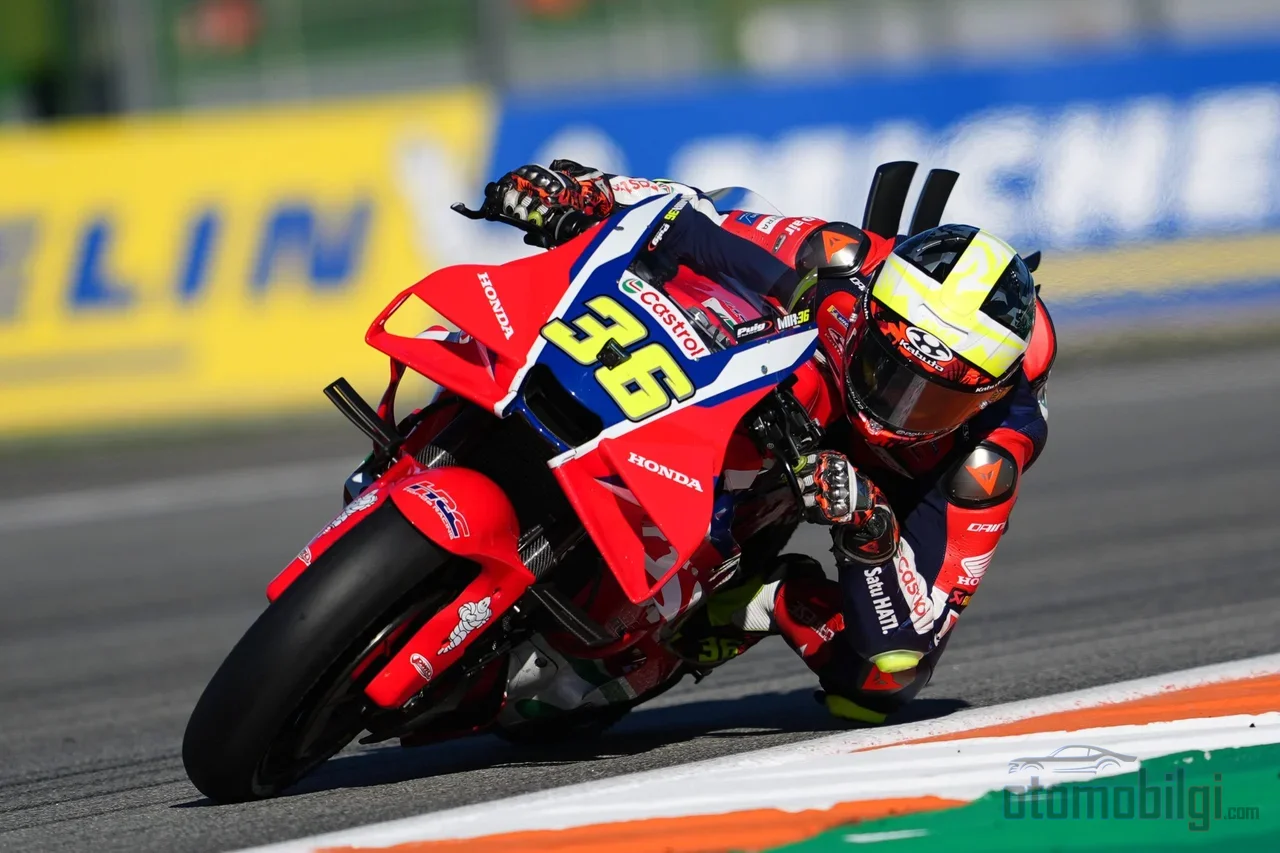
Think of the championship like an apartment building: the ground floor is Moto3, the first floor is Moto2, and the penthouse is MotoGP. Everyone races over the same weekend, on the same track, at almost the same times, but the machines of the three classes are completely different from each other. Moto3, as the name suggests, is the lightweight class; Moto2 is the middle tier; and MotoGP is the premier class where prototype monsters live.
When you put the rungs of the ladder side by side, the difference becomes clear:
| Feature | Moto3 | Moto2 | MotoGP |
|---|---|---|---|
| Engine | 250cc single-cylinder prototype | 765cc three-cylinder Triumph (same for everyone) | 1000cc four-cylinder prototype |
| Power | 60 hp | 138 hp | ~250 hp |
| Minimum weight | 152 kg (motorcycle + rider) | 217 kg (motorcycle + rider) | 157 kg (excluding rider) |
| Top speed | 245 km/h | 301.8 km/h | 366.1 km/h |
| Tires | Pirelli | Pirelli | Michelin |
| Fuel | Standard class rules | Standard class rules | Maximum 22 liters, season-long 7-engine limit |
There is one detail you should note: the chassis is a prototype in all three classes, meaning each team designs its own frame. The engines are prototypes at both ends; only in Moto2 does everyone use the standard engine supplied by Triumph. So in Moto2 there is no engine advantage; everything is based on riding skill and chassis setup. It is somewhat like a tournament where everyone races with the same keyboard.
Each tier has a different game
In Moto3, since power is low, the race weaves together like a slithering pack. Because of narrow tires, low horsepower, and tight groups, slipstream, meaning accelerating by staying in the tow of the vehicle ahead, is worth its weight in gold. Carrying corner speed without losing it and picking the right spot out of the final corner is the essence of the job.
Moving up to Moto2 brings a big jump in horsepower and weight; here, tire management and race strategy come to the fore. In MotoGP, managing 250 hp without sliding the rear, the stopping power of carbon brakes, and speeds above 360 km/h are decisive. Technologies such as winglets, holeshot and ride-height devices, and the seamless gearbox are also exclusive to this class.
How Do the Points System and Race Weekend Work?
In the full-distance race on Sunday, the top 15 riders score points: 25, 20, 16, 13, 11, 10, 9, 8, 7, 6, 5, 4, 3, 2, 1. That means the gap between winning and finishing sixth is huge, which is why chasing the podium in every race is a must. A rider can collect a maximum of 37 points from a single Grand Prix, because the MotoGP class also has a Sprint on Saturday: a short race of roughly half distance, around 20 minutes. In the Sprint, the top 9 score points: 12, 9, 7, 6, 5, 4, 3, 2, 1. A critical detail: the Sprint exists only in MotoGP; Moto2 and Moto3 riders make do with a single race.
For those wondering about the weekend schedule, here it is: Friday morning FP1, Friday afternoon a Practice session that determines entry rights to Q2. The top 10 riders go straight to Q2; the rest race in Q1 and the two fastest advance to Q2. Saturday morning brings FP2 and qualifying, followed by the Sprint in the afternoon. On Sunday there is a warm-up and the main race. Q2 determines the first 12 grid slots including pole, while Q1 decides from 13th place back. Moreover, in both years the championship was decided at the final race: in 2023 Bagnaia won the title by a 39-point margin, and in 2024 Martin claimed it by just 10 points. That is exactly why every point, even a single Sprint point, can turn into gold at the end of the season.
The Road to the Top: Age Rules and Rider Development
So where does a young rider step onto this ladder? The standard route is through national and junior championships, usually entering Moto3 via the Road to MotoGP program, then Moto2, and finally MotoGP. For new riders, the minimum age in all three classes is now 18; but a door has been left open in Moto3: riders who guarantee a top-three finish in the Red Bull MotoGP Rookies Cup or FIM JuniorGP can race in Moto3 from age 17. There is also an upper age limit of 28 in Moto3, meaning this class truly is a youth league. In Moto2, there is a 17-year-old age exception for the FIM European Moto2 champion.
One figure sums up just how grueling this system is: at the start of the season, the 2024 MotoGP grid featured 13 world champions, a combined 26 GP championships, and 347 GP wins. All 22 riders had at least one GP victory to their name. Everyone who reached the top is a name that had won repeatedly on the lower rungs.
The fast climbers and the exception who skipped the ladder
The legends of the championship climbed this ladder at incredible speed. After winning the 125cc title in 1997 and the 250cc title in 1999, Valentino Rossi moved up to the premier class and won 7 more championships. Marc Márquez's rise, on the other hand, was record-breaking: he won the 125cc title in 2010, Moto2 in 2012, and then the MotoGP championship in his rookie season in 2013; on top of that, he added six more premier class titles. Francesco Bagnaia raced four seasons in Moto3, became Moto2 champion in 2018, and then ascended the MotoGP throne in 2022 and 2023. Jorge Martin, after his 2018 Moto3 championship, completed two Moto2 seasons and became MotoGP champion in 2024. Johann Zarco won back-to-back Moto2 championships (2015, 2016); Maverick Viñales had finished third in Moto2 in 2014.
So does everyone follow this ladder? No. Jack Miller was the exception, jumping straight from Moto3 to MotoGP at the end of 2014; since then he has collected 23 podiums and 4 GP wins. So if the contract is right, the ladder can let you skip a rung.
Pedro Acosta: The Star Journey of the Current Generation
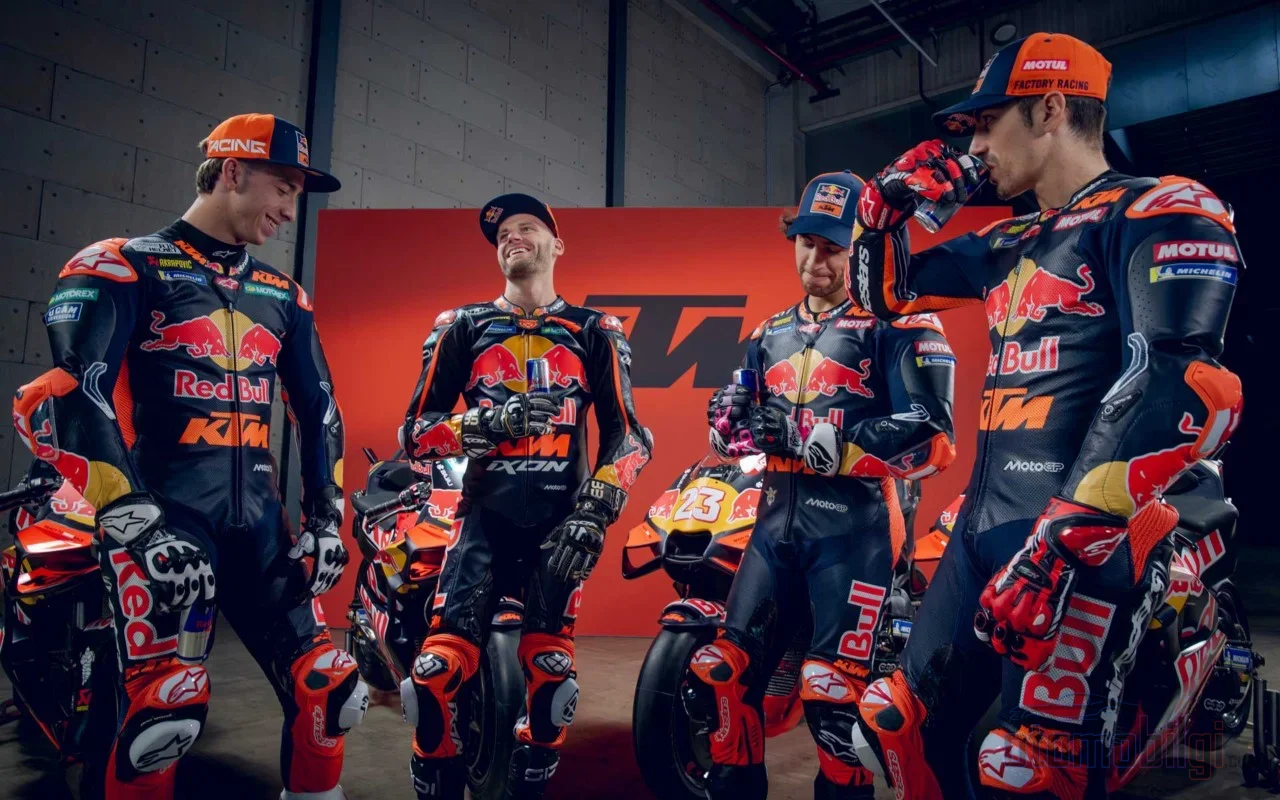
The brightest current example of the ladder is Pedro Acosta. The Spanish rider, born on May 25, 2004, won Moto3 in 2021 during his rookie season, reached the Moto2 championship in 2023, and was named Rookie of the Year in MotoGP in 2024. He is currently racing in Red Bull KTM Factory Racing colors. And his future is now clear: Ducati officially announced that Acosta has signed with the Ducati Lenovo Team until 2028, as Marc Márquez's teammate. Meanwhile, heated moments are happening on track too; in the Sprint on February 28, 2026, Márquez and Acosta had a controversial contact at turn 12. The battle at the top floor gets hotter every week.
The big change of 2027
The premier class is changing from head to toe: in 2027, engine capacity drops from 1000cc to 850cc, the number of engines per season falls from 7 to 6, a move to 100% non-fossil fuel is made, the fuel tank shrinks from 22 liters to 20 liters, and aerodynamic control tightens. The transition from Moto2 to MotoGP may also get easier; according to Diogo Moreira, after 2027, thanks to the same tires and smaller motorcycles, the jump will be more attainable than ever. There is also a rule change: wild cards, meaning one-off guest entries outside the championship, will be banned in the MotoGP class starting from the 2027 season; they will continue in Moto2 and Moto3. This decision also sparked debate in the paddock, and honestly with good reasons.
Türkiye's Ladder Marker: Deniz Öncü
The name through which we can follow this ladder most closely from Türkiye is Deniz Öncü. Born in Alanya (July 26, 2003) and measuring 172 cm and 62 kg, Öncü raced in the Asia Talent Cup in 2016-2017 alongside his twin Can Öncü. After spending four seasons in Moto3, he moved up to Moto2 in 2025 with Red Bull KTM Ajo. He had stated his goal clearly at the time:
My goal is the Moto2 championship in 2025, and MotoGP in 2026.
Reality, of course, does not move as fast as goals: in 2026, Öncü is racing in Moto2 on a Boscoscuro chassis for the Marc VDS team; in previous years he had competed in both Moto3 and Moto2 with KTM-based teams. So he is still on the middle floor of the ladder, climbing toward the top. The road itself feels familiar too: thanks to the same tires and similar dimensions, a smoother transition from Moto2 to MotoGP after 2027 could open a real window of opportunity for names like Öncü.
And there is already proof of the top in the family tree: Can Öncü won his very first Moto3 race at the 2018 Valencia GP, beating Jorge Martin and John McPhee, and went down in history as the youngest rider ever to win a GP. He is also the first Turkish rider to win in Moto3. In this family, climbing the ladder seems like destiny, don't you think?
Is the Ladder Just One Path, or Separate Championships?
We should not pass over one final discussion. Viewing Moto3 and Moto2 as merely a "feeder league" is a perspective not everyone accepts. Many fans argue that these two classes should be racing classes of equal status; after all, both in terms of technology and racing quality, they are full-fledged championships in their own right. A fair point, in my view, is this: the steps are different, but the prize for all of them is the same, a world championship. The 2026 Moto3 season is registered as the lightweight class of the 78th FIM Road Racing World Championship. In other words, the name that wins on the ground floor also carries the title of world champion; only the engine is smaller.
In short: the road to MotoGP is a building with three doors. On the ground floor there is tactics and courage, in the middle there is chassis mastery and strategy, and on the roof there is taming 250 hp. No matter how quickly anyone passes through each floor, the name that wins at every step truly earns it. When the next Turkish name reaches the top floor, we will remember this page, if you ask me.
Sources
- What is the Difference Between MotoGP™, Moto2™ and Moto3™? - MotoGP.com
- What are the MotoGP™ Rules? – A complete overview - MotoGP.com
- What is the MotoGP™ Points System? – all you need to know - MotoGP.com
- 2025 MotoGP, Moto2 & Moto3 Regulations - FIM
- Road to MotoGP - MotoGP.com
- Pedro Acosta will be Marc Márquez's new teammate - Ducati.com
- MotoGP eliminates wildcard riders from 2027 season - Motorsport.com
- Diogo Moreira explains the Moto2-to-MotoGP jump - Autocar India
- Who is Deniz Öncü - Red Bull Türkiye
- Deniz Öncü: My goal is the 2025 Moto2 championship, then MotoGP in 2026 - Hürriyet
- Historic Achievement from Can Öncü - TMF