From Mugello to Phillip Island: MotoGP's Iconic Circuits
Share This Page
When we talk about MotoGP's iconic circuits, the meaning is simple: the legendary tracks on the championship calendar, each one writing a completely different race story. While Mugello's 1,141-meter main straight meets the brake discs within seconds, Phillip Island shreds tires like sand by the seaside, Sachsenring's shortness and Jerez's technical texture each demand a different strategy. In this guide, we look at each circuit's speed profile, history, and what they mean through the riders' eyes.
Highlights
- Mugello: 5.245 km, 15 corners and a 1.141 m long main straight.
- The highest speed recorded at Mugello exceeded 366 km/h; record attempts hit the ceiling here.
- Phillip Island: requires special rear tires due to its extremely abrasive asphalt surface.
- Sachsenring, at just 3.67 km , is one of the shortest circuits on the calendar.
- The MotoGP Turkish Grand Prix was held at Istanbul Park between 2005 and 2007.
Why Does the Circuit Matter? Same Motorcycle, Completely Different Race
Think of it this way: you can use the same phone both for playing games and listening to music, but the settings change, right? In MotoGP, the motorcycle is always a prototype, but the team's preparation according to the circuit changes completely. Suspension settings, brake disc size, tire compound... everything is set up according to the surface, elevation changes, and corner types. On circuits with a long straight and a tight corner at the end of it, larger brake discs become essential.
That's why every stop on the calendar has its own personality. One circuit demands power from you while another tests tire management; a third determines the race's fate with its overtaking spots. This is what we call a championship: the sum of these different venues. Now let's look at each of the most characteristic stops one by one.
Mugello: The Italian Stage of Speed and Passion
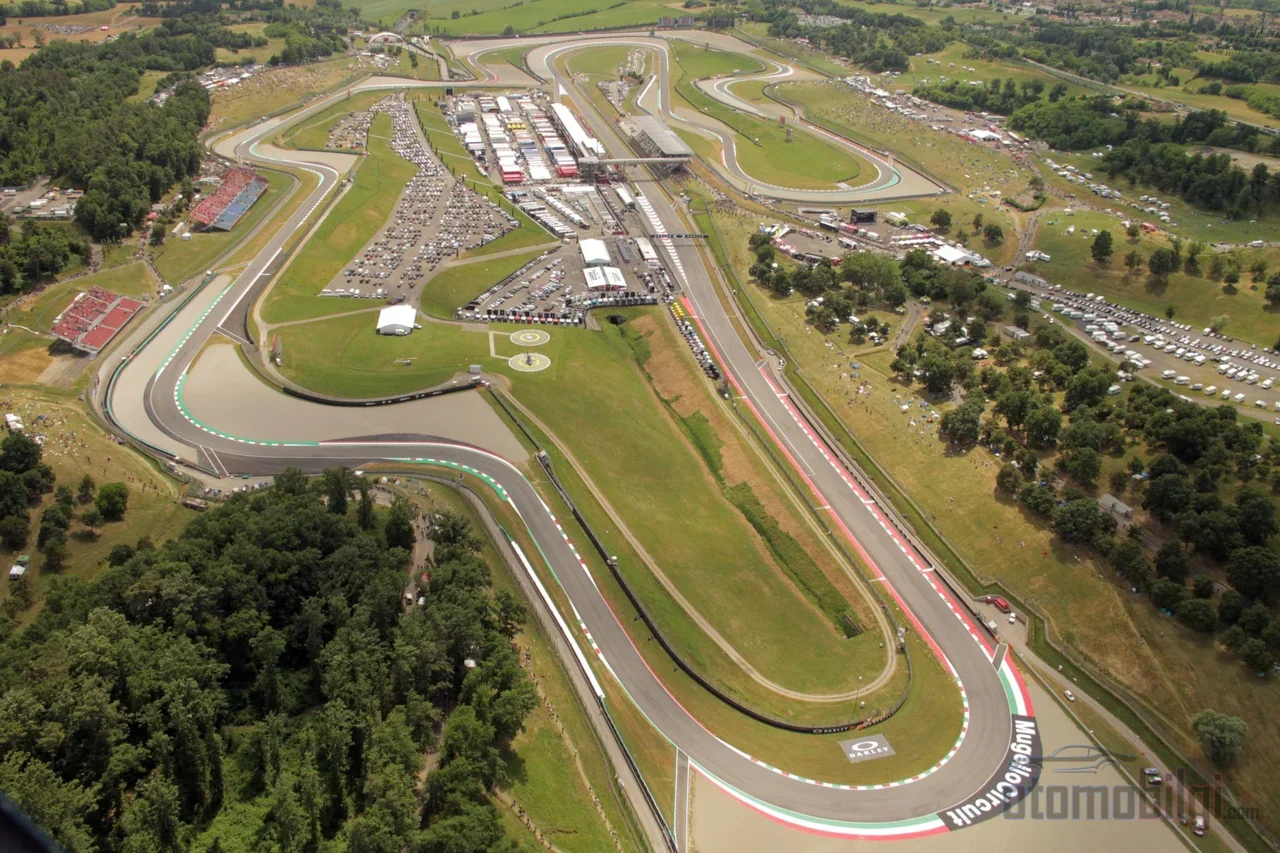
In the heart of Tuscany, 30 km northeast of Florence, the Autodromo Internazionale del Mugello is tailor-made for those who want to see how fast their heart beats. It is 5.245 km long, has 15 corners (9 right, 6 left) and its main straight is exactly 1,141 meters . On this straight, the motorcycles exceed
330 km/h; it is also used as an overtaking spot, meaning nobody hugs the rider in front here, they go for the pass! The circuit's character comes from its mix: slow and fast corners, wide sweeps, and the challenging off-camber corners that tilt outward. It is regarded as one of the most demanding circuits for riders and engineers; horsepower genuinely makes a difference here. The grandstand capacity is 50,000
and the enthusiasm of the Italian fans is on another level - imagine racing in the middle of an orange sea.
Historical Depth and Records The circuit's story actually goes back to the 1920s; in those years, races were held on public roads here, including the legendary 66.2 km course. After an accident in 1970, road racing came to an end and the circuit opened as a permanent facility in 1974. The first MotoGP event was held in 1976, and it has been a regular stop on the calendar since 1991. Since 1988, the circuit's owner has been another legend: Scuderia Ferrari
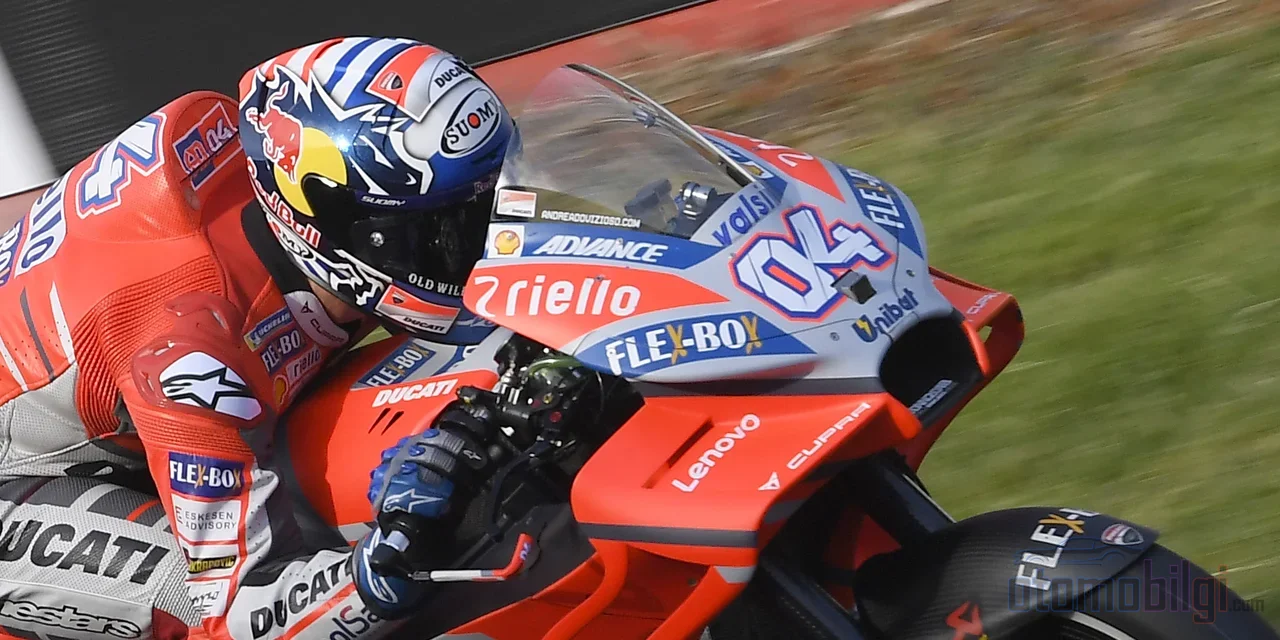
When it comes to speed records, Mugello is like a laboratory. In the 2016 race, a Ducati 354.9 km/h was recorded; at that time, it was the highest speed ever measured in a Grand Prix. In those years, Dovizioso also 356.7 km/h set the highest speed of the era here. In recent years, the limit has been pushed even higher: MotoGP motorcycles at Mugello 366 km/h have exceeded, signing new upper limits. Talking about these speeds honestly gives you goosebumps.
The name most closely associated with the soul of the track is undoubtedly Valentino Rossi: he took 7 wins in the MotoGP class at Mugello. Just imagine the days when the grandstands turned into a sea of yellow - that's exactly why some people call it "Mugello" rather than the "Italian GP". If you find yourself saying "I wish I could see it in person one day", I'm on the same boat.
Phillip Island: Tire-Burning Flow by the Sea
On Australia's southern coast, the seaside Phillip Island is a whole different beast. To sum up the track's character in one sentence: fast, flowing, a bit bumpy and very windy. The corners connect to each other with such a natural rhythm that riders practically dance with the track. It's also worth noting that it's a left-hand corner heavy layout - this detail directly affects tire selection.
The track asphalt, however, is Phillip Island's troublesome side. The resurfaced asphalt offers much more grip than before, contributing to record-breaking laps; but in return, it is extremely abrasive. In other words, tires wear out much faster than normal. That's why tire manufacturers developed special rear tires for this track. An example from history: in 2013, the tire supplier required all riders to use harder rear tires in the Sunday race. The result? A motorcycle that arrived on soft tires turned into a burst balloon by the end of the race.
The lesson of Phillip Island in terms of race strategy is this: durability matters more than grip. Whoever manages tire wear smartly moves to the front in the final laps of the race. It is often said that teams with high cornering speeds also have an advantage on this track - fast corners showcase their equipment. If it were you, would you save your tires for the final laps or fight for position?
Sachsenring and Jerez: Shortness or Technicality?
Germany's Sachsenring is one of the shortest tracks on the calendar: only 3.67 km. Short lap lengths mean that the tenths lost in every corner act like a magnifying glass. The margin for error here is extremely narrow; if you get a corner wrong, you won't find a long straight afterward to make up for it.
Jerez (Circuito de Jerez - Ángel Nieto), on the other hand, offers the opposite balance: its 4.423 m -ish length features a blend of demanding corners and short straights. Motorcycles use the standard layout; the chicane named after Ayrton Senna is only active in car tests and races. The track is located near the city of Jerez de la Frontera in Spain, 90 km to its south. Thanks to its fluid and technical layout, it is described as "one of the most attractive and technical circuits." You can think of it as the heart of the European leg raced close to the season opener: whoever is good here shows everyone who takes their championship ambitions seriously.
| Circuit | Length | Corners | Character |
|---|---|---|---|
| Mugello | 5.245 km | 15 | Long straight, high speed, power-focused |
| Phillip Island | Seaside, fluid | Left-hand corner dominant | Fast corners, abrasive asphalt |
| Sachsenring | 3.67 km | Short layout | Short lap, narrow margin for error |
| Jerez | 4.423 m | Technical blend | Fluid, short straights, technical |
Istanbul Park: Türkiye's MotoGP Legacy
Now let's get to the most emotional part. The MotoGP Türkiye Grand Prix in 2005, 2006 and 2007 was raced at Istanbul Park and has not appeared on the series' calendar since then. The circuit is a Hermann Tilke design; 5.338 km long with 14 corners. It hosted its first race in 2005, and the facility, whose foundations were laid in 2003, was built as a circuit meeting international standards.
Istanbul Park met other categories in later years too: WSBK ran a one-off race here in 2013. Years later the circuit was completely resurfaced, and the Türkiye GP set its course back toward the motorsport calendar. On the F1 side, the Türkiye GP returned to the calendar from 2027 for a period of 5 years; this is a clear sign that the circuit has invested in maintenance and the future. As for MotoGP, there are claims circulating on social media about a return to the calendar; however, there is no official announcement yet. So there is hope, but no confirmation - let's be honest, we shouldn't get our fingers too tired over this.
Tire Choice and Team Strategy: How to Read a Circuit?
These differences between circuits shape the most critical decision of the race weekend: tire choice. In MotoGP, the choice is made among soft, medium and hard compounds; depending on weather conditions, the balance between slicks (dry tires) and rain tires also changes. In short: if the circuit is abrasive (hello Phillip Island), even though the soft compound looks tempting, the final laps can burn you. On a circuit with a long straight, brake discs and power settings come to the fore.
Overtaking points are also directly related to the venue. Corners are usually where overtakes happen; single-line corners after a straight offer the driver with a braking advantage the chance for a block pass. Let's remember Mugello's 1.141-meter straight for this: everyone who makes it there earns the right to attempt a pass at the final corner. This is exactly how what we call the workings of the championship becomes concrete at the venue level.
Which Circuit Is the Best? Our Favorite, in Short
I don't know if giving a definitive answer to this question would be honest, but what is certain is this: track rankings are extremely subjective. In community discussions, Phillip Island is frequently cited as the "best track"; its scenery, flow and abundance of overtaking opportunities are the reason. One approach summarizes it like this: Mugello stands out for speed, Phillip Island for scenery and flow, and Assen for its long track and overtaking. There are also safety discussions - Mugello has heard both great praise and criticism; Mark Webber praised the track, while Vitaly Petrov at one point described it as "unsafe".
Which one is my favorite? On that straight at Mugello, imagine 366 km/h the image of a motorcycle diving into the corner at that speed - and if you can still tell me Phillip Island, I respect that. But my heart beats in the Tuscan hills, in the middle of that yellow sea. Which track would you choose - speed, flow, or passion? See you in the comments!
Sources
- Mugello Circuit - Wikipedia
- Gran Premio d'Italia - track data
- Mugello circuit: a masterpiece of technique and adrenaline
- Italian GP (Mugello): It all started at Mugello - Ducati
- New fastest ever MotoGP top speed record - MotoGP
- Phillip Island: the pros and cons of racing by the sea
- Pirelli: the new asphalt at Phillip Island is record-breaking but extremely abrasive
- Michelin produce 2 special Phillip Island MotoGP rears
- 2013 MotoGP: New Asphalt at Philip Island Demands Harder Tires
- Phillip Island MotoGP Preview - MotoMatters
- How does MotoGP tyre selection work? - motogp.com
- Jerez-Angel Nieto Circuit - motogpSpain
- Circuito de Jerez - Wikipedia
- Türkiye motorcycle Grand Prix - Turkish Wikipedia
- Istanbul Park - Formula One History
- TOSFED Istanbul Park
- 2027 Formula 1 Turkish Grand Prix - TOSFED