How Does a MotoGP Weekend Unfold?
Share This Page
A MotoGP race weekend starts on Friday morning with the first practice session and concludes with the main race run at 14:00 local time on Sunday: two days of practice, two 15-minute qualifying sessions (Q1 and Q2), a Sprint race at 15:00 on Saturday, and finally the grand finale. On this page, you will follow from start to finish what each session means, how points are distributed, and how tire and engine decisions shape the week.
Highlights
- Over a weekend, a rider can collect a maximum of 37 points : 12 from the Sprint, 25 from the main race.
- In the 60-minute Practice session on Friday afternoon, the first 10 riders advance directly to Q2.
- Each of Q1 and Q2 lasts 15 minutes ; only two riders from Q1 move on to Q2.
- In 2026, each rider gets 22 slick tires per Grand Prix: 10 front, 12 rear.
- Throughout the season, each rider is allocated only 7 engines .
What sessions make up a MotoGP race weekend?
If you are sitting in front of the screen for the first time, the format may seem confusing at first glance, but the logic is actually quite simple: over three days, they first learn, then qualify, and finally hand out points. A Grand Prix weekend in the MotoGP class goes like this: two practice sessions on Friday, a short practice session on Saturday morning plus qualifying and the Sprint, warm-up on Sunday morning and then the main race. Moreover, the sessions of the Moto3, Moto2 and MotoGP classes are interspersed throughout the day, meaning the track is almost never empty.
An important detail: the grid for both the Sprint and the main race is determined by a single qualifying process. So the answer to the question "Does the Sprint have its own qualifying?" is still no for 2026; but this will change fundamentally in 2027, more on that shortly.
Friday: a learning day, but no session goes to waste
Everything starts on Friday morning with the 45-minute FP1 . Riders take to the track, try tires and setups, and gather data for the team. In the afternoon, things get serious: the 60-minute timed Practice session comes into play, and the result of this session directly affects Saturday. Because the ten fastest riders in Practice advance directly to Q2, the raw flying-lap stage of qualifying; everyone else has to start from Q1.
That is why Friday afternoon is not "just practice." If you ask your favorite rider "Why can't everyone find their pace on Friday?", the answer is usually this: tires and fuel loads. On Friday evening, the team begins building the race strategy using the data collected.
The 105% threshold: even getting on track has a condition
To take part in qualifying, in any of FP1, Practice or FP2 you must beat the 105% threshold compared to the fastest rider of the session. In other words, on a track where the fastest can lap in 1:30, those remaining above 1:34.5 are left out of the Q1/Q2 door. This rule exists to protect the lower limit of competitiveness; it is also critical for safety in motorsport.
How do Q1 and Q2 work, and why is it confusing?
On Saturday morning, first a 30-minute short practice session (FP2) is held, then the qualifying excitement begins. Each of Q1 and Q2 15 minutes long. The two fastest riders in Q1 move up to Q2; Q2 then sets the first 12 positions of the grid. Those who fail to advance from Q1 line up from 13th place onward. A single qualifying applies to both the Sprint and the Sunday race, remember.
So why is it so confusing? Because the group of ten that "advances directly to Q2" comes from Friday Practice; in other words, who enters Saturday through which gate is actually determined the day before. Viewers accustomed to F1's three-stage (Q1-Q2-Q3) elimination system used since 2006 don't take to MotoGP's two-stage, Friday-based structure at first. Let me make an analogy: Friday Practice is the final rehearsal before the exam; those who make the top 10 there go straight to the final exam (Q2), while the others first take the make-up exam (Q1). And in Q1, the room is very tight: only two tickets are handed out in 15 minutes.
That famous "tire gamble" seen in qualifying is also at work here. In Q1/Q2, riders go out on soft tires for single-lap speed, and just like a single chance in an exam, if rain suddenly hits, the strategy can reverse within seconds. In 2027, the Sprint will get its own 15-minute qualifying on Friday; a GP Q1 with all riders participating and a GP Q2 with the top 12 advancing is planned for the main race. In other words, a weekend streamlined to just two sessions awaits us on Saturday.
What is the Sprint race and how has it changed the championship?
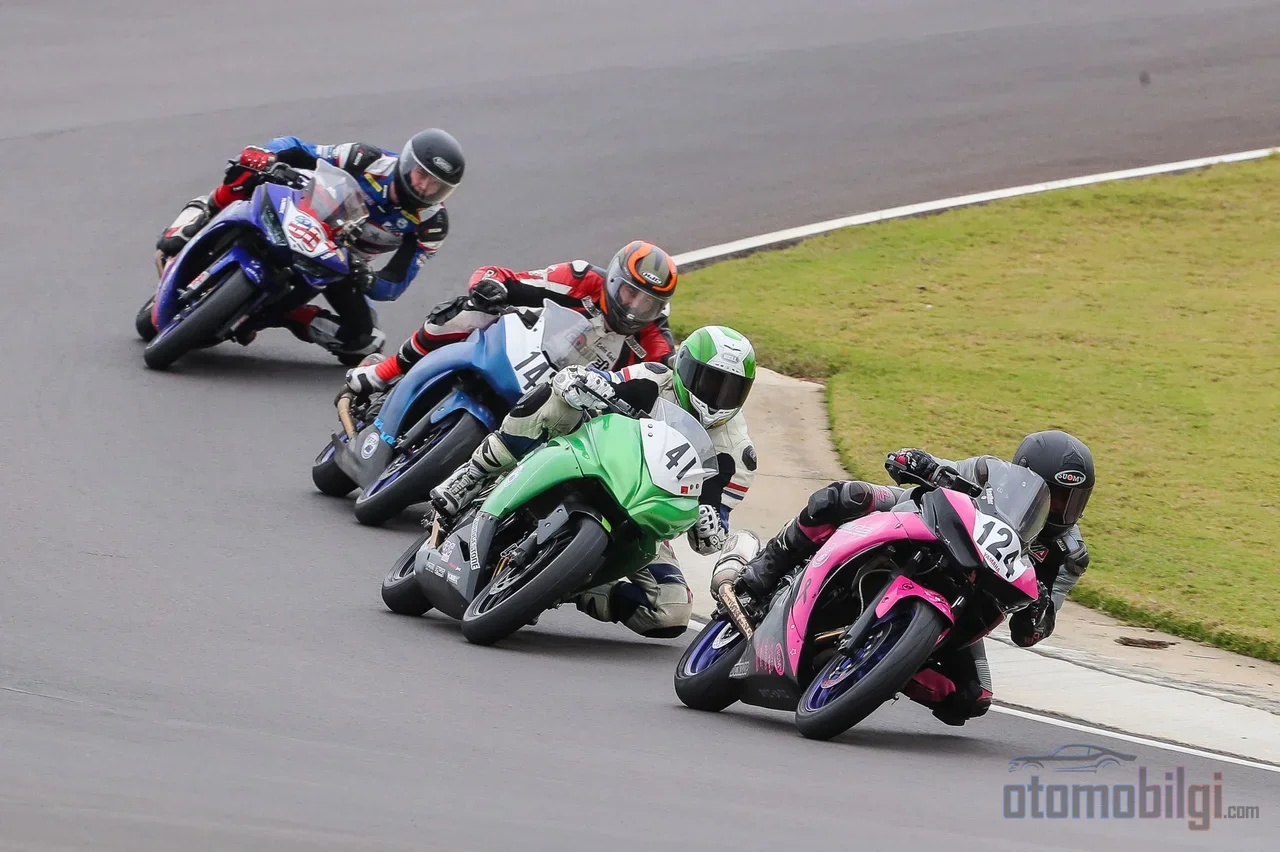
The Sprint was introduced in the 2023 season and completely changed the rhythm of the MotoGP weekend. It is run on Saturday at 15:00, at roughly half the distance of the main race (about 50% of the lap count) and lasts an average of 20 minutes. Short, hot, and closely fought. The fuel limit is also different: in the Sprint it's 12 liters, in the main race 22 liters. The track limits rule has also been toughened: in the Sprint there's a penalty after 3 violations, while in the Sunday race that number is 5.
The points table is separate for the two races. In the main race, the top 15 riders score points; in the Sprint, only the top 9:
| Position | Race points | Sprint points |
|---|---|---|
| 1. | 25 | 12 |
| 2. | 20 | 9 |
| 3. | 16 | 7 |
| 9. | 4 | 1 |
| 15. | 1 | - |
A rider can collect a maximum of 37 points from a single Grand Prix (12 + 25). However, there is an important nuance: Sprint wins do not count as Grand Prix wins and are not used as a tie-break criterion in the event of a points tie. The finest example of how the Sprint has shaped the championship is the 2024 season: Jorge Martin won only 3 races against Bagnaia's 11 race wins; but he crushed the Saturdays. While both riders took 7 Sprint wins, Martin made the podium 16 times and closed out the Saturdays a full 43 points ahead of Bagnaia; Bagnaia's gap on the Sundays was 33 points, and Martin took the championship by a margin of 10 points. The scene was the same in the 2023 Valencia finale: Martin won the Sprint to cut the gap to 14 points, but Bagnaia won the Sunday race and became champion.
What I want to say is this: the championship is no longer won only on Sundays. If you turn on the screen on Saturday afternoon before settling onto the couch, you'll see with your own eyes that the fate of the championship has changed. If it were you, would you want to miss the Sprint?
Sunday flow: what is the Warm Up for?
Sunday morning starts with a 10-minute Warm Up session. This is the final tuning window before the race: the rider wakes up, the engine and tire combination is tested one last time in race conditions, and if there's any lingering doubt, the team makes the final adjustment. Then comes the long wait and finally the traditional time: the main race at 14:00 local time.
A change is on the way here too: from 2027 onward, the separate Sunday morning MotoGP Warm Up session will be removed; instead, the pit lane will be open for 10 minutes before the Grand Prix. So the new generation of viewers will encounter a different rhythm on Sunday mornings as well.
Tire and engine rules: decisions that shape the week in advance
Do you think MotoGP races are won on the track? Partly yes, but the real trump cards are discussed in the pit box on Friday. In the 2026 season, each MotoGP rider is given a base allocation per Grand Prix of 22 slick tires : 10 front, 12 rear. For rain tires, there is a standard allocation of 8 tires for practice, Warm Up and the race. The distribution of tires within the specification is done randomly by IRTA representatives; that is, who gets which tire also depends on chance, and no one gets to choose.
Imagine how tight this quota is: planning how to consume your tires over 3 days, having to do laps in the lower classes to collect data with the tires. This is exactly what we call "tyre management": the rider races at a maximum pace pre-determined with the pit crew and must reach the finish without wearing out the tire. Just as you lower your phone's brightness to make the battery last until evening, the rider learns to spread the life of the tire over 25 laps.
Engines: only 7 units for the entire season
MotoGP engines are prototypes; that is, they have nothing to do with any motorcycle sold in stores. The technical rules are strict too: minimum weight 157 kg, motorcycles can carry a maximum of 22 liters of fuel, and only 7 engines are allocated per rider for the season. Restrictions on in-season development also apply. Wildcard riders are granted a separate allocation of 3 engines. Moreover, 2026 is the final season for the 1000cc engines and the current tire supply arrangement; in 2027, the switch will be made to 850cc regulations. So the era you are watching right now is the closing season of an era. Let's also add a historical note: in 2022, the engine quota was raised to 8 (10 for exempt manufacturers); today's current quota is 7.
Looking from Türkiye: schedules and broadcast rhythm
If you're watching from Türkiye, the time difference works in your favor: session times are listed converted to local time as TRT (GMT+3). For example, at a European Grand Prix, FP2 runs at 10:10-10:40 TRT, Q1 at 10:50-11:05, Q2 at 11:15-11:30, and the Sprint can start at 12:00. So from Friday to Sunday up to the main race, you can follow it with midday schedules; these are perfect hours to get up, grab a coffee, and settle in front of the screen.
Now you can read the race weekend line by line: when you see "Practice" on screen, you know the Friday Q2 ticket has been handed out; when you see "Q1", you know the positions from 13th on back are being decided; when you see "Sprint", you see the Saturday closer worth 12 points, and at 14:00 the grand finale worth 25 points. Shall we try it at the next Grand Prix? After watching the Sprint, you'll understand the story of Sunday's race much better.
Sources
- What Does a MotoGP Race Weekend Look Like?
- How Does MotoGP™ Qualifying Work? – The Complete Guide
- How Does a MotoGP™ Sprint Race Work?
- What is the MotoGP™ Points System? – All You Need to Know
- How Does MotoGP™ Tyre Selection Work? – The Ultimate Guide
- What are the MotoGP™ Rules? – A Complete Overview
- MotoGP Qualifying Explained – Updated for the 2026 Season
- MotoGP Tyres – All You Need to Know About Them for 2026
- MotoGP to Change Weekend Format from 2027 with Separate Qualifying Sessions
- 2026 MotoGP World Championship
- 2026 Jerez MotoGP Race: Schedule and Broadcast Information