How Do Qualifying Sessions and the Q1-Q2 System Work in MotoGP?
Share This Page
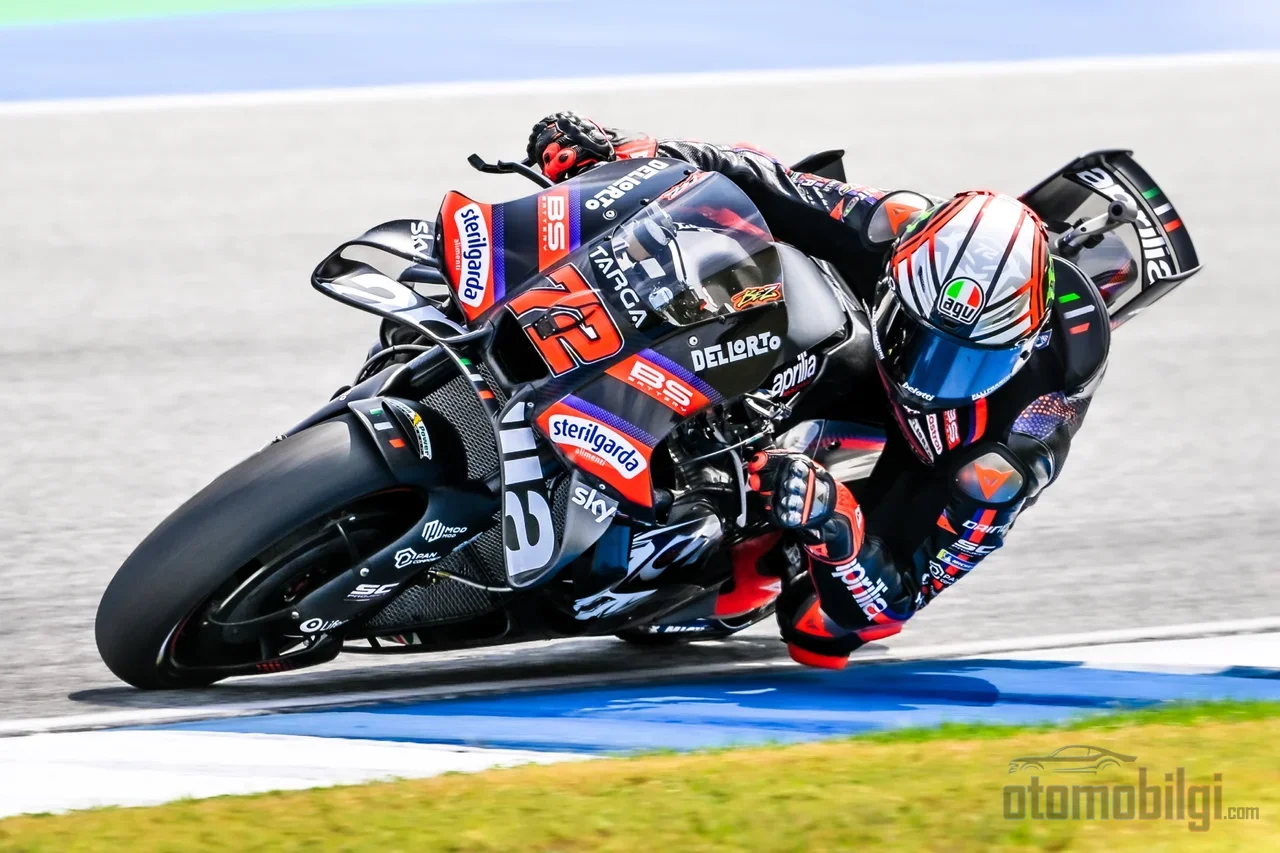
In MotoGP, qualifying consists of two sessions run on Saturday morning, each lasting 15 minutes: Q1 and Q2. Riders who finish in the top 10 in Friday Practice go straight to Q2; the others race in Q1, and the two fastest riders from Q1 advance to Q2. At the end of Q2, the fastest name takes pole position, and the grid for both the Sprint and Sunday's race is set by this result.
Highlights
- Qualifying consists of two 15-minute sessions: Q1 and Q2
- In Friday Practice, the top 10 advance directly to Q2
- Only the fastest 2 riders from Q1 can move up to Q2
- In 2024, every race was won by those starting from the top three
- Per Grand Prix, riders are allocated 22 slick tires are allocated
Weekend Flow: What Happens Before Qualifying?
You can think of a MotoGP weekend like an exam week. You start on Friday morning with FP1 - for 45 minutes riders get to know the track and try setups. But note: FP1 has no effect whatsoever on qualifying. This session is purely a warm-up, a trial run.
The real critical moment comes on Friday afternoon with the 60-minute Practice session. Because this session is timed, and the riders who manage to finish in the top 10 here advance directly to Q2 on Saturday morning. So the week's real first elimination is actually not Saturday, but Friday! Every tenth of a second gained here either takes you to the next round of qualifying or puts you into another elimination round.
On Saturday morning, a 30-minute FP2 is run first. Then come Q1 and Q2; each is 15 minutes. At the end of these sessions, the starting grid for both Saturday afternoon's Sprint and Sunday's GP is finalized. Since the Sprint was added to the calendar in 2023, qualifying has become doubly important because it determines not one race but two at once. After the day's action, a short warm-up on Sunday morning and then the big race.
How Does Q1 Work, and Who Starts Where?
Q1 is the last chance for the riders who failed to make the top 10 in Friday Practice. The two riders who set the fastest laps here earn the right to move up to Q2 - everyone else is out. The rule is brutal: the rider who finishes third in Q1 starts 13th, the fourth starts 14th; the others line up from 15th position downward.
The two riders who advance to Q2 also join the 12-rider final field. At the end of Q2, the fastest rider takes pole position, the second and third complete the front row; the remaining nine riders fill positions 4 through 12. That's exactly why Q1 is one of the least talked about yet most exciting 15-minute sessions of the weekend. Big names, including championship leaders, can drop into Q1 if they have a bad Friday, and getting out of it is never easy.
Yet the format has a beautiful side to it: even the rider with the slowest time on Friday can theoretically take pole. How? By winning Q1 first, then winning Q2. Quite a few riders have pulled off this feat: Luca Marini, Alex Marquez, Fabio Di Giannantonio, Francesco Bagnaia and Maverick Viñales came out of Q1 and took pole. Marc Marquez and Jorge Martin have managed it twice.
The 105% Rule: The Key to the Gate
There is one prerequisite for joining the grid: the rider must have completed at least 105% of the fastest time of that session in FP1, Practice, or FP2. A rider who fails to do this cannot start from the grid; if the race stewards approve, they start the race from the very back of the grid, that is, right after the last grid position. Riders who could not set a representative time due to a crash or a mechanical failure can also start from the back of the grid.
There is also a flexibility window for this rule: the 105% threshold can only be relaxed for contracted riders in cases of force majeure. Or think of the opposite: what if no practice sessions are run at all? If Friday Practice is cancelled, the Saturday morning session determines who advances to Q2; if that is cancelled too, FP1 does. If none are run, Race Direction decides on the procedure.
There is also a timing detail: grid positions are finalized about 10 minutes after Q2 ends. After this point, no appeals or revisions can be made for violations discovered later. In other words, once qualifying ends, fate is sealed.
Why Is Pole Position So Valuable?
You might ask: "Is starting a few meters ahead really that important?" The answer: absolutely yes. In motorcycle racing there is something called the start of the race: the holeshot - meaning entering the first corner in the lead. A rider starting from the front row significantly increases their chances of a holeshot, has fewer overtakes to make in the opening laps, and this means saving both energy and tire. Think of it like sitting in the front row of an exam: nobody even raises a hand to block you.
The numbers confirm this in striking fashion. In 2024, riders starting all MotoGP races from positions 1 through 9 - that is, from the first three rows - won. In 2023, only 2 wins came from outside the top 10, and in 2022, only 1. For the next example, you have to go back to 2016. In short, in the modern MotoGP era, starting from the front row has become almost a prerequisite for winning the race. With the addition of the Sprint, which determines the grid for both races, the value of pole has increased even more - an advantage that is practically like half a championship.
Tires, Tow, and Qualifying Tactics
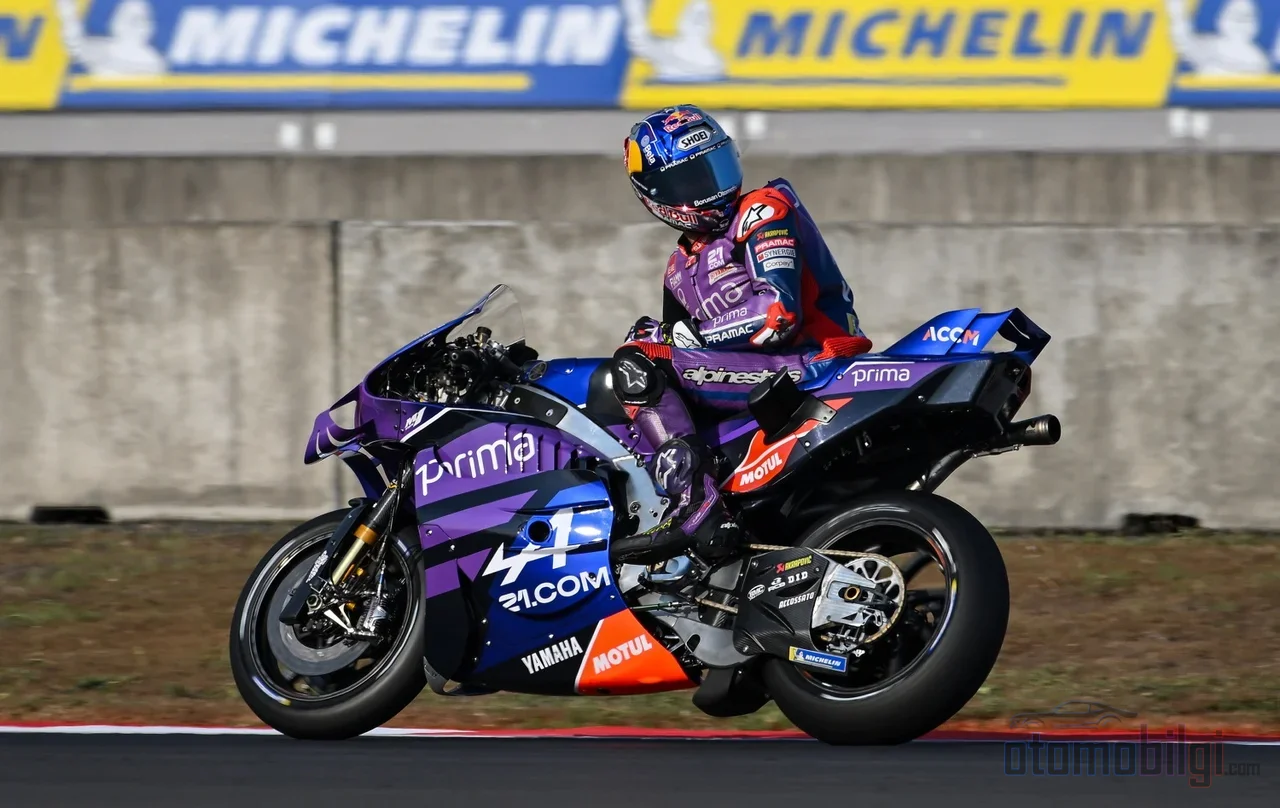
Qualifying sessions are the 15 minutes of motorsport under the sharpest time pressure. Every second counts here, and strategy is just as important as raw speed. Riders in Q2 usually use the softest slick tires; Michelin offers three different slick specifications in MotoGP. The tire allocation is quite clear: per Grand Prix, 22 slicks (10 front, 12 rear) and 13 rain tires (6 front, 7 rear). Lucky riders who take part in both Q1 and Q2 are given one extra front and one extra rear slick.
So where does the tactic come in? There are three big items. First, reading changes in track temperature and grip and timing the fast lap to the right moment. Second, my favorite tactic: the slipstream or a tow. You tuck in behind your rival or teammate; they clear the air resistance for you and you gain extra speed on the straights. You also get a reference for the fastest line. Think of it like riding inside a peloton on a bicycle - the rider in front breaks the wind wall for you.
For a tangible example of the power of the slipstream, we can look at Qatar 2022. Jorge Martín caught a perfect slipstream in the final sector, broke the lap record and took the first pole position of that year, passing Fernandez and Ogura. A single well-planned lap can change the fate of an entire weekend.
Of course, there are risks too. Slow riding - waiting for a position or track gap, including following someone for a tow - can result in a grid penalty. If you exceed track limits, your qualifying lap is also cancelled. On a wet surface, the picture changes: riders have to lap on rain tires. There is also the tire pressure side: in the 2026 season the minimum pressure for the front tire 1.8 bar has been set; this value is applied in a way that will be maintained for 60% of the race distance. For riders unhappy with the rule from previous years, this counts as a breath of fresh air.
What Will Change in 2027?
If you have been trying to learn this system and thought "how am I supposed to remember all these rules?", here is the good news: the system is being simplified. Starting from 2027 separate grids are coming for the Sprint and the GP. Sprint qualifying will be determined by a 15-minute separate session to be run on Friday afternoon; GP qualifying will take place on Saturday.
Also, Practice results will no longer directly determine promotion to Q2. In the new format, a 15-minute GP Q1 will be run with all riders participating, and the first 12 riders from there will advance to GP Q2. So the era of Friday session results directly affecting qualifying is coming to an end. In this new order, where the warm-up lap will also be removed from the calendar, major technical changes such as 850cc engine capacity, 100% non-fossil fuel, and Pirelli tires will also be part of the same package.
Frequently Asked Questions
Why do riders follow each other in qualifying?
It is an entirely deliberate tactic: the slipstream, i.e. the tow advantage. Since riding behind the vehicle ahead reduces air resistance, you reach higher speeds on the straights. Additionally, the rider ahead's braking points and line serve as a reference for your fastest lap.
How is the order determined if Practice is cancelled?
A tiered system comes into play: if Friday Practice cannot be run, the Saturday morning session determines who advances to Q2; if that is not run either, FP1 results decide. If none of them are run, Race Direction makes the call.
Is pole position really that important?
The record of recent years is very clear: in 2024, riders who started every race from the top three won; in 2023 only 2 wins came from outside the top 10, and in 2022 just 1. Starting at the front increases your chances of a holeshot, and by staying away from the first-lap chaos you save tires and energy.
Final Word: Don't Miss Saturday Morning
Qualifying sessions: the 30 minutes least talked about on television but most talked about on the grid. The difference between making the top 10 in Friday Practice and dropping out in Q1 can change the entire rest of the week. Next time it will be worth getting up early on Saturday morning - especially if your favorite driver has been eliminated in Q1. Will another name be added to the list of those who came back from Q1 to take pole? We will see together.
Sources
- How Does MotoGP™ Qualifying Work? – The Complete Guide
- What are the MotoGP™ Rules? – A complete overview
- How Does MotoGP™ Qualifying Affect the Race?
- MotoGP Qualifying Explained - updated for the 2026 season
- MotoGP 2026 – Q1, Q2, Sprint and more explained
- MotoGP 2027 qualifying explained: new sprint grid, Q1 changes and no warm-up
- MotoGP confirms 2027 weekend format changes
- Qatar MotoGP: Slipstream to perfection as Martin secures pole
- MotoGP Full Qualifying Results | Martin snatches pole
- How Will the 2026 Tire Pressure Rules Be Enforced in MotoGP?
- MotoGP riders are not happy with the new tire pressure rules