Why Is Your Teammate Your Real Rival in MotoGP?
Share This Page
In MotoGP the real rival is your teammate, because finishing ahead of the other of two riders who use the same motorcycle, the same tires, the same telemetry and the same technical staff offers a far clearer comparison than the other 20 people on the track. When the machine is equal, only one variable remains: the rider himself. That's why the harshest comparison in the standings always happens inside the same garage.
Highlights
- MotoGP races with 11 teams and a total of 22 riders, two riders per team
- A MotoGP motorcycle has more than 60 main sensors; telemetry comparisons are recorded second by second
- When Mike Hailwood was given number one status at MV Agusta in 1966 in favor of Giacomo Agostini, he transferred to Honda
- Jorge Lorenzo and Valentino Rossi each won two world championships during the Yamaha era they spent together
- In the 2026 championship, the gap between Jorge Martín and Marc Márquez is only 2 points after 17 races
Why Is the Comparison So Transparent When the Motorcycle Is the Same?
Think of it this way: two students in a class take an exam from the same question book, within the same time, under the same conditions. No one can blame the grade they receive on excuses. Teammates in MotoGP are in exactly this situation. The factory delivers the same motorcycle, and the same tire supply, the same mechanics, the same engineering team and often even the same setup philosophy are in place. When comparing with other teams, however, differences in engine, aerodynamics and electronics come into play; that is, the machine is also part of the result. With a teammate, the machine factor drops to zero.
Technology also enters the picture and puts the comparison under a microscope. A modern MotoGP machine has more than 60 main sensors; throttle opening speed, braking behavior, tire temperatures and pressures are displayed on screen second by second as telemetry. It is possible to see side by side in graphs where two riders got on and off the throttle in the same corner. By studying his teammate's data, a fast rider can see exactly where those fractions of a second are being lost. This is something that doesn't exist in football: you have a measurable record of your rival's every move.
But there is an interesting breaking point here. While that data is a competitive tool for the rider, it also serves the manufacturer. Data sets coming from more than one team reveal the motorcycle's true potential. So while you dig through the data to beat your teammate, that data simultaneously reaches the factory as raw material for development. Both functions run at the same time, and this always creates a tension within the team.
How Does Competition in the Same Garage Shape the Standings and a Career?
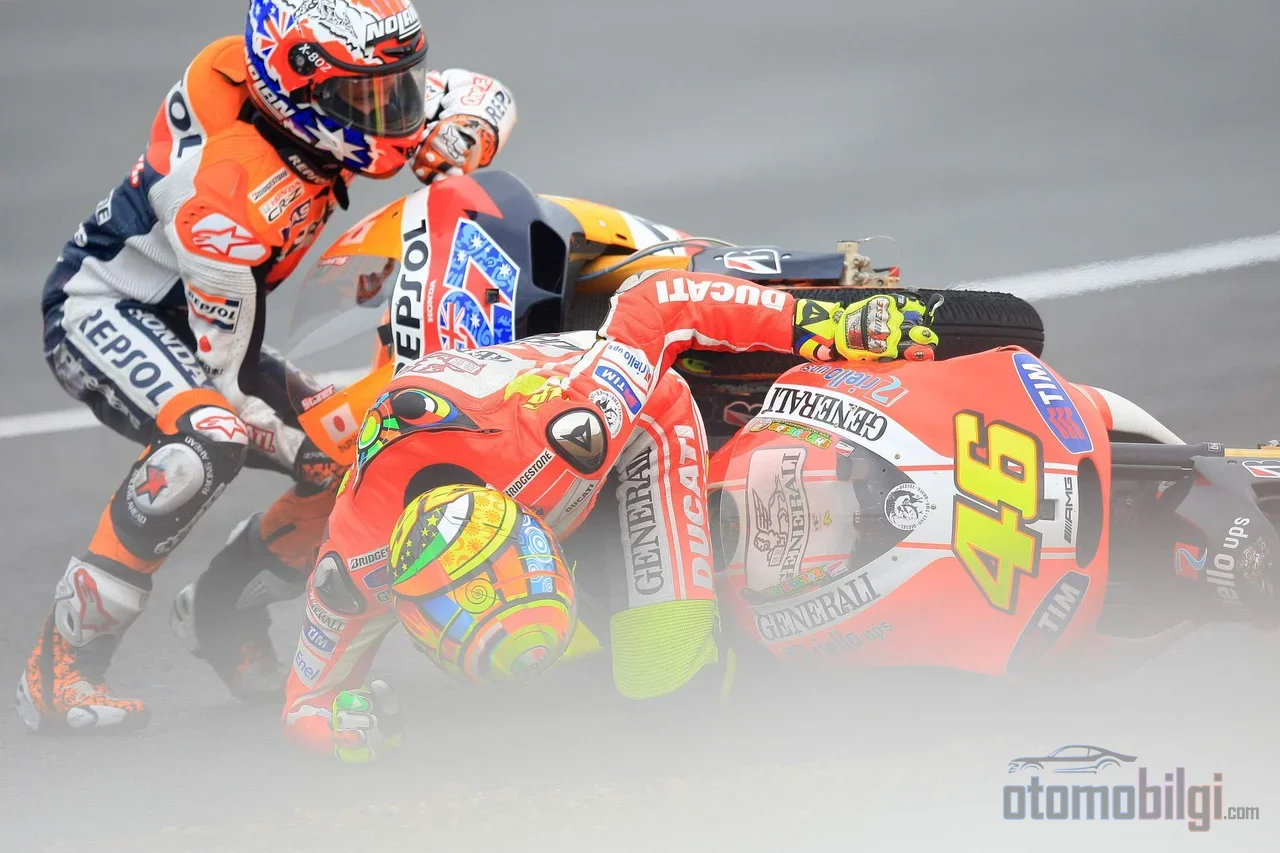
In MotoGP each team has two main riders, and the championship runs with 11 teams and a total of 22 riders. The harshest form of the battle for a seat in qualifying and in the race takes place between motorcycles of the same color, because this is the first thing managers look at: how does the rider perform against his own teammate? This comparison opens every door, from contract negotiations to whom the manufacturer will favor.
The 2026 season is a living example of how close this battle can be. After 17 races, Jorge Martín (Aprilia) leads with 355 points, with Marc Márquez (Ducati) right behind on 353, just 2 points back. Marco Bezzecchi (Aprilia) is third with 309 points. Such a picture instantly rewrites the internal balance of power within a team as well; when a points gap opens up, resources, development priority, and media attention quickly shift to one side.
Famous Teammate Wars from History: Who Won, Who Lost?
The history of MotoGP (and its predecessor, the 500cc era) is practically a history of teammate battles. A few classic cases perfectly summarize how this rivalry works.
Hailwood – Agostini: The Manufacturer's Decision Changed Everything
Mike Hailwood joined MV Agusta in 1962 and lifted three consecutive 500cc championships. In 1965, young Giacomo Agostini joined the team, and the battle began. Then MV Agusta decided in 1966 to give Agostini number-one status by favoring the Italian rider on the Italian motorcycle. Hailwood then transferred to Honda, and in 1966–67 Agostini won the championship each time. This case is a textbook example of how a manufacturer could determine the hierarchy even on grounds such as nationality and brand alignment.
Read – Ivy: How Does a Planned Hierarchy Collapse?
Yamaha management had made a plan at the start of the 1968 season: Bill Ivy would be champion in 250cc, Phil Read in 125cc. But Read, learning that Yamaha would withdraw at the end of the season, did not take this plan seriously and raced for himself; the result was a controversial double championship. An amazing example showing how fragile an imposed hierarchy becomes once the security of a contract disappears.
Rossi – Lorenzo: The Same Garage Split in Two
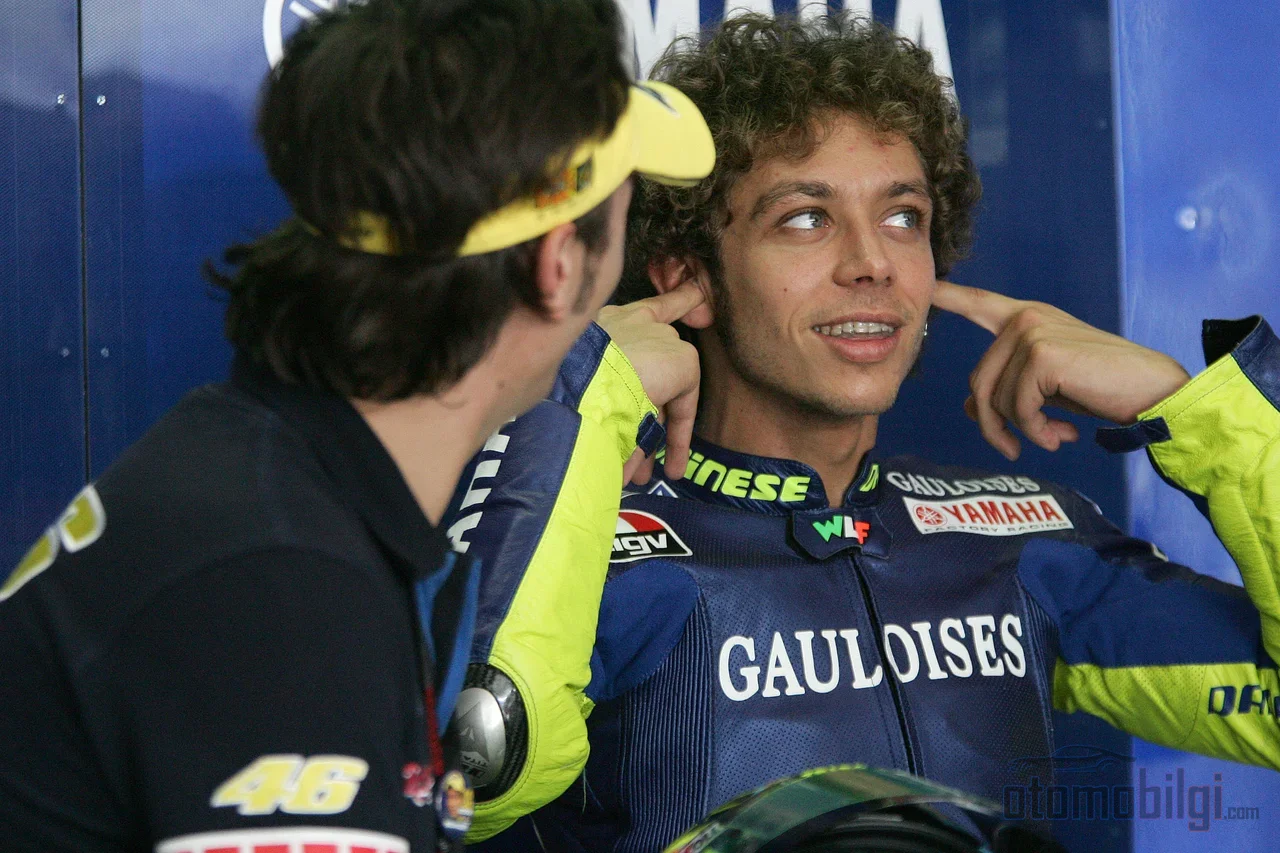
Jorge Lorenzo arrived in MotoGP in 2008 as Valentino Rossi's teammate, and the pair never stopped their battle for race wins. In 2009, Lorenzo won the championship at Yamaha at the end of an internal war waged with Rossi. Looking at the head-to-head statistics, the picture is incredibly balanced: during their time together, each collected two world championships. Former Yamaha official Davide Brivio explained that this rivalry effectively split the team in two, and the moments when Rossi won races with last-corner, last-lap attacks during the period when Yamaha's energy shifted to Lorenzo are proof of how productive this tension can be. Teammate rivalry can tear a team apart; but it can also raise the championship level.
Márquez – Pedrosa: The Hierarchy Was Set by Data, Not on Track
Marc Márquez and Dani Pedrosa shared the same garage at Repsol Honda for six seasons, from 2013 until Pedrosa's retirement from full-time racing. Even the experienced Pedrosa admitting that rookie Márquez's speed and adaptability were unique shows an important point: in the modern era, hierarchy is determined not by titles in the garage but by telemetry and lap times. Márquez is known to openly embrace a strategy of making his teammate's life difficult, and the data has supported this every week.
We can also add the duo of Mick Doohan and Alex Crivillé to the list: At Honda, they were first teammates, even friends, and then became relentless rivals. There is a fine line between teamwork and rivalry, and that line is redrawn every season.
The Number One Rider Concept: How Does a Team Manage Hierarchy?
Not every team declares an official captain, but internally there is always a hierarchy. Sometimes the manufacturer decides (as in the Agostini case), sometimes negotiations and sponsorships, and sometimes purely results. In the new era, the balance is increasingly established through numbers: if telemetry comparisons consistently crush the teammate, the number one debate closes itself. But in the opposite case, tension within the garage escalates; as the Read–Ivy case showed, when hierarchy is imposed on a rider and that rider is not given contractual security, the plan can collapse.
This hierarchy also has a concrete consequence beyond the standings: career. A poor record against a teammate directly lowers a rider's market value. In seat negotiations for 2027, speed alone is not enough; the contract structure with the manufacturer, satellite team agreements, and market dynamics are among the factors determining the seat. Jack Miller making headlines with his demand for an annual salary of 1 million euros from factory teams is a reminder of how tough this market is.
How Does the Teammate Equation Change at Satellite Teams?
So does everyone race with the same chances? No. While factory teams traditionally have the newest equipment, satellite teams-independent teams that rent or buy the motorcycle from the manufacturer-generally worked with older models. Satellite teams receive support from the factory team and orbit around it. That is why the teammate comparison within a satellite team also applies, but it functions as a gateway to promotion to a factory seat: young riders first sign with satellite teams, and if they perform well, they move up to factory teams.
An interesting development is that these structures are changing. With the new agreements between Dorna and IRTA, the satellite label is expected to be removed and all teams to be placed on equal footing with factory teams; some team managers even think satellite teams could gain an early advantage in this transition. If equalization happens, the teammate comparison will become even clearer in the future because the machine difference will be completely eliminated. MotoGP's work behind the scenes on a transfer window system is also an attempt to bring order to the chaos caused by the rider market happening far too early.
Where Intra-Team Rivalry Stands Today: Alonso–Holgado and Türkiye's Mark
We saw just how fierce intra-team rivalry can still be in October 2026 in Moto2. David Alonso and Dani Holgado, teammates at Aspar, collided at Mandalika; Alonso was taken to hospital with a bruised lung. Alonso showed how serious the situation was by saying that there was no solidarity left in the team, that it no longer felt like a team; Holgado, for his part, apologized while arguing that it was pure competition, just part of the sport. The two will face each other again in MotoGP in 2027: Alonso at LCR Honda alongside Johann Zarco, and Holgado at Gresini Racing. So today's teammate feud will continue on tomorrow's grid.
The 2027 rider market is already officially complete, rewriting the teammate equations: Fabio Quartararo is moving to Honda (HRC), Diogo Moreira will race for the factory Honda team, and Senna Agius was announced in mid-September as Luca Marini's teammate. Yamaha, meanwhile, is parting ways with Quartararo and Álex Rins; their motorcycles are being handed over to Jorge Martín and Ai Ogura.
The Türkiye side of the list is not empty either: Toprak Razgatlıoğlu completed his first official test in MotoGP with Yamaha at Valencia, scored his first points with Pramac Yamaha, and went down in history as the first Turkish rider to score points in MotoGP. And who will be his first yardstick of comparison? Of course, his teammate at the controls of the same Yamaha.
Conclusion: If You Really Want to Know Your Rival, Look in the Mirror
In MotoGP, legends are usually told as battles between rival brands and differently colored motorcycles. But to tell the truth, the real measure of championships has always remained hidden in the same garage. Same machine, same tires, same engineers; leaving only one question that needs an answer: how close are you to him? From Hailwood to Rossi, from Pedrosa to today's young riders, everyone has to answer this question every week. Do you think this 2-point gap will be closed in the remaining races of 2026, under teammate pressure? Let's talk in the comments!
Sources
- Top 10 Motorcycle Racing Rivalries
- What Electronics Are Used in MotoGP Bikes?
- MotoGP – Your Teammate Is Your First Rival
- Rossi vs Lorenzo: MotoGP's Best Rivalry
- Davide Brivio on How Rossi and Lorenzo's Rivalry Divided Yamaha
- Future MotoGP Rivals Embroiled in Bitter Feud
- 2027 MotoGP Rider Line-Up: The Official Announcements So Far
- MotoGP 2026 Standings
- 2026 MotoGP Riders
- How Did Toprak Razgatlıoğlu's MotoGP Test Go?
- MotoGP Satellite vs Factory Teams