Why Is the Gap Between MotoGP and WorldSBK So Big?
Share This Page
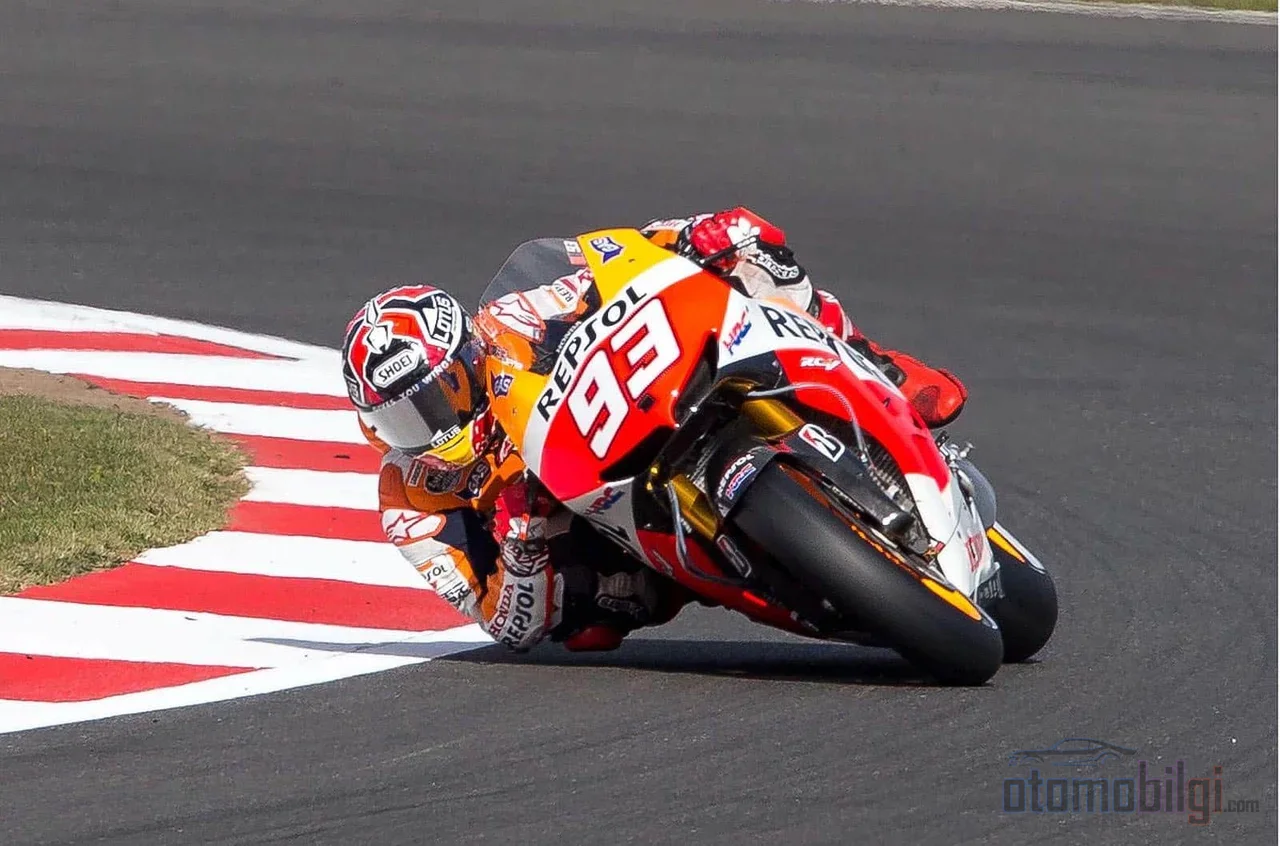
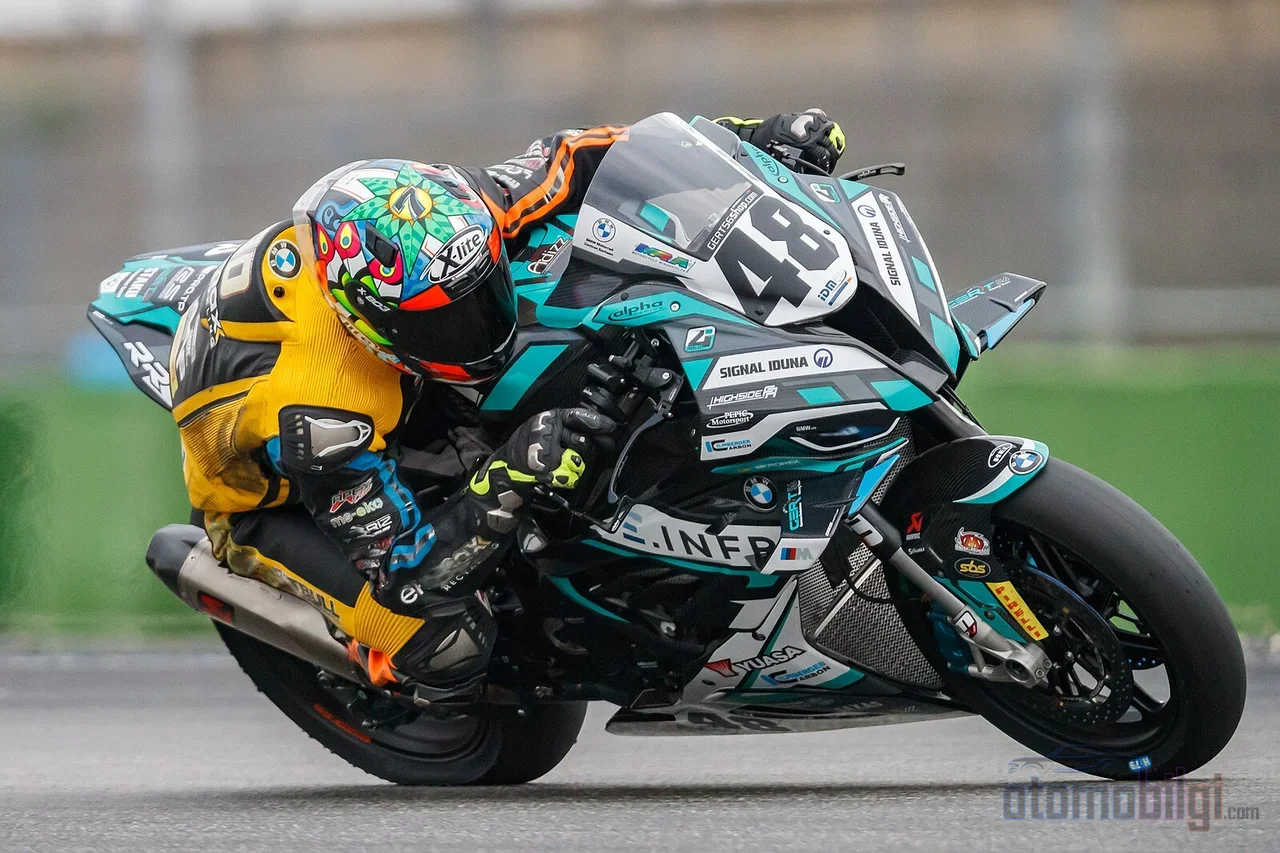
The gap between MotoGP and WorldSBK is this big because MotoGP races prototype motorcycles designed from scratch for racing that you cannot buy; whereas in WorldSBK, heavily modified versions of production motorcycles you can buy from a showroom are on the track. The result of that one-sentence difference: roughly 1.2 to 1.5 seconds per lap and a gap of almost 30 km/h at top speed. Now let's look at where this difference comes from, with numbers and stories - because both look super fast, but they are not the same job.
Highlights
- MotoGP record: 368.6 km/h, WorldSBK record: 339.5 km/h
- Power difference: roughly 270-300 hp versus 230-250 hp
- Minimum weight: MotoGP 157 kg, WorldSBK 168 kg
- Lap difference on the same track averages 1.2-1.5 seconds
- Toprak Razgatlıoğlu is the first rider from Türkiye to move up to MotoGP
The Core Identity of the Two Series: Prototype or Purchased Motorcycle?
MotoGP is the top class of the Grand Prix World Championship, and the machines there are of a kind you can never get your hands on. Manufacturers bring prototypes where every part is designed for racing, sold in no store. There are five manufacturers on the 2026 grid: Ducati, Aprilia, KTM, Honda and Yamaha. You can think of the ladder as running from Moto3 to Moto2 and from there to MotoGP; young riders climb these steps to reach the top.
In WorldSBK the rule is completely different: the racing motorcycle is derived from a production sportbike that can be purchased on the road. So the DNA of a WorldSBK Ducati belongs to the same family as the superbike you casually browsed online - it just went on a diet and hit the gym. Ducati, BMW, Yamaha, Honda and Kawasaki compete in the championship.
This difference determines everything. In the prototype series, the manufacturers' imagination is almost unlimited; in the production-derived series, the motorcycle has to preserve its original identity. The FIM's homologation checks are carried out digitally, and every machine complies with strict tolerances. To enter a new model, the manufacturer must have produced a certain number of units - the exact figure of this requirement is reported differently across sources, but the logic is the same: it must derive from a motorcycle genuinely sold on the street; a model that exists only on paper must not race.
Technical Comparison: Engine, Power, Weight and Electronics
Rather than speaking in the abstract, let's look at the table. According to the 2026 regulations, the technical identity of the two series is as follows:
| Specification | MotoGP | WorldSBK |
|---|---|---|
| Engine capacity | 1,000cc four-stroke | 1,000cc for four cylinders, 1,200cc for twins |
| Power (approximate) | 270-300 hp | 230-250 hp |
| Minimum weight | 157 kg | 168 kg |
| Rev limit | ~18,000-19,000 rpm | 15,000-16,000 rpm |
| Gearbox | Seamless | Conventional |
| Front brake disc | Carbon | Steel |
| Tire | Michelin | Pirelli |
| Electronics | Spec ECU | More customizable |
There is an interesting detail on the rev limit side: For 2026, a 20,000 rpm limit was added to the regulations - meaning the ceiling had to be raised to reach the top. There's a fun asymmetry in weight, too: In WorldSBK, the reference rider is 80 kg, and 0.5 kg of ballast is added per kilo for lighter riders; MotoGP has no equivalent rule. Why? Because a prototype is a machine shaped around the rider, while a superbike is built on a specific production base.
Aerodynamics, meanwhile, is MotoGP's most expensive playground. Wings and airflow management have become so expensive that regulators had to impose strict rules in this area. A simple analogy: If MotoGP is a university's secret laboratory, WorldSBK is a real-world workshop founded by that university's graduates.
How Many Seconds Is the Speed Difference on Track, Really?
Here's the heart of the question. When it comes to top speed records, the gap is huge: In MotoGP, Jorge Martín reached 368.6 km/h with Aprilia at Mugello in 2026, surpassing the 366 km/h records of Brad Binder and Pol Espargaró. In WorldSBK, the record still belongs to Tom Sykes: 339.5 km/h at Monza in 2012, on a Kawasaki. A comparison on the same circuit is more meaningful - at Phillip Island, MotoGP machines hit 356.4 km/h (Bastianini, 2022), while WorldSBK reached 330.3 km/h (Chaz Davies, Ducati, 2020). That's a gap of more than 26 km/h.
What about lap times? At Phillip Island, Fabio Quartararo's 2025 pole time was 1'26"465; WorldSBK's Superpole record is Nicolò Bulega's 1'27"916 from 2024. That makes the difference 1.451 seconds. An interesting note: on the same circuit, when comparing each series against its own benchmarks, the gap sometimes comes out smaller, like 0.7 seconds - because which record is used as the reference (race record, pole, which year) changes the result. On Yamaha's official channel, Remy Gardner reports that with weather and track conditions nearly identical, the gap between the two poles was only 1.2 seconds. The picture is similar at Balaton Park: about 1.3 seconds in MotoGP's favor.
So the realistic answer is this: the prototype is roughly 1.2-1.5 seconds per lap faster than the superbike. To grasp how enormous that is on an amateur scale, this example is enough: a test rider on a top-tier road motorcycle with slick tires ends up about 5 seconds off a MotoGP pole time and about 2 seconds off a WorldSBK pole time. Even 2 seconds is massive; anything more is a different planet entirely.
Why Do Superbike Riders Struggle in MotoGP?
The most human consequence of this speed gap shows up in rider transfers. The move from MotoGP to WorldSBK is common and generally successful: Álvaro Bautista stepped the other way in 2019 and became champion with Ducati in 2022-2023. Max Biaggi reached WorldSBK championships in 2010 and 2012 after 8 seasons in 500/MotoGP - and, at 41, became the series' oldest champion.
The reverse direction is far rarer and far harder. The finest exception is Troy Bayliss: Three-time WorldSBK champion (2001, 2006, 2008), he entered MotoGP in 2006 in Valencia as a wild-card replacing the injured Sete Gibernau and won a grand prix at 37 years old. But stories like this are as rare as the sugar-free candy in a lettuce package.
The reason for the difficulty is technical: GP prototypes are lighter, more powerful and far more sensitive. The limit is harder to find, and mistakes are less forgiving. According to the riders, a superbike is more usable; a GP machine constantly asks you where its limit is but doesn't always give a clear answer. Tires are also a major area of adaptation - Michelin's character is a whole different world from the Pirelli riders are used to. Moreover, MotoGP machines are so customized to each rider that even teammates struggle to go fast on each other's motorcycles. When choosing riders, manufacturers strike a balance between speed and development feedback; this means, alongside riding ability, the skill to communicate with engineers.
The Toprak Razgatlıoğlu Example: How Does a Champion Become a Student Again?
To ask how difficult this transition is, one must turn to the most meaningful example for the Turkish reader: Toprak Razgatlıoğlu. Having become WorldSBK champion with Yamaha in 2021 and with BMW in 2024, Toprak stepped up to MotoGP with Prima Pramac Yamaha in 2026 and became the first rider from Türkiye to compete in this series. Before the switch, he saw 2026 as his last chance to open a door into MotoGP - which alone shows how narrow a window it is.
So what happened? Throughout the 2026 season there were flashes of brilliant pace, but the process did not go as smoothly as everyone expected; news emerged that his energy was draining during the adjustment to the new team environment, and at the Indonesian GP he suffered the misfortune of a mechanical problem. His dominance in WorldSBK did not transfer instantly to MotoGP in the short term - which is precisely the difference this article was written to explain. Remember that the last rider to move directly from WorldSBK to MotoGP before him was Cal Crutchlow, meaning this door had not been opened this wide since 2011.
One of Toprak's goals is also for Istanbul Park to return to the MotoGP calendar. The circuit hosted MotoGP for three years between 2005 and 2007; since the 2027 calendar now appears full, the target looks to be 2028. Also, Deniz Öncü is racing on the 2026 grid - two Turkish riders in the same championship, in my view, prompted the most delightful sentence in this article.
Cost: Why Can't Everyone Race in MotoGP?
Speed has a price too. In MotoGP, the season budget per bike is roughly 2-3.5 million euros; in WorldSBK, the same item is around 250,000-400,000 euros. In other words, a prototype can cost at least about 10 times as much as its production-derived counterpart. The difference is the price of development engineering, aerodynamics, and that intangible precision work. This cost pressure also explains why aerodynamics are so tightly regulated.
This picture will change somewhat in the future. In 2027, MotoGP undergoes a major rules overhaul: engine displacement drops from 1,000cc to 850cc, bore diameter falls from 81 to 75 mm, minimum weight is brought down to 153 kg, ride-height devices are banned, the fuel tank drops to 20 liters, and the tire supplier is Pirelli until 2031 - yes, for the first time the two series will share the same tire brand. On the WorldSBK side, too, the 2027-2030 roadmap has been announced: manufacturer-specific rev limits and fuel flow caps, a single fuel supplier, a noise limit lowered by 3 dB to 112 dB, and from 2030 onward the 1,200cc displacement allowance also applies to four-cylinder engines. The teams welcomed this roadmap positively. So the two series will draw slightly closer technologically, but the prototype-production divide - the soul of the series - will remain exactly as it is.
So Which Series Should You Watch?
The honest answer: both of them. MotoGP is the technical peak humankind has reached on two wheels; the series where legends have been written from Rossi to Márquez, from Agostini to today, where engineering dances on the edge of the rules. WorldSBK, on the other hand, is a championship that breathes more freely, where you watch the victory of the road-going version you can actually buy, and where no one races with a debt to expensive aerodynamic winglets. Which one do you watch more - the 300-horsepower immortal prototypes, or the accelerated versions of the showroom? I'm waiting in the comments.
Sources
- MotoGP vs Superbike: differences and which is faster
- What is the Difference Between MotoGP and World Superbike
- Gardner talks difference between WorldSBK and MotoGP
- MotoGP vs WorldSBK lap times analysed at Balaton Park
- Toprak Razgatlioglu - MotoGP Riders
- Superbike World Championship
- Superbike rules
- WorldSBK teams react to rules roadmap updates for 2027
- MotoGP's 2027 rule changes explained
- Why MotoGP is harder than expected for Toprak Razgatlioglu
- MotoGP - Vikipedi