How Does the Concession System in MotoGP Help Struggling Manufacturers?
Share This Page
In MotoGP, the concession system refers to the development, testing and wildcard privileges offered to allow trailing manufacturers to catch up; manufacturers are divided into ranks from A to D based on Constructors' points, and factories at the back of the grid gain more freedom. In short, the championship wants everyone to race under the same rules but doesn't want everyone to have the same freedom. So how exactly does this system work? Let's take a look step by step.
Highlights
- Manufacturers are evaluated across four ranks from A to D based on the percentage of Constructors' points.
- A manufacturer in Rank D gets 10 free engines, 6 wildcards and 260 test tires .
- The system once every half season is updated in two separate evaluation windows.
- With its recovery in 2025, Honda moved from Rank D to Rank C .
- From 2027 onward, for all manufacturers wildcards are banned .
What Is the Concession System and Why Does It Exist?
Imagine a classmate who is always first, while it seems nearly impossible for the others to get good grades. The teacher says: "Well, let's put some restrictions on the first one and give extra support to those falling behind." That's exactly what MotoGP's concession system is. The aim is to prevent the championship from becoming the reign of a single factory and to ensure the survival of manufacturers at the back of the grid.
The system is set and updated by the Grand Prix Commission, the joint body formed by FIM, Dorna, IRTA and MSMA. Its scope is quite broad: test days and the number of test riders, wildcard entry rights, the number of engines that can be used and whether the engine specification will be frozen, aerodynamic updates and the number of tires allocated for testing. In other words, everything from engine development to the tests you conduct on track depends on this ranking.
The system is evaluated once every half season. For example, at the summer break checkpoint, the first half of the current season and the second half of the previous season are taken into account. There are two evaluation windows: while Window 1 covers the first half of the season, Window 2 measures the period from the end of the summer test ban until the next season's summer ban. This way, the worse a factory's slump has been, the more privileges it gets in the next window for a chance to catch up.
How Are Ranks Determined: Point Thresholds and Advantages
Manufacturers are placed into one of four ranks based on the percentage of Constructors' points they earn in the evaluation window. You can think of anything exceeding the percentage threshold as extra engineering dreams, and the excess as extra test days. Here is what each rank gives and takes away as of 2025:
| Rank | Point Threshold (2025) | Manufacturer | Key Advantages |
|---|---|---|---|
| A | Above 85% | Ducati | 8 engines frozen all season, no wildcards, testing at 3 tracks with a test rider, 170 test tires, 1 aero update |
| B | 60-85% | - | 8 frozen engines, 3 wildcards, 190 tire sets, 1 aero update |
| C | 35-65% | KTM, Aprilia | 8 frozen engines, 6 wildcards, 220 test tires, 1 aero update |
| D | Below 35% | Honda, Yamaha | 10 engines that can be freely developed throughout the season, 6 wildcards, testing at all circuits with factory and test riders, 260 test tires, 2 aero updates |
The irony is real: Ducati, the most successful manufacturer in the championship, is the most restricted factory. Ducati in Rank A must freeze its engine for the entire season, cannot use wildcards, and has the fewest test tires. Honda and Yamaha in Rank D, on the other hand, are granted the freedom to develop their engines as they wish throughout the season, the right to test at any MotoGP circuit, and the highest tire quota.
The point where Rank C differs from Rank D is critical: the manufacturer in C has its engine frozen, and wildcards can be used with engines under development. In D, engine development is completely free. So moving up one rank is not a simple improvement; it means giving up some of the freedoms you get to choose.
Why Was the System Rewritten From Scratch in 2024?
The idea of concessions is not new, but its current form was born when the performance gap between European and Japanese factories became visible. The old system had become effectively defunct in April 2023 when Aprilia hit its podium target and moved to the same technical rules as the other factories. Moreover, while Suzuki's sudden exit from the championship was still fresh in memory, the MSMA agreed on a more comprehensive new system. The Grand Prix Commission approved this system before the Valencia GP and it came into force in 2024.
The starting ranks based on the 2023 Constructors' standings explain the logic of the system at a glance. Out of a maximum of 728 points, Ducati collected 700 points at 96% and took Rank A. KTM at 51% and Aprilia at 45% remained in Rank C. Yamaha at 27% and Honda at 25% dropped to Rank D. In other words, the Japanese factories had a ratio close to only a quarter of the points Ducati collected. A striking detail: since the system was introduced, no manufacturer has managed to reach Rank B. That threshold stands, in a way, as an empty floor.
Ducati's Dominance and the Rationale Behind the Rules
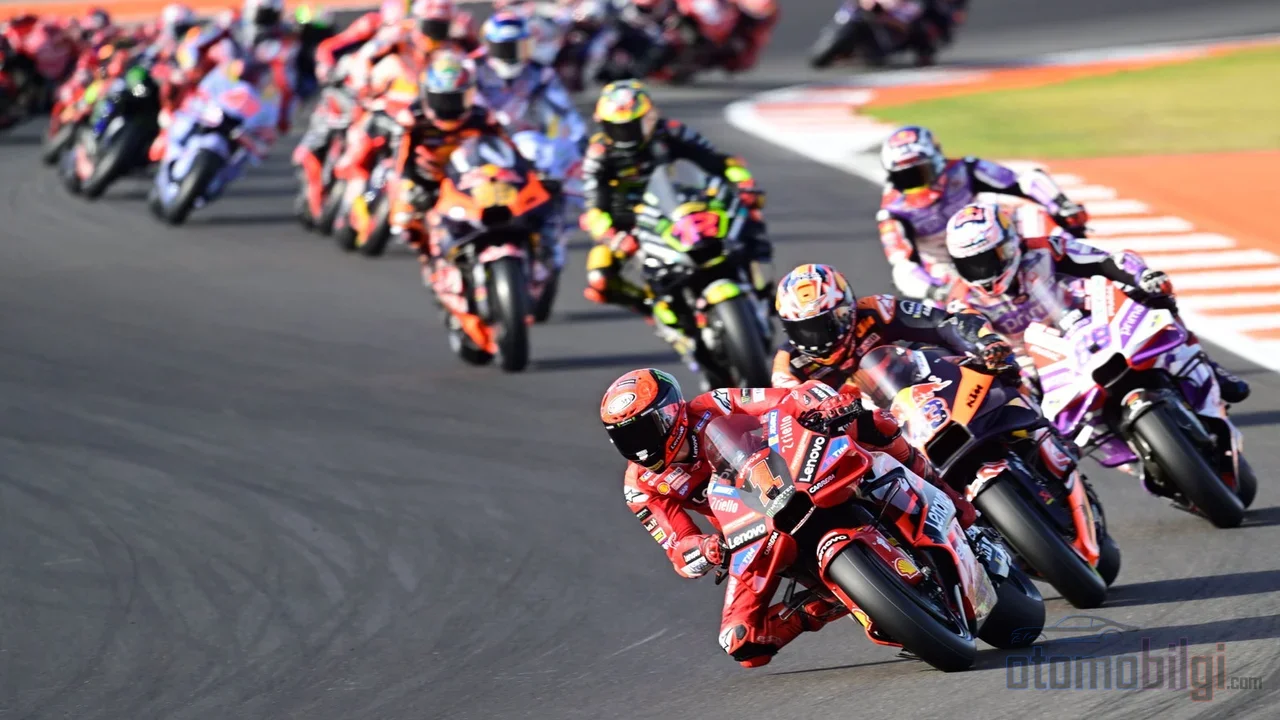
To understand why concessions matter so much, it is enough to look at 2024. Ducati raced with 8 motorcycles on the grid that year; exactly twice as many as its closest rival. In the Thailand GP sprint, all 8 Ducatis finished in the top 10. Ducati won 19 of the season's 20 races, and 14 times the podium was entirely Ducati.
The margin here is also striking. MotoGP motorcycles improve by an average of 0.1-0.5 seconds per year; in contrast, Ducatis were almost 1 second ahead of their closest rival in qualifying at some circuits, and 0.3-0.5 seconds ahead of the grid average in race laps. In other words, the gap was many times greater than the normal rate of development, and it could only be closed gradually through tools like engine freezing or wildcards.
Without concessions, it would have been uncertain why non-Italian manufacturers would continue. Even if it could not stop Ducati in 2024, it could have stayed faster than its developing rivals - that is why concessions are needed.
There is also an unseen counterpart to Ducati's dominance: the factory supported the series by supplying motorcycles to customer teams to fill the grid. In other words, part of its numerical superiority can also be read as an investment made in the championship.
The Return of Honda and Yamaha: Why Was Rank D a Lever?
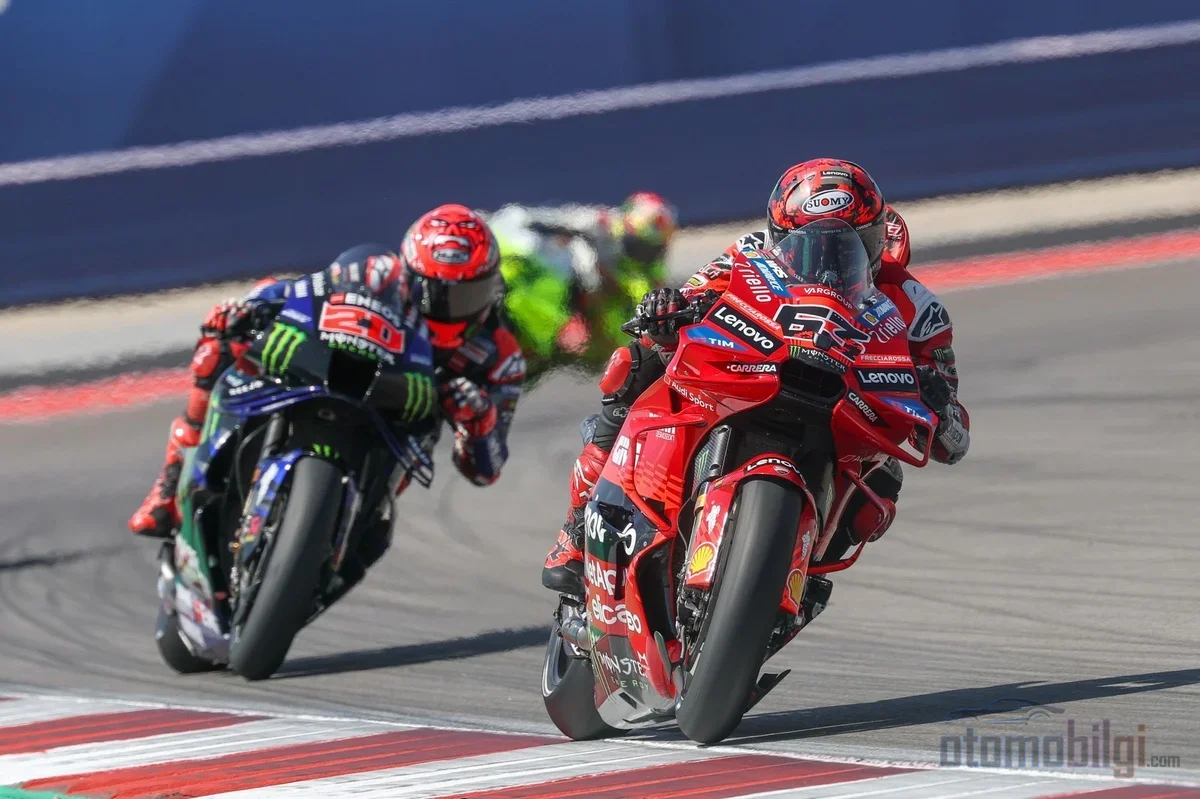
Staying in Rank D has both an advantage and a deceptive side. While it retains all the benefits, such as near-unlimited testing and free engine development, it can also conceal the factories' progress in recovery. But in the 2025 season there was nothing left to hide: Honda won the French GP with Johann Zarco in the LCR Honda squad, while Yamaha collected numerous pole positions and podiums with Fabio Quartararo. Both factories tripled or quadrupled the previous season's 7-8% points ratios.
Honda's Checkered Throne: The Rise from Rank D to C
The formula for moving up was simple but tense: HRC needed one of its riders to finish in the top 7 at the season finale in Valencia. The target held, and after a successful 2025 season, Honda rose from Rank D to Rank C in the concession rankings. With this transition, it lost significant privileges such as conducting private tests with race riders and in-season advantages, and is moving to stricter rules such as the engine freeze, which narrows the development space ahead of the 850cc era in 2027. Heading into 2026, Yamaha was left alone in Rank D, while Honda gained equal advantages with Aprilia and KTM.
The rules of rank changes are also detailed. Test tires, test days, wildcards and aero updates take effect immediately according to the new ranking, while the engine specification freeze can be deferred to the end of the season. In fact, if a manufacturer promoted from Rank D to C falls back to Rank D at the end of the season, the engine freeze is not applied at all. In other words, there is a kind of safety buffer on the engine side.
2026 and Beyond: The End of Wildcards, the 850cc Era
Looking at the 2026 grid, we see the picture becoming clear: Ducati constrained in Rank A, Aprilia and KTM in Rank C, Yamaha continuing with its privileges in Rank D, and Honda moving forward from Rank C. There is movement on the wildcard front too: Takaaki Nakagami takes to the track as a wildcard for Honda HRC in the 16th race of the season, while Augusto Fernández does so under the Yamaha Factory Racing name.
But an end to this era of privileges has also been planned: from the 2027 season onward, MotoGP announced that it has removed wildcard entries for all manufacturers in the main class. No factory, regardless of concession status, will be able to field a wildcard rider. The ban covers only MotoGP; in Moto2 and Moto3, the wildcard system will continue under the current rules.
2027 is also a major technical turning point. Engine capacity drops from 1000cc to 850cc, bore goes from 81mm to 75mm; fuel tank capacity falls from 22L to 20L, and minimum weight from 157kg to 153kg. 100% non-fossil fuel becomes mandatory, ride-height devices are banned, aerodynamics are reduced, and the engine quota per season drops from 7 to 6. The concession system, meanwhile, will continue into the 850cc era despite all these changes. In other words, even though the rules change, the philosophy of "helping those left behind get back on their feet" remains.
Do Concessions Save MotoGP, or Divide It?
Both sides deserve consideration. For critics, the system makes a superior factory like Ducati pay the price of its success; the fact that a manufacturer that delivered a season like 19/20 doesn't even have wildcard rights may seem odd at first glance. For supporters, however, the other side of the picture is much harsher: without concessions, the reason for factories with weaker budgets and results to stay in the series could disappear, and exits like Suzuki's example could have become impossible anyway. Seeing the extra advantages given to Japanese manufacturers start to pay off is the most concrete proof that the system is working.
As far as I can tell, the real magic of concessions is this: it succeeds in tying the performance gaps on the grid not only to budgets but also to the rules. Ducati's reign is the product of engineering superiority, while Honda's comeback is the product of both engineering and the freedom granted to it. So if it were up to you, how would you set up this system? Would you bend the rules to balance the championship, or give everyone the same freedom and show no mercy to those left behind? I'd love to hear your take in the comments!
Sources
- Concessions: where is each factory at the summer checkpoint?
- What are the MotoGP™ Rules? – A complete overview
- How MotoGP concessions work and why they're more important than ever
- Explained: New 2024 MotoGP concessions system
- MotoGP Concessions: What Honda loses by moving from Rank D to Rank C
- Concessions: will Honda change rank on Sunday?
- Every MotoGP team's concessions rank entering 2026
- Concession upgrade pushes Honda into stricter MotoGP rules for 2026
- New concessions in MotoGP: free engine development for Honda and Yamaha
- 2026 MotoGP World Championship
- What the concessions system will look like in MotoGP's 850cc era
- MotoGP to ban wildcard entries from 2027
- Is Ducati domination bad for MotoGP?