The Anatomy of Prototype Motorcycle Racing
Share This Page
MotoGP is the pinnacle of motorcycle racing: a world championship run under the auspices of the FIM with 1000cc prototype machines, consisting of three classes - Moto3, Moto2 and MotoGP. Riders start at the bottom of this ladder and climb to the top, while manufacturers push the limits of prototype technology. Everything you need to know, from the championship's structure and legends to its technology and its connection stretching to Türkiye, is in this guide.
Highlights
- MotoGP machines 1000cc, approximately 250 hp of power and reach a top speed of 366.1 km/h reaches a speed of
- Championship since 1949; the first Grand Prix was held on the Isle of Man
- For the 2027-2031 period, five manufacturers (Aprilia, Ducati, Honda, KTM, Yamaha) have committed their allegiance to the championship
- Toprak Razgatlioglu became the first Turkish athlete to compete in MotoGP history
- Not Giornata, but the correct record: Giacomo Agostini, 15 world titles and 122 victories, stands at the top
Three Classes, One Ladder: What Is the Difference Between Moto3, Moto2 and MotoGP?
Grand Prix motorcycle racing began in 1949; the first race was held on the Isle of Man. From that day to this, the championship has gone through serious evolutions and today consists of three official classes. You can think of it like a school system: Moto3 is kindergarten, Moto2 is high school, MotoGP is university. Each class has its own champion, its own teams and its own machines.
The premier class, meaning the top category, was called "500cc" until 2002; that year it took the name MotoGP. The 2003 Czech GP was the last dance of two-stroke machines in the premier class. Moto2 replaced 250cc in 2010, and Moto3 replaced 125cc in 2012. In 2019, Moto2 switched to Triumph-built 765cc three-cylinder engines.
So where do these classes technically differ from each other? Here is a brief comparison:
| Feature | Moto3 | Moto2 | MotoGP |
|---|---|---|---|
| Engine | 250cc single-cylinder | 765cc Triumph three-cylinder | 1000cc four-cylinder prototype |
| Power | ~60 hp | 138 hp | ~250 hp |
| Minimum weight | 152 kg (motorcycle+rider) | 217 kg (motorcycle+rider) | 157 kg (excluding rider) |
| Top speed | 245 km/h | 301.8 km/h | 366.1 km/h |
| Fuel limit | - | - | 22 liters |
Riders usually enter Moto3 through national and junior championships via the "Road to MotoGP" pathway, then move up to Moto2 and finally MotoGP. But be careful: progression is not guaranteed. Unlike formula series, if you want to climb the ladder quickly here, your performance needs to do the talking.
How do the points system and age rules work?
In Sunday races, the first 15 riders score points: the winner gets 25, second gets 20, third gets 16 points. MotoGP also has a Sprint race, and the Sprint is run only in the premier class; there, points go to the first 9, with 12 points for the winner. The age rules are also interesting: the minimum age is 18 in all classes, but in Moto3 this limit can drop to 17 for those who finish in the top three in the Red Bull Rookies Cup and FIM JuniorGP. There is also a maximum age limit in Moto3: 28. So there is a window of opportunity for the young.
Let's summarize the quality of the grid with a statistic: at the start of the 2024 season, the grid featured 13 world champions, a total of 26 GP world titles, and 347 GP wins. That is truly a crowd of stars!
Why Are Prototype Racing Bikes So Different from Road Motorcycles?
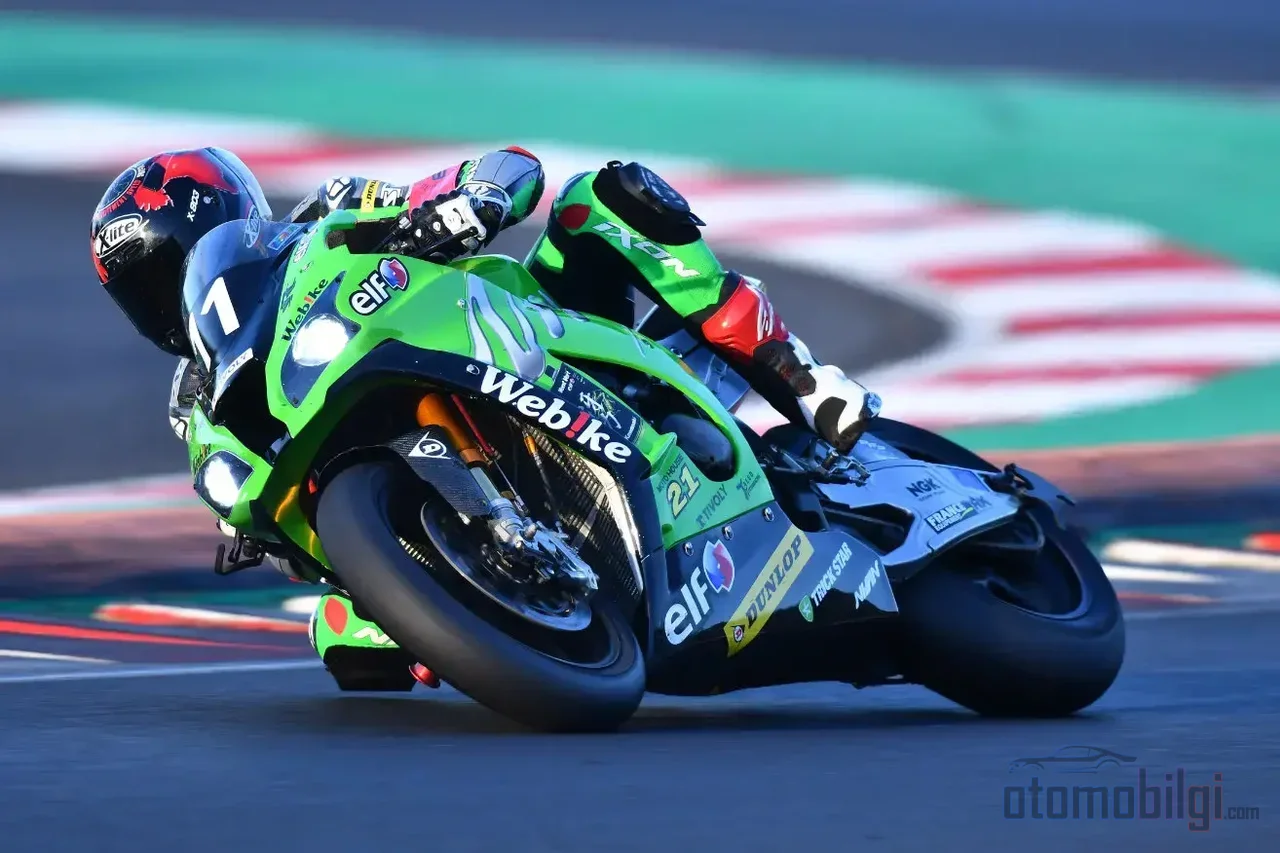
Here is the most fascinating part of the whole story. The machines in MotoGP are prototypes built purely for racing - not sold to the public and not road legal. Unlike the supersport motorcycle you see on the street, these bikes have no headlights, no mirrors, and no license plate mount. Series like World Superbike, on the other hand, are based on production motorcycles; in MotoGP the situation is the exact opposite - there is not even a base that could be converted into a road model.
These prototypes carry technologies you could not even dream of on everyday motorcycles. Aerodynamic fins, or winglets, carbon brake systems, holeshot and ride-height devices, seamless gearboxes... Each one is a separate engineering marvel.
Winglets and aerodynamics: battling the air
Winglets are small fins mounted on the front of the motorcycle, and they generate downforce, that is, a pressing force toward the ground. What do they do? They prevent the front wheel from lifting (wheelie) during acceleration and improve braking. When you think of Formula 1 cars, we are dealing with a very short vehicle with a very high center of gravity and a wheelbase of only about 1.5 meters. That is why engineers are constantly looking for new solutions with wheel fairings and air channels. The new regulations also require aerodynamic elements to be an integrated, enclosed whole with the fairing; in other words, the era of bolting on free wings is coming to an end.
Ride-height and holeshot devices: the acceleration trick under braking
These devices mechanically change the height of the motorcycle at specific moments. Under braking and in hard corners, they lock the rear suspension to make the motorcycle more stable, and at race starts they make it easier for the rear wheel to transfer power to the ground. They are especially beneficial in the "wheelie phase." The debate continues between those who love this technology and those who think the devices spoil the nature of racing; some see them as a natural part of riding, like clutch and throttle use, while others say no. A ride-height ban also came onto the agenda; so this debate seems set to continue.
How much do these machines cost?
Sit down, because the numbers might dazzle your eyes: the cost of a MotoGP motorcycle is approximately 2-3 million euros; even a single engine is around 200,000-250,000 euros. Seven engines are allocated per rider for the season, and the fuel limit is 22 liters. So these machines are among the most expensive and fastest two-wheeled vehicles ever produced in the world. In the World Superbike versus MotoGP speed comparison, the prototypes are clearly ahead on paper.
The Manufacturer Wars: Honda, Yamaha, Ducati, Aprilia, and KTM
MotoGP is not just a battle of riders; it is also a technology race among giant manufacturers. In February 2026, MotoGP Group and Aprilia, Ducati, Honda, KTM and Yamaha signed a framework agreement for the 2027-2031 period. This is the first agreement in which the five manufacturers committed their loyalty to the championship until 2031. In other words, competition is guaranteed for the years ahead!
The championship has been organized by Liberty Media since 2025; commercial rights belong to Dorna Sports, while the FIM is the sanctioning body. Ducati has won the last four MotoGP titles, and in 2025 it celebrated both the riders' championship with Marc Márquez and the constructors' championship with Ducati Lenovo Team. In the 2026 grid, Ducati has three teams: Ducati Lenovo, VR46 and Gresini.
Concession system: help for the weak, or a stumble for fairness?
Ducati's dominance also affects the "concession" system, i.e. the privilege system. This system grants certain advantages to lagging manufacturers. The debate is this: are Aprilia and KTM closer to Ducati than the Yamaha-Honda duo? Sometimes the answer is yes, sometimes no. What is certain is this: everyone is looking for a way to stop Ducati's storm. KTM is one of the teams that has raised its game especially on the aerodynamics side.
V4 or inline-4?
The engine configuration debate has also become a classic. V4 or inline-four? Even technical experts avoid passing a definitive judgment; each configuration has its strengths and weaknesses. So there is no single answer to the question "which is better"; manufacturers make their choices according to their own philosophy.
Legends: In the Footsteps of Agostini, Rossi and Márquez
Every sport has its legends, and MotoGP's pantheon is something else entirely. Giacomo Agostini is the most successful name across all GP classes: 15 world titles and 122 race victories. With 8 titles in the premier class, he still holds the record. Read those numbers again, seriously.
Valentino Rossi, with his unique charisma, carried the sport across generations. He became champion in 125cc in 1997 and 250cc in 1999, then collected 7 titles in the premier class. With 89 victories in the premier class (as of 2026), he still holds the record. Marc Márquez, on the other hand, is the wonder of our era: he became 125cc champion in 2010 and Moto2 champion in 2012, and reached the MotoGP championship in his rookie season in 2013. With the championship he won with Ducati in 2025, he raised his total number of world championships to 9, tying with Rossi at 7 titles each in the premier class.
Other names who rose through the ranks
Beyond the legends, there are plenty of names who climbed between the classes and settled at the top. Here are a few examples:
- Jorge Lorenzo: 250cc champion in 2006-07, then 3-time MotoGP champion
- Jack Miller: a rare exception who moved directly from Moto3 to MotoGP at the end of 2014, with 4 GP victories
- Johann Zarco: back-to-back Moto2 champion in 2015-16
- Francesco Bagnaia: 2018 Moto2 champion, 2022-23 MotoGP champion
- Jorge Martin: came up from Moto3 in 2018 and became 2024 MotoGP champion
- Pedro Acosta: 2021 Moto3 and 2023 Moto2 champion, and Rookie of the Year in 2024
As you can see, every rung of the ladder has a story of climbing to the top. Some rise quickly, while others mature over long years in Moto2. Maverick Viñales can also be counted among this group.
From Türkiye to MotoGP: Toprak Razgatlıoğlu and Deniz Öncü
Yes, we are now writing this section with excitement: Toprak Razgatlıoğlu became the first Turkish athlete to compete in MotoGP history. As the World Superbike Champion, he will race for the Prima Pramac Yamaha team with the Yamaha M1 in the 2026 season. In fact, the transition process began in 2025: he took to the track in MotoGP format for the first time at the Japanese GP in Motegi, the 16th round of the season. Despite putting in a good performance in Aragon, he crashed in the main race, but the signals were promising.
Another important name is Deniz Öncü. He is representing Türkiye in Moto2 and stated his goal very clearly: "My real dream is the MotoGP championship; my only rival is Toprak." He also has a nice word about Toprak's arrival in MotoGP: he will no longer be alone. If he continues in Moto2 with KTM Ajo in 2026, there would be two Turkish riders in MotoGP at the same time; moreover, rumors are circulating that he will move up to MotoGP with Pramac in 2027, but this has not yet been confirmed.
With Toprak's arrival in MotoGP, I will no longer be alone.
Türkiye's racing scene is not limited to this: Can Öncü and Bahattin Sofuoğlu are racing on the WorldSBK side. The federation also announced that the four national athletes will take to the track in Spain and Czechia. In other words, the Turkish flag is waving everywhere on the grids and in the garages. After the first races of the 2026 season, Marco Bezzecchi was at the top with 81 points; a season start worth following.
Has MotoGP Become Too Technical?
This debate cannot be skipped. Many riders say that racing today's machines is harder due to aerodynamic developments. The tech-loving crowd thinks that wings and devices add an extra layer to the sport; the other side argues that they ruin the nature of racing, reducing overtaking and racing depth. There is also a cost race ongoing for aerodynamic superiority; KTM raising its game in this area is a great example of it.
In my opinion, this is a tension that keeps the sport alive. As technology advances, machines get faster and cooler; but to prevent the spirit of the sport from being lost, the regulators also need to maintain the balance well. Which side are you on: pure riding, or a technology show?
Final Word: How Do You Climb This Ladder?
MotoGP is not a dream, it is a ladder. You start from national championships, enter Moto3 through gates like the Red Bull Rookies Cup or FIM JuniorGP, move on to Moto2, and only the best climb up to MotoGP. Toprak's story is a non-classic version of this: he jumped to the summit as a Superbike champion. Deniz's story, on the other hand, is the classic ladder. Both are writing Türkiye into MotoGP history.
If you also want to warm up to this world, watch a full season: the Sprints, the Moto3 battles, the tire strategies and the pit drama. Then tell us: which class excites you the most?
Sources
- What is the Difference Between MotoGP™, Moto2™ and Moto3™?
- Grand Prix motorcycle racing
- MotoGP Group and Aprilia, Ducati, Honda, KTM and Yamaha sign 2027-2031 agreement
- 2026 MotoGP World Championship
- How MotoGP's manufacturers are stacking up ahead of the 2026 season
- How Aprilia and KTM are closer to Yamaha and Honda than to Ducati
- Everything you need to know about MotoGP engines for 2026
- MotoGP Ride Height and Holeshot Devices Explained
- The secrets behind MotoGP aerodynamics
- Aerodynamic Study of MotoGP Motorcycle Flow Redirectors
- How Much Does A MotoGP Bike Cost?
- MotoGP vs. road bike: Two worlds in comparison
- The 10 best MotoGP riders of all time
- Deniz Öncü: "With Toprak's arrival in MotoGP, I will no longer be alone"
- Deniz Öncü: My real dream is a MotoGP championship
- National Riders Will Take to the Track in Spain and Czechia
- Toprak Razgatlıoğlu in Spain for the 4th race of the season in MotoGP
- LET IT FLOW: HOW KTM UPPED ITS GAME IN MOTOGP™ AERODYNAMICS
- MotoGP Rules