What Does Telemetry Data Do in MotoGP?
Share This Page
In MotoGP, telemetry is the process by which data such as throttle, braking, suspension, lean angle and engine temperature is collected thousands of times per second and transmitted to engineers via more than 60 sensors placed on the motorcycle. In short, it produces a digital copy that makes everything the rider does on track visible. So who exactly gets hold of this data, and what is it used for? Let's take a look.
Highlights
- A MotoGP motorcycle has more than 60 main sensors and hundreds of data channels
- The ECU takes measurements thousands of times per second, managing systems such as traction control and wheelie control
- Since 2016, all teams have been using the same standard Magneti Marelli ECU
- The data flow extends from the pit wall to the factory: data engineers, strategy engineers, data analysts and development teams
- Data doesn't solve everything: the rider still has the final say
Just think about it: you're on a motorcycle leaned into a corner while traveling straight at 300 km/h, and in the background dozens of sensors are recording every piston movement, every brake pressure reading, every millimeter of suspension compression. It's really true. MotoGP is also the epicenter of this invisible second race - the data race. While we spectators watch tire smoke and long slides out of corners, the teams are behind the garage studying each other's graphs. In this article, I'll explain what's inside those graphs.
What Exactly Is Telemetry and What Does It Do for the Engine?
Telemetry is the name for the process of recording, transmitting and evaluating the data collected during riding. For hobby-level motorcyclists this is usually a log downloaded to a computer at the end of a ride, whereas in MotoGP the data is transmitted in real time. The difference is like watching a recorded gameplay video on the one hand and doing a live broadcast on the other.
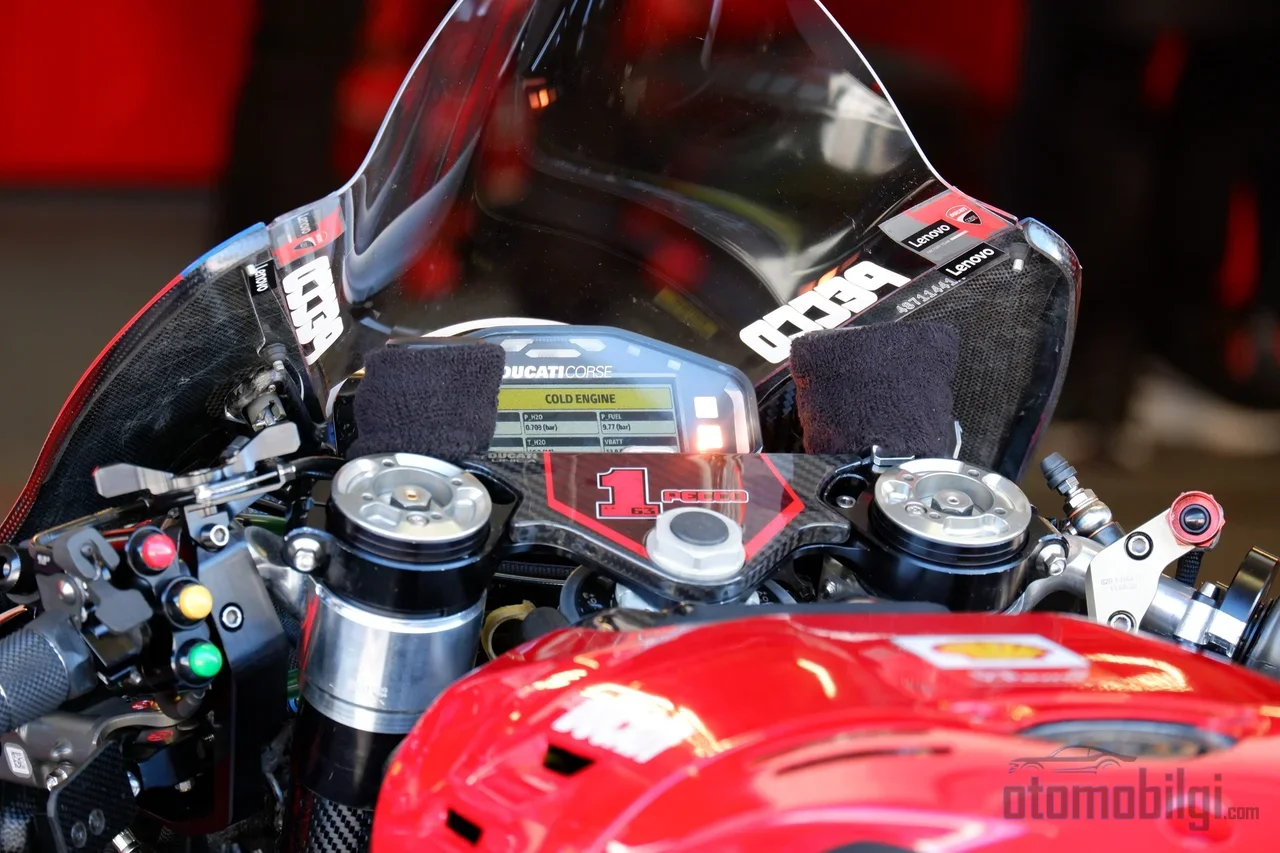
At the heart of the system is the ECU, or Electronic Control Unit. We can call it the motorcycle's brain. Throttle position, revs, gear, front and rear wheel speeds, lean angle, air and oil temperature, the tire's grip level... It analyzes all of these thousands of times per second and, accordingly, regulates everything from fuel injection to ignition timing, and from throttle response to engine braking. So it's not the sensors but this brain that processes the sensors' data instantly that is the real magician.
Which sensors measure what?
Let's look at the main data points the engineers analyze:
- Speed and acceleration patterns, braking points and brake pressure
- Throttle position and torque demand, gear behavior
- Lean angle and corner speeds, wheel speeds and wheelspin - that is, slip detection
- Compression and rebound movements of the front and rear suspension
- Tire pressure, temperature and wear, brake temperatures, fuel usage
- Sector time comparisons and lap overlaying with GPS data
There is also the IMU, or Inertial Measurement Unit. This tiny device measures lean angle, pitch (forward-backward tilt in the horizontal plane), yaw (rotation) and acceleration in real time. Think of the step counter sensor in your phone, but millions of times more precise, on a machine traveling at 300 km/h.
How Does Data Turn Into Electronic Helpers?
Collecting T is nice, but the real point is making this data make the motorcycle faster. That's exactly where traction control comes into play. The ECU constantly compares front and rear wheel speeds, throttle position, revs and lean angle. If the rear wheel is spinning faster than the front, that means loss of grip, in other words wheelspin; the moment the system senses this, it instantly reduces power. By adjusting the ignition timing, cutting fuel, or electronically closing the throttle bodies. All of this happens before you can blink.
Wheelie control works on a similar logic: wheel speeds, throttle and pitch angle are monitored, and when the front wheel's tendency to lift is detected, power and torque are reduced. At corner entry, engine brake management comes into play; when the throttle closes, it adjusts the engine's resistance to keep the rear end stable. On the exits, there's launch control, which is entirely electronic. Don't confuse it with launch devices: holeshot and ride-height devices are mechanical, while launch control is purely a software matter.
The Standard ECU and the Balance Problem
Because the electronics are so powerful, the federation's job is actually to rein them in. ECUs entered MotoGP in the early 2000s and manufacturers began making serious investments from 2002 onwards. However, so that competition wouldn't turn into a cutthroat electronics race, since 2016 all teams have been using the same standard ECU. The goal is for the technology to help the rider but not dominate. I think it's a very sensible decision: we want to ride a machine, not drive a tablet.
How Does Data Flow From the Pit Wall to the Factory?
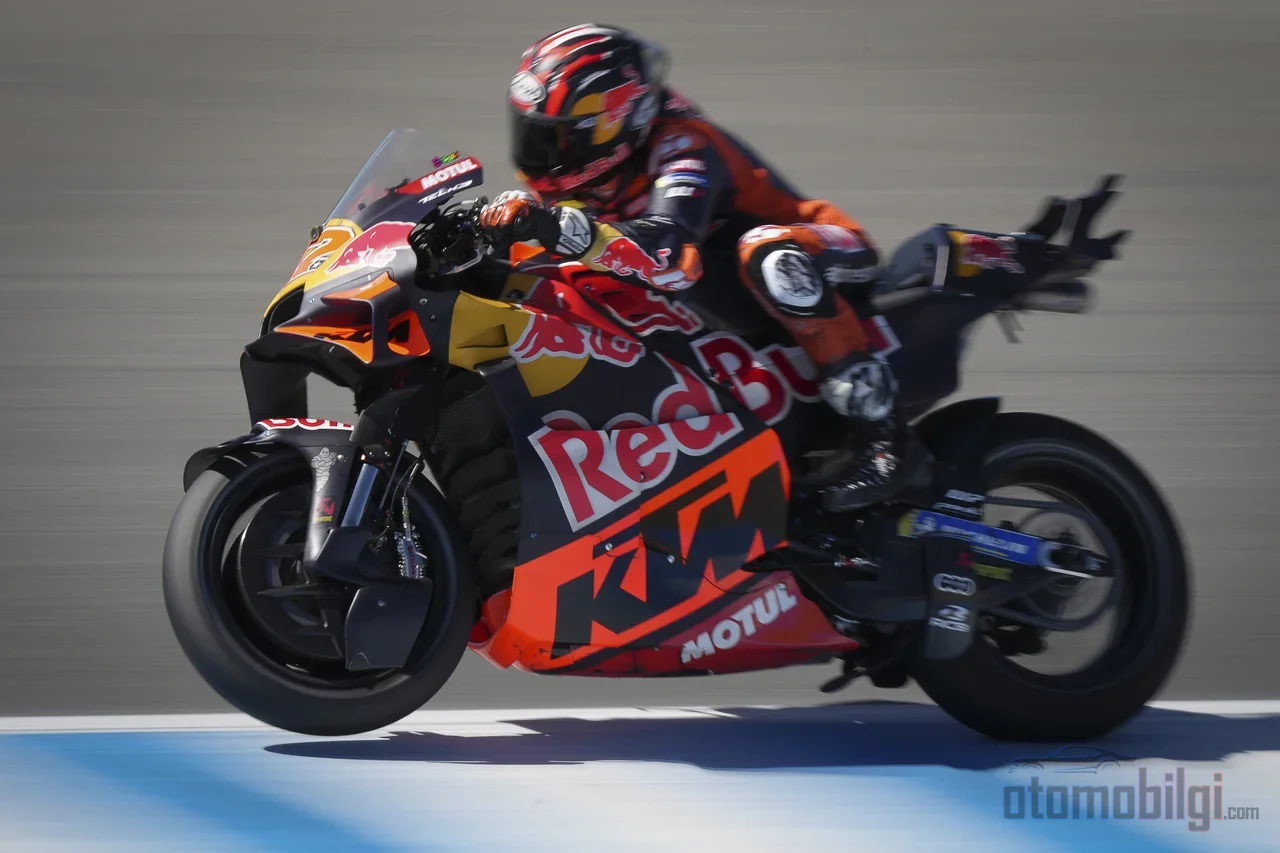
The pit wall image at the edge of the track is a photo opportunity for tourists, but for teams it's a data command center. The division of labor here is quite clear. The data engineer is the only person who connects to the motorcycle in the garage, calibrates all the sensors and downloads the data. The sensor list is dizzying: oil and water temperature-pressure measurements, throttle position, brake pressure, gear lever pressure for the quickshifter, gear position, torque output, lean angle, wheel speeds and suspension stroke sensors.
The strategy engineer, on the other hand, fine-tunes the traction control, engine brake, wheelie control and throttle sensitivity settings according to the rider. When a rider complains about something or the crew chief sends a request, the settings change. One step back, behind the garage, the data analyst and vehicle dynamics engineer are monitoring all the channels. They answer the most critical question: did this gain in the sector come from a new swingarm or from a software change?
The data doesn't end at the pit wall; it flows to the engine and chassis development groups at the factory. From there it also feeds back into long-term development: engine maps, aerodynamics, chassis. The rhythm of the week takes shape accordingly:
- Thursday: historical data and basic setup preparation
- Friday: telemetry and rider feedback analysis
- Saturday: qualifying lap and Sprint optimization
- Sunday: race strategy, monitoring in-race telemetry trends and the debrief afterwards
What Is Telemetry Used For in Rider Development?
This is my favorite part. Telemetry turns riding behavior from a subjective feeling into measurable graphs. A rider saying "I was fast in that corner, my instincts were right" is not enough; whether they brake too late, open the throttle too early, pick the wrong line, or whether the suspension setup does not suit their riding style - it all shows up clearly on the graph. Like a coach analyzing a training video, but with millisecond resolution.
Videometry and data dashboards
Since 2024, all MotoGP teams have had a videographer. In the method called videometry, a corner of the track is recorded and the racing lines of other riders are overlaid to show the fastest line. Just like ghost replays in video games, but in real life and with real champions. Since 2026, engine specifications have been frozen for most manufacturers, so teams now look for gains in setup and riding technique rather than the engine; that is exactly why videometry has become even more valuable.
Teams are also investing heavily in data visualization. A data dashboard developed for Ducati shows sector mapping, lap time trends, and performance consistency on a single screen. According to another figure, 8 riders are monitored in a single session, and this volume corresponds to 41 laps fully reconstructed through high-resolution video analysis. The numbers may sound exaggerated, but on track every millisecond means a grid position.
Are Accidents Investigated Using Telemetry?
Partly yes, but more complex than you might think. In accident investigations, telemetry is of course one data source; however, concrete academic studies are based mostly on video and image analysis. For example, visual and kinematic data were used in the kinematic analysis of the crash involving Johann Zarco and Francesco Bagnaia at the August 2020 Austrian MotoGP, which nearly ended in disaster. Likewise, in late 2024, the high-side crashes experienced by five MotoGP riders wearing airbag technology were examined through video and airbag records. So data is important in accident analysis, but not sufficient on its own; image, sensor, and safety equipment records are evaluated together.
The Data Race: Big Teams or Small Teams?
Let's be honest: data stands on the side of the one with the stronger fortress. Manufacturers spend millions every year to improve their electronic systems by a notch. Ducati is one of the pioneers in this regard; they map the motorcycle and adjust it through electronic management according to the rider's individual style - they have essentially built a team culture that races with data.
Factory teams - that is, the main squads of Ducati, Honda, Yamaha, KTM, and Aprilia - are the ones with the biggest budgets and human resources. Satellite teams, on the other hand, are squads that lease the motorcycles and work with more limited engineering power. The result is obvious: they can collect the same data, but the number of people to analyze it and the budget are not always the same. The disadvantage of small teams in this area is a genuine competitive gap that has seeped into their lap times on track.
Let's round up the engineering roles with a table:
| Role | Responsibility |
|---|---|
| Data engineer | Sensor calibration and data download |
| Strategy engineer | Traction control, engine brake, and wheelie control settings |
| Data analyst | Monitoring all channels, identifying performance sources |
| Vehicle dynamics engineer | Separating mechanical and software gains |
Can Telemetry Solve Everything?
No, and let's be clear about it. MotoGP teams have an incredibly broad pool of data, from brake pressure and throttle usage to lean angle and suspension movement. This data can show a rider where they are losing time. But data cannot be applied from a screen if the technique cannot be physically executed. In short, charts cannot replace the human factor; no matter how rich the feedback from the sensors is, applying it on the track is still the rider's job. When it comes to the best engineering, the first thing that comes to my mind is that, at the end of the day, the rider is still the team's most important person.
If we look at the general trend in motorsport, the picture gets even more interesting: artificial intelligence and machine learning can produce almost perfect pre-race strategies, and biometric gloves are already recording stress, blood oxygen, and heart rate. But a line has been drawn: no two-way intervention with the rider is possible during the race. In other words, the system monitors, suggests, and teaches, but it's not a steering wheel but handlebars, and they remain entirely in the rider's hands.
In summary: The Invisible Race
In MotoGP, telemetry is a giant nervous system that tracks every piston movement of a motorcycle, feeds the electronic aids, turns the rider's progress into graphs, and stretches from the factory all the way to the pit wall. But the purpose of this system is not to control the rider - it is to hold up a mirror in which he and the engineers can make better decisions. With the 2027 rules reducing engine capacity from 1000cc to 850cc and trimming the aerodynamics, this invisible race matters more than ever in these days when gains will be sought in software and data. Do you think that in this era of data, the next championship will go to the best rider or to the best data team? I believe it will happen where the two meet.
Sources
- What Electronics Are Used in MotoGP Bikes?
- What Is the Role of a MotoGP Race Engineer?
- Data analysis in motorcycle racing: How telemetry boosts performance
- Videometry in MotoGP - what is it and why are they using it?
- How telemetry and data in motorsport is changing
- MotoGP: How Ducati goes racing with data
- Lenovo powers a first-of-its-kind data dashboard for Ducati
- From data to track: accelerating performance in MotoGP 2025
- Descriptive Kinematic Analysis of the Potentially Tragic Accident (MDPI, 2020)
- High-side falls: Analysis of videos and airbag data collected during racing accidents
- Why can't telemetry solve everything in MotoGP?