George Russell to Receive a 5-Place Grid Penalty at the Brazilian Grand Prix
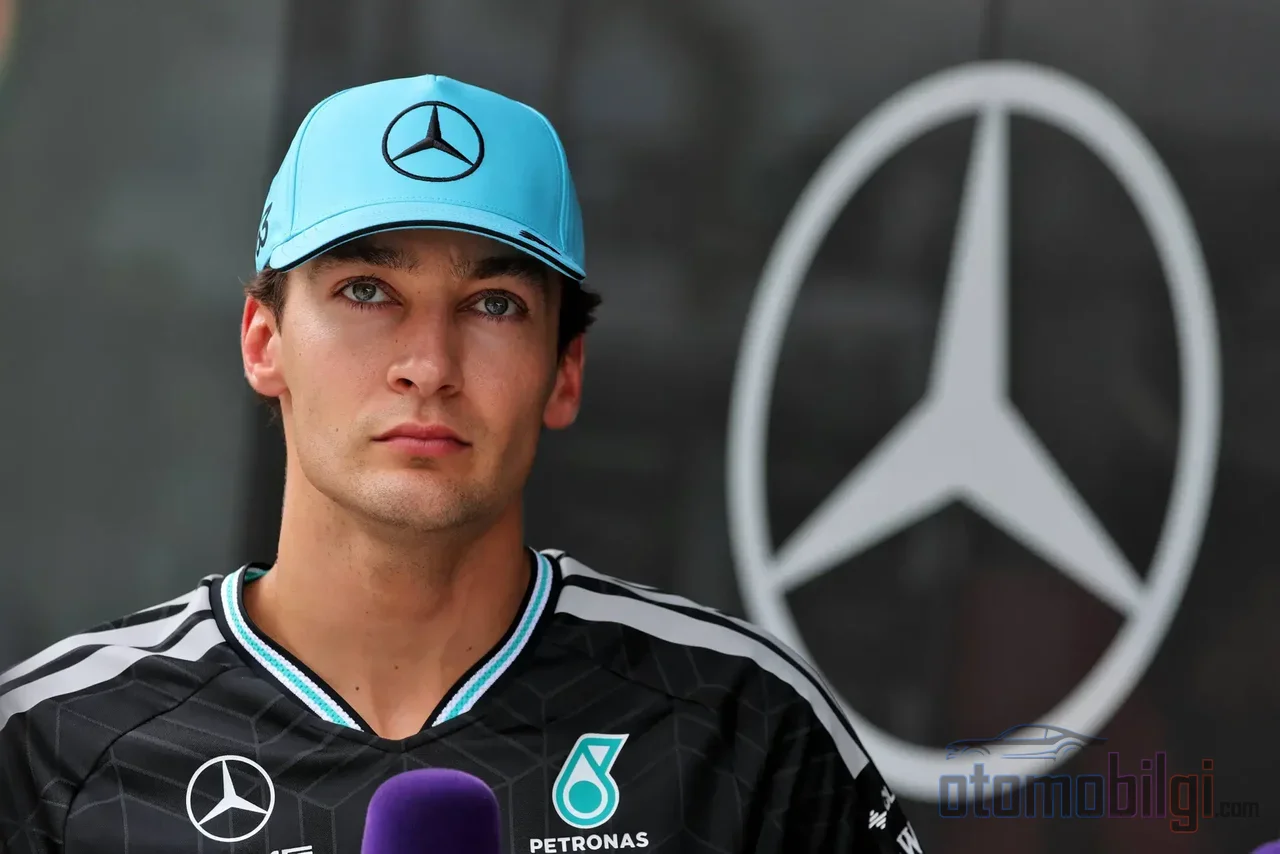
George Russell's 2026 season is unfolding like some kind of trauma diary: After every recovery attempt, a new obstacle appears. The latest example came at Interlagos; Mercedes decided to fit the British driver's car with its sixth internal combustion engine (ICE) of the season ahead of the Brazilian Grand Prix, which means dropping five places on the grid. This is Russell's second grid loss in the last four-race stretch. So why exactly five places, how has Mercedes' engine strategy evolved to this point, and where does Russell stand in the championship order?
What Does a Five-Place Grid Penalty at the Brazilian GP Mean?
When Russell lines up in São Paulo, he will start five places further back on the grid. The reason is technically simple: Mercedes fitted the sixth internal combustion engine (ICE) of the season to his car, which means exceeding the power unit allocation set at the start of the season. The internal combustion engine is only one of the core components of the power unit in the hybrid era of Formula 1; electric elements such as the Energy Store and Control Electronics are also subject to the same allocation system.
The way the rule works may seem odd at first glance: A season's fourth ICE carries a 10-place penalty for drivers, while the fifth and sixth engines result in only a 5-place drop. In other words, using more engines becomes cheaper after this point. The total of engine-related penalties in a single race cannot exceed 70 places; the floor is 5 places. The logic of this design is to keep penalties proportionate: The first exceedance carries a heavy penalty, while the marginal cost of subsequent overuse is low.
Highlights
- George Russell takes a 5-place grid penalty at the Brazilian GP for his season's sixth ICE
- He sits fourth in the drivers' championship with 250 points; Verstappen has 261, Hamilton 259
- He had taken a total of 60 grid places in penalties in Singapore and started 19th Mercedes had postponed the engine change until an updated specification was ready
- In 2022, Interlagos hosted Russell's first and only Grand Prix victory
- In 2022, Interlagos played host to Russell's first and only Grand Prix victory
Russell confirmed the penalty himself in an interaction on his team's social media account:
He announced that he would take a five-place penalty at Interlagos due to a power unit change. This removes any speculative dimension to the matter; the decision is final. the decision has become final. The fact that the British driver himself spoke about the details of the penalty is a sign that Mercedes no longer saw a need to keep the change hidden.
Engine Chain: Malaysia, Singapore and the Exhaustion of Quotas
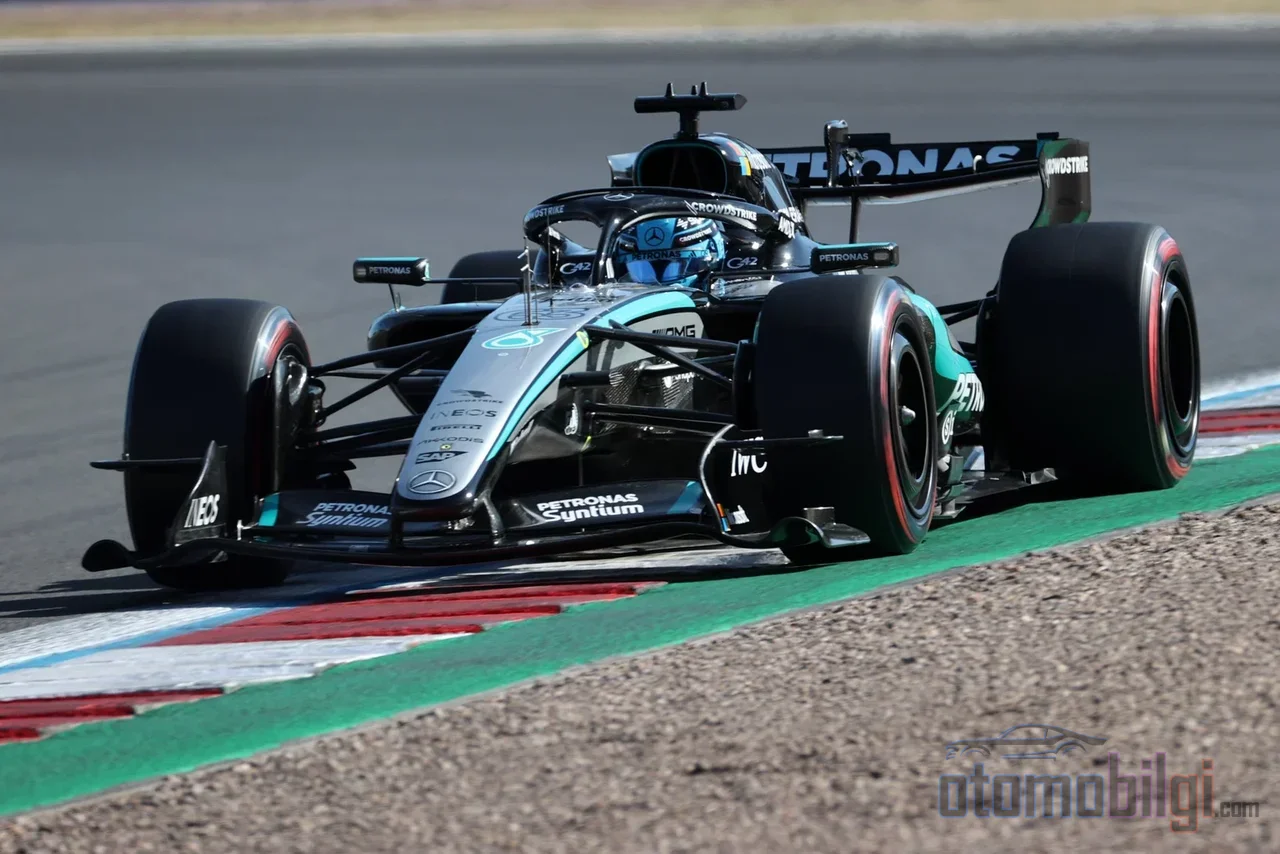
Reading the Brazil penalty in isolation would be misleading; this is the final link in a chain that had been building throughout the season. At the Malaysian Grand Prix in September, Russell retired with a mechanical failure in the final six laps of the race, at a moment when he had podium potential. In Singapore, things got even more complicated: A fourth Energy Store and a fourth Control Electronics were fitted to the car; both elements carried a 10-place penalty each under Articles B8.2.2 and B8.2.3. With the electrical components included, the total penalty reached 60 grid places, and Russell started 19th. on the grid.
Reuters' report in early October had clarified the official situation: Mercedes confirmed that Russell had no engines left in his four-engine season allocation. That meant taking a new engine in Singapore was unavoidable. From that point on, every new ICE inevitably meant a new grid penalty. The five-place penalty in Brazil was the mildest version of this unavoidable outcome.
Why Had Mercedes Delayed the Engine Change?
There was a strategic choice involved here: Rather than taking the penalty in one go, Mercedes waited for an updated engine specification, a new version, to be ready. In other words, the team tried to time the penalty for a driver who had exhausted his allocation with the most advantageous race. This approach can be read in two ways: Some see the decision to wait for the new specification as sensible risk management; others characterize it as the failure of the team's pre-season engine planning being paid for out of Russell's championship fight.
Slipping to Fourth in the Points Table and an Admission of Exhaustion
The penalty news comes at a time when Russell's championship fight has effectively ended. He has slipped to fourth place in the drivers' standings with 250 points; race winner Max Verstappen sits ahead of him with 261 points and Lewis Hamilton with 259. His teammate Kimi Antonelli, meanwhile, has already clinched the championship. After the Italian Grand Prix, Russell had said that, accepting the 66-point gap to Antonelli, he was abandoning his championship bid and that his only goal now was to win as many races as possible.
The driver's own words were more striking: Russell speaks of the exhaustion caused by having to constantly recover this season, of mental burnout. After his teammate's championship, he had also begun to question how often he experienced bad luck throughout the season. These remarks were met with sympathy from fans, and with criticism from some quarters; how his motivation will shape up for the rest of the season is a matter of curiosity.
How Do the Numbers Show the Lost Points?
The points cost of the reliability problems is striking: The Malaysia DNF alone meant a loss of roughly 6 points relative to a fourth-place baseline; the retirement in Bahrain could reach 12 points. Add to these the effect of the 60-place penalty in Singapore on the race result and the 10-second time penalty he received in Mexico for contact with Isack Hadjar on the first lap, and Russell's season picture becomes clearer. Mercedes also paid the FIA a 5,000 euro fine because the driver missed the media day in Mexico.
| Race | Incident | Sanction |
|---|---|---|
| Bahrain | Reliability problem, retirement | A loss of roughly 12 points |
| Malaysia (Sepang) | Mechanical failure in the final 6 laps | DNF, a loss of roughly 6 points |
| Singapore | 4th Energy Store and 4th CE + engine | A total 60-place grid penalty |
| Mexico | 1st lap crash (Hadjar) | 10-second time penalty |
| Brazil | Race 6 of the season ICE | 5-place grid penalty |
Interlagos Holds a Special Place for Russell
The 2022 São Paulo Grand Prix was a milestone in Russell's career: Here he won his first and so far only Grand Prix victory, Lewis Hamilton finished second, and Mercedes achieved a 1-2 finish after many years. Brazil is tied to a memory that is remembered this way with the British driver's name. Now, in a race he will start five places back, the goal is to climb forward with a performance reminiscent of Hamilton's legendary comebacks at Interlagos.
Interlagos's history with Russell is not entirely bright either: In 2023, he received a two-place grid penalty for blocking Pierre Gasly at the pit exit. The track has always been a place of intense emotions for him; both the victory and the penalty happened on the same asphalt.
How Much Will the Five-Place Penalty Cost the Race?
The short answer is: A five-place grid drop is a recoverable penalty at a track where overtaking is possible, like Interlagos; but Russell's real loss in the 2026 season is not these five places, but the points cost of the engine allocations and reliability problems accumulated throughout the season. The championship claim is long over, and the fourth place in the standings is the result of a story far beyond five places.
To broaden the perspective: Engine penalties are the grid's reflection of Formula 1's durability cost. In the past, engines swapped from one race to another, and allocation wasn't even a topic; now the seasonal number of each element is limited, and the price of exceeding it is paid on the grid. Mercedes' fourth allocation was exhausted with the failure in Malaysia; every remaining race will be a test of both durability and performance for the new specification engine. For Russell, Brazil is one of the remaining pieces of an exhausted season that can still be won.
The exact reflection of the penalty on the race order is not yet clear; it will become clear after the grid is formed and the race is run. However, when looking at the season table, these five places are not enough to change the big picture. The only thing that could change it is whether Russell will crown the season with a victory through a comeback reminiscent of his 2022 win.
Sources
- Mercedes driver to take five-place grid penalty at Sao Paulo GP for engine change
- George Russell eyes Lewis Hamilton heroics as Brazil grid penalty confirmed
- Mercedes' Russell expects one more engine penalty as title hopes crumble
- George Russell handed another 20-place penalty before the Singapore Grand Prix
- How much has bad luck really cost George Russell in F1 2026?
- George Russell's F1 engine nightmare to continue
- 2022 São Paulo Grand Prix
- F1 engine penalties explained