Hybrid or Diesel: Fuel Math on Long Journeys
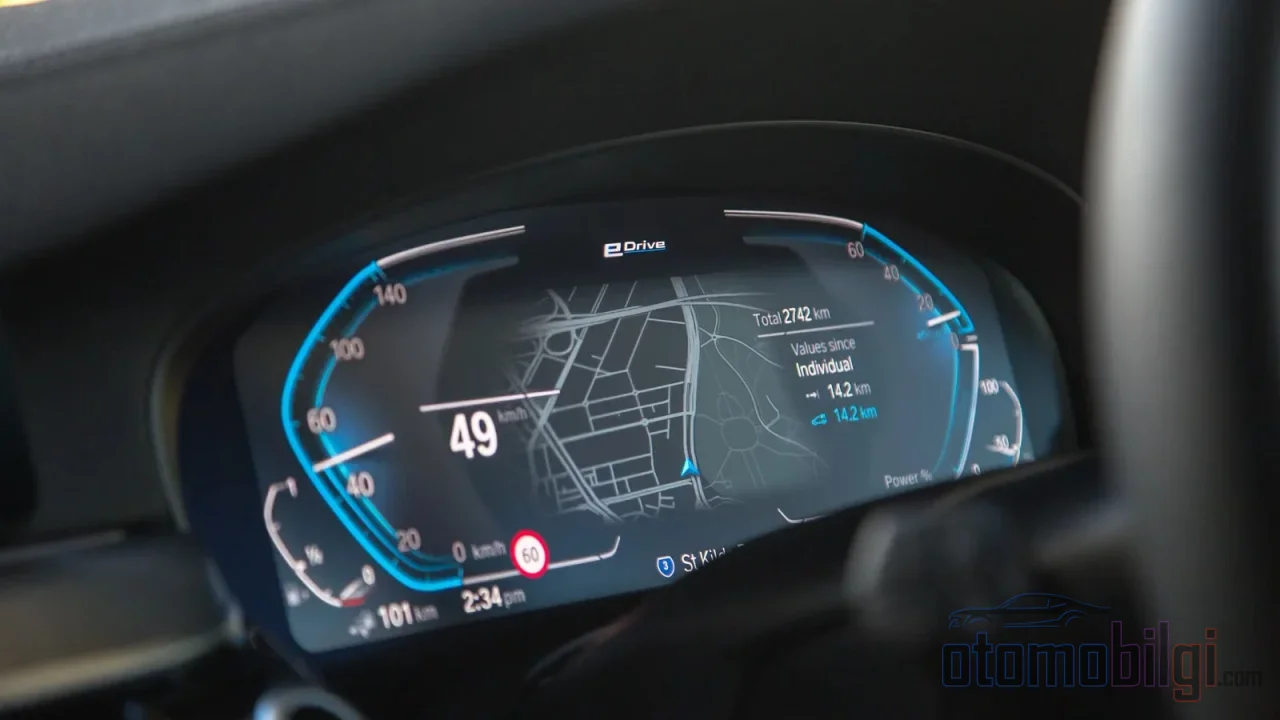
The moment you hit the highway, the hybrid's biggest trump card leaves the table. A hybrid that burns up to 40% less than its gasoline counterpart in stop-and-go city traffic thanks to regenerative braking and electric assistance reduces this advantage to below 20% on long roads where you cruise at constant speed for kilometers. The diesel, however, burns exactly at this point - the speed band where electric assistance is effectively disabled - still like a diesel. So is the right answer the same for a driver doing 10,000 km a year and one doing 30,000 km? When you factor in fuel costs in liters and L/100 km, the picture is much clearer than assumed - but not on the side you expect.
The purpose of this article is simple: to set aside the catalog brochures and calculate the fuel bill of hybrid versus diesel across three different annual mileage scenarios using real-world consumption figures. We will also show with numbers where the break-even point lies.
Why Catalog Consumption Is Not Used in This Calculation
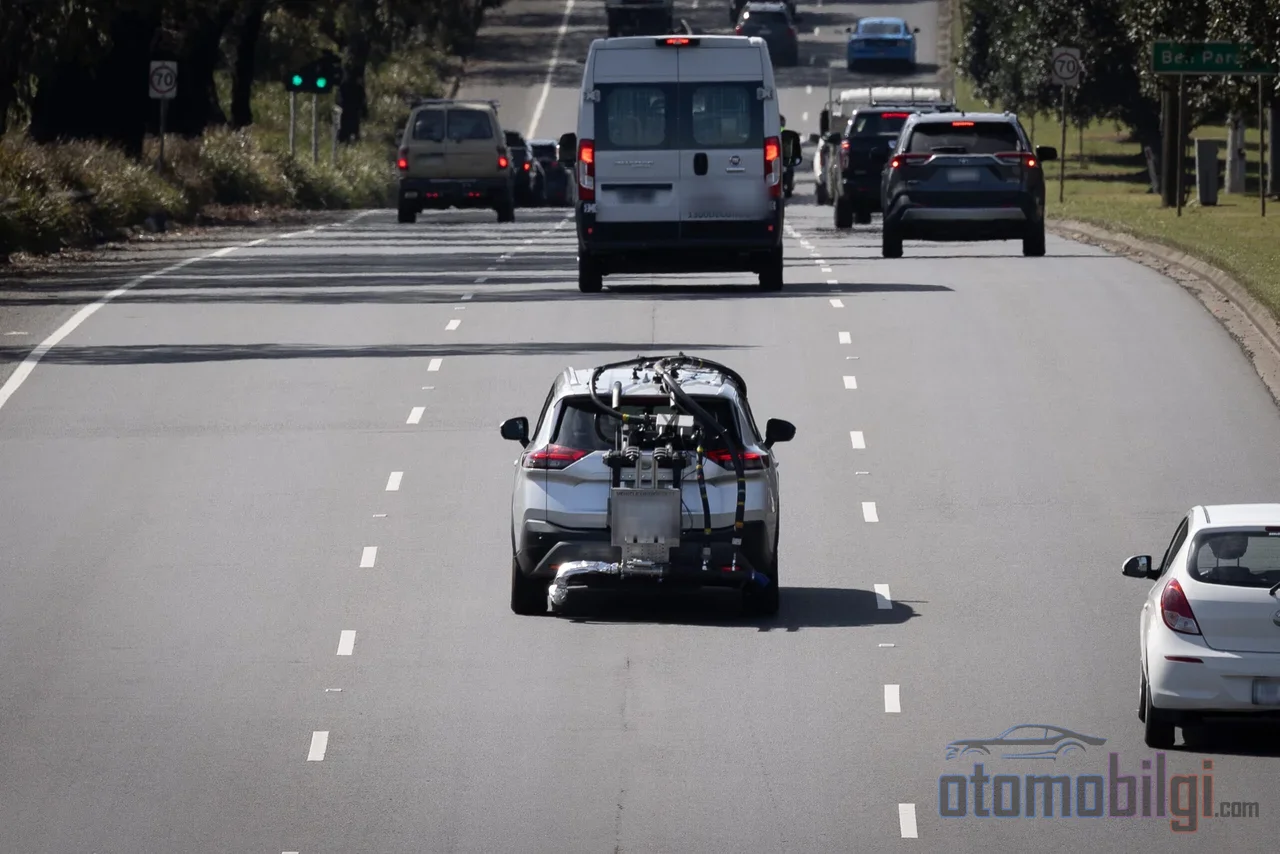
Consumption figures measured under laboratory conditions, especially for hybrids, lag behind the real road. A program in Australia tested around 200 vehicles under real road conditions over three years, and it included 36 hybrids; the result was striking. Most hybrids burn more than their catalog values, and the deviation can reach up to 33% depending on the model. Although the deviation for hybrids dropped to the 2-9% band in the final test round, the picture remains variable by model: some hybrids had even burned less than their catalog values in the previous round. The 2026 Toyota RAV4 Hybrid FWD is a good example: a vehicle listed at 4.5 L/100 km in the catalog consumes 4.6 L/100 km on the real road - meaning the deviation for this model is negligible.
Academic literature paints a broader picture: in real driving, the consumption of hybrid vehicles has been measured 44-100% higher than laboratory values, and that of conventional vehicles 30-82% higher. This does not mean hybrids are bad vehicles; it means that free-flowing, constant-speed highway conditions bear no resemblance to the test cycle. User observations confirm the same direction: it is reported that 25 mpg (about 9.4 L/100 km) was measured on a 500-mile journey from a hybrid that promises 32 mpg (about 7.4 L/100 km) in the catalog, while 34-35 mpg can be achieved at high speeds in the 60-65 mph band. Therefore, all comparisons on this page will be based on real-world consumption figures using sample values.
Key Takeaways
- The hybrid's fuel advantage is around ~40% in the city, dropping to ~20% on the highway
- The catalog-to-real consumption deviation in hybrids can reach up to 33% depending on the model
- Diesel typically delivers 30-35% lower consumption compared to gasoline
- In mixed use of 15,000 miles a year, a hybrid driver saves about ~$459/year in fuel
- In cold weather, hybrids' efficiency drops by about ~30-34%
Why the Hybrid's Advantage Narrows as Speed Increases
The technical root of the problem lies in the architecture of the hybrid system. The electric motor is designed not to replace the gasoline engine, but to support it; its power is limited. At low speeds and in stop-and-go traffic, the electric motor carries a significant portion of the load, braking energy is recovered back into the battery, and the gasoline engine does not operate in its inefficient range. At constant highway speeds, the power comes entirely from the gasoline engine; aerodynamic drag increases with the square of speed and electric assist is effectively disabled.
The efficiency behavior relative to speed is also fundamentally different between the two technologies. Mid-size gasoline vehicles reach their best efficiency at around 55 mph (88 km/h), while diesels begin a gradual decline in the 45-55 mph band and become rapidly inefficient beyond that. A hybrid, on the other hand, shows a more regular, linear efficiency loss across the 45-75 mph range. In practice, this means that at a constant pace of 100-120 km/h, a well-tuned hybrid can achieve consumption close to its city value - which is actually not a bad result for a hybrid, it simply means it is above the catalog figure.
The Difference Between City and Highway Advantage
In mixed use, an average hybrid uses roughly 40% less fuel than its gasoline counterpart in the city, while on the highway this figure is only around 20%. On the diesel side, the picture is different: diesel engines typically deliver 30-35% better consumption than gasoline ones, and this advantage is relatively independent of the usage profile - in fact, at constant high speeds, the diesel's power and torque character works in its favor over long distances. The first engineering conclusion to draw from this is: as the usage profile shifts toward the highway, the consumption gap between hybrid and diesel closes.
Fuel Cost Calculation for Annual Mileage Scenarios
Now let's do the math. Based on real-world data, we will use representative but realistic values: for highway-weighted long-distance use, assume a modern full hybrid SUV consumes about 6.0 L/100 km on real roads, and a diesel equivalent in the same class about 5.4 L/100 km - the band where the hybrid's 20% highway advantage disappears while the diesel's 30-35% advantage is preserved. Since fuel prices vary by country, we set up the calculation with a sample price of 2.0 units per liter, and present the result in a way you can read proportionally.
| Annual mileage | Hybrid annual fuel (L) | Diesel annual fuel (L) | Annual cost difference |
|---|---|---|---|
| 10,000 km | 600 | 540 | Diesel ~120 units ahead |
| 20,000 km | 1,200 | 1,080 | Diesel ~240 units ahead |
| 30,000 km | 1,800 | 1,620 | Diesel ~360 units ahead |
This table shows a pure highway profile and reveals a striking fact: in long-distance-weighted use, fuel cost alone favors the diesel; the gap grows as mileage increases. However, real driving profiles are rarely pure highway. Mixed use - for example, a 55% city, 45% highway distribution with city sections dominant - engages the hybrid's 40% city advantage and reverses the picture. With the same profile, at 15,000 miles (approximately 24,000 km) of annual use, the gasoline model's annual fuel cost is $1,434 while the hybrid stays at $975, meaning an annual saving of approximately $459 is possible; over a five-year horizon, this translates into savings of $3,000–4,000.
How the Difference Changes in a Mixed Profile
As the city share of your travel increases, the hybrid's advantage quickly returns. The hybrid is the city driver's car; regenerative braking and electric propulsion at low speeds create a cycle that turns every stop-and-go moment into fuel. For this reason, when reading the highway table above, place your own profile in it: if more than a third of your route is city or slow traffic, start thinking in favor of the hybrid; if nearly all of it is highway, start thinking in favor of the diesel. This threshold is not a sharp line but a curve - yet its direction is clear.
Scenarios That Reduce the Hybrid's Advantage
Besides fuel price and mileage, there are three conditions that shake up the calculation. The first is cold weather: efficiency drops by ~30–34% in hybrids under winter conditions, and this effect is more pronounced in hybrids than in gasoline vehicles. The reason is technical: at low temperatures, battery output declines, and the internal combustion engine is used more frequently for cabin heating and windshield defrosting. Users report that consumption increases noticeably in freezing weather on mixed routes.
The second is load and speed: a fully loaded hybrid at consistently high speed can consume as much fuel as a gasoline vehicle - because under these conditions the system effectively operates like a conventional gasoline car. The third is mountain roads and trailers: on long climbs and under towing load, the power demand exceeds the capacity of the electric assistance. All three of these scenarios are factors that effectively increase the highway share of your usage profile; in other words, they pull the calculation in the same direction again, in favor of the diesel.
Which Vehicle Should Buy Which: Clear Measurements
Let's list the decision variables. Annual mileage is the largest single factor determining which fuel type makes financial sense. Based on that: for a driver doing mixed driving under 25,000 km per year, the hybrid is the right answer; with city-heavy, low-mileage use, the hybrid's advantage is at its peak. For a driver with very high annual mileage whose route is nearly all highway, the diesel clearly makes more sense - both the consumption difference and the hybrid's narrowing advantage on the highway point this way.
In terms of break-even time: the hybrid's purchase price is generally higher than its diesel and gasoline equivalents (for example, the same model's turbocharged diesel version costs about $3,500 more than the gasoline one, and the hybrid version $6,500 more) and in typical use, the hybrid closes this gap in 3–9 years depending on its annual mileage. If your mileage is low, this period extends; if the highway share is high, the hybrid's savings margin narrows and the period extends even further. For a driver close to average, the expected picture is clear: a hybrid with 15,000 miles/year and a 55% city share produces $3,000–4,000 in fuel savings over five years.
Conclusion: The Decision Formula in a Single Sentence
In a long-distance-heavy profile of over 25,000 km/year at high speeds, diesel leads on fuel costs and the gap grows with every kilometer; below 20,000 km per year, if at least a third of the travel is urban or stop-and-go, the hybrid wins by a clear margin with hundreds of liters saved annually. In the gray band in between, the decision depends on your fuel price ratio and the price difference between the vehicles - the calculation itself is on this page, and the only variable you need to enter by hand is the pump price.
One final reminder: do the math with real-world consumption, not catalog figures. Find the real-world value of the model you choose; in hybrids, the deviation from catalog figures can be close to zero or climb as high as 33%, and this is the variable that can completely change the break-even calculation.
Sources
- Do hybrid cars and SUVs match their fuel consumption claim?
- Maps and Data - Fuel Economy at Various Driving Speeds
- Fuel consumption and emissions performance under real driving conditions
- Diesel vs Hybrids: The Costs and Benefits of Both
- Hybrid vs. Gas in 2026: When the Better MPG Starts Paying Off
- Fuel Economy Comparison: Hybrid vs Diesel vs Gas
- Are Hybrids Good for Long-Distance Driving?
- Understanding Hybrid Vehicle Fuel Economy
- Pros and Cons of Buying a Hybrid
- Diesel vs Petrol 2026: The Definitive Answer