BMW Reveals the Secret E38 M7 Prototype
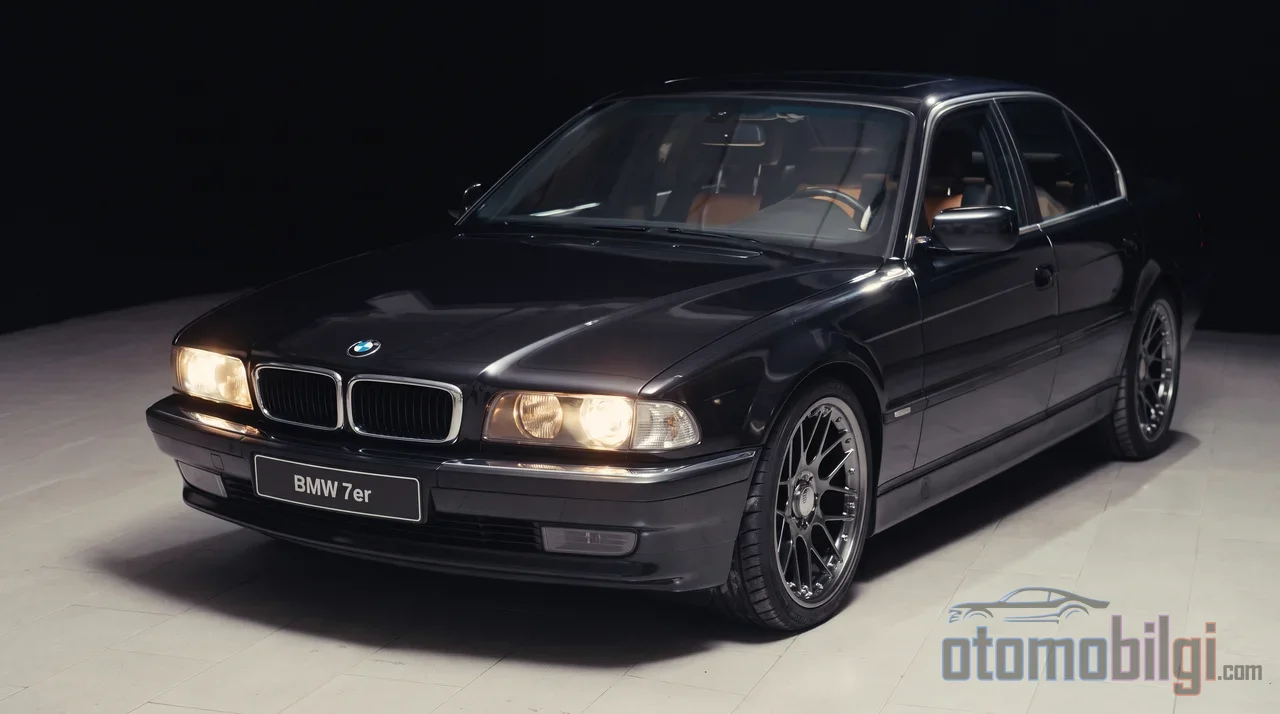
A secret that had been waiting quietly for nearly thirty years on BMW's archive shelves finally came to light in November 2026 with a short video posted on social media: An M7 prototype built on the E38 generation 7 Series that never made it into production. The company's classic car division showed the car publicly for the first time, and the automotive world began discussing this unknown chapter of luxury sedan history. So what exactly was this car, what was inside it, and why was it shelved?
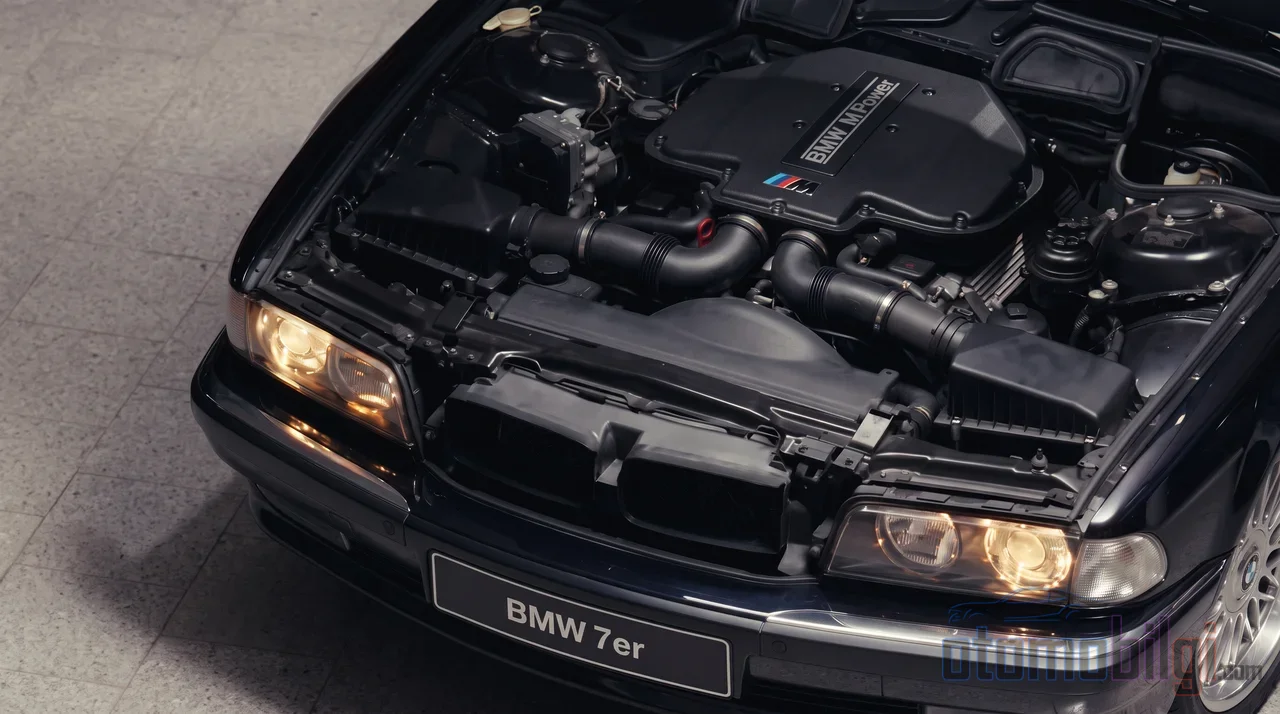
The story begins in Munich in the late 1990s. BMW's M division attempted to place the 4.9-liter naturally aspirated V8 engine, coded S62 and developed for the E39 generation M5 then in preparation, into the body of the luxury sedan flagship. The resulting car could have been a series-production M7; it was not. It remained a single prototype and waited for years in a corner where no one could see it.
When and How Did the E38 M7 Prototype Emerge?
The announcement was made with a short video posted on the social media accounts of BMW's classic car department. The footage was widely covered in the automotive press on November 15-16, 2026. It appears that the prototype was kept secret for about thirty years, and its existence was not publicly mentioned in any form during that time.
The car in question was built on the basis of a 1997 model 740i with a short wheelbase. In other words, the M7 idea existed not just as a design study on paper, but as a running, real car. BMW did not make a detailed statement about the project's background; the information given is largely based on what appears in the promotional video and the shared technical specifications.
Highlights
- The prototype was built on a 1997 model short-wheelbase 740i
- The engine is the 4.9-liter naturally aspirated V8 (S62) taken from the E39 M5
- Power is stated to be in the range of 394-400 hp at 6,600 rpm
- The gearbox is the six-speed manual from the E39 M5
- Top speed 250 km/h, weight approximately 1,875 kg
Technical Specifications: The Heart of the E39 M5 in the Body of the E38
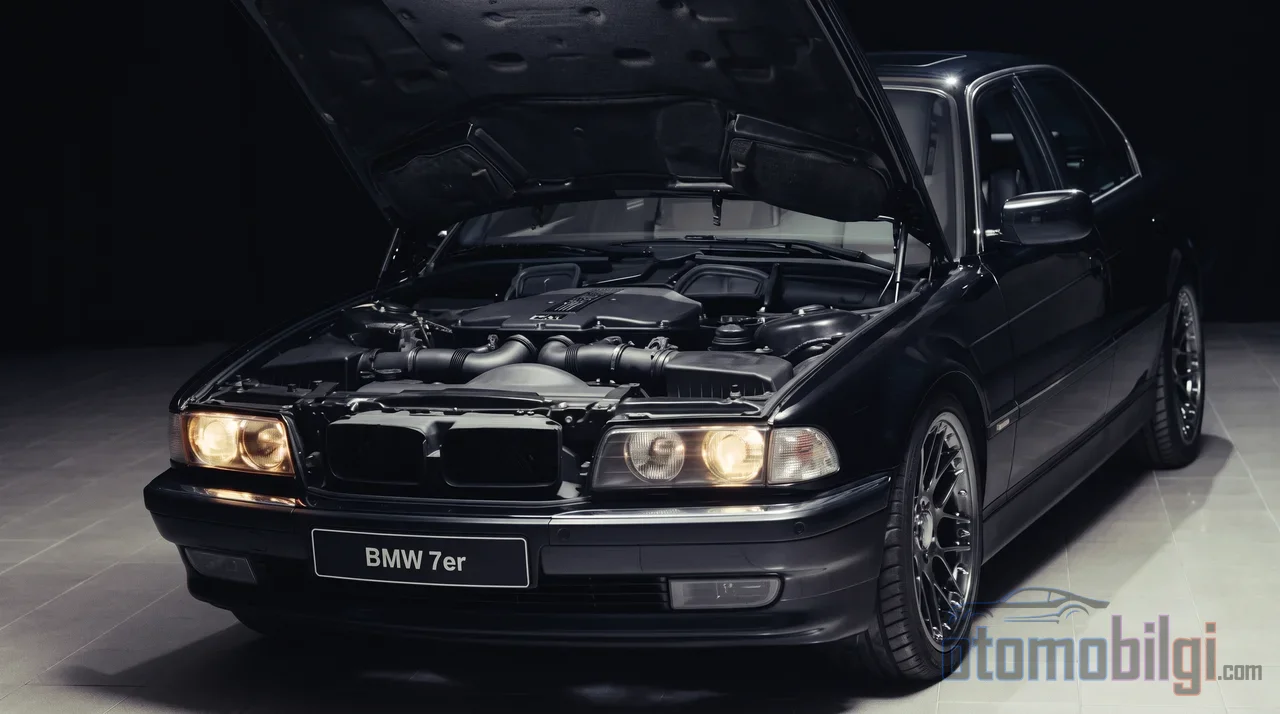
The most striking aspect of the prototype is where the powertrain came from. The car uses the 4.9-liter naturally aspirated V8 engine coded S62, which was being developed for the then-new M5 model. The power of this engine is reported between 394 hp and 400 hp at 6,600 rpm in various publications; both figures correspond to the two commonly used specification numbers for the same engine. A comparison is in order: the standard 740i's 4.4-liter V8 produced 282 hp. In other words, the prototype carried roughly forty percent more power than the car it was based on.
Another important detail that came with the engine is the gearbox: the six-speed manual unit from the E39 M5. Considering that the E38 was never sold with a manual transmission in the North American market, this is not merely a technical detail but a character-defining choice. The M5 traces continue in the interior as well: The console-integrated gear lever, the three-spoke M steering wheel, and the M gauge cluster also taken from the E39 M5 are completed with black and tan two-tone upholstery.
Known Specification Values
| Specification | Value |
|---|---|
| Base vehicle | 1997 BMW 740i (short wheelbase) |
| Engine | 4.9 L naturally aspirated V8 coded S62 |
| Power | 394-400 hp @ 6,600 rpm |
| Transmission | 6-speed manual (E39 M5) |
| Top speed | 250 km/h (155 mph) |
| Weight | Approximately 1,875 kg (4,134 pounds) |
The weight figure points to an interesting detail: the prototype, at roughly 1,875 kilograms, was lighter than both the US-market 740i (4,255 pounds) and the era's chief rival, the S55 AMG (4,190 pounds). Top speed was electronically limited to 250 km/h; the same limit as the E39 M5. The torque value and the 0-100 km/h acceleration time were not disclosed by the manufacturer. BMW never shared performance measurements such as acceleration on any platform; the disclosed weight stands out as the only new technical datum brought by the announcement.
Appearance: A Sedan That Looks Ordinary
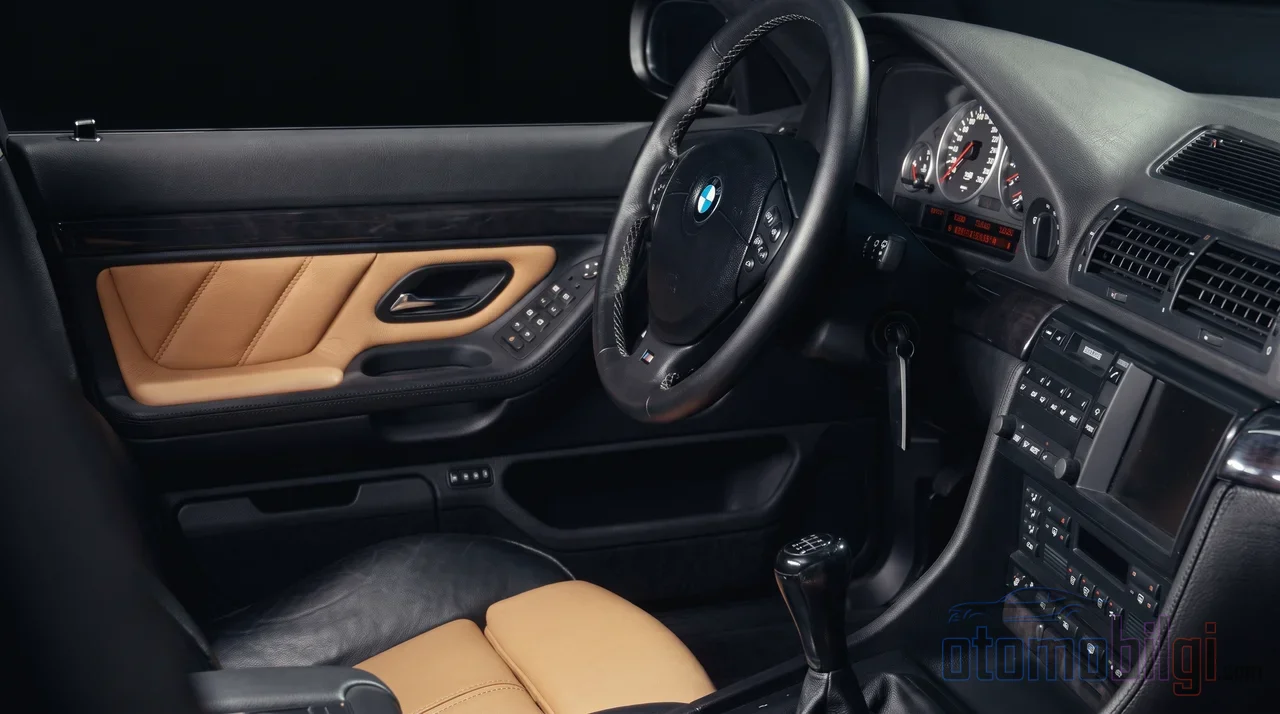
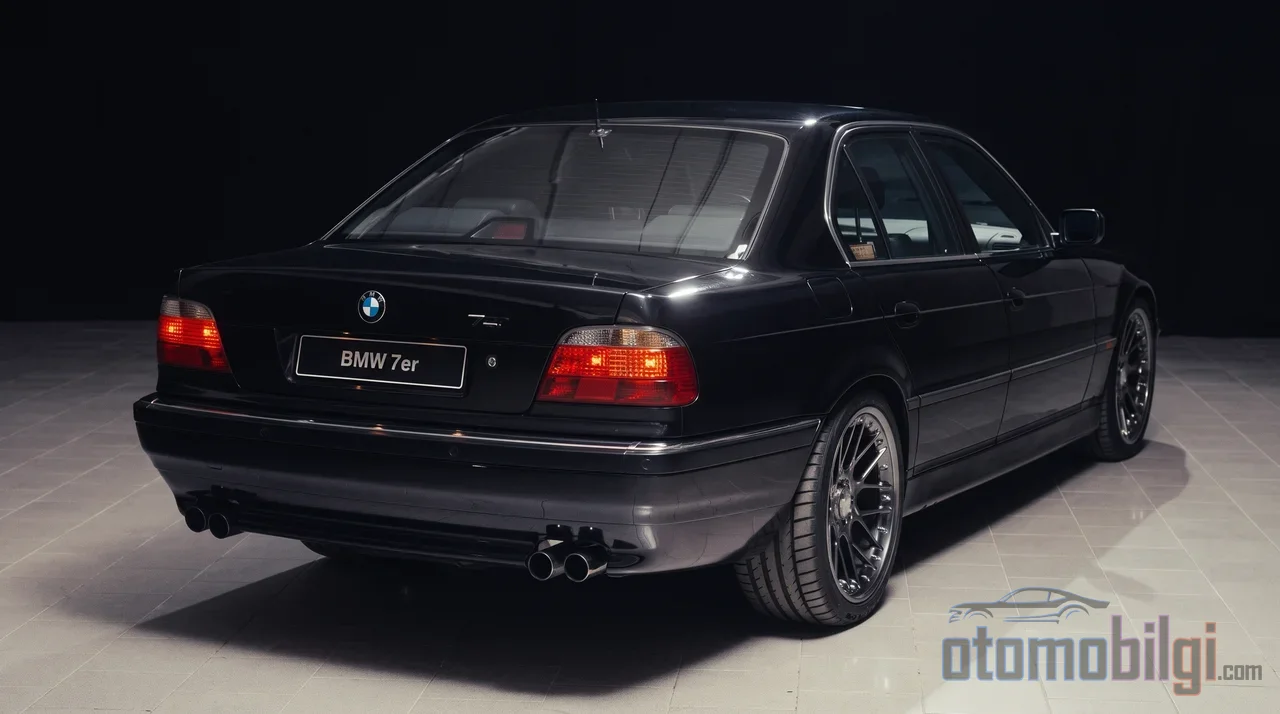
From the outside, the car looks largely like an ordinary 740i. You notice the difference when you look closely: BBS wheels and a quad-outlet exhaust system. The rear bumper was reshaped for the four exhaust tips seen on the E39 M5. Inside, era luxury features such as electrically adjustable rear seats and the telephone on the center console were preserved intact.
This approach fits the M philosophy of the era perfectly: an unassuming exterior, driver-focused mechanical substance. Yet the car was not spared an abundance of standard equipment either. The engineers appear to have tried to build a sport sedan identity without sacrificing luxury limousine comfort. At the end of the 1990s, the only body capable of carrying that balance was the E38, and it was found worth trying.
Why Did the M7 Never Enter Production?
There is no official explanation as to why the project was terminated. Evaluations point to two main reasons. The first was the concern that the M7 would internally cannibalize the sales of the V12-powered 750i at the top of the regular 7 Series lineup, that is, create competition within the same family. The second was that the E39 M5 offered essentially the same V8 performance in a smaller and lighter body at a far more reasonable cost.
The conditions of the era must also be taken into account. In the 1990s, there was effectively no segment for the M7 to occupy. On the Mercedes side, although AMG produced some W140-based S-Class models, buyers had to wait for the S55, introduced with the 2001 model year, W220-based, and producing 355 hp from a 5.4-liter naturally aspirated V8, to get a series-production AMG S-Class. BMW had an uncontested field in its hands, but it cannot be said that it was convinced the market was ready to fill this gap. Statements from M management in earlier periods that such a model would not be made due to costs also support this picture.
What Did 400 Horsepower Mean in 1997?
By today's eyes, 394-400 hp is considered ordinary for a performance sedan. Things were very different in 1997: in the same period, the Ferrari 355 was producing only 380 hp. In other words, this prototype carried more power in a luxury sedan body than Ferrari's mid-engine sports car. This context is instructive in showing just how ambitious the M division's calculations were in the 1990s.
The E38 generation 7 Series was produced between 1994 and 2001, and an M7 never saw series production throughout that generation. The vehicle that came closest to series production was the V12-powered M760Li, whose production was discontinued. The current lineup has reached 671 hp with the M70 version of the fully electric i7; so although the M7 name was never used, the concept of the most powerful 7 Series lives on today with electric powertrains.
Other Prototypes Emerging from BMW's Archive
This announcement is not the first time BMW has revealed a hidden prototype after years. In 2024, the second version of the V16-powered Goldfisch concept based on the E32 was shown. In 2016, 16 years after its production ended, the E46 M3 Touring feasibility vehicle was brought to light. And in 2022, numerous CSL prototypes, including an M5 CSL, were exhibited for the first time.
It is also an important note that these archive revelations should not be read as previews of a new model. BMW makes these kinds of shares to reveal the unseen pages of 7 Series history with enthusiasts. So the emergence of the E38 M7 prototype is not a harbinger of a future M model; it is a thirty-year-delayed confession about just how far the boundaries of the luxury sedan were once pushed.
Conclusion: What Does the Never-Produced M7 Say Today?
To sum up briefly: In 1997, BMW produced a real M7 prototype by fitting the 4.9-liter S62 V8 engine and six-speed manual transmission from the E39 M5 into a short-wheelbase 740i; the vehicle carried 394-400 hp, a top speed of 250 km/h and a weight of around 1,875 kg, but due to cost concerns and internal competition with the 750i, it never entered series production and remained hidden for about thirty years.
Today's M world is in the midst of an ambitious journey reaching toward the hypercar. Viewed from this perspective, the significance of the E38 M7 prototype is clear: it shows that the M brand tested the boundaries in the luxury class thirty years ago, even proved it with a working car, but withdrew on the grounds that the market was not yet ready. Even thirty years later, the idea of an E38 with quad exhausts, a manual transmission and an M5 engine suggests just how impressive it would have been had it been produced. Perhaps this is the most fitting comment that can be made about a prototype: the right car, the wrong decade.
Sources
- BMW Just Revealed a Long-Hidden E38-Gen 7-Series Prototype For an M7
- E38-Based BMW M7 Prototype Had M5 Power and a Six-Speed Manual
- BMW built a secret 'M7' E38 7 Series prototype using an E39 M5's 5.0-litre V8
- BMW M7 revealed at last: hot E38 7 Series prototype secret is out
- BMW Built An E38 M7 After All: A 1997 740i With The E39 M5's V8 And A Six-Speed Manual
- BMW Unearths M7 Prototype It Secretly Built Decades Ago
- BMW Built An Official M7, Then Kept It Hidden For Decades