Spyker Returns to the Hypercar Market After Two Bankruptcies
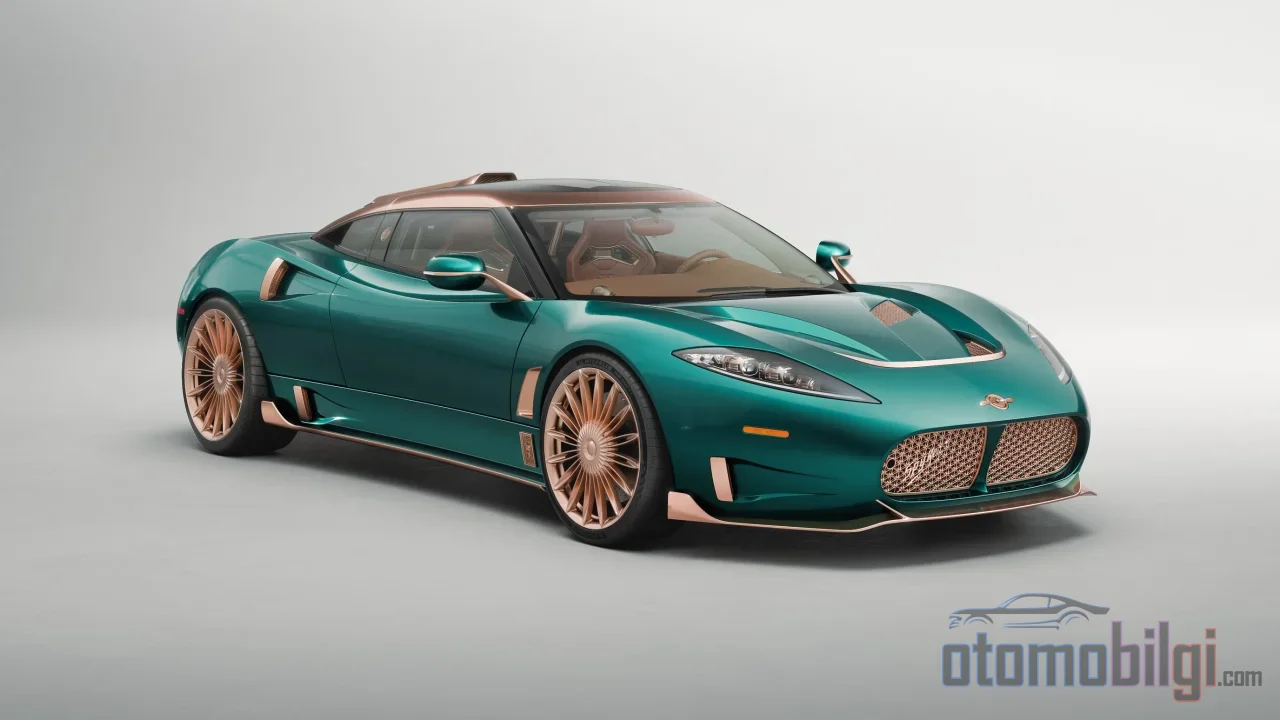
Dutch niche manufacturer Spyker wants to join the most ambitious clubs in automotive history. The brand's co-founder and CEO Victor Muller announced that they will position Spyker at the very top of a market where Pagani, Koenigsegg, Bugatti and Gordon Murray Automotive are the established players. A brand taking the stage for the third time and this time aiming straight for the hypercar summit is not a familiar scenario in this industry. Moreover, there are two bankruptcies, an F1 adventure and a Saab fiasco behind it.
At the center of the announcement is the C8 Preliator XXV Coupé, unveiled at The Quail during Monterey Car Week in August 2026. The map in Muller's head is clear: at most 50 vehicles per year, all hand-built, fully customizable flagships. But how realistic is this claim in a segment ruled by Bugatti and Pagani?
What Does Muller's Positioning Strategy Rest On?
Victor Muller argues that Spyker does not have to prove the difference it offers buyers. His rationale is built on three pillars: an aviation-inspired design language, attention to detail, and the extraordinary craftsmanship of the workforce. According to Muller, the brand heritage dating back to 1880, added to these, completes the picture.
In fact, the strategy is built on not producing too many vehicles. Muller notes that very few boutique manufacturers are considered true hypercar brands, and that these are either established names like Bugatti and Spyker or newer entrants like Pagani and Koenigsegg. He predicts that most of those left off the list will not be permanent. The target is limited in number: 50 vehicles for the entire world market in a good year. In Muller's words, Spyker will never become a mass manufacturer.
The target audience is also consistent with this limitation. A narrow and clearly defined group of buyers is envisioned, ones interested in aviation-inspired design, hand craftsmanship and Dutch identity. The company only needs a handful of customers each year; this is the backbone of the business model.
Highlights
- Spyker announced it will position itself in the same segment as Pagani and Bugatti
- C8 Preliator XXV Coupé: 800 HP, 1,000 Nm of torque, 0-100 km/h in 2.7 seconds
- Only 25 units will be produced; deliveries begin in the second quarter of 2027
- Each vehicle is built by hand in approximately 2,100 hours
- The annual volume target is at most 50 vehicles; the price has not yet been announced
C8 Preliator XXV Coupé: The Bearer of the Claim
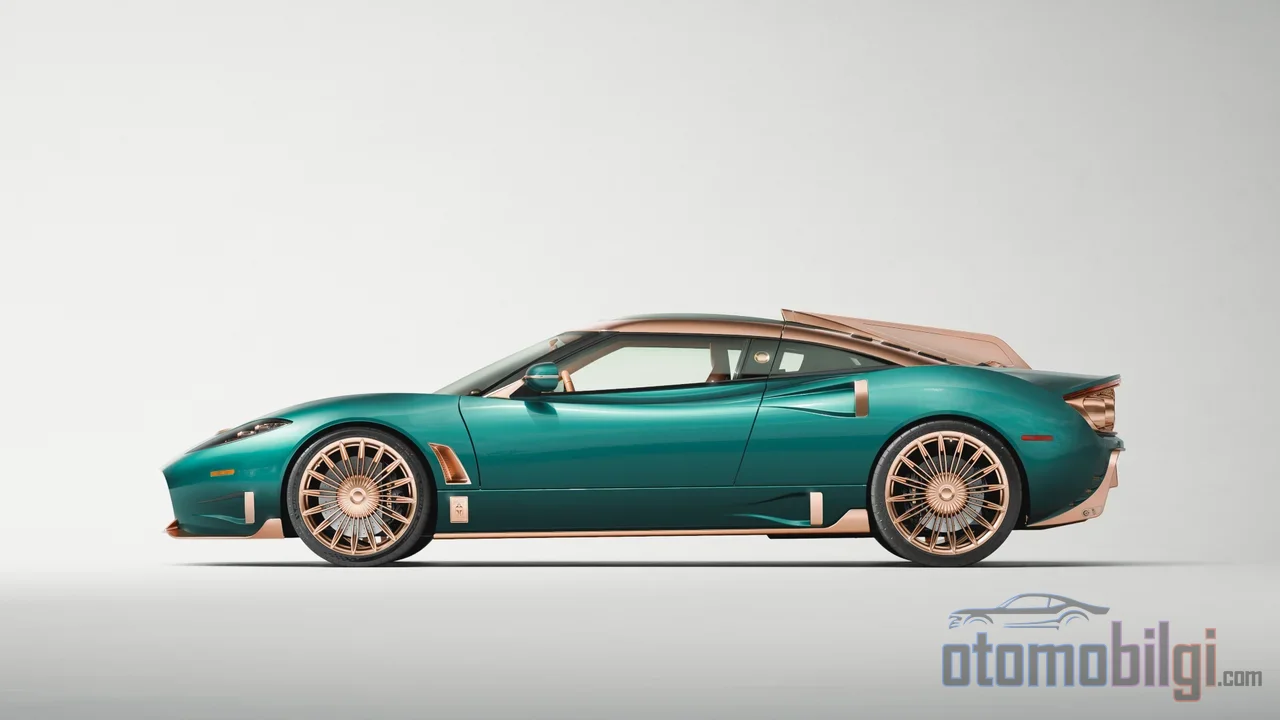
Spyker announced the car, which had its world premiere on August 14, 2026 in Carmel, California, as the product of 146 years of accumulated knowledge and the beginning of a new era. The vehicle carrying chassis number 270 stands as the brand's most tangible proof. It carries a completely redesigned spaceframe chassis engineered entirely in-house; the aluminum body panels are shaped by hand by Coventry Prototype Panels in England. Each vehicle takes approximately 2,100 hours to build, a rhythm diametrically opposed to mass-production logic.
Technical Identity
As for the powertrain, Spyker's official statement gives clear figures. When it comes to the engine supplier, the company has not yet made a confirmation; industry media report that the engine is an Audi-sourced 4.0-liter twin-turbo V8, with output cited as 789 hp. The small discrepancy between the official 800 HP figure and these secondary data has not yet been clarified.
| Specification | Value |
|---|---|
| Engine | 4.0-liter twin-turbo V8 |
| Power | 800 HP (official statement) |
| Torque | 1,000 Nm |
| 0-100 km/h | 2.7 seconds |
| Top speed | Over 217 mph (approximately 349 km/h) |
| Transmission | Six-speed fully manual, rear-wheel drive |
| Production number | 25 |
| Production time | Approximately 2,100 hours per vehicle |
| Delivery start | Second quarter of 2027 |
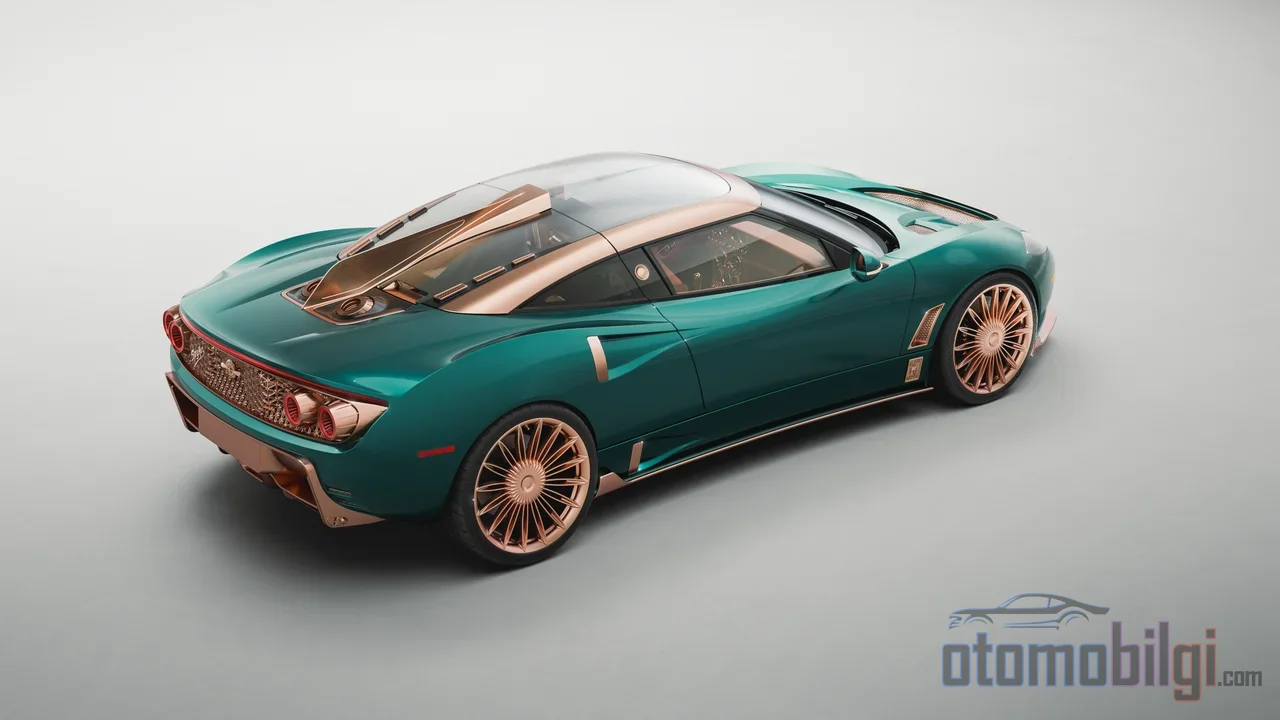
The vehicle's most interesting engineering choice is the transmission. In an 800 HP hypercar, a six-speed true manual gearbox and a rear-wheel-drive layout stand almost as a political manifesto today. An open-linked manual gear lever has been chosen instead of a locked differential. The design features NACA ducts, a large fin over the roof ventilation, taillights reminiscent of a jet afterburner, and isogrid lattice-structured grilles derived from rocketry. The interior is dominated by leather, aluminum, and analog gauges; the only screen is a small head-up display.
Production and Timeline
The 25-unit series is fully customizable. The engineering work is complete and fresh funding has been secured. All coupés are planned to be completed by the end of 2027, with deliveries beginning in the second quarter of 2027. As for pricing, there is no figure yet. The brand is also silent about future product plans; however, it is reported that a return to GT3 racing and the development of the D8 Peking-to-Paris SUV are on the agenda for the new era. A return to the Le Mans Classic has also been announced.
Two Bankruptcies and a Saab Fiasco: Historical Context
The roots of the Spyker name go back to the 1880s, to the Spijker brothers, carriage craftsmen in Amsterdam. The company is noted as the manufacturer that built the first 6-cylinder automobile. The modern brand was founded in 1999 by Victor Muller and Maarten de Bruijn; from 2000 onwards, the C8 Spyder and C8 Laviolette were produced. The C8 Laviolette was introduced at the 2001 AutoRAI and produced between 2001 and 2009; it used an Audi-sourced 4.2-liter V8. In other words, the Spyker of the 2000s is a genuine reference for today's positioning claim.
However, that period contained a few fatal curves. In 2006, the Midland F1 team was purchased, and the 2007 season, raced as Spyker F1, was far from successful. Saab, acquired from General Motors in 2010 for 394 million dollars, halted production and went bankrupt in less than a year. Muller himself points to this F1 adventure and the Saab acquisition as the cause of the earlier setbacks. The company went bankrupt twice, in 2014 and 2021 (at the holding Spyker N.V. level) went bankrupt twice.
The Money and Partners Behind the Third Coming
The financial backbone of the rebirth has also become clear. Muller reclaimed the brand name rights in October 2025. In June 2026, Ukrainian-born crypto businessman Volodymyr Nosov joined the structure as a co-owner, in his capacity as president of W Group and WhiteBIT; the partnership with the W Group ecosystem was formalized with a significant share purchase. The goal Nosov announced is to rebuild the brand on a global scale.
Muller's definition of success is measured this time: a long-term and sustainable business fed by new designs for years to come. What he sees as the biggest risk is not competition, but a global recession that could affect even the wealthiest buyers. He says he does not expect that in the foreseeable future.
Is Spyker Really a Pagani and Bugatti Rival?
The short answer to the question is: a technically ambitious start has been made, but the distance to the top is still long. The C8 Preliator XXV appears to be on par with a Pagani; in terms of craftsmanship, personalization, and design language, this comparison is defensible. On the other hand, it does not promise neck-breaking performance at the level of Koenigsegg or Bugatti. 800 HP and a 0-100 km/h time of 2.7 seconds are respectable, but not record-breaking figures at the bottom of this segment.
Market conditions are paradoxically in Spyker's favor. Wealthy collectors are moving away from electric vehicles in pursuit of traditional driving pleasure and spending more money than before. A V8 hypercar with a fully manual transmission, analog gauges, and rear-wheel drive is exactly in line with this wind. On the other hand, the fact that the price and detailed technical specifications have still not been announced casts a shadow over the ambitious side of the positioning. Moreover, total production of mainstream hypercars is estimated to be only around 4,350 vehicles, and the market is rapidly becoming crowded; space is shrinking for boutique brands.
Two past bankruptcies create a legitimate trust issue on the third attempt. However, this time the model has been unveiled, the engineering completed, the financing secured, and the production schedule announced. The real test for Spyker will be delivering 25 vehicles on time and at the promised quality in 2027. Spyker used to be a brand chasing big dreams, like trying to swallow giants such as Saab; now it aims to be a disciplined boutique manufacturer content with what it has, with 50 vehicles a year. That is the changed strategy, and it is as meaningful as the ambition itself.