The Scots Are Rebuilding the Audi Quattro with a 10,000-RPM V8 Engine
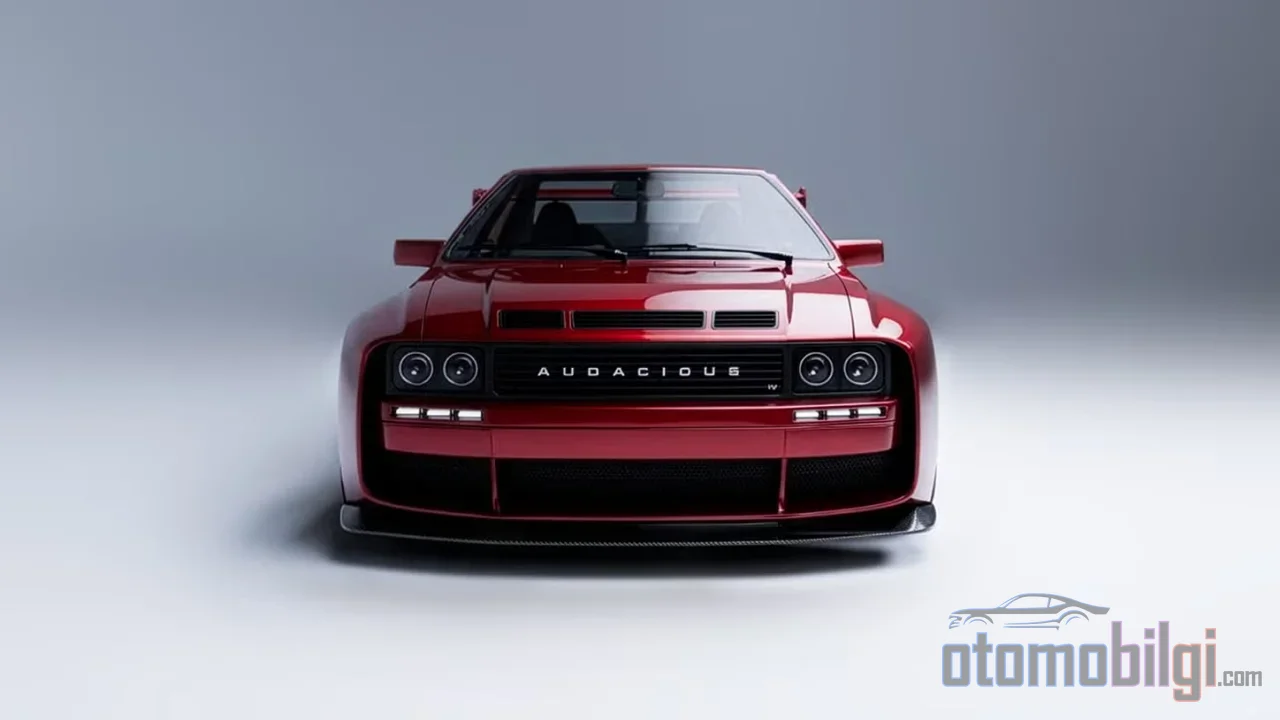
The Audi Quattro, which turned the 1980s rally scene upside down, is one of the rare cars that has kept its prestige for over four decades. Now Audacious Automotive, a small manufacturer based in Scotland, is adding its own interpretation to this legend: the project is called Audacious Automotive IV, and its most radical detail lies at the heart of the car. The iconic five-cylinder engine is being replaced by a V8 that can rev up to 10,000 rpm.
The news has made a big splash in the automotive world in recent days; Established British publications have confirmed the project's four separate engine configurations, and the first debate on social media started right away. Letting go of the five-cylinder sound is not an easy decision for Quattro loyalists. So why did the Scots decide to do this with a V8, and what is the result?
Highlights
- Limited production: only 50 units will be hand-built in Edinburgh.
- Engine options range from 600 bhp to 750 bhp; two versions have a rev limit of 10,000 rpm.
- The carbon fiber-bodied versions have a target weight of 1,200 kg.
- Pricing starts at £350,000 excluding tax (approximately $470,000).
- First deliveries are expected to begin in the second half of 2027.
What Is the Audacious Automotive IV, and What Is It New To?
The Audacious Automotive IV is a restomod project serving as a modern tribute to the original Audi Quattro. The company is not doing this by designing a car from scratch, but by building on a solid modern foundation: The chassis, suspension geometry, braking system, and electronics of the B7-generation Audi RS4 (2006-2008) form the backbone of the project. On top of that sits the classic short-wheelbase Quattro look.
The logic behind this approach is better understood with thirty years of perspective. In the past, "restomod" meant putting a new engine into an old body; now the task has become combining the rigidity of a modern platform with a classic silhouette. Founder Mac Zaglewski's priority has been defined in line with this: a highly usable, highly enjoyable, and highly analog car.
Why Not a 5-Cylinder?
That is of course the first question that needs to be asked. The Quattro's identity is based on its five-cylinder engine and quattro system; why is one of them being replaced? Zaglewski's reasoning is technical and convincing: the only current platform where you can find a five-cylinder engine today, the 2.5-liter engine of the Audi RS3, does not allow a manual transmission. Moreover, the RS3 chassis is less rigid than the B7 RS4 and uses a front-biased Haldex differential. The RS4, on the other hand, with its longitudinally mounted engine, rear-biased Torsen differential, and modern refinement, offers a blend of analog driving feel. The foundation that delivers the experience closest to the quattro system as it came out of the box is, for this very reason, the RS4.
The 10,000 rpm V8: Power or Character?
The engine is the 4.2-liter V8 taken from the RS4. Four different configurations will be offered, and the differences between them are not only about power. The supercharged entry version produces 600 bhp. At the level called Stage Two, with strengthened internal components, improved cooling and a fuel system, power reaches 750 bhp. The really interesting part is in the other two versions: the rev limit has been raised from the standard 8,250 rpm to 10,000 rpm. That means twenty percent higher revs compared to the standard RS4 engine, meaning the internal components must withstand 43 percent more stress.
The point to note is this: the 10,000 rpm versions do not offer extra power. In these two versions, the aim is the induction character and engine sound; whether it will be supercharged or naturally aspirated is also left to the buyer. For someone who has listened to high-revving naturally aspirated engines for many years, this choice is quite understandable. Revolutions have a soul that horsepower cannot measure.
| Version | Power | Note |
|---|---|---|
| Entry level | 600 bhp | Supercharged |
| Stage Two | 750 bhp | Strengthened internal components, improved cooling |
| 10,000 rpm (supercharged or naturally aspirated) | No extra power | Rev limit raised from the standard 8,250 rpm |
On the transmission side, everyone is equal: all versions have the RS4's original 6-speed manual gearbox and a quattro AWD system with a rear-biased Torsen differential. The performance targets are ambitious; according to the company's figures, all versions will complete 0-60 mph in under 3.4 seconds, with a top speed of 200 mph (approximately 322 km/h).
Body and Weight: Metal or Carbon?
Buyers will be able to choose between two body paths. The first is a metal body taken from an original Quattro; in this case the target weight is around 1,400-1,450 kg. The second is a completely new carbon fiber body; with this option no donor car is needed and the target weight is 1,200 kg. The company expects that approximately 80 percent of production will feature the carbon body. It should also be added: the B7 RS4 weighs a standard 1,650 kg; the finished cars are expected to be at least 250 kg lighter.
The donor car issue is always a sensitive one in the restomod community. On the Audacious side, the preference is clear: to give new life to tired cars whose maintenance and restoration costs are no longer realistic, avoiding trouble-free, collectible cars. The fact that the carbon body option will make up the vast majority of production is a natural consequence of this approach.
Design and Interior: References to Group B
The body design is directly inspired by the Group B rally Quattro; some details come from the IMSA GTO racing version of the Audi 90, the Quattro's successor. The wide box-flared fenders and the large slotted rear wing are elements that reveal the car's identity at a glance. The only notable absence: there is no Audi emblem on the body; in its place, Audacious's own logo has been used. This can be read as a marker of legal boundaries as well.
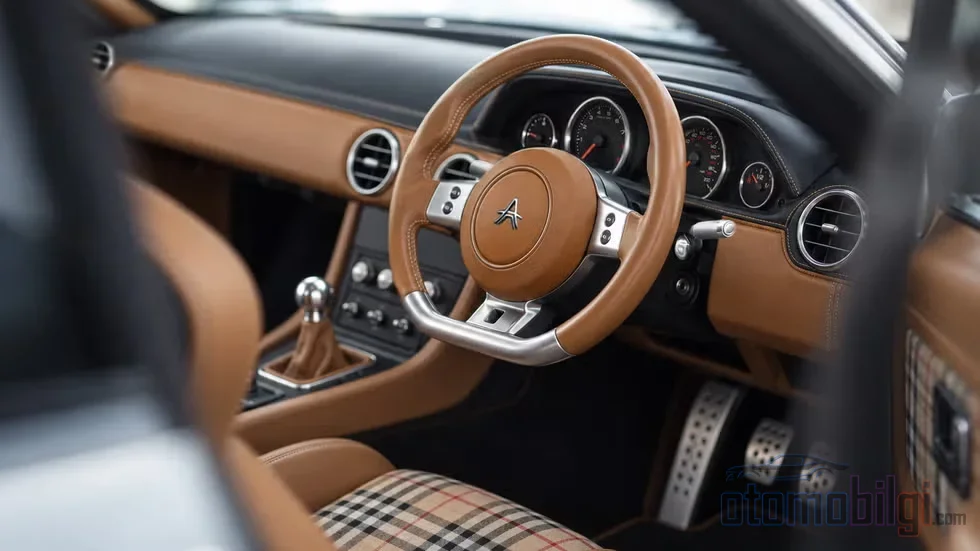
In the interior, an attempt has been made to preserve the Quattro's brutalist atmosphere. A completely new dashboard, gauges and controls have been installed; The RS4's digital hardware has been removed. The RS4's electronically controlled wingback seats, however, remain as they were. The first show car features tartan and plaid upholstery as a nod to the Edinburgh-based firm; since each car is planned to be different from the others, it is predictable that such personal details will vary.
Production, Price and When Is Delivery?
The plan is limited and deliberate: only 50 units will be built by hand; 40 of them will have carbon bodies, and 10 will have mixed metal bodies. Production will take place in Edinburgh, Scotland. The price starts at £350,000 excluding tax, roughly in the band of $468,000-470,000. The first deliveries are expected to begin in the second half of 2027; the time from order to delivery is about three years. So if an order had been placed while reading this article, the car would have arrived at your door at the earliest in 2029 - that is the realistic timeline of small-scale hand production.
Five-Cylinder Loyalty: A Rival Approach
The natural point of comparison for this project is the Audi Sport Quattro (1984) restomod by Germany's HSR Manufaktur. HSR produces 500-600 hp with its 2.5-liter turbocharged five-cylinder engine coded DAZA, with a carbon fiber body and a target weight under 1,200 kg; its price starts at roughly $570,800. Carbon ceramic brakes, coilover suspension and launch control are also part of the equipment. In short, the market is testing two philosophies at once: Audacious seeks character with a V8, while HSR insists on five-cylinder loyalty. Saying that both approaches are justified is an observation that can easily be made with thirty years of watching.
A Point of Debate: What Can Replace the Iconic Sound?
The most obvious objection to the project centers on the loss of the five-cylinder sound. In social media posts and comments, the debate over engine sound quickly flared up; for many Quattro enthusiasts, saying goodbye to an iconic engine is the project's hardest decision to swallow. This criticism can be said to be fair; the sound was half of that car's identity. The opposing side's argument is also strong: pairing a five-cylinder engine with a manual transmission is not possible on today's platforms, and Audacious's priority is the driving feel, the seating position and the entirety of the engine's character.
Recalling the background matures the debate. The Audi Quattro was introduced in 1980; it was the first rally car to benefit from the rule change allowing four-wheel drive, and it went down in history as the first car to use permanent 4WD in the WRC. The quattro system created a sensation in motorsport from 1981 onward, and in 1982 Audi won seven rallies. The short-wheelbase Audi Sport Quattro was developed in 1984 for Group B homologation; the 1985 Sport Quattro S1 is considered the most powerful rally car of its era, reportedly reaching 470-550+ hp in racing specification. Audi's 50th anniversary of five-cylinder engines in 2026 anniversary of five-cylinder engines in 2026 once again shows the weight of the icon.
Conclusion: Is the Modern Interpretation of a Classic Icon Justified?
Audacious Automotive IV is a project that bears the Quattro name but has a modern V8 beating at its heart, limited to 50 units with a three-year waiting period. The decision to part with the five-cylinder sound is debatable; in return, the project tries to preserve Quattro's true message - the direct bond the driver builds with the car - with a manual transmission, rear-biased Torsen system, a 10,000 rpm rev limit, and a target weight of 1,200 kg. Faced with the HSR, which represents five-cylinder loyalty, it must be acknowledged that both approaches serve the Quattro legacy. The answer to which one is more justified is one your palms, not your ears, will give; and the chance to try these cars will fall to only 50 people.
Sources
- Revealed: Legendary Audi Quattro returns with 10,000rpm V8 twist | Autocar
- A British Marque Is Building a 200-MPH Audi Quattro with a V-8 That Revs to 10,000 RPM | Car and Driver
- British-built Audi Quattro restomod with a 10,000rpm RS4 V8 option | Evo
- Audacious Automotive IV is a 750 bhp Audi Quattro tribute with a 10,000 rpm V8 | The Supercar Blog
- The Audi Sport Quattro has returned as a €500k, 2.5-litre limited edition | Top Gear
- TractionLife on Instagram (October 31, 2026)
- Audi Quattro | Wikipedia
- quattro in rallying | Audi