Can You Keep Your License Plate After Selling Your Car?
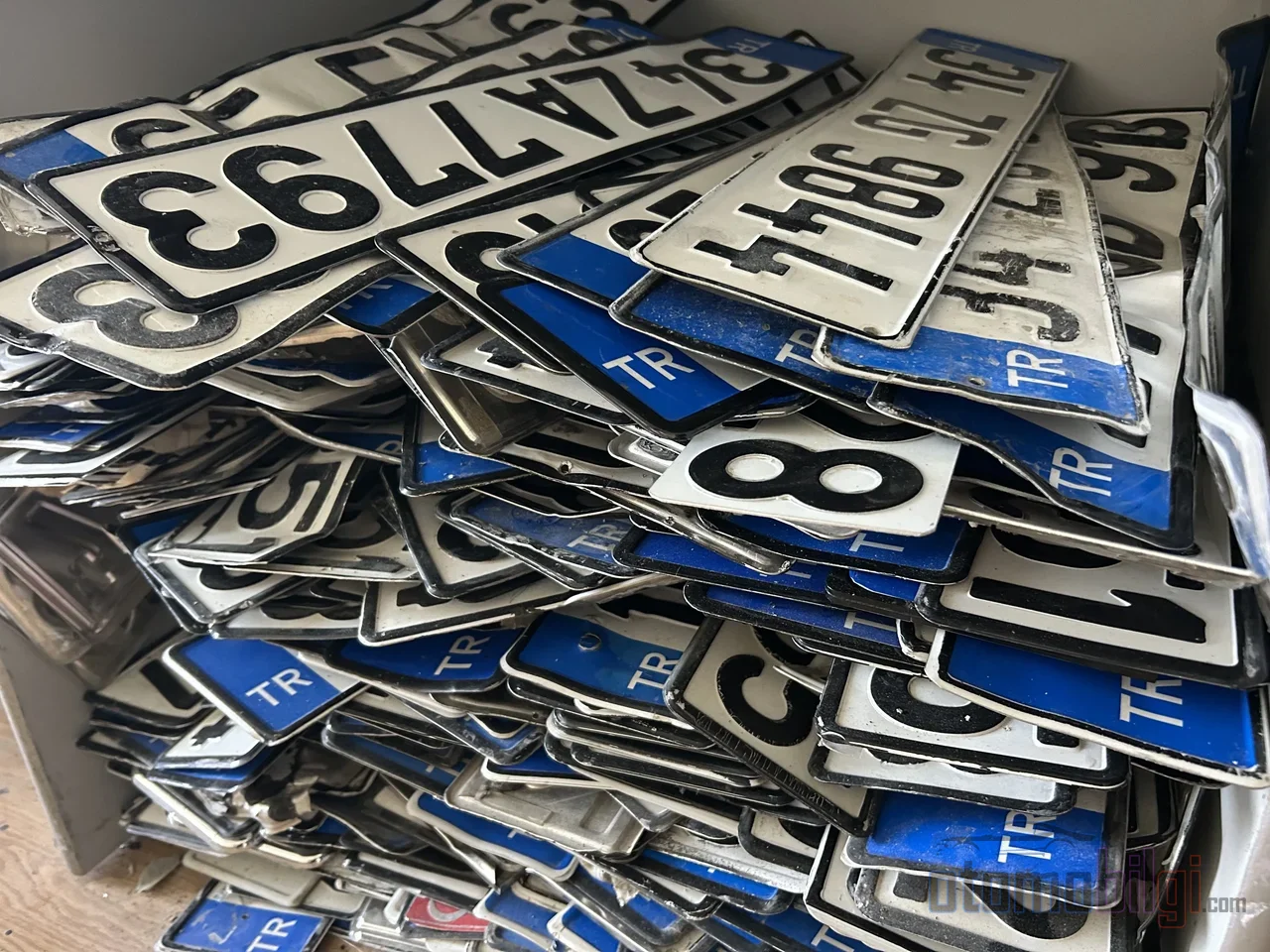
You sold the car and collected the money, you left the notary; the job is done, right? For most sellers it is, but for the small minority who are attached to their plate, the real issue begins at that very moment. A driver who has been on the road with the same plate for years, who considers that number almost a part of themselves, looks for a way to keep the plate even though they have transferred the vehicle. I have been in this business for over thirty years; in the old days, plate matters were settled by queuing at the police headquarters' door, but now it is completed at the same table as the notary transfer. Still, how to avoid leaving the plate on the sold vehicle is one of the most frequently asked and least written-about topics. On this page, we fill that gap.
At what stage should you request plate retention?
Besides the rules, the matter also has a timing aspect. At the moment of transfer, the notary official asks whether the plate will be changed before the sales document is prepared. Processing the plate change request in the system at the same time as the sales document is prepared is the cleanest and least costly way. The request is processed together with the sale, the new plate number is determined by the police system, and the old plate is released within this flow. Trying to go back and carry out a separate transaction after the sale is completed is more burdensome in both time and fees.
So what is this "retention" officially? To be honest here: there is no separate, standard process definition titled "plate retention" in the guides published by the institutions. In practice, there is a procedure carried out through the notary, colloquially known as keeping the plate, and the critical point in this flow is: the plate becomes available only when the buyer obtains a new plate in their own name, that is, registers the vehicle under a different plate. For this reason, the process proceeds in contact with the buyer; unless the buyer changes the plate, your old plate does not appear in the system as an available plate.
Highlights
- The official period allowed for a plate change after transfer is 30 days; after the period expires, no change can be made.
- The plate change request is most easily processed at the moment of sale, at the notary.
- Changing the plate on a second-hand vehicle is not mandatory; the existing plate may remain with the buyer.
- Traffic and comprehensive insurance policies are tied not to the plate but to the chassis number; the change does not cancel the policy.
- If the HGS record is not updated, penalties may occur at highway toll crossings.
The role of the plate in the transfer flow and the e-Government side

Plate transactions used to be under the authority of the police; today this authority lies with notaries, and there is no appointment requirement for a plate change. The notary transaction is usually completed the same day if there is no heavy workload. The flow works in this order: the vehicle sale transaction at the notary, the processing of the plate change request in the system, the determination of the new plate number by the police system, printing at the authorized plate printing office, and the updating of the plate information on the registration certificate.
Required documents
- Mandatory traffic insurance policy; this is the most critical document in the transaction.
- Transfer documents obtained from the Drivers' Chamber.
- Identity card.
- Old plates and traffic documents.
- Notary sales document or temporary registration paperwork.
On the e-Devlet side, there is no direct service called "plate retention"; its role here is indirect. The plate printing request document can now be obtained through e-Devlet: you log into the system, generate the document, and fill in the vehicle and contact information. Lost plate notification is also done through the e-Devlet channel. There is also a practical detail: on e-Devlet there is a service for HGS plate update and plate reset applications via the PTT channel. These are not the retention process itself, but the official digital footholds around the process.
Inspection and process execution by power of attorney
You are not obligated to carry out transfer and plate procedures in person. A person given power of attorney can carry out the process on your behalf; vehicle purchase and plate change can be done with a power of attorney, and general vehicle purchase authorization can be granted. It is a reasonable solution for a seller who works intensively or is in another city. Just note this: on the inspection side, valid mandatory traffic insurance is required, and the policy check is now done via the plate. So going to inspection after a plate change without notifying the insurance is exactly the point where things get tangled. One practical detail: if the inspection report is presented, reprinting can be done without requiring the plate printing request document.
The effect of a plate change on inspection, insurance, and HGS passages
The most common concern is whether insurance has to be taken out again when the plate changes. It does not: comprehensive and traffic insurance policies are tied to the chassis number, and are not canceled even if the plate changes. It is enough to notify the insurance company of the new plate; the policy number stays the same, and in most cases no extra fee is charged. The real problem is seen among those who fail to notify: drivers who do not inform the agency of the new plate can face difficulties with claims, inspections, and checks.
The HGS side is a sharper trap. The highway toll system reads the plate; if the record is not updated, passages are reflected on the old plate and penalties arise. Updating takes a few minutes at a PTT branch or through a bank, with the registration certificate and ID presented; the PTT application on e-Devlet also does the same job. On the inspection side, unreadable or worn plates count as a serious defect and renewal is made mandatory; if you plan to carry your plate to your new vehicle, print quality is not a detail to be overlooked.
Within how many days can a retained plate be used on a new vehicle?
The backbone of the rule is 30 days. If 30 days have passed since the day you took over or transferred the vehicle, you cannot change the plate. This period also serves as the working calendar for a seller planning to put the plate on a vehicle they will buy: anyone who cannot complete the procedures within this window from the moment the old plate is freed up bids farewell to their plate. Official sources do not specify a separate day count for the use of a retained plate on a new vehicle; the applicable framework is this 30-day change period. Therefore my advice is clear: align your new vehicle purchase and the license plate process into the same calendar, and do not separate the two transactions from each other.
Know one more point as well: changing the plate is not mandatory when buying a used vehicle. The buyer may continue using the existing plate; this flexibility means that it is the buyer's move that directly determines your plan to keep the plate. If the buyer does not want to change the plate, your old plate never becomes free or transferable. The fact that a plate change can be carried out on vehicles with a required lien even when the buyer's and seller's province of residence is the same is a detail that may work to the seller's advantage at this point.
The most common mistakes sellers make when transferring a plate
I can say this with the accumulation of many years: these matters rarely arise from rules, and mostly from negligence. The main mistakes are these:
- Trying to handle the plate change request as a separate transaction days later instead of at the moment of sale.
- Completing the transfer without discussing the plate with the buyer at all; being forced to wait for the plate to become free because the buyer did not change it.
- Starting the search for a new vehicle without factoring in the 30-day period.
- Failing to notify the insurance agent of the new plate; running into problems with damage claims and the periodic inspection.
- Failing to update the HGS record and facing toll crossing fines.
Rule changes to watch for in 2026
This year, the topic came back onto the agenda because of non-standard plates. According to the police authority's March 2026 announcement, the use of non-standard APP plates is banned; the procedure runs as follows: reporting the loss and detection to the police or gendarmerie, then applying to a notary, and then printing at the authorized units. An administrative fine is imposed when a non-standard plate is detected, and the vehicle can be banned from traffic until it is brought into compliance. Figures about the fine amounts are circulating publicly across a wide range from 4,000 TL to 140,000 TL; these are different items for different violations, and the primary reference to be taken as basis is the police authority's official announcement. Inspections were carried out for guidance and information purposes until April 1, 2026. For those planning to keep their plate, the lesson is clear: always keep your plate standard, TSOF-sealed and undamaged; plates with drilled holes, missing screws or thick lettering mean both fines and inspection problems.
On the fee side, let us draw a clear picture: As of 2026, the plate process consists of; the notary fee, the plate printing fee, the registration certificate update fee, the traffic registration record update, and, if applicable, the surcharge for a special plate, and the total can reach the level of several thousand TL. As of February 2026, the plate printing fee is paid at the workshop. Concrete current figures should be learned from the notary and the printing room on the day of the transaction; the old rate lists circulating online on this subject are misleading.
Conclusion: The summary of saving your plate
The short, quotable answer is this: If you want to keep your plate when selling your vehicle, process the change request at the notary at the moment of sale; plate, it becomes free the moment the buyer takes a new plate, and complete the transfer of the plate to the new vehicle within the 30-day window, also making the insurance and HGS notifications. Every step of this process requires coordination with the buyer; if the buyer does not change the plate, you will not have a portable plate. Sentences that begin with "a plate is just a piece of metal" try to defy convention, but the truth is this: for a driver who has been on the road with the same plate for thirty years, that number is a habit, and habits are preserved knowingly.
Sources
- Press Release Dated 08.03.2026
- How to Change a License Plate? 2026 Notary and Plate Fees
- How to Change or Renew a License Plate?
- How Is a License Plate Changed?
- License Plate Renewal and Change: Procedures, Fees and Conditions
- e-Devlet - HGS Plate Update / Plate Reset Application
- License Plate Renewal and Change Guide
- I don't want to sell the car with the plate, is there a solution?