How to Sell a Vehicle After Its Periodic Technical Inspection?
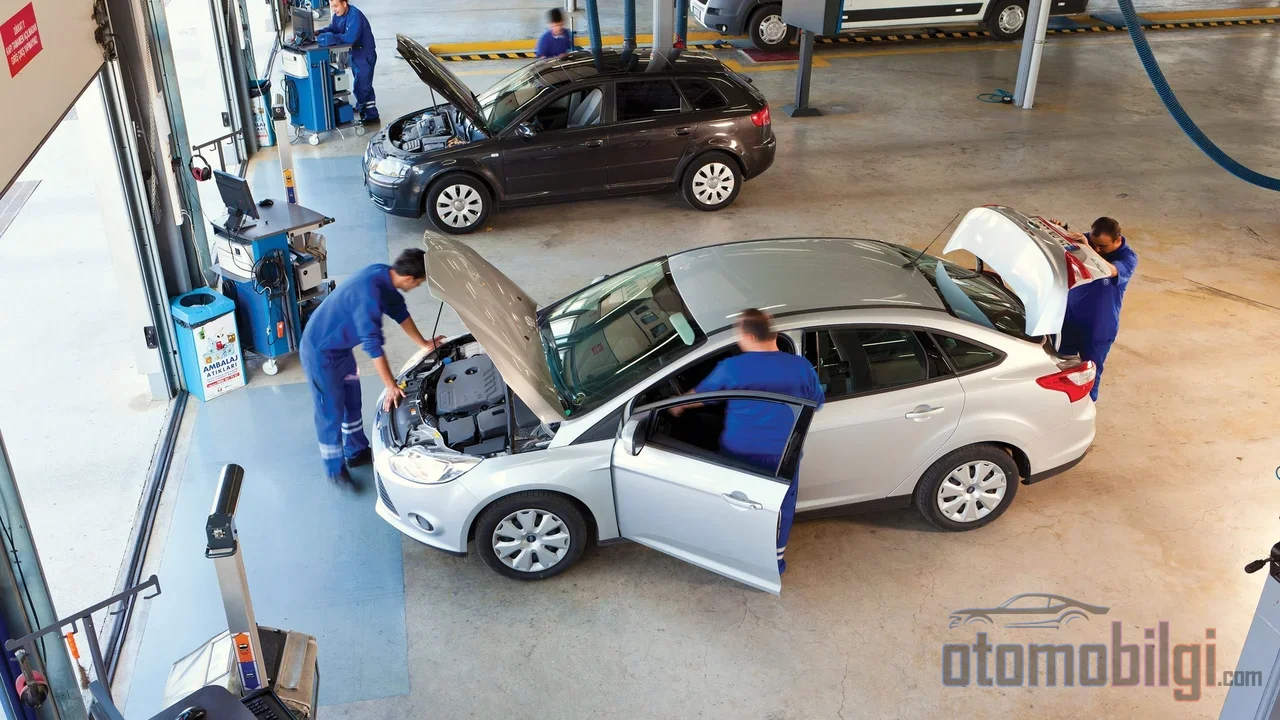
When you prepare the listing of a vehicle whose inspection has expired and set a price, the work has actually only just begun. Because a vehicle that is actively registered and on the road cannot be sold at the notary without a valid inspection; the system does not allow the sales contract to be established. Let me tell you as someone who has been in this business for over 30 years: This situation does not make the vehicle unsellable; it only changes the order of the sale and the balance of the negotiation. The question is not "will it sell or not"; the question is "who will cover the inspection cost, how will the findings affect the price, and in what order will you go to the notary".
Can a Vehicle with an Expired Inspection Be Sold at the Notary?
The rule is clear: Article 18/1 of the Regulation on the Conduct of Vehicle Sales, Transfers and Registration Services requires two prerequisites for a notary sale - the vehicle's valid inspection and, in the buyer's name, valid mandatory traffic insurance on the date of transfer. For a vehicle whose inspection has expired, the notary sees a status blocking the sale in the query made through ARTES (Vehicle Registry and Registration System) and does not initiate the transaction. Even if the buyer and seller sign a written agreement between themselves, the outcome does not change; an agreement on paper is not enough.
The only exception is when the vehicle has been withdrawn from traffic. A vehicle with a withdrawal certificate can be sold at the notary; but the buyer must pass the inspection in order to put the vehicle back on the road. The fine issued for a vehicle driven without an inspection is written to the new owner. So even the exception does not eliminate the inspection, it only postpones it.
Highlights
- An active vehicle with an expired inspection cannot be sold at the notary; inspection first, then transfer - that is the requirement.
- The 2026 car inspection fee is 3,288 TL, approximately 3,748 TL together with the exhaust emission measurement.
- Each month of delay brings an increase of 5% of the inspection fee.
- As of January 1, 2026, a proportional duty of 0.2% is applied on the value declared at the notary transfer.
- There is no legal rule regarding splitting the inspection cost with the buyer; this is entirely a matter of negotiation.
Is the Inspection Done Before or After the Transfer?
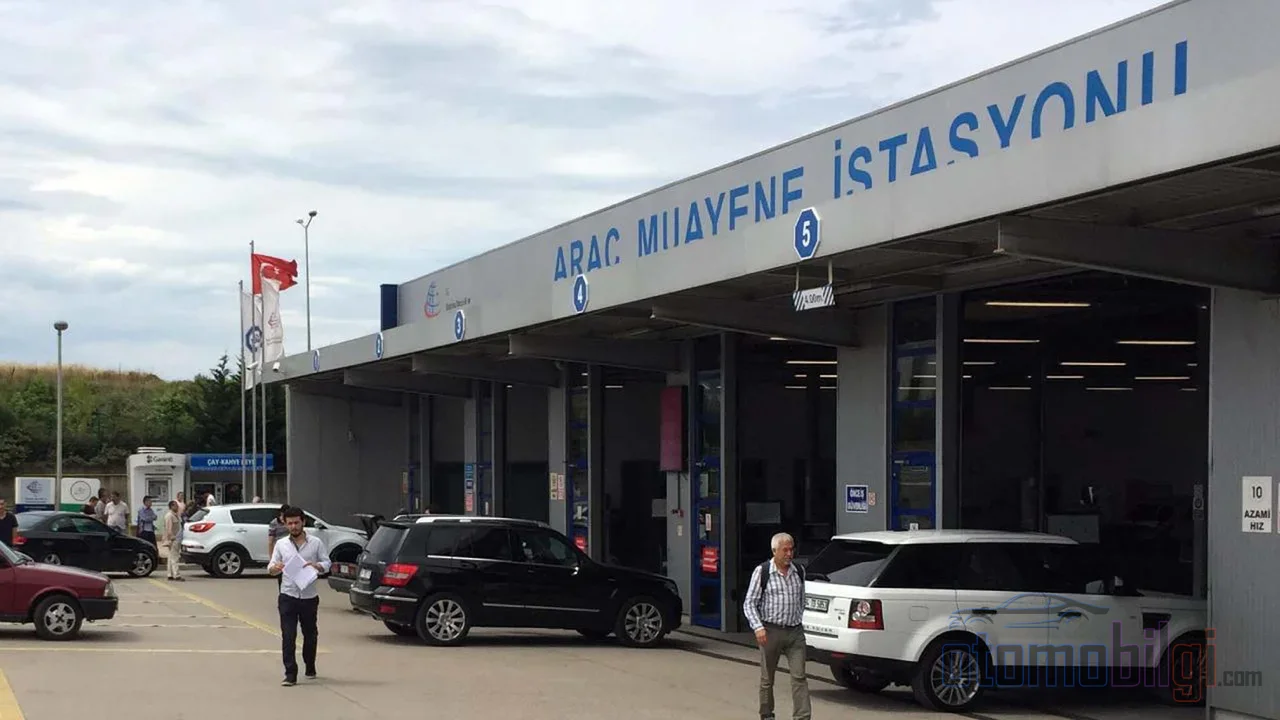
The order is inevitable: First the inspection station, then the notary. Without completing the inspection, you are guaranteed to return from the notary's door. That is why, from the moment you decide to sell, putting the inspection appointment on your calendar and stating in the listing text that the vehicle's inspection has been completed makes the job easier for both parties.
The good news is this: You do not need to take the vehicle to the inspection yourself. Stations do not require being the registration holder; the vehicle can be taken to the inspection by someone other than the registration holder. This creates a practical flexibility before the sale. When the buyer likes the vehicle, you can discuss how to share the cost between you and send the vehicle to the station together or with a relative on the buyer's behalf. Also, you can go to the station before the last inspection date arrives; you do not have to wait.
Who Pays for the Inspection Out of Their Pocket?
Here the legislation remains silent, and this silence actually reflects an honest truth: The law does not regulate whether the inspection fee belongs to the seller or the buyer. That is a matter of agreement - it is settled at the negotiating table. As someone who has been following this business for many years, my observation is this: In practice, three scenarios emerge. The seller can have the inspection done themselves and present the car as "inspected, no worries"; they can split the cost fifty-fifty; or they can deduct the amount from the price and leave the cost to the buyer. All three are legitimate, and each creates a different bargaining chip in negotiations.
The numbers that go into the cost calculation (2026)
Before sitting down at the negotiating table, you need to clarify the items. For automobiles, minibuses and pickups, the 2026 inspection fee is 3,288 TL including VAT; with the exhaust emission measurement (460 TL), the total comes to roughly 3,748 TL. Depending on vehicle type, fees range from 1,674.53 TL to 4,445.60 TL; motorcycles and tractors stay at the lowest limit.
On top of that, there is a late fee. Under Article 35 of the Highway Traffic Law, a surcharge of 5% of the fee is added for every month the inspection period is exceeded. A one-month delay for a car pushes the total to roughly 3,453 TL. The late fee can apply even if you are just a single day late; waiting with the thought "it's only a week" is a laziness that shows up directly in the calculation. Also, the fine for driving without an inspection in 2026 is 2,719 TL; with early payment it drops to about 2,040 TL. An owner whose vehicle is fined during a check must have it inspected within 7 days. If you are towing the vehicle away for a sale, these figures are also part of the risk equation.
In 2026, notary costs changed the calculation too
As of January 1, 2026, transfer transactions moved to a "proportional duty" regime: On top of the fixed transfer service fee (1,870-1,970 TL), a proportional duty of 2 per thousand on the declared sale price, with a minimum of 1,000 TL, is added. For a sale of 500,000 TL, the total notary cost is roughly 2,870-2,970 TL; for a sale of 2,000,000 TL, it rises to the 5,870-5,970 TL band. This proportional duty is not applied in sales by authorized corporate dealerships. Bringing this item to the table when discussing the inspection cost keeps the negotiation realistic. The weekend on-duty notary service is a separate convenience that will add flexibility to the timing.
How Do the Findings at the Station Affect the Price?
The inspection cost is a predictable item; the real uncertainty begins at the station gate. Noise and exhaust emissions are also checked at inspection - if the exhaust measurement document is missing, the vehicle is recorded as "heavily damaged" on the inspection report. Vehicles found to have a defect or deficiency dangerous to life and property are classified as "unsafe" in the language of the regulation, and the inspection is not approved. Approved reports are issued only for undamaged or lightly damaged vehicles. Station personnel's decisions are independent of commercial and financial pressures; thinking "we'll find a way around it" is hope in vain.
From a negotiating standpoint, the situation is clear: Before the inspection, the seller holds an unplayed card - the uncertainty of "maybe nothing will turn up." After the inspection, everything comes to light and the risk passes from the buyer to the seller. Therefore, there are two reasonable strategies for the seller. Either have the inspection done yourself and turn the clean report into your strongest piece of evidence while protecting the price accordingly; or openly share the detected defects and compensate for them with covered costs and a price reduction. Staying in the gray area in between means legal risk after the sale.
There is also a service that gets overlooked at this point: Free diagnostic inspections can be done at the stations. For a seller who wants to see the vehicle's condition before the inspection, this is a practical tool that shows you the map in your hand before negotiation. Whatever the defect is, it is fixed before the sale; the report gets cleaned up and you become the party that can tell the buyer "no surprises." There is no fixed multiplier for the rate of the discount that findings will reflect on the price - it is recalculated in every sale according to the severity of the defect, the cost of fixing it, and your bargaining power.
The Seller's Legal Liability: The Hidden Defect Trap
Even if the inspection process is finished, the seller's responsibility does not end. Under Article 222 of the Turkish Code of Obligations, the seller is liable for hidden defects in every case; in fact, according to the established case law of the 13th Civil Chamber of the Court of Cassation, the seller is held liable even if unaware of the defects. For obvious defects that the buyer knew or should have known about at the time of sale, a defect claim cannot be raised afterwards. In other words, honest presentation protects you; silence does not.
There are two subtleties. First: The absence of a damage record does not mean the vehicle is defect-free; if the seller has given false information, legal liability arises. Second: A malfunction that appears after delivery is not by itself proof of a defect at the time of sale; normal wear and tear is assessed separately. On the buyer's side, the path is clear: formal notice, optional rights, the consumer arbitration committee, or a lawsuit. As a seller, your best insurance is your transparency on the day of sale - sharing the inspection report and, if available, the expert appraisal document, and putting what you know in writing. In a private sale, an expert appraisal report is not a notary requirement; however, at authorized dealerships, a report obtained no later than 3 days before the sale is mandatory for vehicles under 8 years old and 160,000 km.
Preparing for Transfer Day: Obstacles Beyond the Inspection
You have taken care of the inspection - is everything done? No. The notary's ARTES query checks a few more items: motor vehicle tax debts, traffic administrative fines, highway fines, bridge and toll road fee debts, liens, encumbrances, court precautions, seizure or prohibition records. Vehicles whose lien has not been removed cannot be sold. All of these debts must be cleared before the sale; a lien record you learn about in the notary queue burns your day and the buyer's patience.
On the insurance side, there is an update that makes things easier: As of December 5, 2024, traffic insurance can be taken out in the buyer's name before the registration transfer. The buyer can have the vehicle insured in their own name even before the transfer by requesting the registration certificate photo from the seller. On the payment side, the Secure Payment System is a legal requirement: The buyer has the money blocked in the bank's pool account, and as soon as the transfer and registration are approved, the money passes to the seller. For the seller, this is the institutional equivalent of the trust problem once solved with a handshake in bodywork shops - it eliminates the tension of "don't hand over the car until you get paid."
In summary: Seller Roadmap
- Verify the inspection status via e-Government or with the registration certificate; if necessary, see the vehicle's condition with a free diagnostic inspection.
- Clear any MTV tax, fines, toll fees, liens, and encumbrance records; leave nothing that would get caught in the ARTES query.
- Talk clearly with the buyer, even without writing it down, about who will cover the inspection and exhaust costs (approximately 3,748 TL plus the late fee); in the negotiation, think of the price, expenses, and notary fees in a single equation.
- Complete the inspection before the transfer; share the report and all known defects transparently with the buyer.
- On the transfer day, have the buyer's insurance ready (it can be done before the transfer after December 5, 2024) and the Secure Payment System set up; with an on-duty notary, the sale is possible even on weekends.
Briefly and clearly: A vehicle with a completed inspection is only sold as inspected; the only exception is vehicles with a tow certificate. The sharing of inspection costs is not regulated by law and is entirely left to the parties' negotiation. For the seller, the least costly path goes through managing the process early and transparently - because every surprise that emerges at the inspection station is always cheaper than a surprise learned at the notary.
Sources
- TÜVTÜRK 2026 Current Vehicle Inspection Price List
- TÜVTÜRK Frequently Asked Questions
- TÜVTÜRK Vehicle Inspection Late Fee Calculation
- Can a vehicle without an inspection be sold? | ENUYGUN INSURANCE
- Notary Vehicle Sales Procedures 2026 - Barem Cars
- Can a Vehicle Without an Inspection Be Sold? - HesapKurdu
- Defective Vehicle Sales Current 2026 - Eser Çelik Law Office
- The Seller's Liability in Second-Hand Vehicle Sales - Temizer Law
- Can a Vehicle Be Sold Without an Inspection? - Toyota Türkiye Blog
- Penalties for Vehicles Without an Inspection - OtoPratik