Car Sales in Türkiye Dropped Sharply in October

Turkiye's car market entered autumn with a harsh picture. The September figures, announced in the October 2, 2026 bulletin of the Automotive Distributors and Mobility Association (ODMD), show that the total market shrank by 24.33 percent year-on-year to 83,469 units; the loss on the passenger car side reaches 27.80 percent. The market has been experiencing year-on-year contraction exceeding 20 percent for three consecutive months since July. In the first days of November, the industry's eyes are on the not-yet-released October data: Given that a 10-year record of 116,149 units was broken last October, the new figures will be compared against a high base, and the extent of the decline will only become clear then. So what lies behind this contraction - a permanent loss of demand, or a normalization after record years?
Contraction Ongoing for Three Months: What Do the Numbers Say?
In the January-September 2026 period, the total market - passenger cars plus light commercial vehicles - fell back to 803,465 units; this means a contraction of 13.39 percent compared to the same period last year. While passenger car sales declined 15.45 percent to 627,977 units, the light commercial segment is experiencing a more moderate loss of 5.12 percent at 175,488 units. Over nine months, the unit loss on the passenger car side is approximately 114,710.
What is truly striking is that the pace of contraction has been accelerating as the months go by. A year-on-year drop of 25.0 percent in July, 20.3 percent in August, and 24.3 percent in September came in succession. In September, passenger car sales fell to 63,736 units and light commercial to 19,733 units. The October data has not yet been released; however, last year's October-November-December bases - 116,149, 132,984, and 191,620 units respectively - leave this year's fourth quarter facing a tough comparison.
Highlights
- In September 2026, the total market contracted year-on-year by 24.33 percent to 83,469 units; passenger cars declined 27.80 percent.
- The market has been experiencing year-on-year contraction of over 20 percent for three consecutive months since July.
- In the January-September period, the nine-month total market was 803,465 units (-13.39 percent).
- Renault leads the year with 102,818 units; Togg grew by approximately 60.5 percent and rose to fifth place.
- While the market contracted in September, electric passenger car sales increased 17.1 percent to 15,128 units.
Contraction or Normalization?
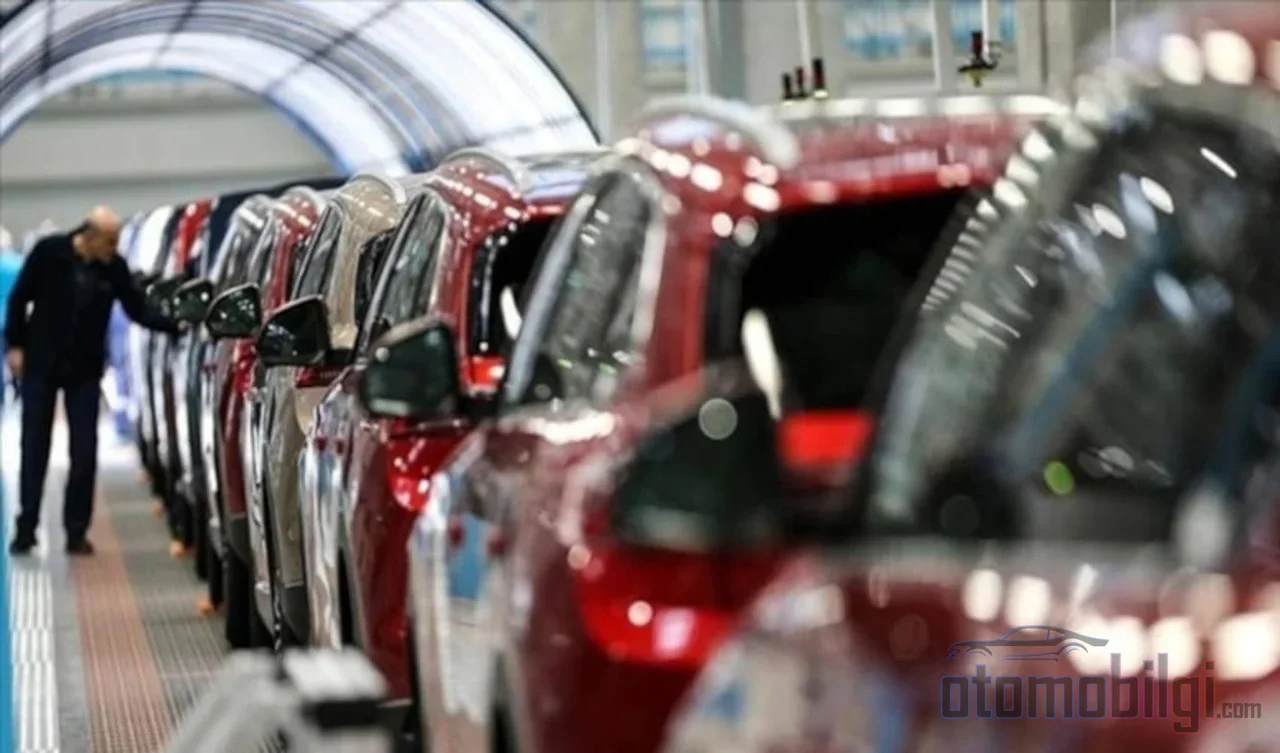
When reading this picture, looking through a single window can be misleading. Although the figures show a sharp drop when compared to the record years of 2023-2025, a longer perspective changes the picture: September sales are 17.8 percent above the 10-year September average and 0.8 percent above the 5-year average. In other words, the market is not small by historical standards; it has simply come down from the bar set by three consecutive record-breaking years. As anyone seasoned in this business will know, the cooling that follows such years can also be read as the market correcting itself. Which way credit conditions and price levels will turn this balance needs to be seen.
Causes of the Decline: Credit, Prices, and Fading Campaigns
Industry representatives see the key to 2026 in credit, interest rates, and tax regulations. The majority of vehicle purchases are still made with credit; therefore, every squeeze in financing conditions directly affects demand. With average new car prices starting above 2 million lira and credit becoming harder to find for amounts above that threshold, the buyer's decision-making process is noticeably getting longer.
Another factor is the campaign calendar. In August 2026, many brands were offering brand-backed financing options with 0 or 0.99 percent interest. Since such campaigns pull sales forward, the following months inevitably weaken as their effects fade. The share of this shifted demand in September's steep decline cannot be ignored. In the luxury segment, it is known that a contraction of up to 30 percent occurred in the first months of the year, and that economic uncertainty combined with high interest rates and tax burden put additional pressure on this segment.
Year-End Dynamics
As November approached, brands pressed the campaign button again; zero-interest credit options and updated price lists are on the agenda. Considering the very high base in the last quarter of last year, year-end comparisons do not look easy. Data on the supply side completes the picture: In the first nine months, total production fell 6 percent, automobile production 17 percent, and exports 11 percent. The industry still maintains its export target of 43.7 billion dollars at year-end.
Brand Breakdown: The Loss Was Not Evenly Distributed
Over the nine-month period, Renault holds the market lead with 102,818 units; the brand, reaching 95,518 units on the automobile side, grew its sales by approximately 12.7 percent. Volkswagen follows with 66,112 units and Fiat with 65,875 units. The real breakthrough, however, came from Togg: The domestic brand, growing approximately 60.5 percent to reach 37,426 units, climbed to fifth place in the year's ranking. Looking at September alone, in automobiles Renault ranked first with 10,549 units, Togg second with 6,692 units, and Hyundai third with 5,523 units; in the total market, Fiat, Volkswagen, Toyota, Ford, and Peugeot filled the top positions.
| Brand | January-September 2026 (units) | September 2026, total market (units) |
|---|---|---|
| Renault | 102,818 | 11,430 |
| Volkswagen | 66,112 | 6,140 |
| Fiat | 65,875 | 6,208 |
| Toyota | 56,876 | 5,429 |
| Ford | 48,273 | 4,394 |
| Peugeot | 50,647 | 4,304 |
| Hyundai | 47,292 | 5,532 |
| Togg | 37,426 | 6,692 |
The bill for the contraction was not shared equally among brands. The total unit loss at Fiat, Ford, Opel, Peugeot, and Citroën reached approximately 61 thousand - more than half of the nine-month total decline of 114,710 units comes from just these five brands. An interesting structural detail: Four of these brands' Turkiye distributorships had passed to Tofas, that is, the Koc Group, in 2025; Ford also operates through the same group's Ford Otosan partnership. The relationship between this concentration and sales performance remains one of the market's ongoing debates.
Segment and Engine Distribution: How Did the Market's Structure Change?
Within the contraction, the market's identity is also rapidly transforming. 84.7 percent of sales occur in the low-taxed A, B and C segments; The C segment alone holds a 56.1 percent share with 352,589 units, and the B segment a 28.3 percent share with 177,786 units. The SUV's dominance in body type is clear: SUV-bodied vehicles accounted for 66.2 percent of the market with 415,909 units, while sedans remained at 19.9 percent and hatchbacks at 13.2 percent.
The Rise of Hybrids and Electric Vehicles
The shift in engine distribution is even more striking. Over nine months, gasoline vehicles stayed at a 41.2 percent share with 258,453 units, while hybrids rose to a 32.6 percent share (204,956 units) and electric vehicles climbed to 19.3 percent (121,079 units); diesel fell to 5.5 percent and LPG to 1.4 percent. Nearly all of the hybrid growth was carried by mild hybrids: While this class's share rose from 16.4 percent to 25.3 percent, plug-in hybrids collapsed from 4.8 percent to 0.6 percent - a concrete indicator of the preference created among consumers by the changes in tax and pricing structure.
September summarizes this trend most clearly: While the market shrank by 27.8 percent, electric car sales increased by 17.1 percent to 15,128 units, and their monthly share rose to 23.7 percent. Diesel, meanwhile, fell by 81.8 percent in the same month, dropping to 1,166 units. While 97.2 percent of cars were sold with automatic transmissions, 67.2 percent of vehicles sold were imported; the domestic production share remains at 32.8 percent.
What Will the October Data Show?
All eyes are on ODMD's October bulletin. Without making a concrete prediction, it is possible to say this: Last year's October record of 116,149 units forms a very high comparison base for the same month this year. Moreover, considering the accelerating contraction trend in September and the effect of the ending August campaigns, a significant year-on-year decline in October seems inevitable. The real question is the depth of the decline and whether it will carry over to the year-end.
The short answer is this: The Turkish car market in October will be measured against last year's record base of 116,149 units; after more than three months of over-20 percent contraction, a decline is expected in October as well due to tight credit conditions and high prices - however, since sales are still above historical averages, this picture is also read as a normalization compared to record years. How much the zero-interest campaigns kicking in in November can change this equation will be the key variable determining the year-end. Industry representatives, who say demand could quickly return if there is any easing in interest and credit conditions, tie 2026's fate largely to financing.
Sources
- ODMD Press Release - January-September 2026 Passenger Car and Light Commercial Vehicle Market
- Turkiye Car Market September 2026 Sales Data
- 2026 automotive sales: Market shrank, electric cars rose
- The 10 best-selling cars have been announced
- The key to 2026 is credit and interest: Assessment by automotive industry representatives
- The 10 Best-Selling Brands in Türkiye in the First 9 Months of 2026
- OSD - September 2026 production and export results