Colton Herta Finally Gets His F1 Super License
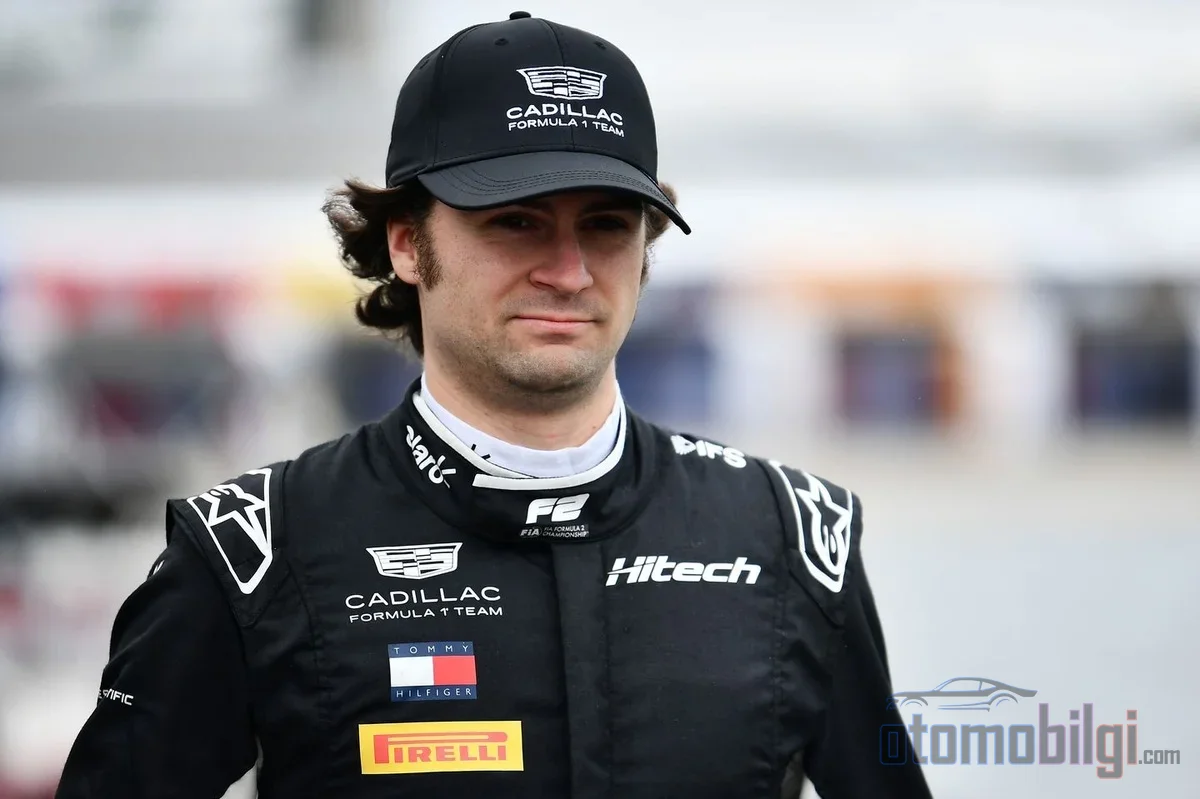
Colton Herta's long and often frustrating journey toward a Formula 1 superlicense has finally been completed at Interlagos. The American driver, who took to the track in Sergio Pérez's car during the first practice session of the Brazilian Grand Prix, completed 30 laps, comfortably surpassing the 100-kilometer threshold required to earn points in an FP1 session, and thus reached the 40 points required for the superlicense. However, a critical hurdle still stands in front of Herta, who has now earned the points: Cadillac's 2027 seat decision.
The 100-Kilometer Threshold Was Crossed at Interlagos
Herta's task in São Paulo was simple on paper: To complete at least 24 laps, meaning 100 kilometers, in Pérez's car during the first practice session. This threshold awards a driver one superlicense point when completed in an FP1 session. Herta is 20. completed the session in which he finished in the ordinary way by completing 30 laps, and the threshold was passed. the goal was to complete the points tally, which was stuck at 39, up to 40. So why did this one point become so valuable?
Because five of the six FP1 sessions Herta participated in throughout the season earned points, and only the session at Monza had gone to waste. Because five of the six FP1 sessions Herta took part in throughout the season earned points, and only the session at Monza had gone to waste. The car broke down there, and the 100 kilometers could not be completed. This training program, stretching from Catalunya to Interlagos, was as much a points-collecting operation as it was preparation.
Highlights
- By completing 30 laps in the Interlagos FP1 session, Herta surpassed the 100 km threshold and reached the 40th point required for the superlicense.
- he failed to earn a point at Monza due to a car failure. He failed to earn a point at Monza due to a car failure.
- Before Mexico, his points tally had been set at 39 due to an error in the IndyCar standings.
- Cadillac has the option for 2027 of either keeping Valtteri Bottas or putting Herta on the grid.
- The Tally Stuck at 39 Points:
The Points Confusion in Mexico The most interesting part of the story was why Herta had been stuck at 39 points.

Before the Mexico City Grand Prix, Cadillac had calculated that Herta would reach 40 points with the Mexico FP1. However, the FIA finalized the total at 39 points. The source of the problem was a standings error on IndyCar's official website; a season standings table on the website showed a different picture from Herta's actual points situation. Even after the error was corrected, the table did not change: Even after the correction of the error, the table did not change: Herta entered the race one point short against Brazil.
The points coming from IndyCar history were as follows: The championship runner-up finish in the 2024 season was worth 30 points, the 10th place in 2023 was worth only 1 point, and the 7th place in another season was worth 4 points. With the five points coming from FP1 sessions, a total of 39 had been reached, and the final point was left to Interlagos.
The Framework of the Rules The rules require four FP1 sessions per year for new drivers.
The rules mandate four FP1 sessions per year for new drivers. Cadillac went beyond this requirement and gave Herta six sessions across the season: Barcelona, Budapest, COTA, Mexico City, São Paulo and Monza. The function of the last two sessions was directly collecting points; the team had chosen the route of overcoming its driver's license barrier through practice sessions. The sixth session at Interlagos was an opportunity designed entirely for the purpose of points.
The general requirements of the Super License should also be recalled at this point: the candidate must be at least 18 years old, must pass the F1 rules theory exam, must hold an international A license, and must complete a certain percentage of races. Herta's only remaining shortfall was points; with Interlagos, that shortfall was closed, and the driver is now in a position to apply for a Super License.
Cadillac's 2027 Seat Decision: Bottas or Herta?
The points are complete; the real decision is now on Cadillac's table. The team extended Pérez's contract before the Mexican Grand Prix, so the uncertainty in the 2027 lineup is concentrated on a single seat. Valtteri Bottas had signed a multi-year contract before 2026; however, the team has not yet triggered the 2027 option for the Finnish driver. This means the door has been left ajar.
The Bottas front: confident yet uncertain
Bottas says he is surprised by rumors that he will leave his seat, and emphasizes that these rumors contradict the feedback he has received from within the team; he states he is quite confident he will stay. On the other hand, he also knows how the sport works: if Cadillac chooses to terminate his contract, this may require compensation to be paid. There is no clarity on the team management side either; Cadillac boss Dan Towriss left the door open, saying Bottas's seat could be preserved. Technical director Marcin Budkowski, meanwhile, describes Herta's development and feedback this season as invaluable for the 2027 development program.
Alternative names and Herta's expectation
Herta is not the only candidate. Mercedes reserve driver Frederik Vesti (on the agenda due to Cadillac's IMSA ties), former Haas driver Esteban Ocon and Liam Lawson from Racing Bulls are also among the names being considered. Herta, for his part, openly voices his hope: he says that if the 2027 seat is not a realistic chance, he does not know why he did this. There is also time pressure in the young driver's calculations; he thinks that if he returns to IndyCar, his F1 chance will never come again, and he hopes the decisions will be made within the coming month.
What Does This Mean for the Move from IndyCar to F1?
Beyond this development, the circumstances also favor US-based drivers. Cadillac's entry into the grid has made the bridge from IndyCar to F1 a practical one. In the past, it was nearly impossible for an American driver to accumulate Super License points without spending years in European feeder championships; now a team can turn practice sessions into a points tool for a driver it is working in its own interest. The Herta case became concrete proof that this mechanism works.
There is also a critical voice here, to be sure. On social media, the debate continues over whether Herta owes his seat more to marketing value and a boss's preference than to his performance; on the other side, the driver's steady development in the FP1 sessions and Cadillac's investment in him are defended. The truth, most likely, lies somewhere in between: While Herta collects points, he is also generating real data for the development of the team's 2027 car.
The short-term point to watch is when and how Cadillac will clarify its Bottas option. The team's difficult Mexico weekend (a front-left suspension fault was detected in Bottas's car after the race and the team issued a statement) adds extra tension to the decision-making environment.
Conclusion: Points Check, Ball in Cadillac's Court
In short, the answer: Colton Herta passed the 100-kilometer threshold in Interlagos FP1, earned his 40th superlicence point, and fulfilled the technical prerequisite for a full-time F1 seat with Cadillac in 2027. The obstacle is no longer the licence, but the choice. Cadillac will either continue with Bottas or put Herta on track; among the alternatives, Vesti, Ocon and Lawson are also standing by. The coming month will show whether a new page opens in American motorsport's F1 journey.
Sources
- Chris Medland on X - Herta's hit the magic 100km for an FP1 Super Licence point
- Colton Herta to run Cadillac FP1 in Brazil as FIA superlicence quest continues
- Colton Herta Finally Has His F1 Super License Points. Now It's Cadillac's Call
- Colton Herta finally reaches F1 milestone
- Herta gets another Cadillac F1 practice to earn superlicence
- Herta's F1 superlicence confusion explained
- Bottas surprised by Cadillac exit whispers
- Cadillac F1 chief on Bottas future