Colton Herta Falls One Point Short for a Super Licence
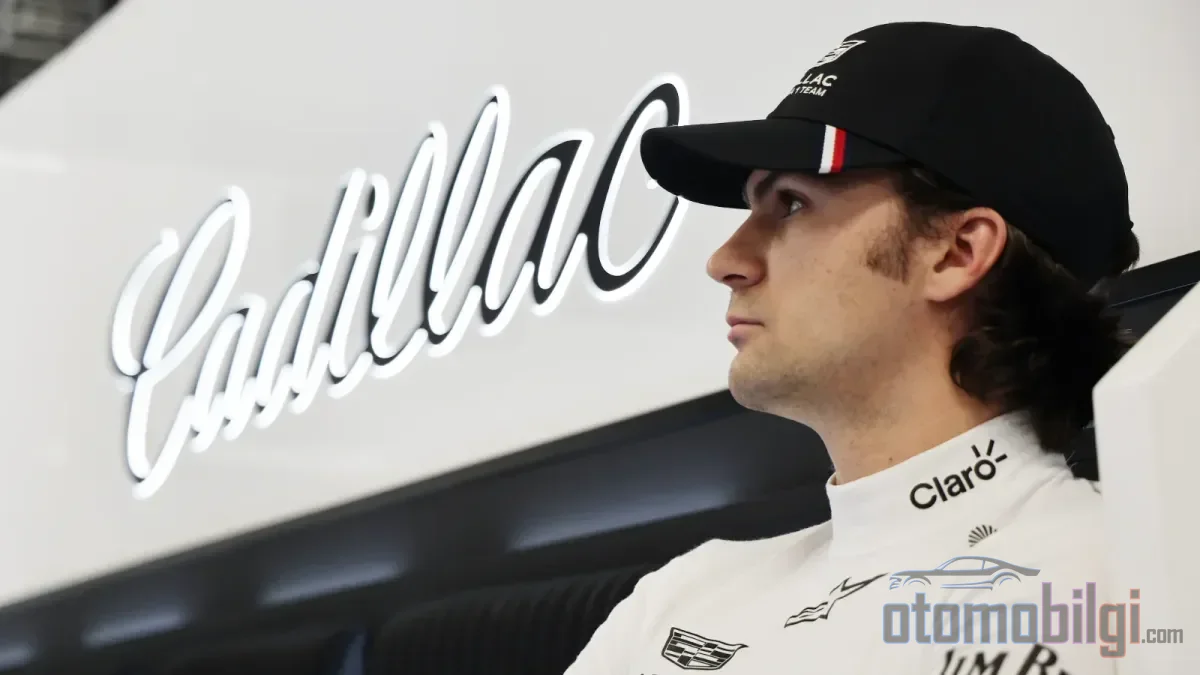
Colton Herta was sitting in Valtteri Bottas' seat in Cadillac's car during the first practice session of the Mexico Grand Prix. Thirty laps, nineteenth position, one spot behind Sergio Pérez, who was racing at home. An ordinary Friday morning on paper. But the real debate about this FP1 run is not about lap times, but about a document: The FIA superlicence required for Herta to race in Formula 1 is still mentioned as one point short of the necessary total, due to a technical anomaly in IndyCar results. So can a practice run overcome this barrier?
The FP1 Window Cadillac Opened for Herta
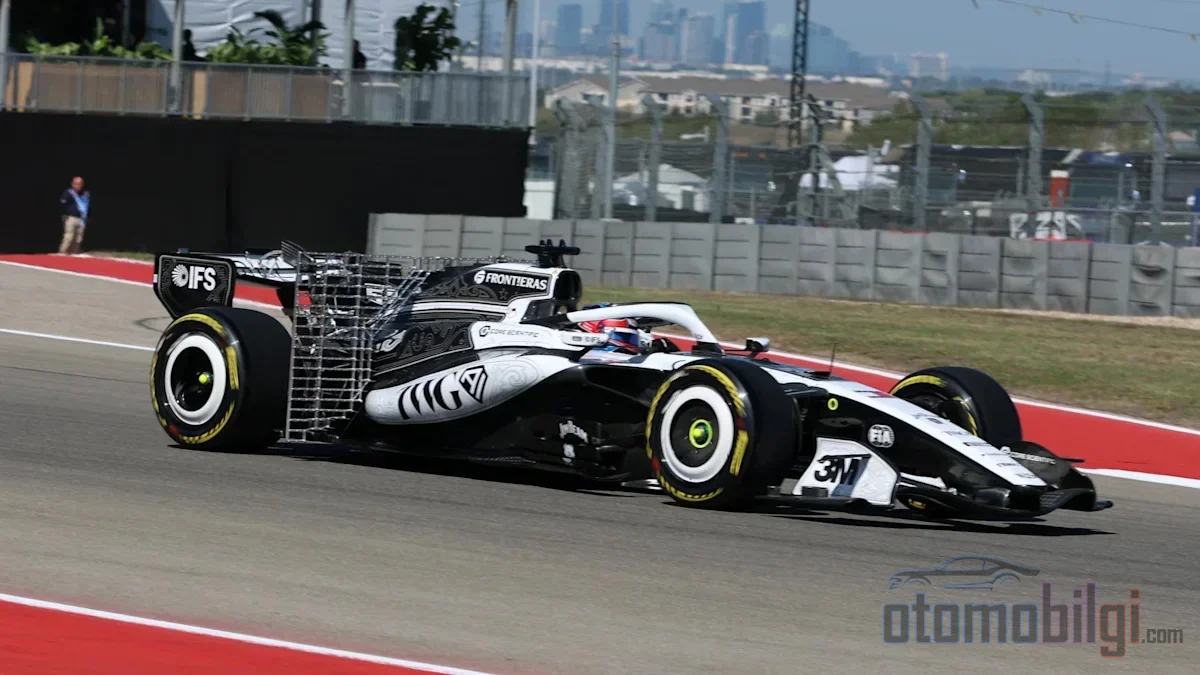
Herta's 2026 calendar is running two separate tracks from the very start. On one side is a full-time Formula 2 program, and on the other is a test and reserve driver role at Cadillac F1. The team has allocated four FP1 sessions to him over the season. The first came in June at Barcelona-Catalunya: He completed 27 laps in Pérez's car and finished the session in 21st position. In late October in Austin, it was Pérez's car again; Herta reported that he was pleased with the track and that the car felt better with every entry. The session in Mexico, however, paints a different picture.
This time, Herta, who took Bottas' seat, completed 30 laps and finished in 22nd position; Pérez was 18th at home. finished in that position; Pérez 18th at home. became. In FP1 sessions, the ranking itself is of secondary importance: sessions run with different fuel loads, test parts and setups. in IndyCar, only the champion achieves that.
Highlights
- The points required for the Super Licence 40; including Barcelona, Austin, and Mexico.
- Herta sits 6th in the IndyCar standings, excluding ovals.
- Cadillac gave Herta 4 FP1 sessions in 2026: The FIA superlicence is the document required for a driver to be able to race in the Formula 1 World Championship.
- The FIA increased IndyCar's Super Licence points allocation in December 2025.
There is only one exception in the system: Formula 2.
The F2 champion receives the licence outright with a full 40 points. In other series, points are distributed based on results, and in IndyCar only the season championship corresponds to 40 points. For a series to award superlicence points, its season must also consist of at least five rounds at at least three different circuits. This system has a long-known flaw on the IndyCar side. The series in question runs on a dual-character calendar: alongside road course races, ovals make up a significant portion of the season.
Yet superlicence points come only from road course races; oval results are not counted. The result is that a successful season across the whole calendar is not fully reflected in licence points. However, superlicence points come only from circuit races; oval results are not taken into account. The result of this is that a successful season across the calendar is not fully reflected in the licence points. When calculated retroactively under the rules introduced after 2016, it turns out that only eight IndyCar drivers would have enough points; the number drops to three, including those who have never won a championship.
The FIA partially addressed this criticism in December 2025 and increased IndyCar's superlicense point allocation. But the increase was not enough to change Herta's tally within the existing points window. This is where the real oddity begins.
An Anomaly That Cost a Single Point
Herta enters the 2026 season with the 10th and 2nd places he achieved in IndyCar, and entered with 39 points from his 7th-place results. In other words, there was a one-point gap on the table, and the reason for it was not driving but the calendar: the exclusion of oval races from the calculation. With the ovals removed, Herta sits in sixth place in IndyCar; the one-point shortfall stems precisely from this method of calculation. Had the ovals counted, the picture would have been completely different, but rules are rules.
This kind of bureaucratic threshold is a phenomenon that a thirty-year motorsport follower knows well. Once upon a time, it was talent and results that spoke; now, alongside on-track performance, there is also a points table, license mathematics and seat politics. Herta's situation is the textbook example of this new order: a driver who regularly reaches the podiums in IndyCar can get stuck on a single point at the F1 door. In late 2022, Lando Norris's call for a review of the rules when Herta could not obtain the required points was also not the first time this same problem had come up, but a recurrence of it.
Does an FP1 Run Earn Superlicense Points?
The rule side is clear: a driver who completes sufficient distance in an FP1 session earns superlicense points. Herta's sessions in Barcelona, Austin and Mexico could be expected to count toward this calculation. However, how many laps, which conditions are deemed sufficient, and the exact amount of points remained unresolved after Mexico. Some outlets reported that Herta reached 40 points with the Mexico FP1 and obtained the superlicense; by contrast, another source maintaining expertise on the matter wrote that, due to the calculation arising from the anomaly in the IndyCar results, Herta was still one point short. The difference between these two readings stems from differing assessments of how FP1 points are factored into the calculation, and it is clear that the definitive picture will be settled by the FIA's official calculation.
So the question can be summarized in a single sentence: Did those 30 laps in Mexico close that one-point gap? What was seen on track on Friday does not show whether it was enough; and it does not need to show it either. The superlicense operates on a timetable, and each new session sits on the table as an input that could change the calculation. This uncertainty is the most fragile link in Herta's plans for 2027.
The F2 Route: How Realistic Is Plan B?
The second door open to Herta is more classic: Formula 2. According to the program announced by Cadillac, Herta is racing full-time in F2 in 2026, and if he finishes the series above 11th place, he will earn the points required for the superlicense. This means solving the calculation on track; rather than dealing with the anomaly on the table. His fourth-place result in the February 2026 F2 tests can be read as an early sign that the adaptation is going well, but test times pale against the challenge of race weekends.
This path has its own risk: The F2 scene offers a different tire than IndyCar, a different race format, and unfamiliar tracks. It is said that Herta has had to act like a chameleon in this transition. Those who know the history of drivers who have switched series for many years always read the outcome of a single season with caution: it either opens the door to a full 40 points or starts another year of waiting.
The 2027 Cadillac Seat: Who Sits in Bottas' Seat?
The real prize behind all this license mathematics is clear: Cadillac's 2027 lineup is not yet finalized, and Herta is mentioned as the strongest candidate to replace Valtteri Bottas. Yuki Tsunoda and Esteban Ocon are also mentioned for the same seat in paddock rumors. The information that Herta did not return to IndyCar for 2027 and rejected Chip Ganassi Racing's offer rests on a single source, so it is wise to approach this claim with caution for now; but its very existence shows how seriously the GM side is taking the F1 project.
Pérez's assessment is measured. He notes that Herta has done a good job and brought good feedback and data to the team; he adds that it was hard to show his speed in the FP1 sessions, but they are now beginning to see more of his speed. Pérez, who emphasizes that he has no say in the seat decision, says the decision belongs to team principal Marcin Budkowski, that he works well with Bottas, and that the choice was not easy for the team. His expectation for the rest of the season points in the same direction: the next three or four months are critical in terms of preparation.
In this picture, the real function of the FP1 sessions becomes clear: both collecting track data and settling into the F1 operation. Earning license points, meanwhile, is a separate and clearer gain. Each of Herta's Friday runs advances two separate files serving a single goal at the same time.
| Path | What is required | Herta's situation |
|---|---|---|
| IndyCar points | 40 points in three years; ovals do not count | 39 points, one short |
| FP1 sessions | Complete sufficient distance | Barcelona, Austin, Mexico; the clear picture lies in the FIA's calculation |
| Formula 2 | Finish the season above 11th place | Racing full-time in F2 in 2026 |
The Embassy War Behind the Point
Viewed broadly, the Herta file tells a story beyond the fate of a single driver. The FIA's decision in December 2025 to increase IndyCar's point allocation amounts to an official acknowledgment of the criticism that the system's schedule, based on ovals, could not make a fair assessment. But the increase did not extend to drivers in the transition period: the points window works retroactively, and today's correction does not change yesterday's calculation. Herta's one-point deficit is precisely the product of this timing gap. It will stand as one of the best examples showing how narrow the door to F1 is; whether he closes out Mexico FP1, or a season in F2.
Result: What One Point Means
Colton Herta was one point short of the 40 points required for a super license due to an anomaly in IndyCar results - because ovals are not counted; whether FP1 sessions including Mexico FP1 close this gap will become clear with the FIA's official calculation, and in the meantime finishing above 11th place in F2 remains as an alternative route. The 30 laps in Mexico were a forgettable Friday run in terms of track timing. But its meaning for the super license file is far greater: the one-point gap is now either closed or about to be closed. The decision awaiting on Budkowski's desk for the 2027 Cadillac seat will be finalized with this bureaucratic last act. One of motorsport's oldest lessons applies here too: winning on track is not enough, you also have to win on paper.
Sources
- Herta still one point short of Super License after IndyCar results anomaly
- FIA Super Licence - Wikipedia
- Perez delivers Herta verdict as he weighs in on Cadillac teammate decision
- 2026 Mexico City Grand Prix - Free Practice Report
- Herta could replace Bottas at Cadillac in F1 2027
- FIA increases IndyCar's Super License points allocation
- Colton Herta finally qualifies for crucial F1 document
- Cadillac: Herta to race in F2 in 2026