Liam Lawson Disqualified from Mexico Qualifying

Liam Lawson had completed Saturday's qualifying session at the Mexico City Grand Prix in 8th place, standing out as the fastest name in the midfield. Hours later, the FIA's decision document was published and the New Zealander's result was deleted. So how can a qualifying lap be cancelled over a technical detail that occurred at the end of the lap?
When and Why Was the Disqualification Decision Given?
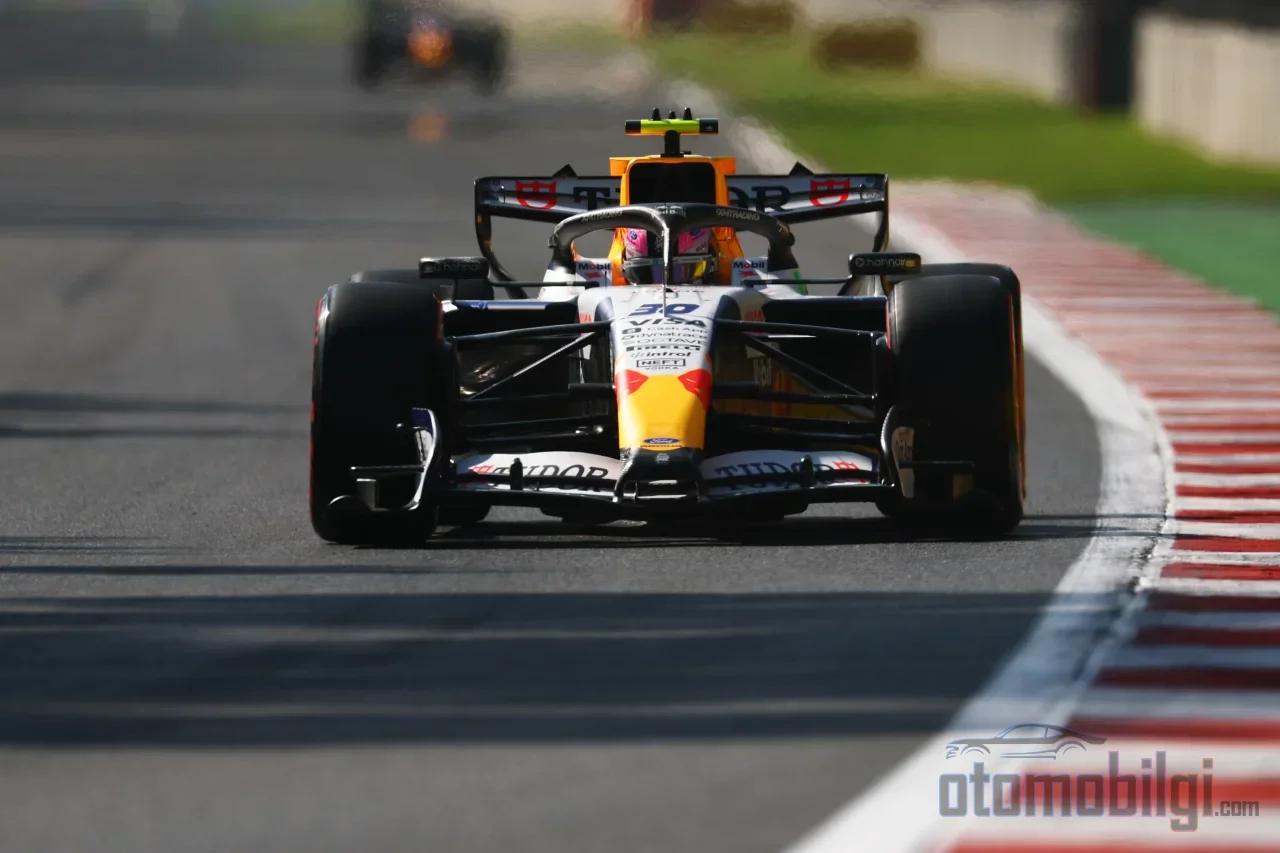
According to the report of FIA Technical Delegate Jo Bauer, car number 30 - that is, Lawson - violated the minimum MGU-K power requirement immediately after completing his fastest lap in Q2, upon crossing the line. The report stated that the driver's maximum power demand and the MGU-K's electrical DC power were reduced at faster rates than the technical regulations allow. The violation was identified under articles C5.12.6 and C5.12.7 of the technical regulations.
The stewards noted that the evidence showed Lawson did not immediately release the power after the control line at the end of his fastest lap in Q2. This led to a failure to achieve the gradual power reduction rate prescribed by the rules. The result did not change: his qualifying result was cancelled and Lawson will start Sunday's race from the very back of the grid, from 22nd place. Every driver behind him gained one position.
Highlights
- Lawson had qualified 8th; his result was cancelled due to the MGU-K rampdown violation.
- The violation was identified under articles C5.12.6 and C5.12.7 of the technical regulations.
- The team's defence and self-reporting were recorded, but they could not prevent the penalty.
- Lawson is starting the race from 22nd place, at the very back alongside Bottas.
- Over the weekend, he had also received a one-place grid penalty for the collision in FP2.
What Exactly Does the MGU-K Rampdown Rule Prohibit?
For those unfamiliar with the technical side, here is the essence of the matter: In addition to the petrol engine, the MGU-K provides up to 350 kW of electrical power. However, when this power is depleted, the rules do not allow the system to be shut down abruptly. The power must be reduced gradually, at a maximum rate of 50 kW or 100 kW per second depending on track length; a complete cut lasts only a few seconds.
The two quantities involved need to be distinguished as well. The driver's maximum power demand refers to the total power the car delivers to the driver at full throttle; the MGU-K's electrical DC power defines the actual power flowing from the battery to the motor. Both must decrease gradually, and according to Bauer's report, both fell faster than permitted. In the past, such deviations were met with a reasonable tolerance; now, since telemetry records every single watt, monitoring down to the letter of the regulation text has become inevitable.
Why Didn't the Team's Defence Change the Penalty?
The team argued that the incident provided no performance advantage and self-reported the violation to the officials. The stewards recorded both points in the decision document as mitigating circumstances. Yet it was not reflected in the result: based on numerous precedents, they announced they had no choice but to impose a disqualification penalty for a vehicle that did not comply with the technical regulations, despite all mitigating circumstances. The car must comply with the rules at every moment of the event; no flexibility is granted on technical infringements under this principle. As anyone who has been in this business for years knows, technical regulation matters have historically produced black-and-white outcomes, and this disqualification was actually the expected scenario.
The Season's MGU-K Debate: Same Rule, Different Solutions
This infringement is not an isolated incident; it is part of a technical debate that has continued throughout the season. Red Bull Ford Powertrains - also the engine supplier for Mercedes and Racing Bulls this year - drew attention with some technical solutions in MGU-K power deployment. The first of these was to bypass the mandatory gradual rampdown by using an emergency mode that cuts the MGU-K to 0 kW instantly; the penalty for this method was the system being locked for one minute.
That method was found to be unsafe: the loss of the MGU-K combined with a very rapid drop in turbo pressure could merge into a complete loss of engine power, causing cars to slow down or even stop on track. The FIA issued a technical directive to prevent the exploitation of this emergency shutdown in qualifying sessions. The alternative solution discovered afterwards is interesting: if the driver power demand and internal combustion engine power are negative, the standard 50 kW per second drop can be avoided. This is achieved by the driver lifting off the throttle just before completing the lap.
The Difference Between Lawson and His Teammate
And here is exactly where the detail at the heart of the decision lies. His teammate Arvid Lindblad was seen lifting off the throttle before the line in qualifying; thus the gradual reduction condition was naturally met. Lawson, however, stayed at full throttle on the relevant lap and did not lift off quickly enough. The telemetry difference cost him one of the most expensive lap eliminations of the driver's career. Same team, same engine, same rule - the only difference was whether the throttle was lifted a second earlier or later.
Lawson's Weekend: Collision, Penalties and the Very Back Row Alone
Mexico was already going painfully for Lawson. For his collision with Max Verstappen in FP2, both were given a one-place grid penalty and a superlicence penalty point; the incident was deemed careless by both sides, and Lawson apologized. With that penalty, the result he achieved by qualifying 8th had effectively dropped to P9. The disqualification took all the cards off the table: he will start Sunday's race from the very back of the grid, in 22nd place.
The name waiting at the very back with him is Valtteri Bottas. After Cadillac's comprehensive power unit changes, including ICE, TC, ES, PU-CE and MGU-K, the Finnish driver had received a 50-place grid penalty. So at the very back of the race, two experienced names will be side by side: one for a technical infringement, the other for an engine change.
The Picture Up Front: Hamilton on Pole Position
The impact of the disqualification on the grid is also tangible. With Lawson's qualifying result deleted, everyone behind him moved up one position. The order ahead took shape as follows:
| Pos | Driver | Note |
|---|---|---|
| 1 | Lewis Hamilton | The 105th of his career pole position |
| 2 | George Russell | - |
| 3 | Charles Leclerc | - |
| 4 | Kimi Antonelli | The race where he can clinch the championship |
| 5 | Max Verstappen | One-place loss due to an FP2 penalty |
| 6 | Lando Norris | - |
| 7 | Isack Hadjar | - |
| 8 | Arvid Lindblad | Teammate Lawson was disqualified |
This pole position carries a special meaning for Hamilton: it is the 105th qualifying pole of his career, and for the first time in three years he will start from the very front. Antonelli's story is even bigger - the race he will start from 4th place could be the one where he can claim the world championship.
Result: The Price of a Watt on a Blank Page
The clear answer to why Lawson was disqualified is this: after his fastest lap in Q2, the MGU-K power was reduced faster than Articles C5.12.6 and C5.12.7 allow; the driver did not release the power immediately after the line. The performance advantage argument did not save him from the penalty, because the technical regulations are not written that way. What is left for us to watch is this: with modern power units, qualifying laps are now won or lost not only on track, but also in the electrical management of the final seconds at the end of the lap. Lawson will start on Sunday from 22nd place; the legacy of a lap that reached 8th place was paid for by a missing lift-off - that is, by the rigor of a single moment.
Sources
- Lawson disqualified from Mexico City GP Qualifying - Formula 1
- Lawson at risk of Mexico qualifying DSQ - The Race
- F1 2026 Mexico Grand Prix: Updated starting grid - Crash.net
- Breaking: Liam Lawson at risk of Mexico City qualifying disqualification - RacingNews365
- Formula 1 2026 Regulations Section C: Technical - FIA