Verstappen and Lawson Receive Grid Penalty in Mexico
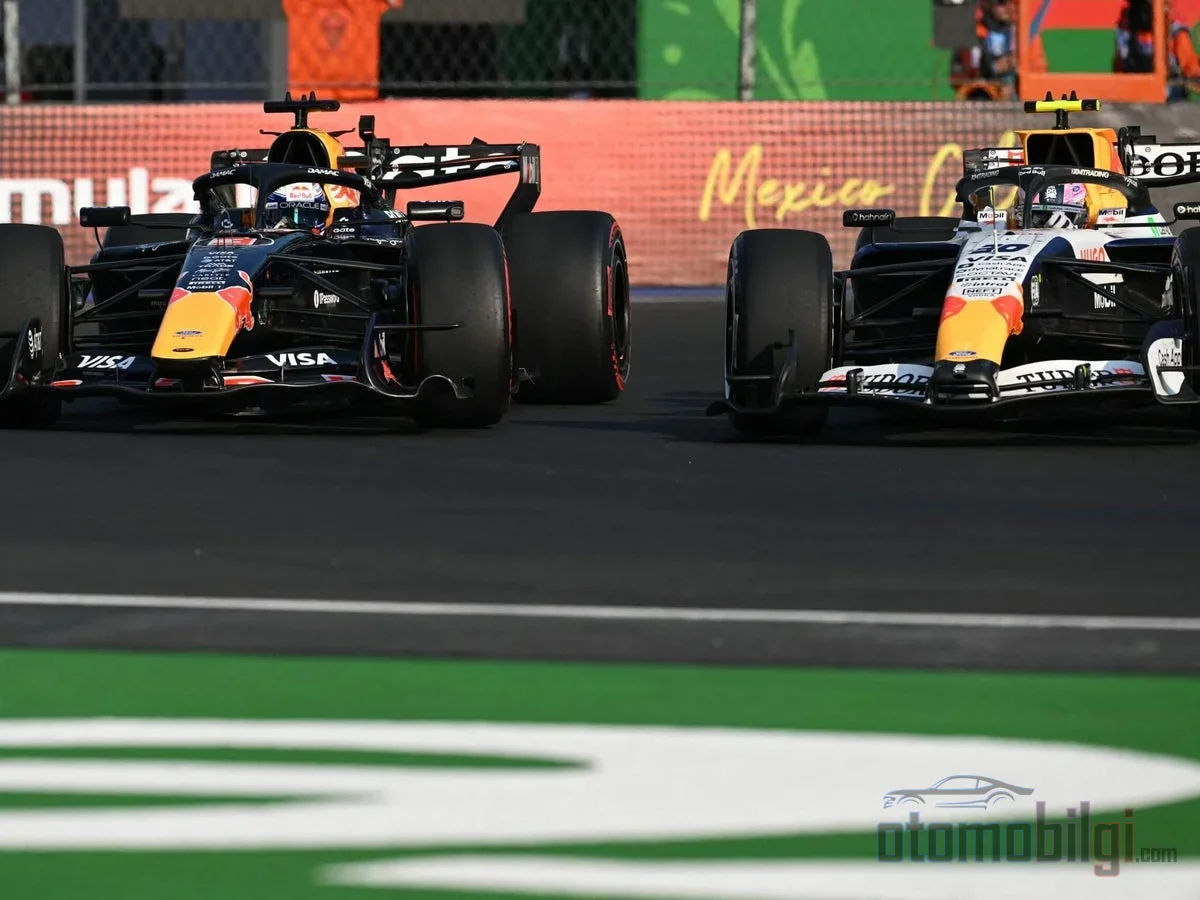
In Friday's second practice session of the Mexican Grand Prix, a contact in the Foro Sol stadium section punished two big names at once: Max Verstappen and Liam Lawson. The stewards responded to the incident by handing both drivers a one-place grid penalty and adding one penalty point to their super licences. So why did a practice contact not remain a mere official warning, and why were both sides given the same penalty?
A Ten-Second Mistake at Foro Sol: How Did the Incident Unfold?
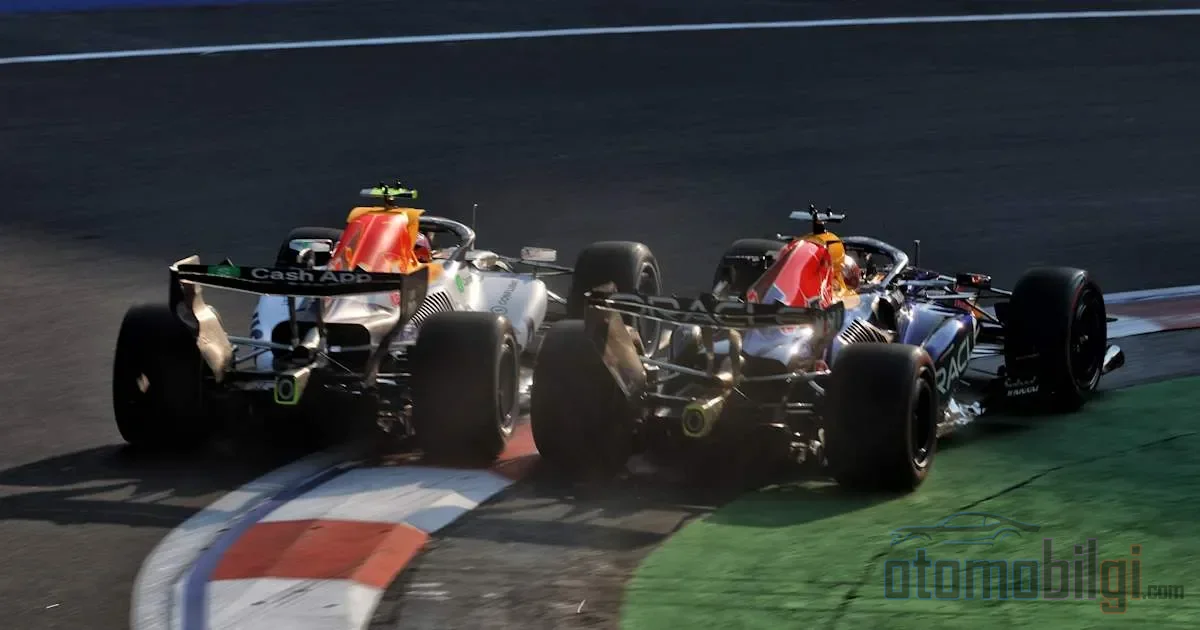
The incident occurred in the early part of FP2 in the stadium section. Verstappen was on his preparation lap with the Red Bull, while Lawson was on a cool-down lap. The Dutch driver tried to pass the Racing Bulls ahead of him before entering Turn 12, a 90-degree right-hand corner. Lawson, 13. maintained the outside line through the switchback section of the corner; Verstappen cut the track at Turn 14 and managed to get ahead - but in the process the two cars touched.
The cost of the contact became immediately apparent: the bargeboard on the left side of the Red Bull, the aerodynamic deflector panel behind the front wing, shattered. Because debris was left on the track, the session was briefly stopped with a red flag. Of course, the race was brought under control before it grew like wildfire; but the real debate began once practice ended. Footage showing the two cars passing almost side by side in the stadium section also circulated on social media that evening.
This type of preparation-lap overtaking has long been seen in practice sessions; in the past, it was usually waved through without anyone noticing. Now, every contact is on record, every angle is on camera, and everything is examined digitally before the stewards. That is why the fate of this incident was decided as soon as the session ended.
Key Takeaways
- Max Verstappen and Liam Lawson each received a one-place grid penalty following their contact in Mexico GP FP2.
- Both drivers also had one penalty point each added to their super licences.
- In their decision, the stewards judged both drivers' actions to be unacceptable.
- The contact caused the left bargeboard of the Red Bull to shatter and led to a brief red flag.
- The warning given at Friday morning's team principals' meeting was cited as justification for the heavier penalty.
The Stewards' Decision: Why Were Both Drivers Given the Same Penalty?
In identical decisions issued to both cars, the stewards did not place the responsibility for the incident on a single party. Both Verstappen's overtaking attempt on his preparation lap and Lawson's failure to yield the outside line on his cool-down lap were deemed unacceptable. In other words, the case appears to have been closed as two-sided: one made a quick move looking for space, the other refused to give way, and the result was contact.
The most striking aspect of the decision text is why the penalty was made heavier than an ordinary practice contact. The stewards noted that at the team principals' meeting held the same day, it had been raised that similar incidents between drivers had occurred repeatedly in free practice sessions this year. The official warning issued at that meeting was a sign that bandwidth had already filled up. That's why the stewards stated that they escalated the incident to a grid position penalty rather than closing it with just a reprimand, and that this was also consistent with decisions given on practice session incidents in previous years.
An interesting detail: Both sides took an attitude of accepting the incident rather than defending themselves. Both Lawson and Verstappen described the move as a clumsy and unnecessary maneuver; Racing Bulls team principal Alan Permane made the same assessment. This shared tone shows that the incident was neither a malicious move nor a turning point affecting championship calculations - it was plainly bad timing and a poor choice of place.
How Meaningful Is a One-Place Grid Penalty?
A one-place grid penalty may sound small; but even a single-place change in the front rows of the starting order at a track like Mexico can affect the opening lap. Both drivers will start the race having slipped one position back from where they qualified, and the starting dynamics of the other drivers remaining close behind them in the two rows will change accordingly.
On the other hand, it is a known fact that pole position in Mexico is not always a sacred advantage; the high entry speed of the long first corner and slipstream factors can sometimes make starting from second place more appealing. When you consider that long run to the start line just before the bowl-shaped stadium section, it is hard to say that a one-place drop has zero effect on race strategy, but calling it devastating would be an exaggeration. The real cost lies elsewhere: superlicense penalty points.
What Is a Superlicense Penalty Point For?
The second leg of the stewards' decision was the one penalty point each added to both drivers' licenses. These points accumulate on the superlicense over a certain period; if the threshold is exceeded, the driver is forced to miss the next race. Since the material did not include either driver's current total point count, it is not possible to give an exact account of their remaining rights; but as the season progresses the weight of each added point increases, and the teams must constantly monitor how the points are distributed. Grid penalties used to be rare, newsworthy events; now that they have become a routine item of the weekend plan, keeping track of the points ledger has become as much a job of the team desks as following fuel strategy.
Bargeboard Damage: How Did It Affect the Race Weekend?
The left-side bargeboard that broke in the contact is a detail that directly touches Verstappen's weekend program. Although the bargeboard may look like a small part, it is a critical element managing the airflow behind the front wing; the damage affects the car's balance at the front and, therefore, its setup references. Of course, in repeated practice laps the engineers have work to do to keep such damage from carrying over into the race setup, but every clean lap lost on Friday means a narrowing setup window. For a team trying to build confidence across two practice sessions, this is an invisible loss, even if not as harsh as a red flag.
Verstappen's attitude after the incident also fits this picture. Speaking to Sky Sports F1, he said Lawson's move was not very smart and that he tried to push him off the track at a difficult corner; but in the same conversation, he also sent the message that the incident would not change his weekend. In the context of Lawson's seat at Racing Bulls not being confirmed for 2027, Verstappen's comment - implying, referring to both Lawson and young teammate Arvid Lindblad, that they were fighting for his seat - added color to the background of the incident. The tendency of every driver whose seat is not guaranteed to be aggressive even in practice is an old truth of this profession, and this incident is a small cross-section of exactly that truth.
Who Was at Fault? The Debate Continues on Social Media
The stewards' file is closed; the debate is not. On social platforms, it is still being discussed whether the incident was a racing incident or a punishable offense. One side places the blame entirely on Verstappen, criticizing him for failing to make the corner and pushing Lawson off the track; the other suggests in their comments that the identical penalties given to both drivers were intended as a balancing act. These are reader and fan opinions; they are not the basis of the stewards' decision. The stewards' official stance is clear: both sides were at fault, and the penalty was applied symmetrically to both.
This symmetry may be the most debated aspect of the decision. In the past, stewards would easily point the finger at one side in incidents that appeared one-sided; in recent years, however, symmetric penalties have become a more common approach in cases involving two-way contact during practice. Let us add as a commentator's note: Accepting this does not please everyone, but consistency is a prerequisite in a penalty regime, and this decision is at least the product of a consistently established framework.
Starting Grid at the Mexico GP: How Did the Penalties Change Sunday?
The results table is not as dramatic as the headlines; but it redraws the stage. Both drivers will start one position behind their qualifying results, the gaps between them and around them will shift, and the likelihood of chaos in the opening corner will increase somewhat. In Mexico's 2,200-meter altitude, where the thin air makes overtaking harder, adapting quickly to race pace is of vital importance; pit strategy and safety car timing will come into play to make up for a position lost on the grid.
The stewards taking this incident beyond the level of an official warning also carries a message for the rest of the season: Practice sessions are no longer a playground where leniency is inexhaustible. Friday's contact was merely a two-minute clip; but the note left behind today will leave a mark on the grid and in the points ledger that will not fade for years.
Sources
- Verstappen and Lawson get grid drops for 'clumsy' Mexico clash - The Race
- Verstappen and Lawson given grid penalties for Mexico - BBC
- Verstappen and Lawson hit with grid penalties for Mexico City GP practice clash - Racer
- Max Verstappen and Liam Lawson given one-place grid penalty - ESPN
- Max Verstappen, Liam Lawson handed F1 Mexico GP grid penalties after practice clash - Motorsport.com