Speed Limiter That Locked the Race at the Mexico GP
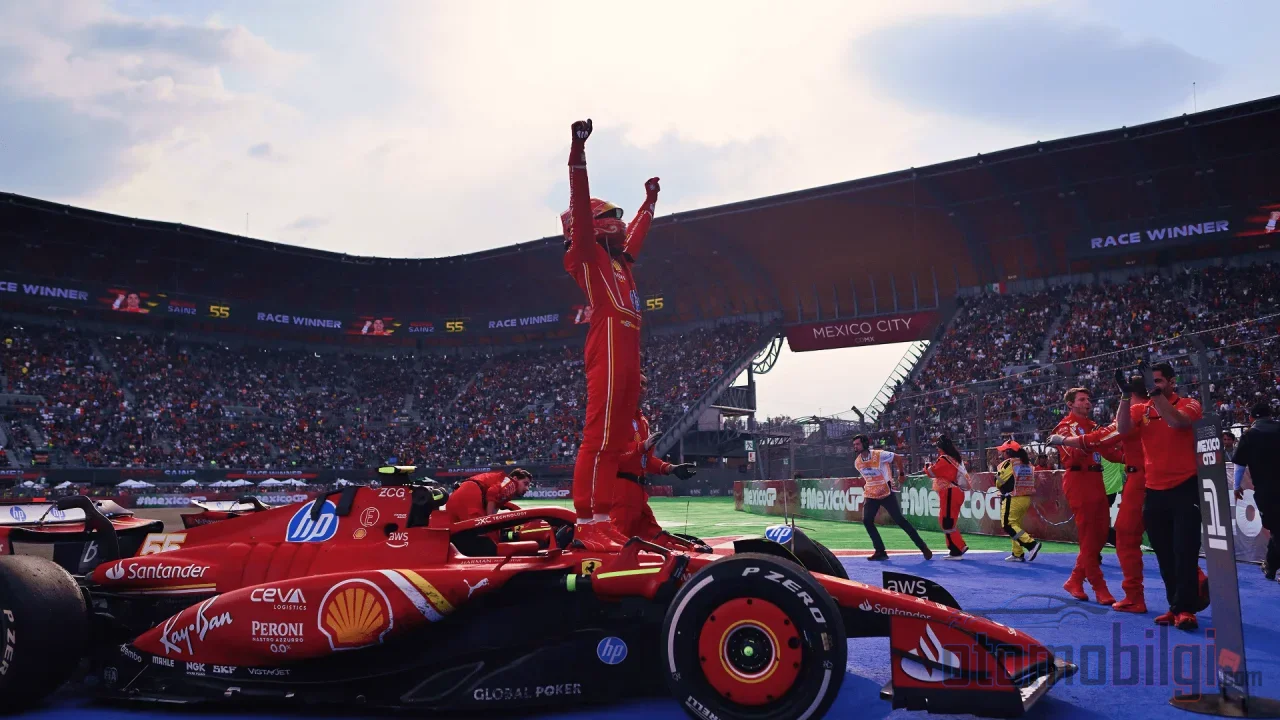
The real story of the Mexico City Grand Prix on November 1, 2026 - where Max Verstappen won and Kimi Antonelli secured the title of the youngest world champion in F1 history - was not on the podium, but between the lines of the technical regulations: Even when the gap to Hamilton's Ferrari dropped to 0.756 seconds, no pass was made. Because the 2026 cars run with a speed limiter that cuts electrical power entirely the moment they reach 340 km/h, and this system makes passing virtually impossible at Autódromo Hermanos Rodríguez's 2,240-meter altitude. So why does this rule exist, how does it work, and why did it produce such a heavy consequence especially in Mexico?
How Does the 340 km/h Limiter Work?
The 2026 Formula 1 cars do not have a fixed speed limit in the classical sense; The system implemented by the FIA is based on the conditional cutting of electrical power. When a car reaches 340 km/h, the electrical supply in the power unit is zeroed out; even if energy remains in the battery, all cars are locked to the same top speed. In other words, the limiter does not cut the engine's potential, but the electrical component's contribution. The FIA's reason for resorting to this approach is to prevent single-seater race cars from approaching the 400 km/h band and especially to reduce the risk created by closing speed differentials.
The regulation has a background that left its mark on the 2026 season: DRS was removed entirely this year. In its place came a new system that provides conditional extra electrical energy to the following car. This system, called Overtake Mode, provides extra power to the attacking car when the gap to the car ahead drops below one second. On paper, this was the new tool for passing; in practice, we saw the exact opposite in Mexico.
Highlights
- Electrical power is cut entirely when cars reach 340 km/h
- The track sits at 2,240 m altitude; air density, downforce and cooling are approximately 20% lower
- Hamilton took Ferrari's first pole position of 2026 with 1:16.514
- Verstappen won; Antonelli became 2026 world champion
- In the FIA revision, maximum charging power was raised from 250 kW to 350 kW
The Altitude Problem: Why Does Everything Get Harder in Mexico?
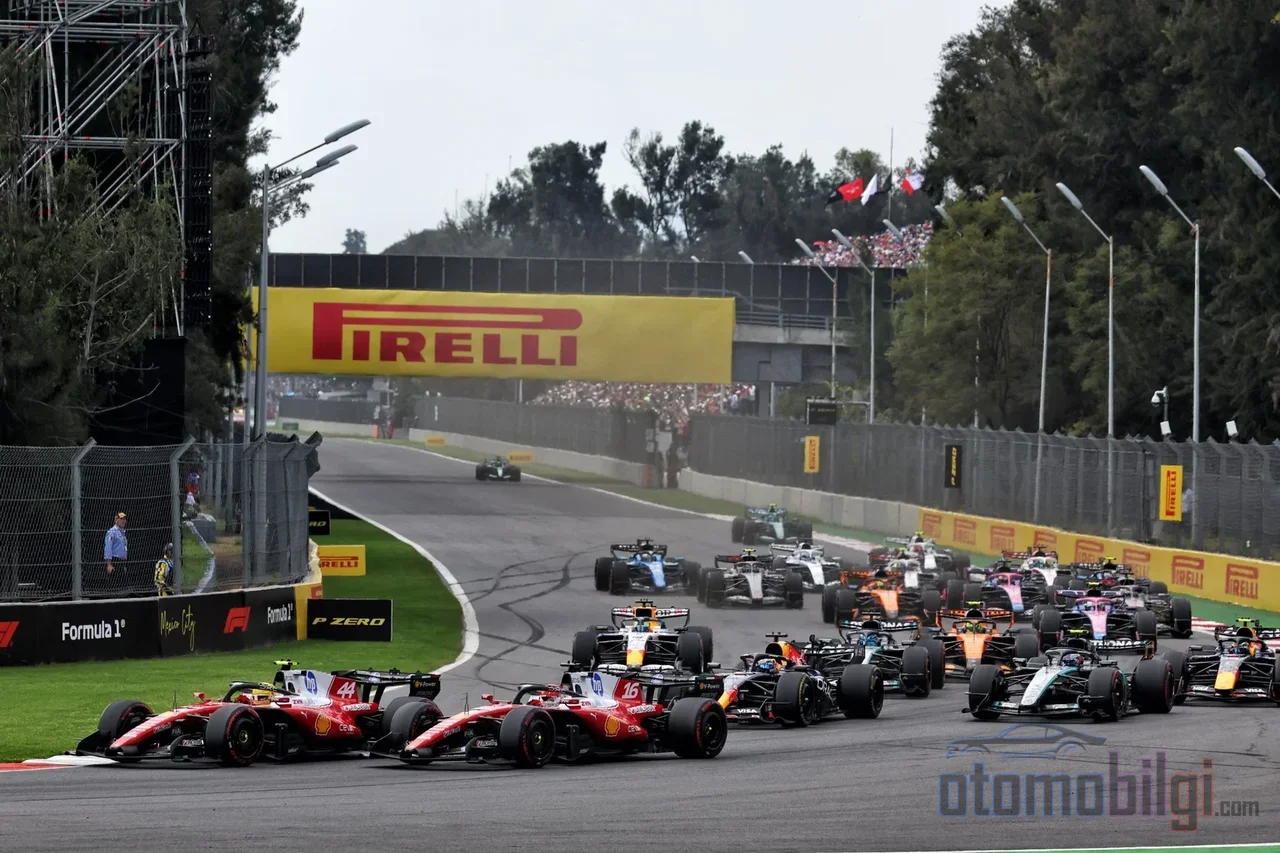
Autódromo Hermanos Rodríguez is the highest track on the calendar. At this circuit, roughly 2,240 meters above sea level, air density is about 20% lower compared to sea level. This means an equal loss in downforce and cooling capacity: the wings generate less pressure, and the radiators heat less air. The 2026 cars come out unexpectedly fast in this thin air; because lower air resistance, combined with electric-combustion propulsion, turns the altitude into an advantage on the straights. However, on the other side of the coin, the closeness required for passing cannot be established in that same thin air.
The 1.2 km main straight is the track's main passing point at the entry to Turn 1. The Foro Sol stadium section, meanwhile, is a low-speed zone where traction in the corners is critical. The picture laid out by Williams' head of race strategy, Charles-Antoine Florentin, is clear: on a long straight, the thin air erases most of the slipstream advantage (tow) of the following car. The fast corners in the middle sector and the stadium section are sensitive to dirty air, so the car behind loses time before it even reaches the straight. With no DRS, drivers try to throw all their energy into Turn 1; as a result, T1 is the only real overtaking opportunity left.
Why Does Overtaking Become Mathematically Impossible?
To explain the mechanism here through the eyes of someone who has been around the pit lane for thirty years, the matter is simple: overtaking requires a speed difference. 2026 cars quickly lose the advantage they build up in the low-speed corners after the straight and cannot compensate for it. When the limiter kicks in, the car ahead and the car behind are locked at the same speed - the difference between them is wiped out. Even if energy remains in the battery, if the attacking car cannot go any faster, the extra power Overtake Mode provides becomes meaningless at the end of the straight.
After the race, Lando Norris summarized the situation by saying that overtaking is almost impossible when the limiter is active. Lewis Hamilton, meanwhile, said at the FIA press conference that he found the rule downright stupid, and laid out his reasoning clearly: overtaking is not possible here, and for a chance to pass, cars need to be able to go beyond the top speed limit; the engine can go faster but is not allowed to. Norris and Hamilton stated that the speed restrictions prevent drivers from using their full straight-line speed capacity, effectively disabling the new regulation's straight-line performance. Charles Leclerc, too, had been among the foremost voices worried since the start of the season that Overtake Mode could limit overtaking.
The Race in Numbers: What Does the Strategy Tell Us?
The race result table is actually the simplest proof of the rule's impact. Hamilton took Ferrari's first pole position of 2026 with a 1:16.514 and started the race from the front; Leclerc led the early laps but received a five-second penalty for cutting received a five-second penalty for cutting the corner. During the pit stops on lap 28, Verstappen moved ahead and carried an ambitious 43-lap strategy on soft tires through to the end with his final stint average: a lap average of 1:19.725, only 0.037 seconds better than Hamilton's 1:19.762. In other words, the speed difference came from strategy and tire management, not from the straight. Bottas' suspension failure on lap 44 brought out the Safety Car and then a red flag; Antonelli, meanwhile, sealed his championship with third place.
On the tire front, compounds were once again consecutive in 2026 (C3-C4-C5), which once again made the strategy of moving from the medium to the soft compound strong. One-stop races were already dominant in Mexico; in 2025, 60% of the field had gone one-stop and 40% two-stop. With the possibility of overtaking eliminated, the only card left in the teams' hands was the pit wall - and what spectators saw was not a race on the track, but a race played out on the timeline.
Tension Between the FIA and the Drivers: Who Does the Rule Protect?
The criticism that continued throughout the season did not go unheard. FIA completed a consultative regulation review with drivers, teams, FOM and power unit manufacturers, and clearly chose the path of evolution, not revolution. At the center of the revision is energy management: with the fix called superclipping, maximum charging power was raised from 250 kW to 350 kW and the maximum time per lap was reduced to around 2-4 seconds. The goal is to make qualifying more spectacular and reduce the risk created by dramatic closing speeds.
On the management side, the defense is firm. F1 CEO Stefano Domenicali defended the controversial 2026 regulations, arguing that they continue to improve despite the drivers' criticism of the championship. The counterargument is not empty either: the legitimacy of the pressure for rule changes is built on the dangerous differences in closing speeds; the view voiced in forums, that a serious concern about collisions caused by an excessive closing speed difference is forcing the regulation, is not yet based on verified data.
How Will the Mexico Lesson Shape the Future Race Format?
The lesson delivered by the Mexican GP can be summarized in one sentence: electrical energy is the new overtaking currency of the calendar, and the limiter invalidates that currency on the straights. With the removal of DRS, electricity became the only real tool for overtaking; and the 340 km/h limit prevents this tool from being fully used. On a track where thin air kills the tow and low downforce sends cars tumbling in dirty air, the only remaining opportunity is the amount of energy that can be loaded for turn 1 - and that is a much narrower window than what it offers to the spectator.
In the past, an overtaking problem was managed with DRS, wing angles or tire temperature; now the problem is knotted in the regulation itself. The charging power raised to 350 kW and the shortened energy loading times will give drivers more flexibility within a lap. However, the Mexico example shows that the problem is not entirely a matter of technical adjustment: track character, altitude and air density proved that the same rules do not produce the same result everywhere. The question FIA must answer in the coming months is this - who does the speed limit protect: the drivers, or the race itself?
The next track will be at a lower altitude, with denser air; the limiter will kick in later, and Mexico's shadow will be erased to some extent. But the Mexico City Grand Prix delivered the clearest regulation lesson of 2026: overtaking, the oldest art of racing, is now only as realistic as a line drawn on top of the energy map.
Sources
- F1 - 2026 Mexico City Grand Prix Post-Race & World Champion's Press Conference Transcript
- The 'stupid' speed limit that neutered Mexican GP explained
- Everything we learned from F1's 2026 Mexican Grand Prix
- Mexico City Grand Prix 2026 - Race Report & Data Analysis
- How F1 drivers, engineers and strategists tackle the Mexico City Grand Prix
- The beginner's guide to the 2026 regulations
- Refinements to the 2026 FIA Formula 1 regulations agreed with all stakeholders
- FIA and F1 bosses targeting tweaks to 2026 regulations
- F1 CEO hits back at criticism of 2026 regulations
- Could F1's new rules limit overtaking? Charles Leclerc leads driver concerns