Isack Hadjar Faces Paddock Demotion
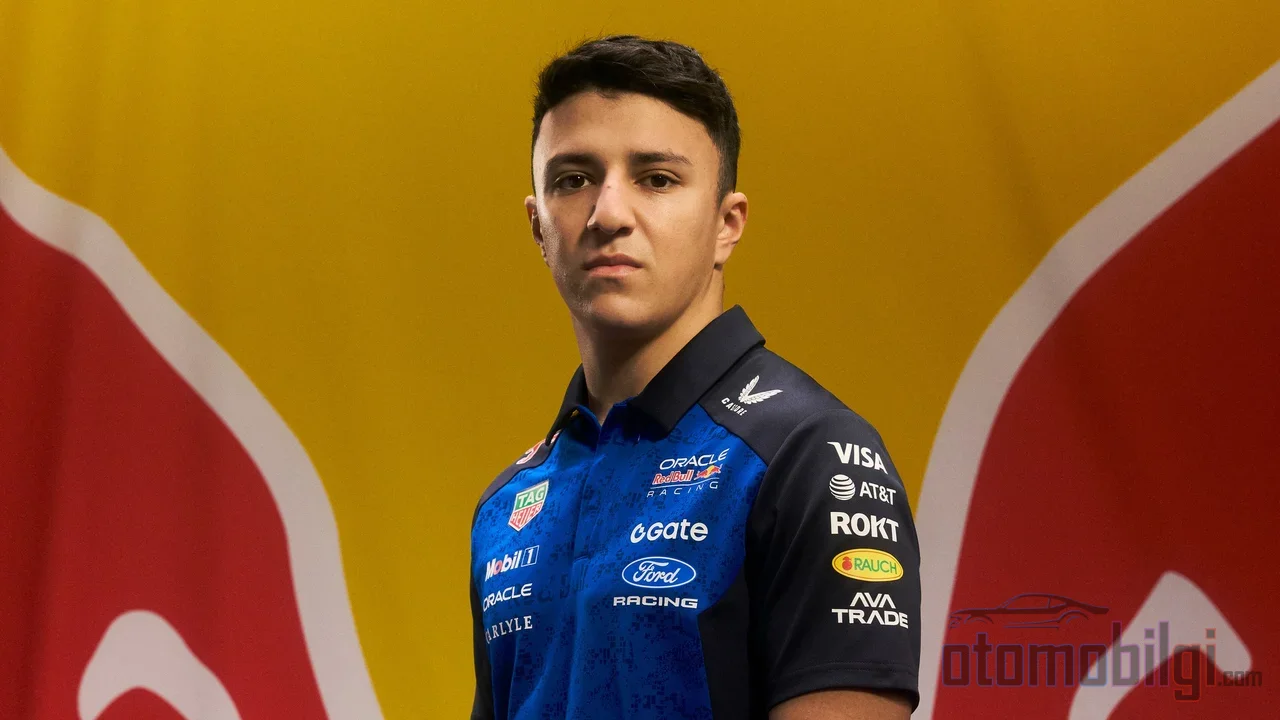
The most talked-about document of the Mexico Grand Prix weekend was not a race result, but a one-page official summons. Isack Hadjar, in his first season in the Red Bull seat, was summoned before the stewards with a phrase that has by now become all too familiar; yet this time the matter was not a maneuver on track or a technical rule infringement, but an alleged behavioral incident said to have taken place in the paddock. FIA Document No. 35, dated 30 October, requires the French driver to report to the stewards at 10:15 local time on Saturday.
The nature of the incident has not yet been fully disclosed, and it is precisely this ambiguity that makes the process intriguing. What lies behind a page full of allegations, what penalties could Hadjar face, and what does this development mean at a time when the driver needs to prove himself? Let us address the answers to these questions one by one.
What Does the Summons Say - and What Does It Not Say?
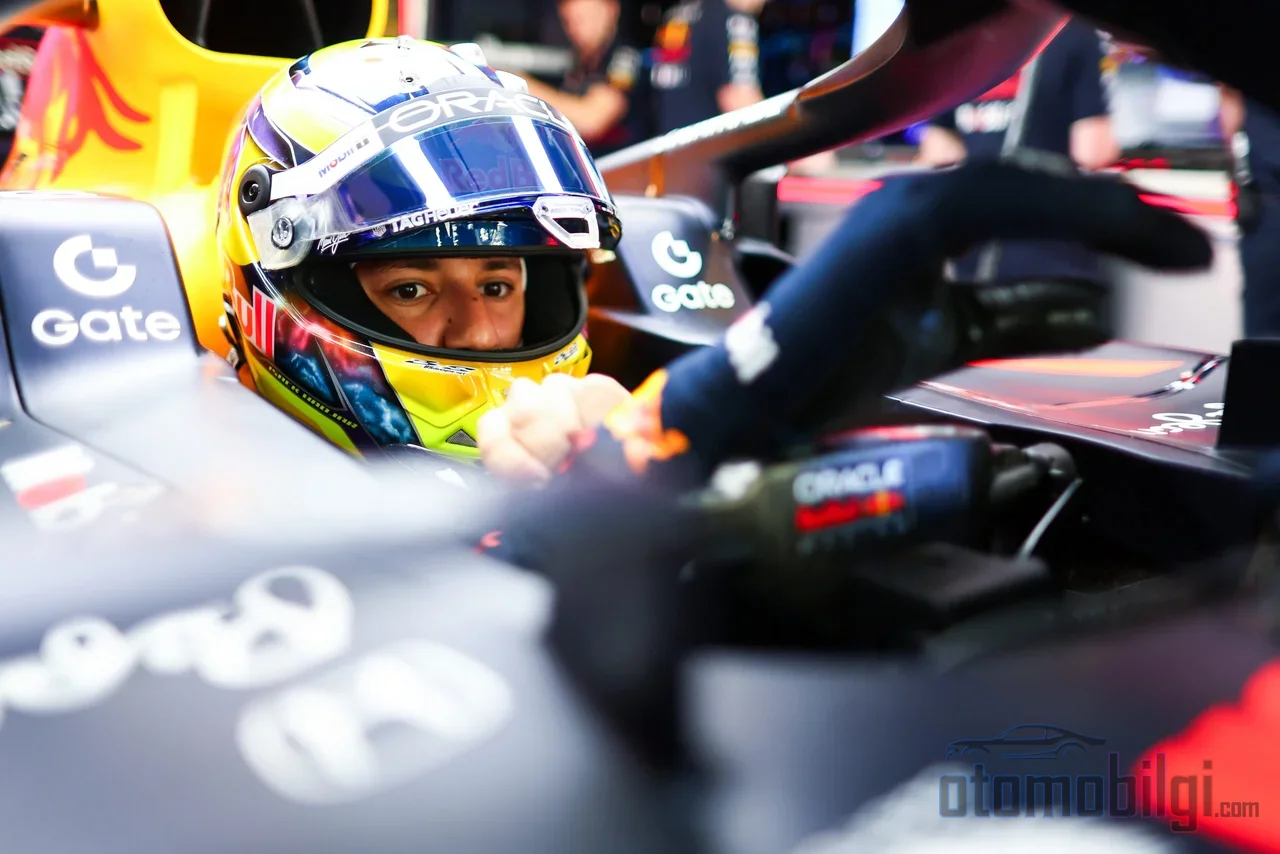
The summons delivered to Hadjar by the stewards defines the matter as bad conduct related to an incident in the Formula 1 paddock. While this wording is itself informative, the striking aspect of the summons is actually what is missing from it: the document does not specifically explain why Hadjar was summoned. Which incident is meant, who lodged the complaint, or which rule provision is the basis, none of this appears in the official text.
Such an omission is not unusual in F1 bureaucracy; steward summonses are often published not at the end of a process but right in the middle of it, and the details become clear during the hearing. Still, the question on readers' minds is concrete: what exactly happened in the paddock? A video circulating on social media appears to show Hadjar pushing away a person who wanted to take a selfie with him. Whether this footage is the actual reason for the steward summons has not yet been verified. The experienced approach is to treat it with caution: between a video circulating and an infringement being established lies the entire disciplinary process.
Highlights
- Hadjar was summoned to the stewards over an alleged behavioral violation in the paddock during the Mexico GP weekend.
- The official summons is dated 30 October, FIA Document 35; the reporting time is Saturday at 10:15.
- The summons does not specify the reason; the link to a video on social media has not been verified.
- Possible penalties: a fine ranging from 5,000 € to 20,000 €, with heavier sanctions in serious cases.
- Hadjar had received a technical disqualification in Miami and a driving penalty at the US GP; however, he kept his Monaco podium.
Possible Penalties: What Penalty Risk Does Hadjar Face?
The FIA International Sporting Code envisages a layered penalty architecture for behavioral violations. For words, conduct, or writings that cause moral harm to the FIA, its bodies, members, or officials, or that damage the interests of motorsport and the values the FIA upholds, the upper limit is a 5,000 € fine. In other cases, this upper limit rises to 20,000 €. The law also clearly states that heavier sanctions may be applied for very serious violations.
In terms of penalty points, the picture is more nuanced. According to the guidelines the FIA updated at the start of this season, penalty points are now applied only for dangerous, careless, or clearly intentional actions; a paddock conduct incident rarely falls within that definition. So in a realistic scenario, the outcome will most likely read as a fine or an official warning. Mitigating or aggravating circumstances can also change the outcome: the context of the incident, Hadjar's attitude, and any apology, if there is one, are not details that will go entirely unnoticed by the stewards.
A reminder is needed here as well: being summoned to the stewards is not a sanction, it is the beginning of the process. This season itself provided a live example of this; in the Monaco case we will touch on shortly, the review ended without a penalty.
Why Timing Matters: The 2026 Seat and the Driver Market
Reading this process as an ordinary penalty file leaves the picture incomplete. Hadjar was promoted to Red Bull this season and is, by his own words, in a period where he has to deliver for the team. The Red Bull seat is one of the most ruthless performance evaluation desks in motorsport; the discipline record is weighed just as much as on-track performance. The file of a driver who was disqualified from qualifying in Miami due to a technical infringement, received a penalty in Austin for a driving standards offense, and now faces a conduct investigation in the paddock could influence the decisions to be made at the end of the season.
A Season's Discipline Record
Placing Hadjar's 2026 incidents with the stewards side by side makes clear just how unusual this process is:
| Period | Subject | Outcome |
|---|---|---|
| Miami GP, May | The RB22 floor did not comply with technical regulations; disqualified from qualifying | Dropped from 9th to the back of the grid |
| Monaco GP, June | Alleged red flag violation; attempt to work on car No. 6 contrary to the rules | No action taken as the change was reverted, podium (P3) preserved |
| United States GP, Austin | Review of angry driving following the incident with Alex Albon; separate call for the FP3 incident | Penalty issued |
| Mexico GP, October | Alleged conduct violation in the paddock | Process ongoing, decision pending |
The table formed by these lines can also be interpreted as the typical apprenticeship period of a young driver's first top-tier season; the unpenalized outcome in Monaco shows that the stewards do not turn every review into a penalty. But assuming that these records will be put on the table as a file in the end-of-season evaluations with Red Bull management does not contradict thirty years of observation.
The FIA's Approach to Conduct Rules: Tightening or Indecision?
The FIA's approach to conduct rules has drawn an interesting arc over the last two years. In May 2025, the federation softened the misconduct rules following driver reactions, lowering the standard driver fine ceiling from 10,000 euros to 5,000 euros. This was a clear step back within the framework that has long determined referee decisions in terms of severity.
In contrast, the updated driving standards and penalty guidelines published on March 6, 2026, pointed in a different direction: automatic penalties were narrowed, referee discretion was expanded, and the definition of actions subject to penalty points was limited to dangerous, reckless, or clearly intentional actions. In short, the federation is taking a more cautious line on on-track incidents, while remaining a consistent follower on conduct files. This call in Mexico can be read as a current application of that second line.
Why Are Paddock Incidents a Separate Category?
There is a practical reason why an on-track racing incident and a paddock conduct incident are separated into different files. Racing incidents are evaluated against the driving standards guidelines, while conduct incidents are assessed directly under the general provisions of the sporting code. The measurement is harder in the second category: where anger ends and unsporting behavior begins is not always clear, and the referees decide based on the details of the specific incident. That is why two incidents that look similar can produce very different outcomes.
What Will Happen on Saturday and How Should the Outcome Be Read?
Hadjar must report to the referees on Saturday morning; after the hearing, either a sanction or a decision of no action will come. The predictable range of outcomes is narrow: the most likely outcome is a fine of up to €5,000, the first tier of the sporting code, or an official warning. If the incident carries a quality that falls into the second tier of the code, the upper limit extends to €20,000; if it is found very serious, the code also allows for heavier sanctions, but for a paddock conduct incident this scenario is considered exceptional.
Two cautions are useful when reading the decision. First, since the video's connection to the incident has not yet been verified, the concrete grounds on which the decision is based could be different. Second, as this season's Monaco example showed, the fact that referees have opened an investigation does not mean a penalty must be given; in the red flag investigation, the change was reversed so no action was taken, and Hadjar kept his podium.
The real long-term question is how this file will play out in the driver market. For Hadjar, what matters can be reduced to a single word: trust. For a driver who has openly said he has to deliver at Red Bull, a discipline record is now being added alongside on-track performance. This hearing in Mexico alone will not shake the seat; but the records accumulated over a season - Miami, Austin, and now Mexico - could become part of a decision at the end of the season. When the referees announce their decision on Saturday, the outcome will be only one line in the story Hadjar is writing himself - but which line it is will be the most eagerly awaited detail of the coming weeks.
Sources
- Hadjar summoned for alleged paddock misconduct
- Hadjar keeps Monaco podium after post-race investigation
- Hadjar disqualified from Miami Grand Prix Qualifying
- FIA confirms Isack Hadjar punishment after US GP investigation
- Hadjar admits he 'needs to deliver' for Red Bull
- Updated FIA F1 Stewards Guidelines for Driving Standards & Penalties
- FIA reduces driver fines by 50 per cent in softening of misconduct rules