FIA ADUO Announces Result: Engine Ranking Unchanged
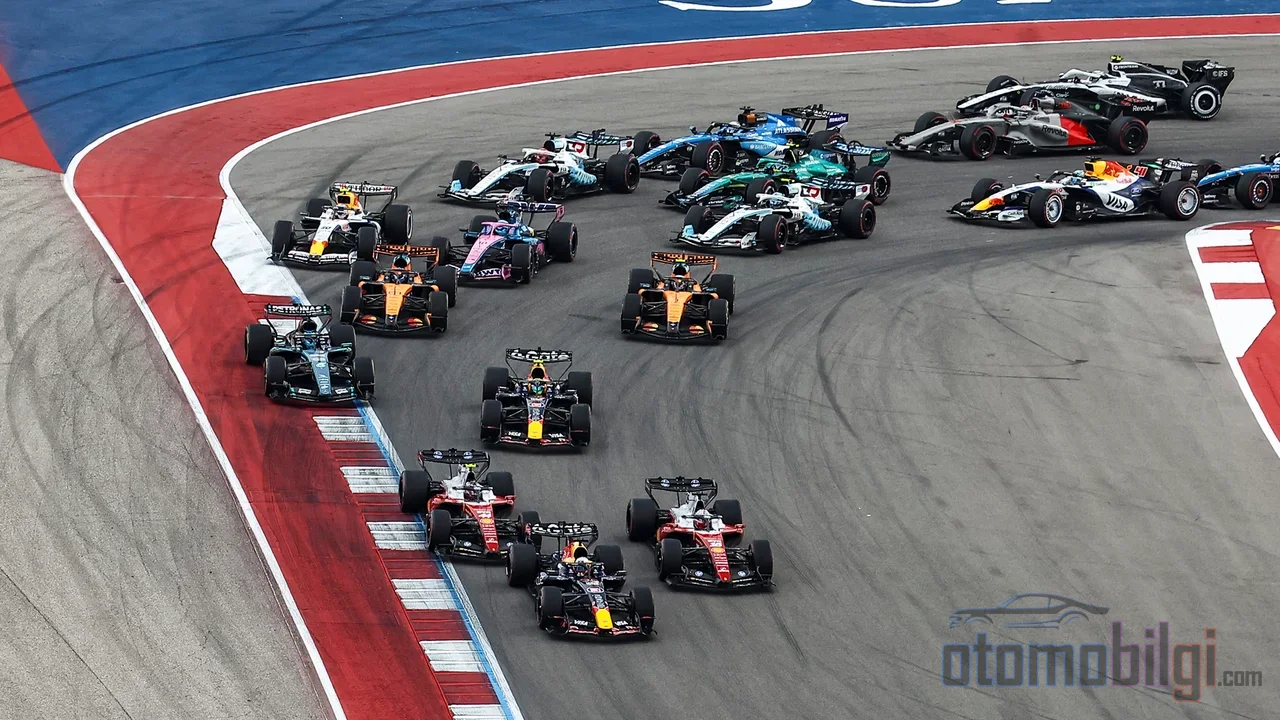
The third and final review of the ADUO system, which measures the power balance between engines in Formula 1's 2026 season, has been completed, and the result did not change the picture that has been familiar since the start of the season: In its final analysis published on November 10, the FIA granted no new privilege to any engine manufacturer. While Red Bull Ford Powertrains retained the benchmark position, the unreasonable gap between Ferrari, Audi and Honda also remained the same. So what exactly was measured in this system's first year, what was found, and why is a revision for 2027 on the table?
No One Earned New Rights in the Third Period
The FIA's third and final ADUO review of the 2026 season scanned data covering rounds 12-18, spanning from the Dutch Grand Prix to the Mexico City Grand Prix. The result was a picture repeating that of the second period: no change occurred in the engine ranking, and no manufacturer emerged from this period with an additional homologation right.
Red Bull-Ford, producing its own engine for the first time this season, continues to stay at the top. Mercedes, just as in the first period, is positioned immediately behind the benchmark engine, within the 2-4% band. Ferrari, Audi and Honda retain their deficits above 4%. These three manufacturers hold two extra upgrade rights each, earned in the first period and valid for next season.
Highlights
- In the FIA's third and final ADUO analysis on November 10, no new right was granted to any manufacturer
- Red Bull Ford Powertrains retained its benchmark position for the third time
- Ferrari, Audi and Honda hold two upgrade rights each with their deficits exceeding 4%
- Nikolas Tombazis conveyed that the concept is correct, but that a revision could be on the agenda in 2027
What Is ADUO and How Does It Work
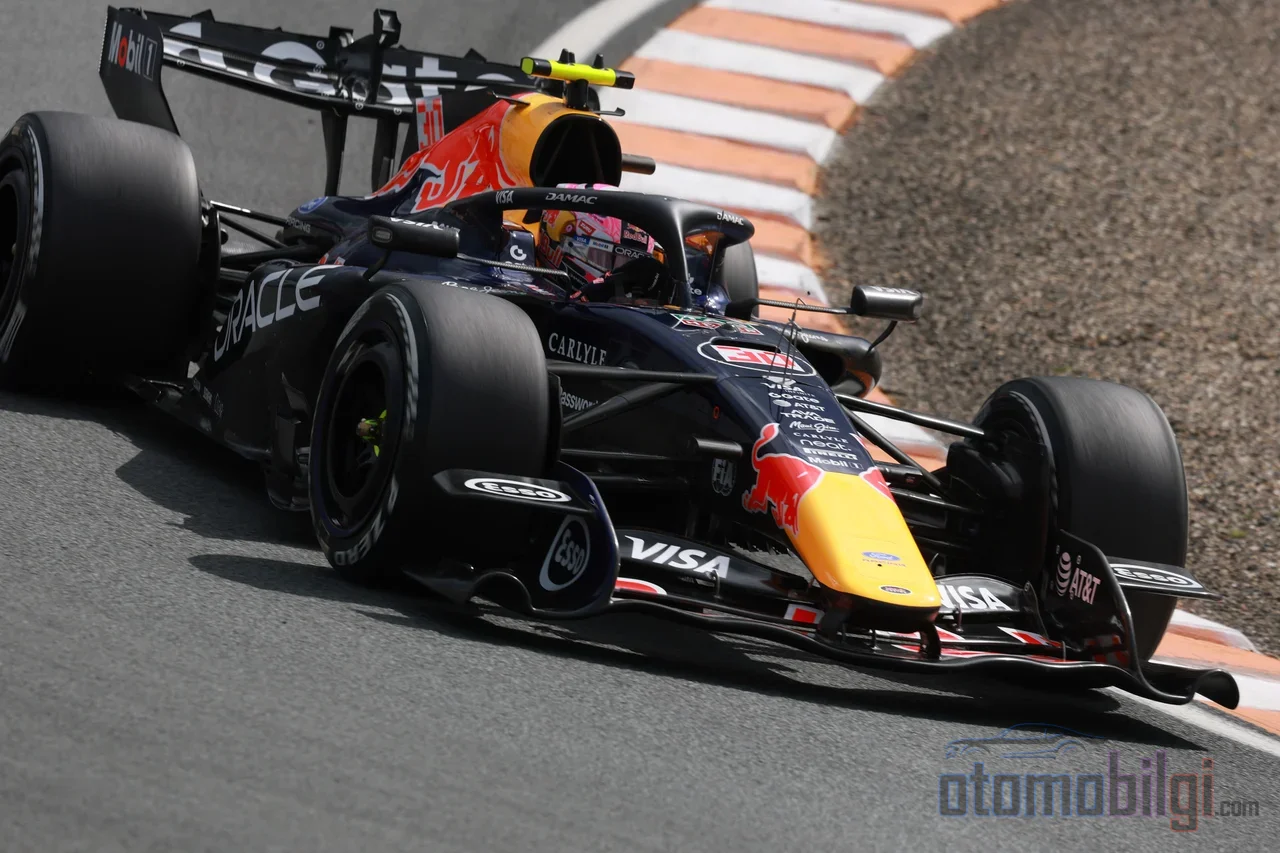
ADUO stands for "Additional Development and Upgrade Opportunities" and falls under Article C4 of the 2026 Formula 1 Technical Regulations. The logic of the system is simple: in defined review periods, manufacturers whose internal combustion engine performance trails the best engine by at least 2% are granted additional homologation upgrade rights for the current and following season. In addition, an extra spending allowance within the cost cap and extra dyno testing rights are also granted.
The thresholds are clearly defined. A manufacturer trailing the benchmark engine by between 2% and 4% earns one additional homologation for the current season and one for the next season. For those trailing by 4% or more, this number rises to two; two additional homologation rights each become valid for both the current season and the following year. Rights do not accumulate within the season, and an unused upgrade loses its validity for that season.
What Does the Performance Index Measure
The assessment is made through a Performance Index that weighs engine speed, input shaft torque, MGU-K power, and the lap time's sensitivity to power. There is a critical boundary: ADUO measures only the internal combustion engine, and the ERS, that is, the energy recovery system, is excluded from the assessment. The FIA itself admits that the measurement does not represent full power unit performance for this reason. This is already the most criticized aspect of the system.
The Story of the Season: Surprise Ranking and an Unchanged Table
The first period, covering the first five races of the season, turned the paddock's expectations upside down. Red Bull-Ford, with the engine it produced through its partnership with Ford, had been declared the benchmark in its first season, while Mercedes, despite generally having the best car on the field and strong performance on the straights, remained in the 2-4% band. While Mercedes had to settle for a single upgrade allowance within the 2-4% band, Audi, Ferrari and Honda, with shortfalls exceeding 4%, had each earned two allowances. Red Bull had requested a review of the results, but the review yielded no outcome.
The second period, announced on August 26, covered laps 6-11, and no new allowances were granted to anyone. The new power unit Honda introduced at the Dutch Grand Prix was not included in this calculation. Now the third and final period confirmed the same picture: the ranking did not budge. In short, in ADUO's first year, the table remained the same in all three reviews.
The FIA also stated that it is working with power unit manufacturers and teams to improve the methodology. This statement can be read as the official expression of the signal that a revision is on the table for 2027.
Cost Support: The System's Real Engine
At the heart of ADUO, there is more money than upgrade allowances. The cost cap side of the system provides a graduated spending allowance to manufacturers left behind: Those 2-4% behind are granted support of up to 3 million dollars, those in the 4-6% band up to 4.65 million dollars, for 6-8% up to 6.35 million dollars, and for 8-10% up to 8 million dollars. Manufacturers 10% or more behind can spend up to 11 million dollars per period. With a regulation specific to 2026, manufacturers more than 10% behind can bring forward up to 8 million dollars in spending from future cost cap periods.
Nikolas Tombazis, the FIA's single-seater director, draws a clear framework about the nature of the system: ADUO is not a balancing mechanism, but a cost cap relief mechanism. In other words, this system does not increase fuel flow, nor is ballast added to the car; it grants the manufacturer left behind extra development opportunities and budget to close the gap. According to Tombazis, a manufacturer will still need to build the best engine in order to win; the system is not a magic wand.
Why the 2027 Revision Is on the Agenda
In August, Tombazis had admitted that the system has a weakness, saying the concept is right but the system may need to be revised. After the second period, he stated that, based on the quality of the data, he was confident the analysis was extremely sound, but that it was ADUO's first year and that, over time, areas for improvement could be found by discussing with all power unit manufacturers.
In the industry, it is said that a comprehensive revision for 2027 is on the agenda. The purpose of the revision is to make the mechanism, which aims to close the gap on the manufacturers left behind, more functional; along these lines, the system is planned to be rethought with a two-pronged approach. The fact that the third-period result also produced a motionless picture does not weaken the justification for the revision - on the contrary, it reinforces it.
Criticism Directed at the System
The criticisms are gathered along two axes. The first is the scope problem: measuring only the internal combustion engine does not reflect all the performance differences in a hybrid power unit. The second is the methodology problem: The FIA does not disclose to the teams how it measures the engines; the reason for this is to prevent manufacturers from manipulating certain areas in order to earn upgrade rights. However, this opacity also makes it harder for the system to earn trust in the paddock and to be understood from the outside. While it was widely believed throughout the season that Mercedes in fact had the strongest power unit, the benchmark position remaining with Red Bull-Ford also fueled the debate over whether the ranking was genuine. On the Red Bull side, with team principal Laurent Mekies also joining the general consensus that Mercedes has the strongest power unit, there was a perception that the system had placed them in a position on paper rather than an advantage.
Conclusion: Status Quo Confirmed, Eyes on 2027
The short answer is this: No engine manufacturer gained a new privilege in the final ADUO analysis announced by the FIA on November 10, 2026; Red Bull Ford Powertrains remained the benchmark, and Ferrari, Audi and Honda, due to their deficits exceeding 4%, still hold the two upgrade rights each that they have.
The first year of ADUO did not produce a concrete rupture in the competitive plane among engine manufacturers. However, the FIA's methodology work and Tombazis's signal of a revision point to the possibility that the system could be redesigned in 2027 in a more comprehensive and more understandable way. Over the past thirty years I have seen how often restructuring rhetoric in this paddock has covered up the status quo; the difference here is that the problem has been openly acknowledged by the very architects of the system. In the coming winter, it may not be 2026's engine map that changes, but the very ruler that measures it.
Sources
- FIA announces ADUO results following first and second review periods of 2026
- EXPLAINED: What is F1's 'ADUO' engine upgrade system - and how will it work?
- ADUO in F1: Red Bull engine top rated by FIA as Mercedes, Ferrari granted upgrades for 2026 Formula 1 season
- FIA reveals latest engine ranking for ADUO as Red Bull remains F1 benchmark
- FIA reaches decision in final F1 2026 ADUO announcement
- FIA confirms latest ADUO review results after third analysis of 2026
- Formula 1 News: FIA grants no new ADUO upgrades after third 2026 review
- FIA director admits to F1 ADUO 'weakness' amid possible rethink
- FIA's Honda help could trigger major ADUO system revamp
- Power Ups: How F1's Additional Development Upgrade Opportunities Will Be Applied