Ferrari Missed Pole 18 Times in 2026, Again Starting Second
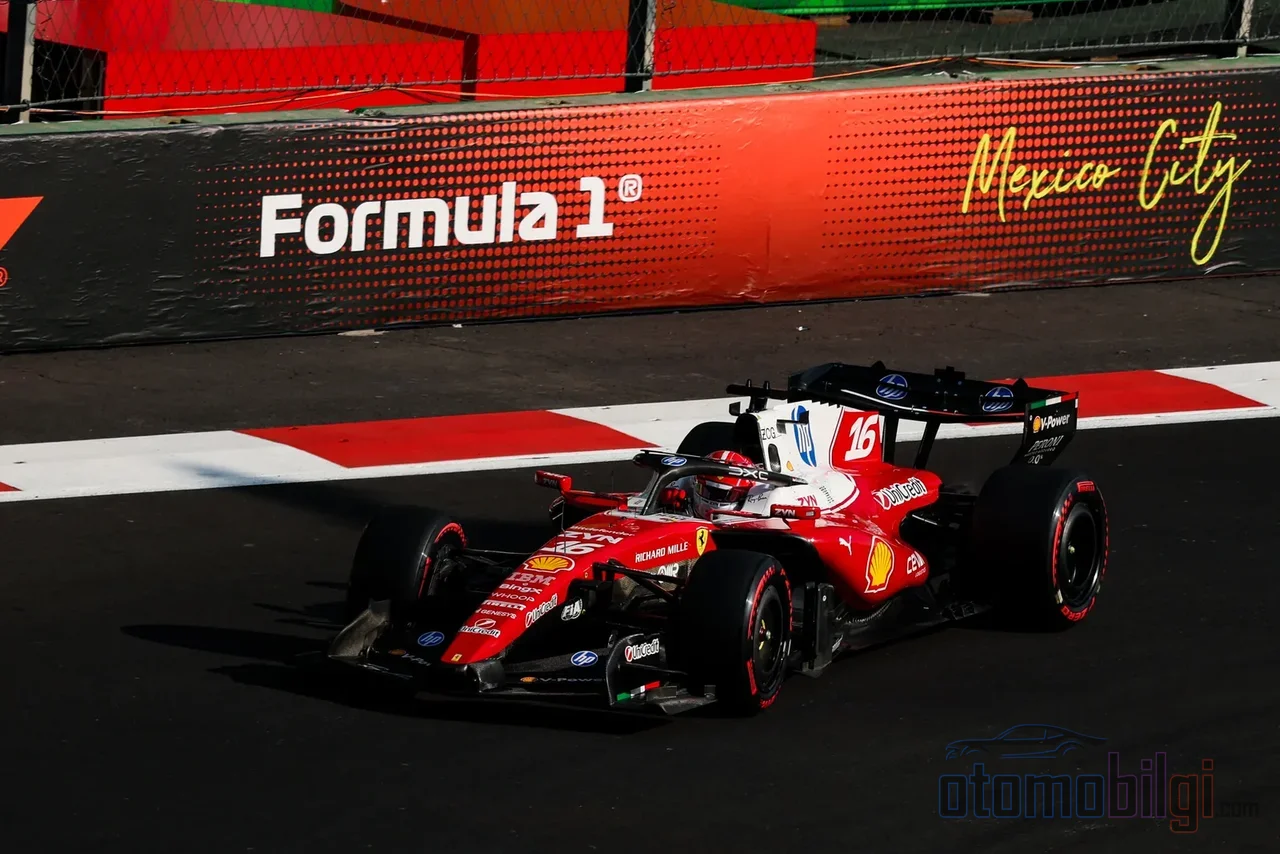
In the closing laps of the Mexico City Grand Prix, everyone in the paddock was talking about the same thing: Ferrari had the speed to win, but the victory went to the Mercedes garage. Max Verstappen won by a margin of 0.799 seconds, Kimi Antonelli finished third and was declared the youngest world champion in F1 history, and Ferrari closed out the race with Hamilton in second and Leclerc in fourth, 10.7 seconds behind. The headlines talk about Ferrari's tactical chaos and the drivers refusing to leave room for each other. Rightly so. But this story also needs to be read the other way around: this team, with the weakest power unit of 2026, is standing much higher in the championship than in 2025. The subject of this page is that second story, the one nobody is writing.
What exactly is Ferrari's 2026 power unit weakness?
The short answer to the problem lies in straight-line speed. Measurements taken in Austin laid the picture out clearly: At the end of the main straight, Charles Leclerc was roughly 10 kilometers per hour slower than Kimi Antonelli and 5 kilometers per hour slower than his own teammate Lewis Hamilton. Hamilton, in turn, was losing an estimated 0.03-0.05 seconds, about 0.04 seconds, to Verstappen along the straights. Ferrari missed pole position 18 times this season, and one of the two weaknesses that proved decisive in Austin was directly the power deficit; the other was the single-lap tire warm-up problem.
The weakness is not limited to horsepower alone, either. The problem concerns the power unit as a whole: Ferrari has not yet been able to do what rival manufacturers have achieved in energy harvesting and storage capacity. The ADUO update was expected to close some of the gap, but the expected leap never came. Vasseur does not hide this picture either: he openly acknowledges that the team has a raw power deficit and that the aim is to close the real gap with the 2027 power unit project. The inertia on the engine side is far greater than on the chassis side; the process is long, parts delivery lead times are wide, and the budget cap does not make things any easier.
Highlights
- Ferrari missed pole position 18 times in 2026; the entire average pole gap of 0.442s in Austin did not come from power and single-lap tire warm-up alone, but the straight-line loss was decisive.
- After Singapore, Ferrari was second with 444 points; at the same stage in 2025 it was third with 298 points.
- Antonelli became the youngest world champion in F1 history by finishing third in Mexico.
- The internal Hamilton-Leclerc tally: Hamilton 229 points, Leclerc 215 points.
The small turbo: a deliberate choice, a double-edged sword
At the center of the debate over Ferrari's engine architecture is the turbo choice. Maranello chose a V6 architecture with a smaller-diameter turbo than its rivals to reduce turbo lag, and it was judged that this move outperformed the competition in the short term. The emerging picture confirms this: Ferrari's standout launch performance advantage throughout the season comes directly from the engine, and in the new regulations without the MGU-H, turbo lag management is a critical determining factor. But the same small turbo exacts a price on the power side at high-speed tracks. The engineers had seen this risk from the start: the warning that a small turbo could be a problem on power-focused tracks was on the table the moment the architecture became clear.
Why was Mexico the worst-case scenario?
The Mexico City circuit sits 2,240 meters above sea level and the air is about 25 percent thinner. Since the 2026 regulations have no MGU-H, high altitude places a far greater load on the turbo than normal. Ferrari's small turbo choice doubled the weakness in thin air. Engine simulations flagged Mexico as the worst race of the season, and the same expectation was widespread in the paddock. The other side of the data was interesting: in low-speed corners, especially in the third sector, Ferrari was at the top of qualifying. So the chassis and aero package was the best of the season in some metrics; what was missing was the power to carry the car on the straights.
How the weakness showed on track: Hamilton and Leclerc hitting the same wall from different corners
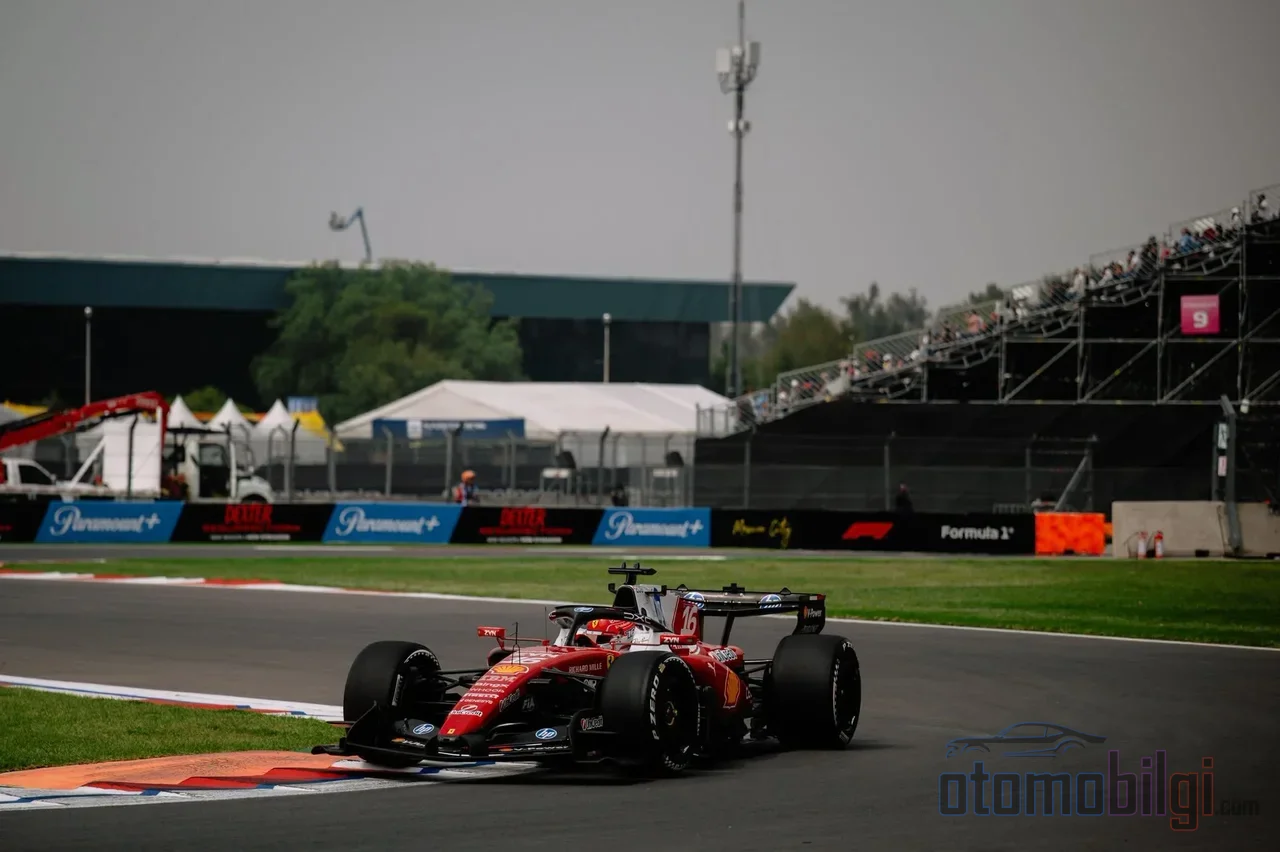
Ferrari's internal balance produced two different narratives of the weakness. According to Hamilton, the gap to rivals has been closed on the chassis side; the only thing not closed is straight-line power. Leclerc, on the other hand, highlights the single-lap tire window problem. Both are describing different faces of the same truth: SF-26's latest major update package did its job in Austin, Leclerc finished fourth, Hamilton fifth, but the final ten km/h of speed needed for victory was still missing.
The numbers summarize the internal battle like this: Hamilton 229 points to Leclerc's 215; in head-to-head, Hamilton leads 9-8. The breakdown is more striking: Leclerc is ahead 11-8 in qualifying, while Hamilton has won the races 10-9. Both drivers have one win and six podiums each. So what marked the season was not a difference in driver quality; it was Leclerc's more frequent retirements and the car's stubborn inconsistency per lap.
Vasseur's real achievement: second place with a weak engine
Now let's come to the question at the center of this page: What did Fred Vasseur achieve while managing this weakness? The answer stands in the championship table. After Singapore, Ferrari was in second place with 444 points; at the same stage in 2025, the same team was third with 298 points. So points production has increased by roughly 50 percent, and this increase was achieved with the engine, the team's weakest link. The average gap to pole position tells it like this: the gap, which was 0.442 seconds up to Monaco, has dropped to 0.204 seconds after Barcelona.
Applying the lesson of 2022 again
Vasseur's engine strategy follows the known method of 2022: first power at the expense of reliability, then refinement. Both the cost and the reward of this approach were seen. The cost: retirements caused by reliability risk, with Leclerc's DNF at the Italian Grand Prix being the most painful example. The reward: the team recovering its chassis side early and being able to focus the 2026 updates on the SF-26 relatively early. Vasseur keeps defending the decision to shift the development focus to 2026 early, and was describing the engine update at Monza as a bet placed on marginal gains. The bet did not fully pay off; but the standings table also shows that the bet was not entirely lost.
The outgoing picture despite the crisis rhetoric
Maranello's internal agenda is noisy. Vasseur denies claims of an internal crisis, and does not accept the accusations directed at the energy deployment strategies either. But reports write that his future is uncertain despite his recently renewed contract. In the engine department, the departures of Wolf Zimmerman and Lars Schmidt also cast a shadow over the 2026 plans. The striking paradox here is this: while the team has climbed from third to second, the pressure applied to the team appears to have increased. The tactical mess in Mexico grew this pressure even more; Hamilton's anger that they threw away his season headline and Verstappen's remark that Ferrari is fighting itself turned the direction of the criticism from engine weakness to management weakness.
What happened in Mexico: engine weakness, or a tactical error?
The Mexican results sheet carries both Ferrari's thesis and its antithesis at the same time. On one side there was victory-level pace; Hamilton finished second by 0.799 seconds, meaning the gap was of a recoverable fineness. On the other side, the simulations said this track was Ferrari's worst-case scenario. The picture that materialized was a mix of the two: Ferrari effectively overturned the expectation of its worst race, which on its own is a remarkable engineering and strategy achievement; but the in-race decisions could not carry this gain to the top of the podium, and Leclerc came fourth from 10.707 seconds behind. Therefore it would be unfair to reduce the loss in Mexico to a single cause: the power deficit was real, it was closed, and then points were left on the table.
2027: the address where the deficit will be closed
Where Vasseur's entire strategy leads is the 2027 project. The plan is to combine competitive engine, chassis and aerodynamic development on the same axis. Leclerc also says that big gains are possible in the engine, chassis, aero and tires. This is also a key to reading the current season: the 2026 runner-up finish is not a success in itself; it is an interim period that gains value when read as preparation for 2027. Developments on the Mercedes front also show that this cannot be rushed: a new engine solution used by the rivals is unsettling Ferrari's surroundings and making the gap the team is chasing look bigger than it is.
Conclusion: the real picture behind the noise
Ferrari's 2026 power unit weakness is a concrete fact standing before everyone's eyes on the long straights: the 10 km/h Leclerc gave to Antonelli, the 4 tenths of a second Hamilton gave to Verstappen, 18 missed pole positions. With these figures out in the open, what remains in the shadow of the tactical mess in Mexico is this: Fred Vasseur built a team that, with the weakest power unit on the grid, scored more than a hundred points compared to the previous year and moved from third place to second. When you read together the small turbo architecture that produces an advantage off the line, the power-prioritized development order that accepted the reliability risk, and the decision to focus early on 2026 updates, what stands before you is not panic but a long-term plan. The plan's verdict will be seen in 2027. But it is already possible to write the lesson of 2026 in advance: finishing second with a weak engine is a harder task than finishing third with a strong one, and this task has been accomplished.
Sources
- Antonelli clinches title as Ferrari mess helps Verstappen win
- The two weaknesses conspiring against Ferrari at Austin
- Ferrari's outwitted its rivals with key F1 2026 engine choice
- Ferrari engine concern exposed as Charles Leclerc admits PU 'quite down' on horsepower
- Ferrari's engine simulations spark fears Mexico City Grand Prix could be their worst race of 2026
- Ferrari is closer to F1's top in 2026. So why is Vasseur under more pressure?
- Leclerc leads Ferrari qualifying. So why is Hamilton ahead in F1 points?
- F1 Mexico Grand Prix: Updated race results
- Fred Vasseur rejects Ferrari internal crisis suggestions
- Vasseur promises engine improvements as Ferrari chases Mercedes