Ford Bronco Frostwarden Debuted at SEMA with 1,200 HP
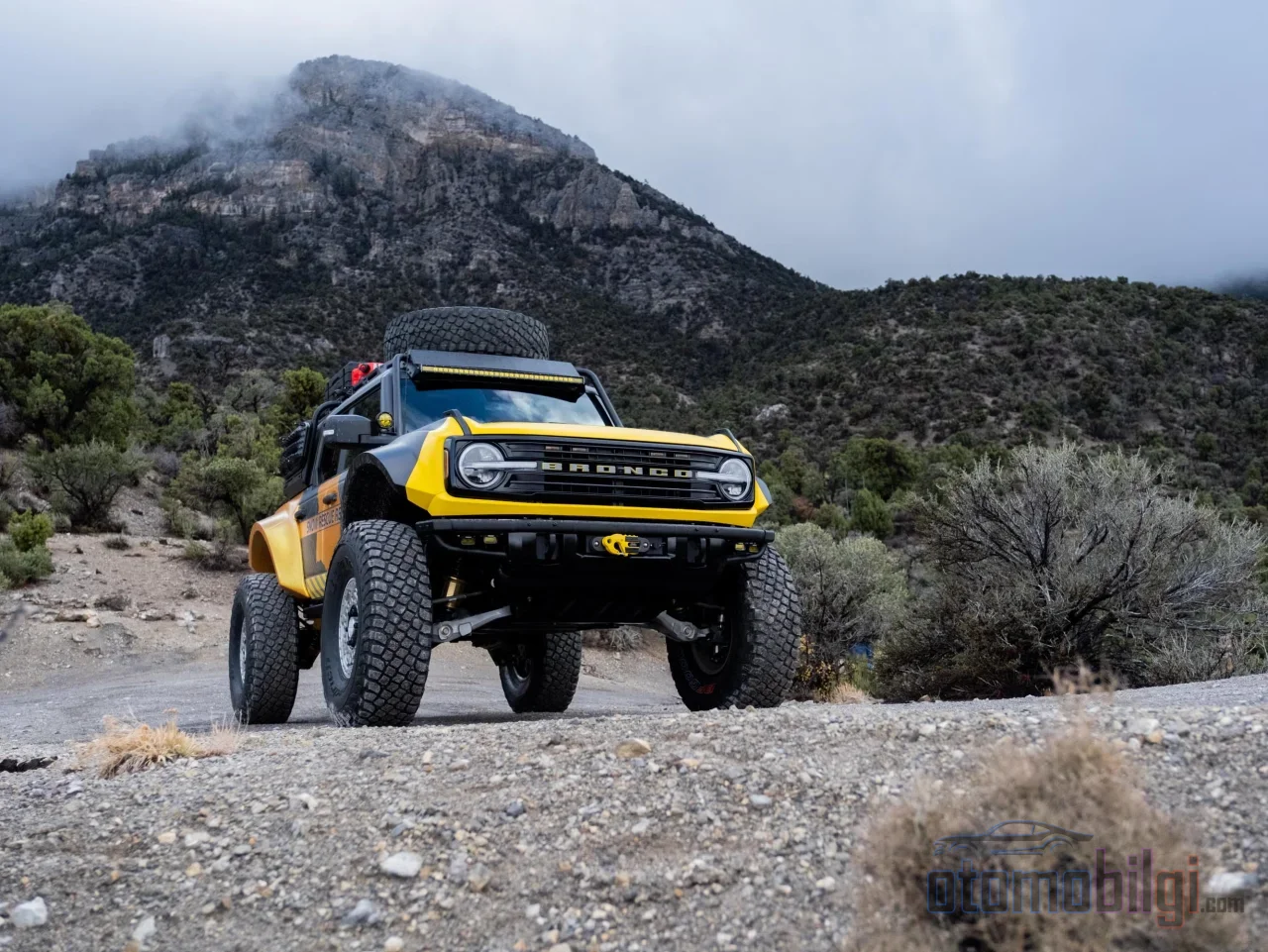
One of the sharpest Ford builds showcased this year in the halls of the SEMA show in Las Vegas was a Bronco carrying a winch on its front bumper and a spare tire on its roof. Although the vehicle called Frostwarden looks at first glance like a search-and-rescue concept to be taken seriously, the real story is under the hood: A supercharged V8 crate motor called Megazilla 2.0, claimed to produce over 1,200 horsepower. So why exactly did Ford choose an icy rescue theme as the first showcase platform for this engine?
The answer lies in the momentum the crate engine market has gained in recent years. Ford announced the Megazilla 2.0 in January 2025 with a 1,000-horsepower target; Frostwarden is the first build in which this engine has been installed in an actual vehicle. For those who remember the old days when a manufacturer's show stand displayed body kits and wheels, this is proof that the game has changed considerably.
Highlights
- Megazilla 2.0: The 7.3-liter supercharged V8 produces over 1,200 HP and 1,000 lb-ft of torque on race fuel
- Frostwarden is a one-off Bronco build that will not enter series production
- Arctic search-and-rescue theme; equipped with a winch, an external fuel tank, and 42-inch tires
- According to Ford's claim, the most powerful crate engine ever made by a manufacturer
Megazilla 2.0: Not Just a 7.3-Liter With a Supercharger Bolted On
Ford's 7.3-liter "Godzilla" engine family was the modern representative of the tradition of large-displacement naturally aspirated V8s. The naturally aspirated Megazilla 1.0 already produces 612 horsepower and 670 lb-ft of torque; with a weight of 673 pounds, it offers crate engine buyers a solid starting point. Megazilla 2.0, however, is not an easy derivative with just a compressor attached to this foundation.
The updates made to the engine are comprehensive: a stronger block, a new camshaft specific to supercharger applications, reinforced pistons, larger fuel injectors, a different belt drive, and damper. The boost duty is handled by a 3.0-liter Gen 6 Whipple supercharger with bright blue covers. The result is a unit claimed to deliver over 1,200 HP and 1,000 lb-ft of torque when running on race fuel - in Ford's words, the most powerful crate engine ever produced by a manufacturer.
The numbers need to be put on the current scale of the automobile world: The standard Bronco produces 300 horsepower with its 2.3-liter EcoBoost engine; the V6 option reaches 330, while the Raptor, the most extreme series-production Bronco, reaches 418 horsepower with its 3.0-liter twin-turbo V6. Megazilla 2.0 offers roughly three times the Raptor's power. This is a change of scale; a change of order.
Why Is Frostwarden Dressed Up as a Rescue Vehicle?
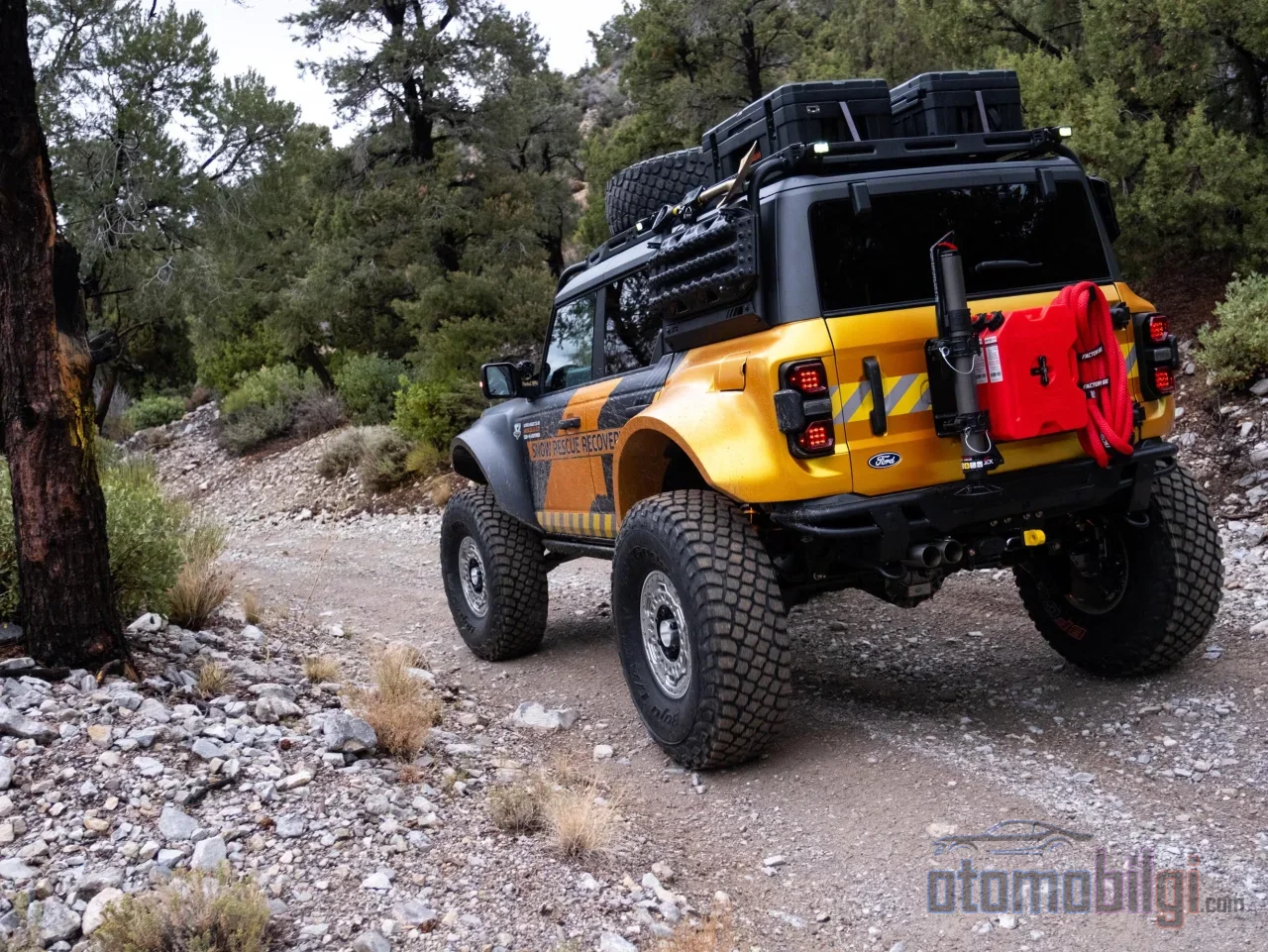
Ford's showcase logic is simple: A vehicle that would put 1,200 horsepower down to the tires needed a platform capable of carrying that power in demanding environments. The Arctic search-and-rescue scenario gives the engine's escaped-from-prison power a legitimate job. Developed with Kincer Chassis in Tennessee, the vehicle is built with its extended body to carry the hardware this scenario requires.
What's in the Chassis and Suspension?
- 74Weld portal gear lift kit
- 42-inch BFGoodrich tires on 18-inch Weld beadlock wheels
- Dana driveline components
- Custom Bilstein shock absorbers
- Steel bumpers carrying a winch up front
The recovery equipment is as serious as the theme: off-road lights, an external fuel tank at the rear, a spare tire in the roof rack, a bright yellow front winch, RTR traction board holders and additional Rigid-brand lighting. When combined with the black-and-yellow livery, the vehicle forms a coherent whole between function and aesthetics. Inside the cabin, black-and-yellow upholstery, a Megazilla logo on the steering wheel and carbon fiber details are the touches fair visitors will encounter when they open the door.
No Series Production, But That's Not the Real Goal
The answer to the most frequently asked question is clear: Frostwarden will not enter series production. Ford explicitly states that the vehicle is a one-off build and that its purpose is to show that extreme projects powered by Ford engines can be brought to life. In short, the vehicle is a three-dimensional display board for the Megazilla 2.0 crate engine; the real product is the engine under the hood, and that engine will be sold in the Ford Performance parts catalog.
It's worth briefly explaining the crate engine concept: These engines allow modifiers to bring ready-made, warrantied high power directly into their projects instead of developing a powertrain from scratch. The price of the Megazilla 2.0 has not yet been officially announced. For comparison, the data we have shows the following: the naturally aspirated Megazilla 1.0 starts at over $20,000, and similar Whipple superchargers sell in the $7,000 to $15,000 range; based on these components, it is predicted that the Megazilla 2.0 could come with a price of around $30,000 - but this is not an official figure.
Another practical matter is the area of use: In the initial announcement in January 2025, the Megazilla 2.0 was specified for off-road use only; the current promotional material contains no new official statement on this matter. So the question of where the crate engine buyer will put this power is largely left to the buyer themselves.
Ford's Place in the SEMA Tradition
For years, SEMA has been the showcase of out-of-catalog creativity for manufacturers. Ford, in recent years, has been using this fair as the stage for its crate engine strategy; the Megazilla 2.0 being first announced in January 2025 with a 1,000 HP target and its final form being shown at SEMA 2026 through Frostwarden is the final step of this planned roadmap. In the past, fairs were places where aftermarket manufacturers displayed parts and major manufacturers sponsored them; now the major manufacturer itself is marketing its own part with its own halo vehicle.
Frostwarden's function in this context also becomes clear: a reference point showing how far extreme projects powered by Ford engines can go. The coming together of components like a Dana driveline, Bilstein suspension and a Whipple supercharger in the extended-body build developed with outside partners like Kincer Chassis is a concrete demonstration of the crate engine ecosystem's chain of OEM + parts suppliers.
Conclusion: Not a Showcased Vehicle, But a Statement of Capability
The Ford Bronco Frostwarden is a singular build that puts SEMA 2026's most powerful crate engine, the Megazilla 2.0 - a 7.3-liter supercharged V8 with over 1,200 HP and over 1,000 lb-ft of torque - on display with a search-and-rescue theme. There is no mass production plan; the real message is that crate engine buyers can put this power to use in their own projects. The price was not disclosed, and road use remains uncertain. But for someone who has been watching these shows for 30 years, the picture is clear: what manufacturers display at their show stands is no longer just cars; it's engines that enable others to build cars.
Sources
- Frostwarden Unleashes Megazilla 2.0 - Ford (official announcement)
- 7.3L Megazilla 612 HP Crate Engine - Ford Performance
- New Megazilla, Coyote Crate Engines Deliver More On Everything - Ford Racing
- Ford's Frostwarden Bronco Is a One-Off Rescue Vehicle with a 1200-HP Supercharged 7.3L V-8
- The Ford Bronco Frostwarden Makes 1200 HP, Thanks to Its Megazilla 2.0 Supercharged V-8
- Ford Crams The Most Powerful OEM Crate Engine Ever Made Into New Bronco Concept