Mopar Dropped a Hellcat Engine into a 1967 Plymouth GTX
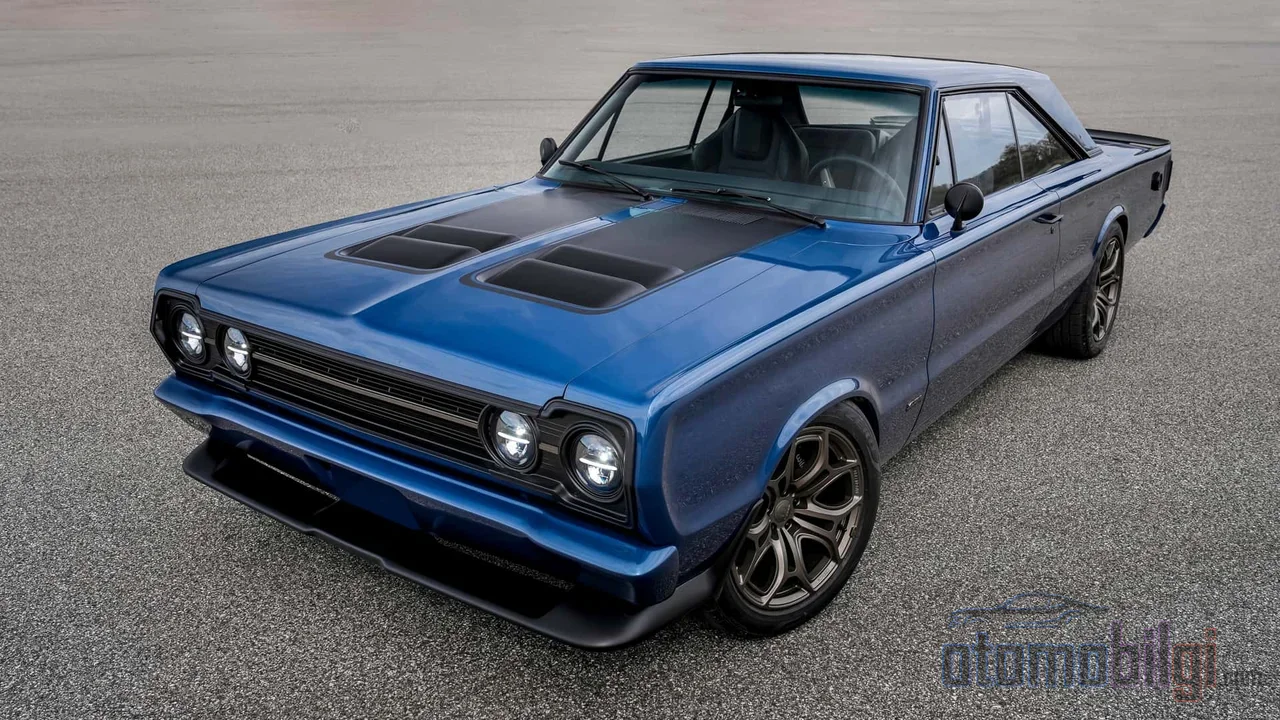
A strange sense of déjà vu played out at Mopar's stand at this year's SEMA show: The 1967 Plymouth GTX restomod that drew attention with its electric drivetrain in 2024 returned two years later with a supercharged Hemi under its hood. After the show's electric-transformation-themed years, this alone counts as a statement. What's more, the conversion wasn't driven by marketing calculations, but by the vehicle's former owner's open dissatisfaction.
Why Did the Electric GTX Experiment Fall Short?
The story begins at SEMA 2024. Mopar had equipped the 1967 Plymouth GTX with an electric eCrate drivetrain producing 335 hp (340 PS), using a 73 kWh battery pack to move the classic body in a modern and silent way. The bodywork earned everyone's admiration; the problem was the power itself. Even the standard engine of the 1967 GTX as it left the factory produced 375 hp. In other words, the electric conversion fell short of the stock car. Moreover, the weight added by the battery modules, each weighing 230 pounds, also sparked debate.
The former owner, who sold the car to Stellantis, wasn't satisfied. Tim Kuniskis, a devoted V8 supporter himself who runs the brand's performance operations, took this reaction seriously; this year the matter was closed and a Hemi was once again placed in the car's engine bay.
Highlights
- The 1967 Plymouth GTX restomod was introduced at SEMA 2024 with an electric eCrate producing 335 hp, with a battery capacity of 73 kWh.
- At SEMA 2026, the electric unit was removed; its place was taken by the 6.2-liter supercharged Hellcrate Redeye.
- The new engine produces 885 hp (897 PS) of power and 787 lb-ft (1.067 Nm) of torque on high-octane fuel.
- Power is sent to the rear wheels through a TorqueFlite 8HP90 eight-speed automatic transmission.
- The original 1967 GTX's standard 440 engine produced 375 hp and 480 lb-ft (651 Nm) of torque.
The Solution That Came with the Hellcrate Redeye
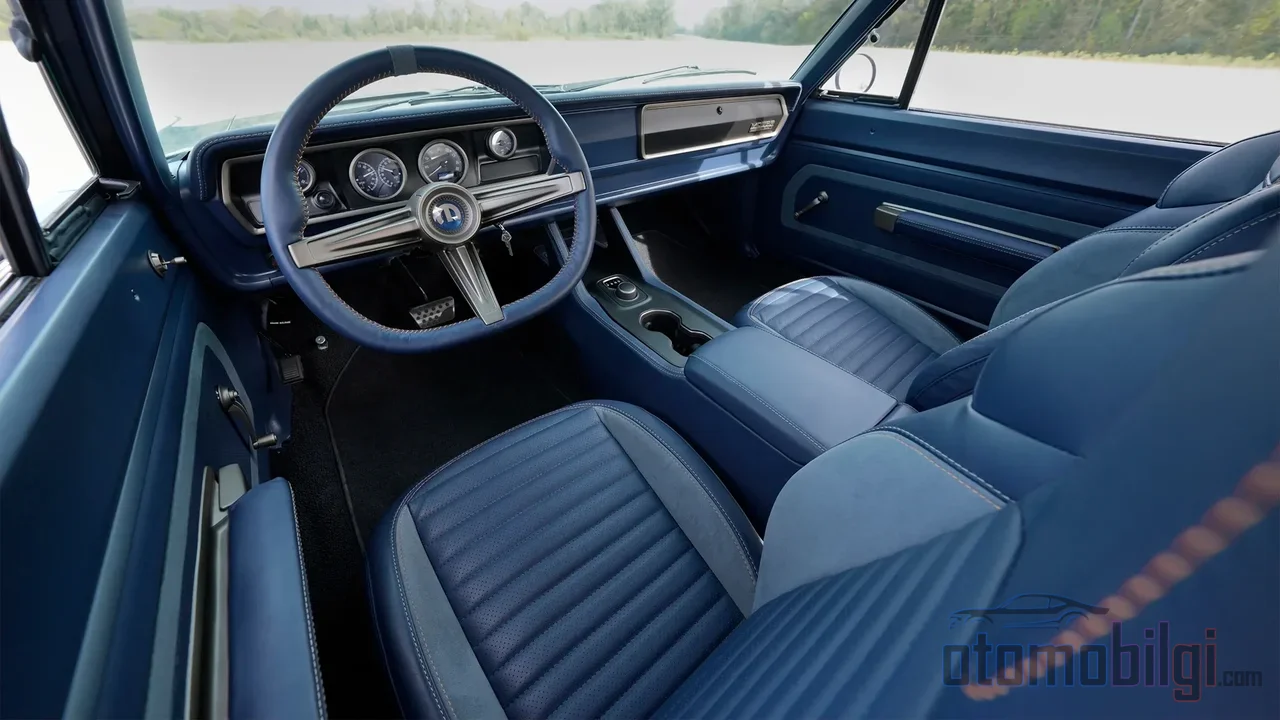
The unit placed under the hood is the Hellcrate Redeye package from Direct Connection's new crate engine lineup: a supercharged 6.2-liter Hemi V8. It produces 885 hp (897 PS) of power and 787 lb-ft of torque on high-octane fuel - 1.067 Nm in metric terms. That's more than double the 425 hp of the 426 Hemi, the car's optional peak in 1967. Power is delivered to the rear wheels through a TorqueFlite 8HP90 eight-speed automatic transmission.
On the visual side, the changes weren't limited to the engine either. The Frostbite Blue metallic paint and 18x9-inch BTG Vintage Bronze forged magnesium wheels were retained; in 2026, two silver racing stripes were added to the body and an aggressive hood scoop feeding air to the engine was added. The car's overall silhouette preserves the clean GTX character from before the era of wings and bright colors.
| Drivetrain | Engine / unit | Power | Torque |
|---|---|---|---|
| 1967 standard | 440 cu in (7.2L) Super Commando V8 | 375 hp (380 PS) | 480 lb-ft (651 Nm) |
| 1967 optional | 426 cu in (7.0L) Hemi V8 | 425 hp (431 PS) | 490 lb-ft (664 Nm) |
| SEMA 2024 | Electric eCrate, 73 kWh battery | 335 hp (340 PS) | Not revealed |
| SEMA 2026 | Hellcrate Redeye 6.2L supercharged Hemi V8 | 885 hp (897 PS) | 787 lb-ft (1.067 Nm) |
What Did the 1967 Plymouth GTX Stand For?
The GTX was Plymouth's answer to the Pontiac GTO, which had been bringing General Motors serious profits since 1964. It arrived with a clean look at a time when the muscle car concept had not yet become a formula, and when bright colors and huge spoilers would only become widespread later. In a test conducted in November 1966, a GTX with the 440 engine and a three-speed automatic transmission completed the 0-60 mph run in 6.0 seconds despite narrow-section bias-ply tires. The Hemi version was even faster.
The production numbers also explain the car's value today: A total of 12,109 GTX units were produced in 1967; only 720 of them came with the 426 Hemi engine. In other words, the body now equipped with the Hellcrate Redeye was, in its birth year, an ordinary example of a car that was already produced in small numbers.
The Real Announcement Behind the Conversion: The Crate V8 Lineup
This swap is not an isolated project done for show. Stellantis announced six crate V8 packages at SEMA 2026, and the GTX stood out as the first application example of the Hellcrate Redeye in this lineup. The common feature of the packages is that the engine controller compatible with the Hemi or Hellcat engine is sold together with the unit. The approach Kuniskis summarized is based on the principle of one piece and one solution: no one building a serious project should be forced to guess whether the parts will be compatible.
The key stops of the announced lineup are as follows: The 5.7-liter 345 Street Strip package offers 385 hp and 417 lb-ft of torque; the 6.4-liter 392 package produces 485 hp and 475 lb-ft. At the top sits the Hellephant C170 Super Stock, delivering 1.025 hp (1.039 PS) and 945 lb-ft on an E85 blend - that is, 1.281 Nm of torque. The target audience is not only professional shops; enthusiasts building their own projects are also considered with these packages.
Which Way Is the Wind Blowing in the Restomod World?
This conversion has a meaning that goes beyond a single car. In recent years at the SEMA stage, fitting electric powertrains into classic bodies had become something of a trend. Mopar turning its own project from electric to a supercharged V8 within two years is the clearest example of how quickly this trend can be pushed into the background. The industry reads this page as a kind of apology.
Dodge ending Hellcat V8 production in 2023 and going with an electric or twin-turbo six-cylinder direction in the new Charger is a known backdrop. Precisely because of this, the crate engine lineup looks like the commercial formula for keeping the culture of the V8 discontinued from production alive in the shops. Among classic Mopar B-body owners, the cost of a Hellcat conversion, at figures of around $40,000 and above, is one of the permanent discussion topics of the forums.
On the other hand, the moral dimension of raising a body that was a simple muscle car with 375 horsepower in 1967 to 885 horsepower is also debated: some consider it a sin, others a pleasure. No official value was shared regarding the car's 0-100 km/h performance; it was not announced by the manufacturer. The price of the crate packages has not yet been specified.
Short Verdict
The conclusion is clear: The 1967 Plymouth GTX was first tried with electric power, and when 335 hp proved insufficient even by that era's standards, it was this time re-engined with an 885 hp Hellcrate Redeye, fittingly restored to its original character - and then some. With this conversion, Mopar both won the heart of an old customer and placed the first reference application of its crate V8 lineup in the most visible spot of the show. Electric conversions, once presented as the future of such shows, now sit in the corner of the stand; under the hood, there is a Hemi. It would be hard to find a clearer summary of the shift in direction in the restomod world.
Sources
- Mopar's EV-Swapped GTX SEMA Car Finally Gets The Hellcat It Deserves
- Mopar Pulls the Plug on Its Electric Plymouth GTX for a Supercharged 6.2-Liter Hellcrate Redeye
- 1967 Plymouth GTX Electromod Headlines Mopar's 2024 SEMA Concept Reveals
- Mopar's Plymouth GTX Electromod Is Our Kind of EV
- Mopar Rights EV Wrong With New 885HP Crate Engine