Fiat Koala Confirmed: New Model Will Slot Below the Panda
Share This Page
Fiat has confirmed the name of the new city car that will sit below the Panda: Koala. Brand chief Arnaud Belloni announced at the Paris Motor Show that the name has been registered on behalf of the brand; the vehicle will be a fully electric, affordable city car sharing Stellantis's new E-Car platform. There are no official technical figures yet, but the platform partnership and production plan are extremely concrete.
Highlights
- The Koala name has been registered on behalf of Fiat and confirmed by brand chief Arnaud Belloni
- The vehicle will share Stellantis's E-Car platform with the Citroën 2CV concept
- The 2CV concept was unveiled at 3.76 meters long, with a target price of around €15,000
- Production is planned to begin in 2028 at the Pomigliano d'Arco plant in Italy
- Official technical specifications, pricing and launch date have not yet been announced
The Koala name was officially confirmed in Paris
In the weeks when the Paris Motor Show has been the stage for small cars, Fiat's most eye-catching announcement was not a presentation but a name registration. Brand chief Arnaud Belloni confirmed at the show that the Koala name now belongs to Fiat; this confirmation has made it certain that the name, which has been circulating as a rumor for months, has become reality. Belloni's statement also included a nod to the naming tradition: with Koala, another bear - a Grizzly - will be added alongside the Panda, meaning the bear-themed family will keep growing.
In fact, this tradition looks set to span more than thirty years. Following the Panda, Grande Panda and Pandina, Koala means yet another Fiat named after an animal. Belloni seems to be someone who does not attach too much meaning to name choices; he noted that names matter but do not determine everything, and that some successful models have carried on even with names that seem utterly absurd. This measured attitude fits the new CEO's overall approach.
Belloni himself is also new to the brand's top seat. Appointed in September 2026 as CEO of Fiat, Abarth and Lancia, Belloni succeeded Olivier François. One of his first moves upon taking office was to finalize the name of the brand's most critical electric project. Seen from this angle, the registration is not merely a legal procedure but a strategic message: Fiat is not stepping back from its vision of small, affordable electric cars.
The E-Car platform: Stellantis's cheap electric car project
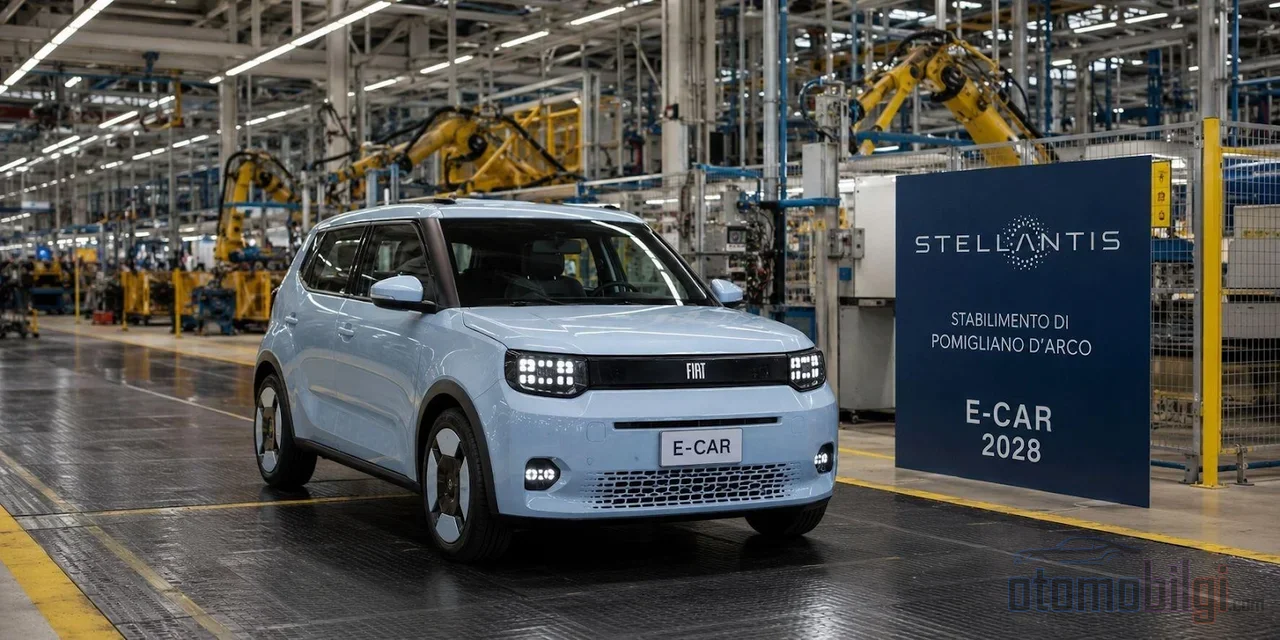
The foundation on which the Koala will stand is Stellantis's E-Car platform, announced in May 2026. In this project, which targets small, affordable and fully electric vehicles, production is planned to begin in 2028 at the Pomigliano d'Arco plant in Italy. The group's price expectation is an entry level equivalent to around $17,500 in dollar terms. For Italy, long the heart of small car production, to take on a role again in this segment is a decision with high symbolic value for both the brand and the group.
Another element the platform targets lies on the regulatory side. The new M1E vehicle class, proposed by Stellantis and Renault and adopted in the European Commission's December 2025 automotive package, covers Europe-made small vehicles no longer than 4.20 meters and gives these vehicles an advantage such as a 1.3-vehicle multiplier in CO₂ fleet calculations. The model targets the kei vehicles that make up roughly 40 percent of the market in Japan: small in size but a class supported by regulatory incentives. The Koala fits precisely into this framework.
At the Paris Motor Show, the concrete example built on this platform was Citroën's new 2CV concept. The concept, at 3.76 meters long and expected to drop to around 1 ton in production, heralds a production version planned to go on sale in 2028 with a price target of about €15,000. The Fiat side implied that the first E-Car has reached the dimensions of the 2CV concept for production, but that Paris was not the right time to show the new model. Not wanting to leave the group's two brands in each other's shadow at the same show reads as a reasonable justification for not announcing the timetable.
How big will the Koala be?
There is no official statement on dimensions yet, but the available information narrows the range considerably. According to the scenario relayed by Auto Express, the Koala will potentially be around 3.6 meters; meaning it will fall below even the Fiat 500. This measurement would make the Koala the smallest car in the brand's history. The dimension pointed out by Motor1 is more of an upper limit: below 4.2 meters. The difference between the two figures depends on what a vehicle class is accepted to be; 4.20 meters, the ceiling value of the M1E class, is not so much an upper limit as it is not a concrete dimension figure. The only concrete figure announced is the 3.76 meters of its platform sibling, the 2CV concept.
Technical specifications are also at the level of unofficial estimates. Within the framework of platform analysis, the expectations can be summarized as follows:
| Feature | Expectation | Status |
|---|---|---|
| Length | Below 3.6 meters or 3.76 m (2CV reference) | No official data |
| Range | 200-300 km WLTP | Estimate |
| Battery | 25-35 kWh, LFP cell | Estimate |
| Motor power | 29-37 kW (city-focused) or 44-66 kW | Estimate |
| Price | About €15,000 | Rumor level |
| Production | Pomigliano d'Arco, Italy | Planned for 2028 |
The LFP battery choice would be a fitting direction for this class: Cheaper, longer-lasting, and suited to the cycle profile of city use. A WLTP range of 200-300 km is also enough for buyers living within municipal boundaries who use the vehicle for short daily distances. What Fiat is chasing here is not a range record but a price balance. There is a fact that surprises no one who has been around this business, yet has been neglected for years: In Europe, the price floor of the electric car can only be pulled down with a small battery and a small motor.
Will it replace the Pandina?
The short answer is no, at least not initially. The Koala is not expected to be positioned as the direct successor to the spark-ignition Pandina. The Pandina has been on sale since 2011 and holds the title of Italy's best-selling car; its production in Pomigliano is planned to continue until at least 2027. Fiat is maintaining its commitment to offering an affordable gasoline model. The Koala, meanwhile, will enter the market first in a different class, as an additional model that broadens the options.
In terms of positioning, the framework established by CarScoops is instructive: the Koala will sit below the Grande Panda and the Grizzly, serving as a fully electric alternative to the buyer base of the gasoline Pandina. The distribution of roles resembles the 500, but the Koala targets buyers who are more utility-focused and budget-friendly. It is also in a different segment from models in the heavy quadricycle category like the Topolino; these small Fiats are legally classified in another class, and the Koala will arrive as a real car.
One contradiction should also be noted. While Stellantis is focusing solely on electric powertrains for its small vehicle platform, Fiat's Europe chief Gaetano Thorel was reported to have voiced the pursuit of a multi-energy solution. Fiat's answer, apparently, is not a technological compromise but a product strategy: offering electric and gasoline models side by side. Following the path of brands that solved the same problem with product diversity years ago is a strategy with low risks but not without cost.
Design: Not neo-retro, but a new approach
Belloni has a clear message on design: the Koala will not follow a neo-retro path like the 2CV. The 2CV concept carries a line that pays homage to an icon of the past; the Koala will come with a very different approach. There is a rational logic behind this decision. Having two products from brands sharing the same platform play on the same vein of nostalgia would have been inefficient, both in terms of perception and marketing.
Where the design might draw its inspiration from, however, went through a rather interesting process. Fiat organized an open E-Car design competition for Italian university students; the winning entry was 'Ippo', a small, angular, box-like vehicle. Details taken from the finalists Lumo, Su Misura and Fizz could also seep into the production design. Seven students were taken into the design studio, four of whom are still working there. Incorporating live contributions from a student competition into the design DNA of a production model is an unusual but low-cost route in the automotive world.
When will it arrive, and which uncertainties remain?
The launch schedule is the most uncertain part of this story. Based on the 2CV project's timeline, 2028 is the strongest expectation; some reports, however, point to 2027. The absence of a Koala preview at the Paris Show is also consistent with this timeline: at Fiat's stand, the Multiplay concept was unveiled, along with the Multiplina, a four-seater L7E-class light vehicle planned to enter production in 2028; the Koala was kept hidden. The confirmation of the name registration indicates that the next step will be an official preview.
There are also unclear points regarding the production location. The Pomigliano d'Arco plant in Italy is the officially announced site for Stellantis' E-Car production. The possibility of production alongside the 2CV in Italy, as well as claims about the Kenitra plant in Morocco, remain at the unofficial level, so nothing is certain. Fiat and Citroën have not yet announced a single official figure regarding technical specifications, price, or date; so far, the only thing confirmed is that the name has been registered.
All of these uncertainties point to a model's normal development cycle. The only thing verified is the name and the strategic intent; the rest depends on the calendar maturing. All of these statements, including Belloni's remarks that the importance attached to Euro NCAP safety ratings has diminished, are signs that the brand has reopened the small car war.
Assessment: What does Fiat's smallest car mean?
From a long-term perspective, the most important aspect of the Koala is neither its name nor its size; the real issue is whether the European small car market can become reproducible again. In the past, this segment was where every brand had the largest presence; now, as prices have risen, it has become a gap that keeps emptying. The M1E class and the 1.3-vehicle counting advantage in CO₂ fleet calculations provide manufacturers with a regulatory ground to fill this gap with electric vehicles. Fiat adding one more member to its bear-named family is the symbolic part; the real game is being able to profitably produce an electric car approaching the €15,000 band.
That is why the Koala matters. Behind a name registration stands a concrete step in Europe's electric small car strategy. We will have to wait until 2028 for the results to emerge; until then, it will be the factory lines that speak, not the Belloni rumors.
Sources
- Stellantis Announces Groundbreaking, Small and Affordable E-Car Project
- Stellantis Appoints Arnaud Belloni CEO of FIAT, Abarth and Lancia
- Fiat 'Koala': Company is ready to reveal Panda-inspired 2CV twin - Autocar
- Fiat Koala: Electric city car based on 2CV platform pegged for 2028 launch
- New Fiat Koala on the way to sit under the Panda - Auto Express
- Move Over, Panda! Fiat's Next City Car Will Be Named The Koala - CarScoops
- Fiat's Next European City Car Has A Name: Koala - Motor1
- Stellantis plans $17,500 small EV to revive European market - Reuters