DS F3VER Concept Revives the Spirit of the DS 3 in the Electric Era
Share This Page
DS Automobiles unveiled its exploratory concept called F3VER for the first time in the world at the 2026 Paris Motor Show. The car is read as the harbinger of the brand's new compact model DS No3, reinterpreting the design spirit of the original 2010 DS 3 in a fully electric framework. The concept explores three themes: strong desire, ultra-personalization, and freedom of use.
Highlights
- F3VER, October 13, 2026, made its world premiere at the Paris Motor Show.
- Length 4.19 m, wheelbase 2.70 m, trunk volume 400 liters.
- The concept is interpreted as the precursor of the new DS No3's design language.
- It is based on the new-generation electric desire, personalization, and freedom pillars.
- Battery, range, and power figures have not yet been announced; there is no official production decision either.
What Is the DS F3VER Concept and Why Does It Matter?
F3VER is a design trial tool developed in-house by DS Automobiles' own teams. The name is a reference to the English word fever, meaning heat and excitement; the aim is to create an instant emotional response in the viewer. The brand describes the concept as a design manifesto and positions itself as a scaled design laboratory charting the direction of its future products.
The answer to why it matters lies beyond the concept itself. While DS displays all six of its series-production models at its stand, the main emphasis is on the new DS N°7 SUV and this concept. For someone who has been following this industry for more than thirty years, such fair nights always carry a message: wherever a brand is heading, it points there first. F3VER also signals DS's return to the compact segment, historically the area where it has been most successful.
The concept is built on three pillars. The first is strong desire, a lasting visual attraction at first glance; the second is comprehensive personalization, the vehicle becoming one with its owner; the third is freedom of use. The company's top management emphasizes that these three pillars have been pushed further than before, and that on the design side the goal is to create originality with fewer parts. This last sentence, as we will see in the later sections of this page, is the concept's real technical message.
A Harbinger of the New DS No3? The Electric Continuation of the DS 3 Legacy
DS officially says that the F3VER is not a preview of a production model. However, most established automotive publications clearly read the concept as the harbinger of the new DS No3. This tension is the classic choreography the industry is used to: the manufacturer speaks of a manifesto, the press of a thinly veiled preview. Experience shows that the latter is usually closer to the truth.
The story here is actually a story of return. The original DS 3, was a supermini that brought Paris's design language to the compact segment when it was introduced in 2010 as Citroën's premium sub-brand, and it was the brand's best-selling model in those years. In the following years, this line evolved into a compact SUV called the DS3; however, amid the saturation of the crossover market, the vehicle failed to achieve the expected volumes. Now the brand is returning to the city-center class, meaning the urban compact segment, and the No3 is expected to be the successor to the current DS3.
In March 2026, it was announced that a premium supermini carrying the spirit of the original DS 3 would return in the coming months. In the same period, it was written that the electric No3's direct target was the Renault 5. The Paris Motor Show clarified this picture: the F3VER already shows the new generation hatchback's design language, its electric powertrain approach, and its interior technology. Concepts used not to reach series production; now the gap has narrowed to just a few years, and in some details it is still smaller.
Is the return to a hatchback certain?
DS has no official production statement on the matter. Nevertheless, signals from the press are consistent: the No3 is expected to replace the DS3 compact SUV, and the concept is considered the first tangible example of this return. The exact launch date has not yet been confirmed. In short, the direction seems certain, while the timeline remains unclear. The two rarely become clear at the same time in this industry; readers need to be patient.
Design Language and Dimensions: Fewer Parts, More Character
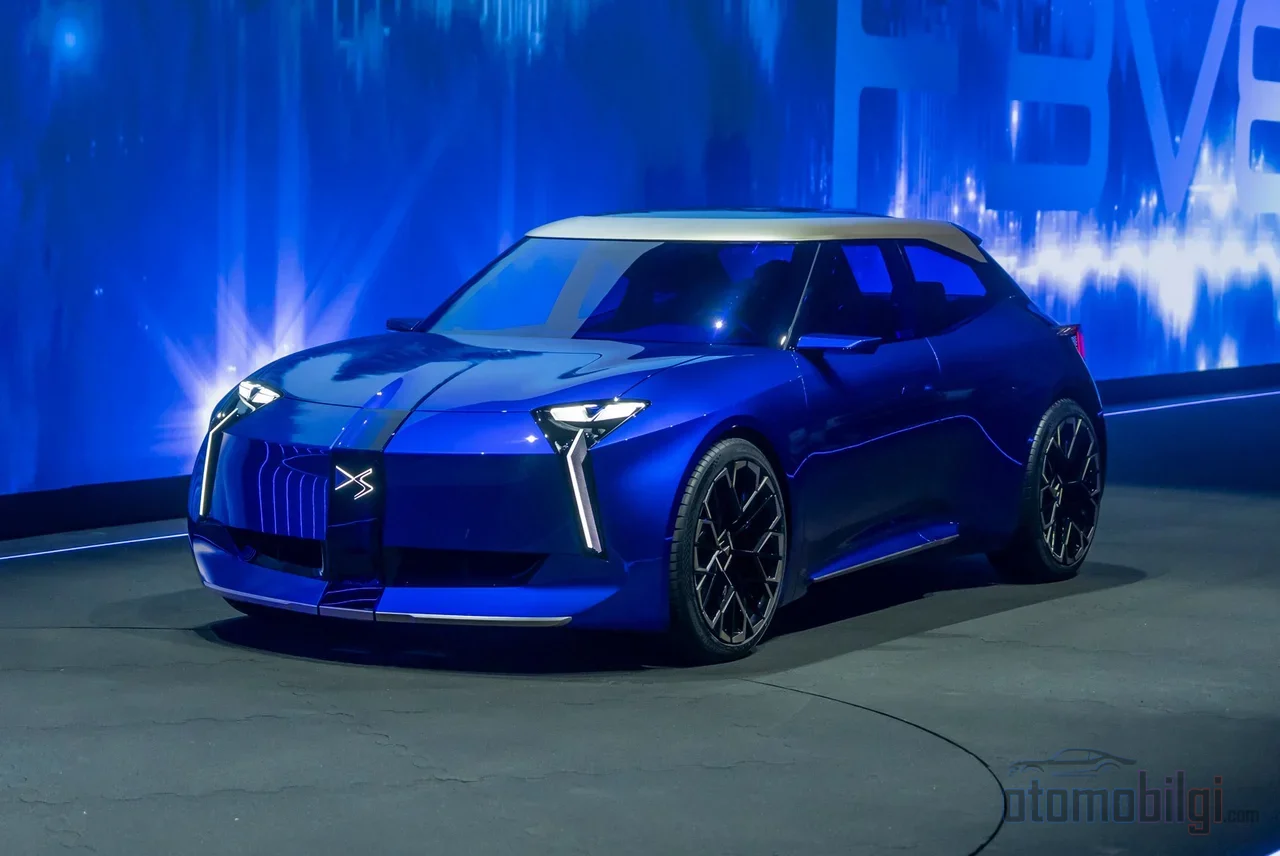
In the F3VER's exterior design, what DS calls its Design Intelligence philosophy stands out: fewer parts, lightened structures, optimized aerodynamics. The headlight unit and LED daytime running light are combined in a single piece; the bumpers are solved as a single piece; unnecessary plastic elements in the wheel arches and lower body have been removed. This approach is significant not only aesthetically, but also in terms of production cost and weight. After years of the cardigan-sweater, gleaming SUV era, understanding the value of simplification is a late but correct lesson for the industry.
| Feature | Value |
|---|---|
| Length | 4.19 m |
| Width | 1.84 m |
| Height | 1.46 m |
| Wheelbase | 2.70 m |
| Cargo capacity | 400 liters |
| Rear lighting | 16 LED panels on an ultra-lightweight magnesium structure |
| Color | Cosmic Blue dichroic paint |
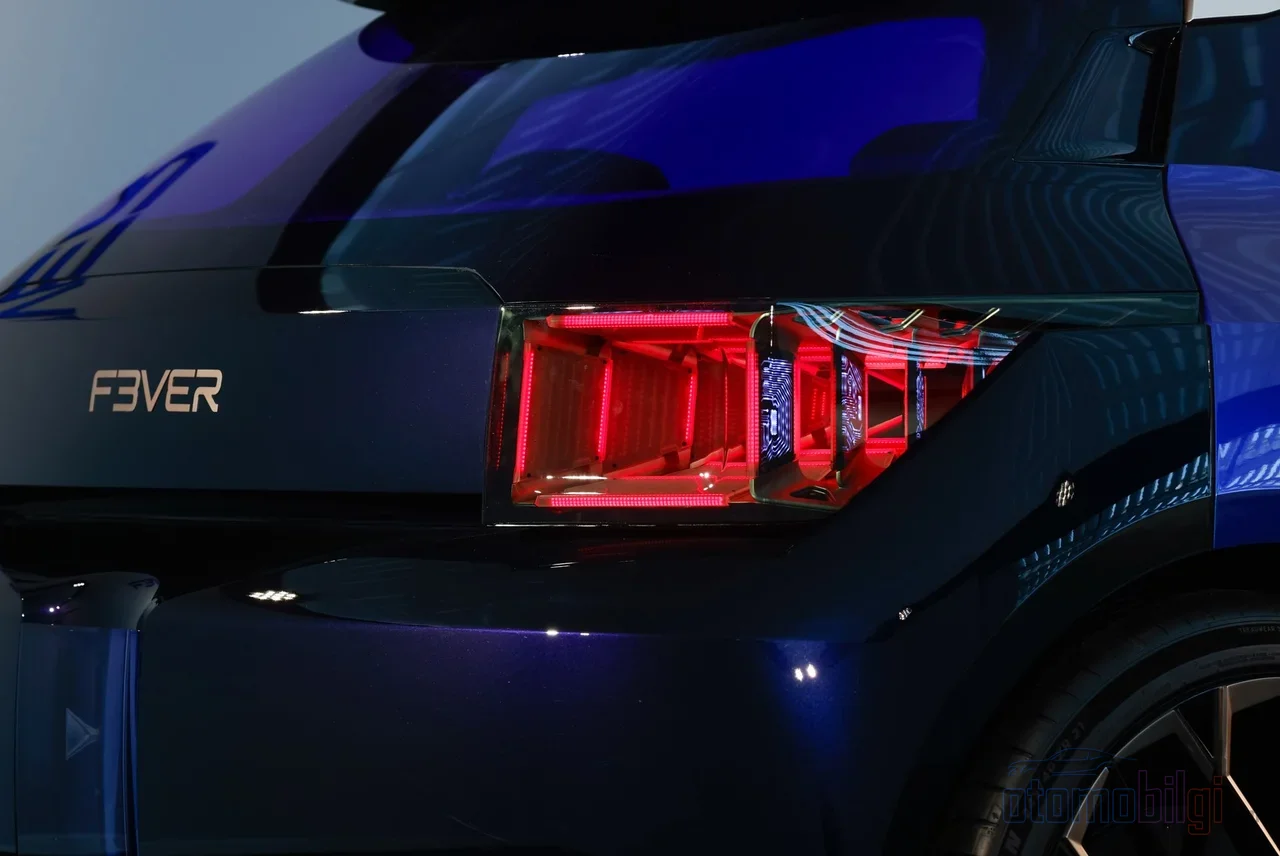
At the front, a vertical totem bearing the DS emblem and vertical Y-shaped signature lighting draw attention. At the rear, there is a second totem with a digitized DS logo; the multidimensional lighting here creates a light tunnel effect. The rear lights consist of 16 LED panels on an ultra-lightweight magnesium structure, and the vaulted ceiling of the Grand Palais in Paris is cited as the inspiration for the composition. A French brand integrated with its city drawing on the architecture of its own capital is a detail consistent with its story.
Special work has also been done on color: specifically developed Cosmic Blue dichroic paint, which shifts from vivid blue to deep purple depending on the angle of the light. Dichroic paints reflect light differently according to its wavelength; in recent years they have become increasingly common in the luxury segment. The wheels feature champagne-colored details and a Clous de Paris guilloche pattern. This pattern is a classic French decorative tradition borrowed from the world of haute joaillerie and aligns perfectly with the visual language of DS's luxury positioning.
Personalization: Roof Ring and UX Light Animations
One of the concept's most striking ideas is the customizable roof ring. This ring extends all the way to the rear lights and combines with two-tone paint applications that wrap around the tailgate and sides. The aim is to make the same model look different for each owner; DS presents this as the concrete embodiment of its ultra-personalization pillar.
The second idea is the UX light animations on the rear totem. Three functions are defined for these animations: personalization, interaction with the environment, and information transmission. In other words, the rear of the vehicle is not just a tail light but also a digital surface that communicates with the outside world. Of course, production reality comes into play here: whether such technologies will make it to series production and what they will cost remains unclear. Some of the lighting displays we see in concepts always stay in the showroom; which ones will make it to the road will be revealed by the first production model.
It is stated that digital design tools developed within Stellantis and artificial intelligence solutions were used in the design process. The point to emphasize is that AI does not replace creativity but accelerates the discovery process. This is a correct distinction for the industry as a whole: the algorithm generates alternatives, but selection and taste are still human work.
Electric But No Numbers: The Exposed Technical Side
DS positions the F3VER as a herald of a new generation of electric vehicles and class-leading range. However, the concept's stated data is limited to dimensions and design details only: battery capacity, range, charging speed, and motor power were not shared. This absence is also the focus of criticism; without the numbers, it is impossible to assess the concept's competitiveness against established electric rivals.
We have a concrete reference about the current situation: DS 3 E-TENSE, the electric compact SUV on sale, is available to order in the United Kingdom between October 1 and December 31, 2026, and 400 km offers a range of up to. The No3 is expected to be this vehicle's successor; therefore, for the new model to at least exceed this level seems mandatory in terms of class logic. Against a growing electric compact rival base like the Renault 5, DS has no verified figure in hand yet; this is an obvious gap for a brand marketed with a luxury claim.
Stellantis's Luxury Calculation: DS's Strategic Position
DS's future must be read together with its parent company's overall strategy. Stellantis, in May 2026, 60 billion Euros strategic plan covering the 2026-2030 period, FaSTLAne 2030 announced under that name. Under this plan, Lancia and DS are being kept as specialized premium brands despite their weak sales. On the other hand, the quartet of Jeep, Ram, Peugeot and Fiat is being defined as priority global brands receiving 70% of future investments, and DS is not on that list. So the picture is clear: DS has been removed from the volume brands' league, but is being kept alive by being given a small and distinct role.
The path the brand has chosen is the French luxury line rather than volume-focused sales. A three-vehicle product plan is being discussed with the new management. DS aims to carry its premium identity beyond its Citroën roots, and in this race, when comparisons are made, it sits below the German luxury brands and Mini, and clearly above Citroën. The F3VER displayed at the Paris Motor Show was also read as a concrete indicator that this struggling brand will not be shut down. Bringing a manifesto to a motor show is the cheapest and most elegant declaration that the brand still has a plan for the future.
Assessment: Between Manifesto and Product
The F3VER is a vehicle that must be read on two levels at once. On the level of design language, it is ambitious: simplified surfaces, meaningful light signatures, a genuine idea of personalization, and details rooted in the French design tradition. Speaking as someone who has been steeped in this business, let me say: the most valuable thing in a concept is not showiness, but the presentation of a clear language that can be carried into series production. The F3VER is promising in this respect, because the simplicity it proposes also translates into a cost advantage.
On the strategic level, however, question marks persist. The lack of technical data disclosure, the uncertainty of the production decision, and DS's absence from Stellantis's investment priorities do not yet solidify the brand's roadmap. Still, this concept, displayed as the harbinger of the No3, has for the first time concretely put on the table the possibility of the DS 3 legacy being carried on in hatchback form in the electric era. The result is an open file until the show closes and the first official production data arrives; but the contents of that file are fuller than we have seen in a long time.
Sources
- DS F3VER CONCEPT, A NEW DESIGN EXPRESSION BY DS AUTOMOBILES (Stellantis Media)
- Stellantis Unveils €60 Billion Strategic Plan (FaSTLAne 2030)
- DS 3 E-TENSE | DS Automobiles UK
- New DS No3 previewed by F3VER concept at Paris – Auto Express
- New DS F3ver concept previews next-gen DS 3 hatch – CAR Magazine
- DS F3VER Concept Reminds Us The French Luxury Brand Still Exists – Motor1
- Paris 2026: DS N°3 returns to the city center – Flotauto
- DS 3 reborn: Retro-styled Renault 5 rival coming "in near future" – Autocar
- Upcoming Electric DS No3 targets Renault 5 upon arrival – EV Powered
- Stellantis Gives Lancia And DS Another Chance Under FaSTLAne 2030 – Yahoo Finance