Peugeot RCZ Vision Brings the Brand Back to Sports Cars
Share This Page
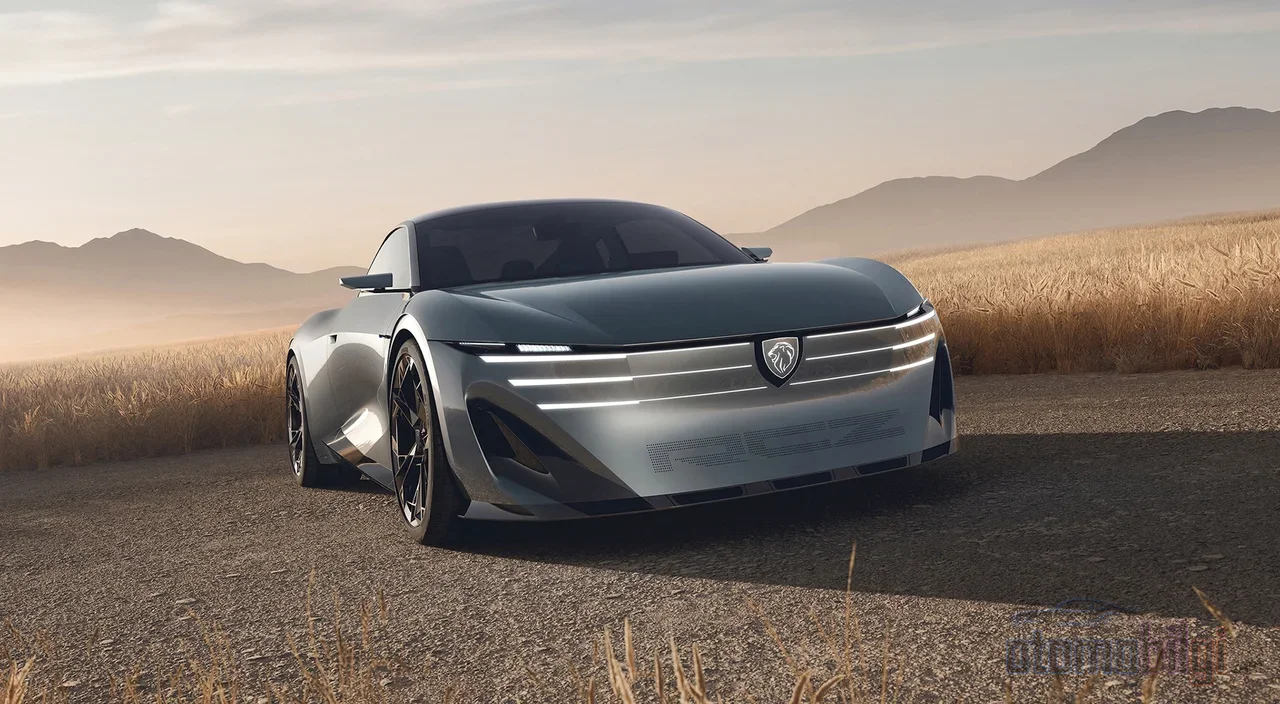
Peugeot, at the Paris Motor Show RCZ Vision carried the brand back to the sports car conversation years later with an electric 2+2 coupé concept of that name. With 500 horsepower and solid-state batteries, this study is not yet a production commitment; but read together with the Opel STX and DS F3VER that Stellantis unveiled on the same stage in Paris, it clearly shows that design is regaining weight in the group's model strategy.
Highlights
- 500 hp of power and 600 km electric 2+2 coupé concept unveiled with a range target
- Solid-state battery and 1000V STLA One architecture with 10-80% in under 10 minutes charging
- The new "Feline Future" design language will move to series production with the next-generation E-208 in 2027
- Wireless steer-by-wire and brake-by-wire: a first for Stellantis
- Stellantis in Paris 9 concepts from 8 brands and more than 60 vehicles on display
What Is the RCZ Vision, and What Did It Unveil in Paris?
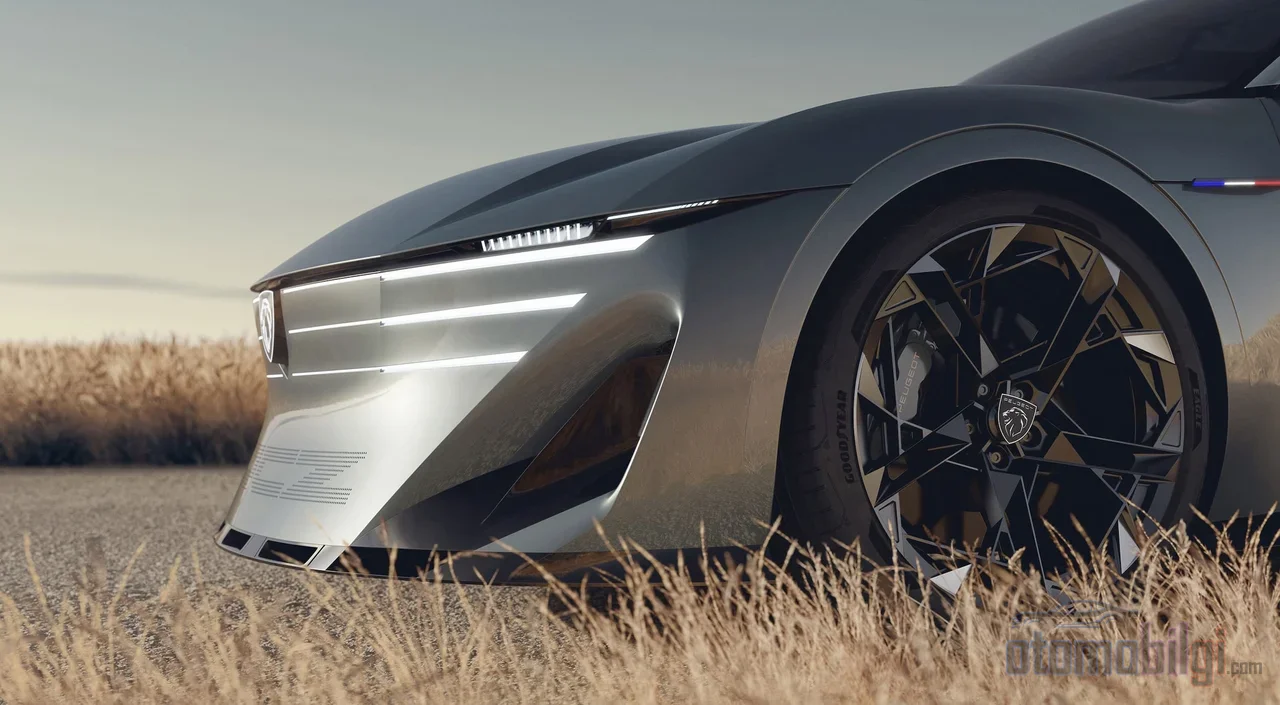
The RCZ Vision is a four-seat, fully electric coupé concept unveiled at the Paris Motor Show held on October 12-18. Taking its name from the RCZ produced between 2009 and 2015, the study revives that car's most characteristic detail - the fully glass "double bubble" roof - with a fresh interpretation. The brand's three-claw light signature appears at the front and rear, and the whole body is the first major showcase representation of Peugeot's new design language called "Feline Future."
On the technical side, the picture is ambitious: 500 hp (approximately 493 bhp) of power, 600 km of range and 10-80% in under 10 minutes charging. The efficiency target was announced as 5.4 miles/kWh per kilometer; battery capacity was not shared. The wheels are 21 inches at the front and 22 at the rear - the size difference is part of the concept's proportion balance.
Technical Clues: Solid-State Battery and 1000 Volts
The real news value of the RCZ Vision may lie not in its power but in the underlying infrastructure. The vehicle uses the new-generation, 1000-volt-capable version of the STLA One modular platform. This architecture makes a 10-80% charge possible in under ten minutes. What is more striking, however, is the battery side: the concept previews solid-state battery technology. This technology is not found in any of Stellantis's production vehicles today; meaning the RCZ Vision is a marker stone showing the group's intentions in this area.
There is another first under the seats: wireless steer-by-wire and brake-by-wire systems are used in a concept for the first time at Stellantis. There is no mechanical connection between the steering wheel and the wheels, or between the brake pedal and the brakes; the system also supports regenerative braking. The goals the manufacturer cites are familiar: fewer steering inputs at low speed, fewer corrections on the highway. For anyone who has spent a long time in this business, it is enough to say this: by-wire has been part of concepts' standard repertoire for four or five years; the real question is whether it can carry the same credibility into series production.
Hypersquare Steering and the New i-Cockpit
In the cabin, the steering wheel is a rectangle that departs from the classic triangular form Hypersquare. This solution was first seen with the 2025 Polygon concept; now in front of it stands a transparent Micro LED instrument display and the new-generation i-Cockpit. The key point is this: the production version of the Hypersquare appears not in a concept write-up but in a production calendar - it will arrive in the next-generation E-208. So nothing in the RCZ Vision's cabin, at least as far as the steering wheel is concerned, is pure fantasy.
Will the RCZ Vision Reach Series Production?
This is the most fluid part of the story. Peugeot has made no official statement regarding production, pricing, or a launch calendar. Autocar reported that the concept was developed with production plans in mind and that the designer wanted to bring emotion back to the brand; Autoexpress, meanwhile, stresses that Peugeot has not confirmed a return to the shrinking two-door coupé segment. In other words, there is a gap between the campaign headlines and the official line, which is not unusual in the concept-car world.
Design chief Matthias Hossann made a comment in Paris to journalists, implying that the 2+2 could finally be produced - but that this might cynically happen twenty years from now. It takes thirty years of reflex to read statements like this: "twenty years from now" is not a date, it is a form of hedging. On the one hand it says the concept carries a production signal, on the other that no commitment has been given. At this stage, the only correct sentence is that the production decision has not been finalized.
Still, context matters. Peugeot will bring the Feline Future language to the roads with the new-generation E-208 it will put into series production in 2027; the RCZ Vision, in turn, will influence the STLA One-based E-208 and E-308. So whether it is produced or not, the concept directly drips into the brand's product language in the near future.
In the Same Display Case: E-T16, a Salute to the 205 T16
Peugeot was not content with the RCZ Vision at its Paris stand; it placed beside it the 816 bhp three-motor E-T16 concept. Its name is a reference to the legend of the mid-eighties, the 205 T16 Group B. The two vehicles share the same Feline Future design language, and this overlap is no coincidence: referencing the harshest chapter of memory while rebuilding a brand's sporting identity was done this way in the past, and it is done this way now.
Opel STX: The Other Premiere at the Family Show
It is impossible to separate the RCZ Vision from Stellantis's overall show strategy. The group came to Paris with 9 concepts from 8 brands and more than 60 vehicles; six concepts were previewed at the "The Night Before" event held the night before the show. The Alfa Romeo, Citroën, DS, Fiat, Lancia, Opel, and Peugeot stands each showcased their own design vision.
The Opel leg of this series, which had its world premiere on October 12, is the STX became. The Vauxhall version, named "Sports Tourer eXperimental," is this visionary electric study previewing the brand's future estate/tourer model - most likely the next-generation Astra line. Opel also showcased the high-performance GSE world at its stand. The STX is not a fan car like the RCZ Vision; rather, it is a design manifesto of how a volume brand's family cars will look in the years ahead. This is the clearest example showing that each brand was assigned a different role in Stellantis's show strategy.
DS F3VER: Third Premiere in Design Language
DS Automobiles also, ahead of the show, F3VER unveiled its electric design study named. The emphasis is gathered under three headings: desirability, personalization, and freedom of use. Standout details include an illuminated front face, a 16-panel light design, Cosmic Blue paint, and compact dimensions. Also, the F3VER's proportion close to a hatchback form was read as a signal of a return to the brand's past. When the RCZ Vision, STX, and F3VER are placed side by side, the picture becomes clear: Stellantis is using Paris not for a single vehicle, but as the design front of a strategy it announced with an investment plan of 60 billion euros foreseeing more than 60 new models globally by 2030.
| Concept | Brand | Highlight Feature | Meaning |
|---|---|---|---|
| RCZ Vision | Peugeot | 500 hp, solid-state battery, 600 km range | Signal of return to the sports segment |
| E-T16 | Peugeot | 816 bhp, three motors | Reference to the 205 T16 heritage |
| STX | Opel | Visionary electric estate/tourer | Design of the future Astra line |
| F3VER | DS | 16-panel light design, compact dimensions | Personalization and design vision |
Assessment: Strong Signal, No Commitment
For someone who has been following this industry for more than thirty years, the picture shown by the RCZ Vision proceeds with a familiar rhythm. Concepts used to consist solely of rakish cars that would never enter production; now, the fact that parts like the Hypersquare have scheduled production versions shows the concept is an input that goes beyond corporate decisions. The previewing of a solid-state battery in a concept does not mean it will enter series production; but knowing which technology they will package with which architecture shows a group's internal planning is working properly.
Caution is required: no production decision, no timeline, no price. On the motor side, it is also worth noting that some exaggerated battery capacity figures circulating on certain platforms do not reflect reality; according to manufacturer data and established reports, the picture points to a 100 kWh-class battery and a range of approximately 600 km. The RCZ Vision is for now a statement of intent - but this stage Stellantis set up in Paris with nine concepts is of the most expensive and most planned kind of statement of intent. Years from now we will look at which concept from this show made it to the road and smile, or not; to be fair: Peugeot made the sports car topic debatable again, and it did so without needing a single rumor.
Sources
- PEUGEOT RCZ VISION: Emotion at the Heart of the Future of Peugeot
- Stellantis Unveils Six Concept Cars "The Night Before" the Paris Motor Show
- Stellantis to Unveil New Mobility Vision with Nine Concept Cars
- Peugeot RCZ Vision concept electrifies Paris Motor Show
- Peugeot RCZ returns as sleek four-seat GT – with production plans
- New Peugeot RCZ Vision revealed
- Opel STX Concept Arrives at the 2026 Paris Motor Show
- DS F3VER Concept, A New Design Expression by DS Automobiles
- 2026 Paris Auto Show: Hottest Cars and Concepts
- Stellantis Promises 60 New Products by 2030