Next-Generation Dacia Jogger to Be Electric for the First Time
Share This Page
Dacia's family car Jogger's second generation will share the same CMF-B platform as the new Sandero, and for the first time in the model's history it will come with a fully electric version alongside the hybrid - this has been confirmed through official channels. The vehicle, expected to be on the roads in 2028, is also mentioned with a compressed natural gas (CNG) option in some markets. Considering that Dacia has long been a brand moving along the line of 'we won't go electric until we're forced to,' a seven-seat family car becoming something you plug into the wall socket counts as a turning point.
Highlights
- A second generation Jogger is 2028 projected launch date.
- It will share the same CMF-B platform as the new Sandero.
- Alongside the hybrid, a fully electric version is on the agenda for the first time; a CNG option is expected in some markets.
- Dacia has the FutuREady roadmap, which includes the launch of four electric models by 2030.
- The current Jogger, in the 2026 model year, went up to 155 hp on the hybrid side.
When and how will the new-generation Jogger arrive?
Field information converges on a few basic points for now: the new-generation Jogger is expected to appear around 2028 , roughly seven years after the current generation's launch in 2021. On the powertrain side, room will be made for both hybrid and fully electric versions; it is being considered that the CNG option running on compressed natural gas will also be offered in some markets. Announced under the name of Dacia design chief David Durand, this plan is read as part of the brand's model strategy - however, no concrete data such as drawings, technical details, or range figures have been shared so far.
Such early announcements are nothing new in the automotive world; manufacturers shape market expectations in their favor by announcing a model's second generation years in advance. For Dacia, however, the message here is more important than the calendar: the brand implies that putting a fully electric option on the table for a vehicle of family size is now neither an exception nor an experiment.
CMF-B platform: how much will it share with the Sandero?
The current Jogger already stands on the Renault-Nissan alliance's CMF-B LS architecture; with a 2.897 mm wheelbase and 4.547 mm body length, it is Dacia's largest vehicle today. In fact, the technical basis is already shared with the Sandero: the two cars are identical up to the B-pillar, and Dacia created the difference at the rear, managing to fit extra interior space and a 7-seat option with a 40-millimeter step solution. This is one of the segment's oldest engineering tricks, but here it is a masterfully executed version of it.
In the new generation, this commonality will become even more pronounced. All future Dacia models, including the Bigster, are expected to sit on the alliance's CMF-B platform. The picture is also becoming clearer on the production side: the main base for CMF-B-based vehicles is the Tangier factory in Morocco, and the Jogger production was also moved from Romania to Morocco with the arrival of the Bigster. In the past, every model had its own factory, its own infrastructure; now a single platform family, a single production ecosystem manages both cost and quality consistency from one point. The economics of this business tell us far more than a supposedly cheap brand's plan for the future.
Where does the current Jogger stand?
To set the context correctly, we need to look at today's Jogger. The model was introduced to the public at the Munich Motor Show in September 2021, as part of a process that began with the announcement of its name in August 2021. It was positioned as the successor of the Logan MCV, Lodgy and Dokker, gathered in a single Vehicle; based on the third-generation Sandero/Logan, a long-wheelbase station wagon body offers five or seven seats. It is the most tangible product of Dacia's 'one name, many tasks' approach that it has applied for years.
Where things stand on the hybrid side
Jogger was introduced with its hybrid version at the 2022 Paris Motor Show; orders opened in January 2023 and first deliveries began in March 2023. In the system called Hybrid 140, the 1.6 TCe petrol engine was connected to the electric motor through a four-stage electronics gearbox on one side and a two-stage transmission. In the 2026 model year, the Hybrid 155 variant came into play: the battery 1.2 kWh from 1.4 kWh was increased to, the three-cylinder 1.6 H4M gave way to the four-cylinder 1.8 HR18, and total power 140 hp from 155 hp rose to. In October 2025, the model, which also underwent a significant facelift together with the Sandero, Sandero Stepway and Logan, had its front face, headlights and wheels renewed.
On the pricing side, the picture shows that Dacia continues to do what it knows best: in the United Kingdom, 2026 model year Jogger prices start from £18,995, the cheapest hybrid version is at the £23,330 level and the top price stays below the £25,000 threshold. At its initial launch, the 5-seat version €14,990, and the 7-seat version €15,750 went on sale with these price tags. These figures also draw the hidden yardstick of the price expectation the new-generation electric version will face.
Dacia's entry into the affordable family EV gap
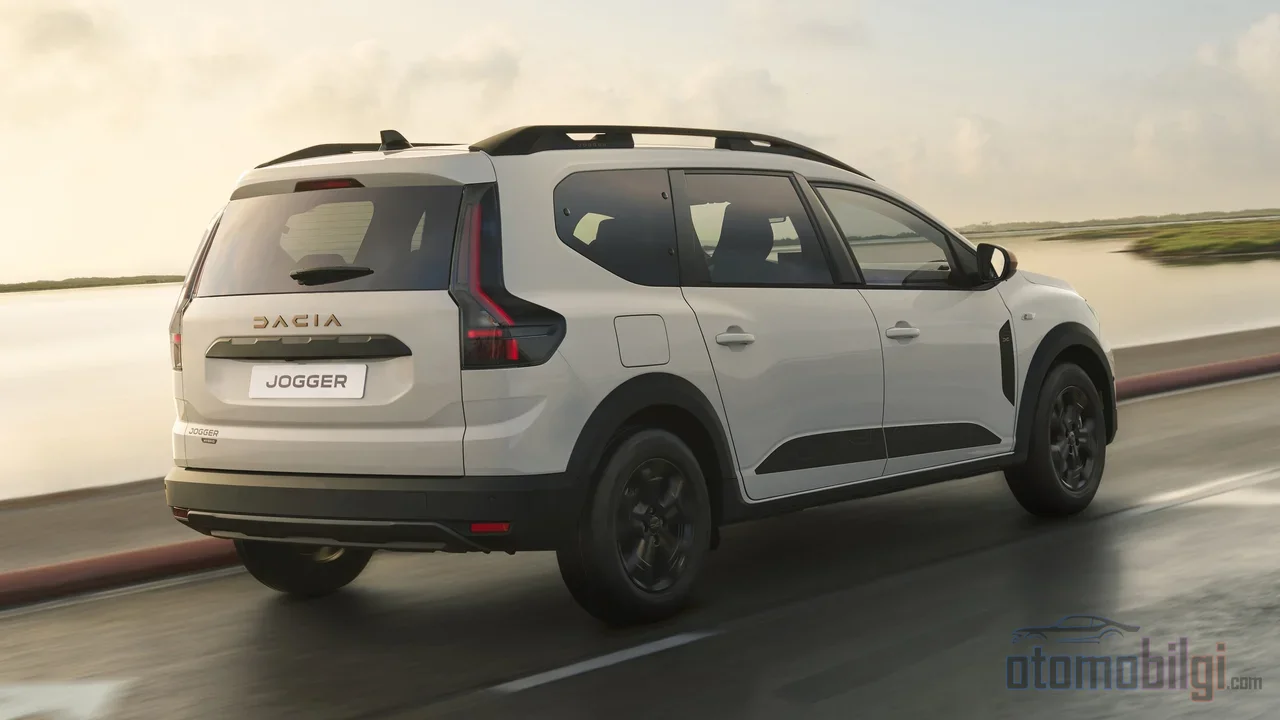
There is a strange gap in the electric vehicle market: Either there are small city cars in the A segment with two-person trunk space, or spacious family models that demand a lot of money. In between, there is almost no reasonably priced electric family car that can carry seven people. The new-generation Jogger's fully electric version aims precisely at this gap. Managing range anxiety in a family car is a different calculation than managing it in a city car; Dacia's attempt to take on this calculation is a sign that the segment is starting to move.
The brand's overall electrification plan also frames this move. The FutuREady strategy, announced in March 2026, foresees four electric model launches on a roadmap extending to 2030, and the first step of this journey, with a starting price of €18,000 an A-segment electric model priced under that. That model emerged as the second generation Spring introduced in September 2026: a fully electric A-segment vehicle produced in Europe. The new Spring will share a mechanical underpinning related to the upcoming Renault Twingo and is expected to go on sale in spring 2027.
The turning point in the electrification timeline
There is a turning point worth remembering here: In September 2021, Dacia was a brand that openly stated it would not go electric unless it was forced to, in order to preserve its price advantage during the launch days of the Jogger. Five years later, the same brand is talking about a schedule of four EVs by 2030 and an electric Jogger . This is not a contradiction, but a change in the reality imposed by the market. As emission rules tighten and electric sales accelerate in Europe, offering a plug-in option in the 'budget brand' segment is no longer a preference but a necessity of the transition strategy.
Yet the price of this shift is also on the table. The significant increase in the UK price of the second-generation Spring shows that the cost of electric production has outgrown the brand's accustomed 'cheapest' position. A similar tension can be expected in a Jogger EV as well: a family-size battery and seven seats mean a framework far more expensive than the A segment. At what price point Dacia will solve this equation is the question that will truly determine the model's success.
Why is the CNG option still on the agenda?
One detail left in the shadow of the electrification narrative is that the CNG option is being evaluated in some markets. Compressed natural gas is still a debated alternative among fleet users in terms of fuel cost and tax regulations; Dacia's efforts to renew its gasoline and hybrid engines with economical alternatives continue in this direction. In the new generation where fully electric and hybrid versions will play the leading role, it is not yet clear in which markets and with which engine option CNG will be offered. In the past, a single scenario used to be told as an 'exhaust-free future'; now each region is progressing at its own transition pace, and manufacturers see no objection to multi-fuel strategies.
The Paris Motor Show context
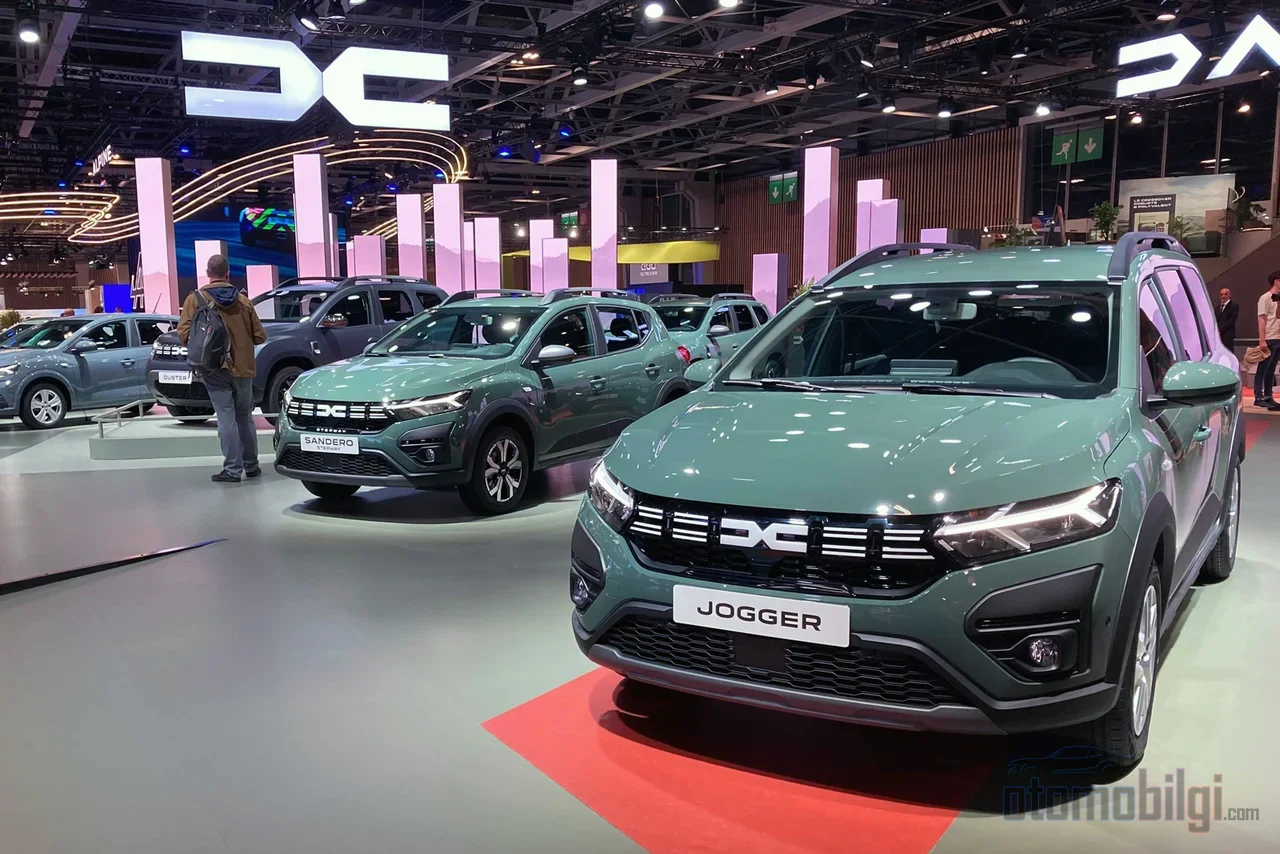
Dacia's plan intersects with the 2026 Paris Motor Show , a stop in the middle of the timeline: The brand will hold two world premieres at the press day on October 12 and at the public fair between October 13-18; among the models on display are the second-generation Spring, Jogger, Duster and Bigster . The new-generation Jogger is not yet on stage, but all of the intermediate stops on the brand's path to an electric family car have been gathered in this fair showcase. The upcoming model calendar will tell us when and how the next step will look.
Conclusion: The pending question is price, the certain direction is electric
For the new-generation Jogger , what we have is a timeline, a platform decision, and a powertrain vision: 2028, CMF-B, hybrid plus fully electric. Most technical details - range, battery capacity, price, which markets get CNG - are not yet known and for now do not need to be known. The real news is this: Dacia's seven-seat family car is now part of an electric future, and the brand will try to achieve this without giving up its promise of affordability. If it can strike this balance, it has the chance to be the first name to fill the gap of an affordable electric family car in Europe. If it cannot, the answer to the question of how heavy the cost of electrification is in the budget brand segment will once again come from Dacia.
Sources
- TWO WORLD PREMIERES FOR DACIA AT THE 2026 PARIS MOTOR SHOW
- FutuREady: Dacia presents its strategic roadmap for 2030
- New Dacia Spring: 100% electric, 100% Dacia
- DACIA ELECTRIFIES SEVEN-SEAT JOGGER
- EVEN MORE FOR YOUR MONEY: 2026 DACIA JOGGER
- Dacia Jogger
- Next-gen Dacia Jogger to go even bigger on space and affordability
- Dacia to launch first hybrid with Jogger crossover
- New Dacia Jogger 2026 Review
- Dacia launches second-gen Spring, first of four EVs by 2030