New Opel Astra's Entry-Level Price in Germany Exceeds 31,000 Euros
Share This Page
The entry equipment level of the new-generation Opel Astra starts at 31,890 euros in Germany; at the current exchange rate, that corresponds to a band above roughly $35,000. So what do you get for this money? Steel wheels, wheel covers, and a very bare cabin. The facelifted Astra's new entry level is a good example of how skewed the price-to-equipment balance has become in the compact class.
Highlights
- The Astra Start entry equipment launched in Germany at 31,890 euros; it comes with 16-inch steel wheels and wheel covers.
- The Astra Electric's entry price was raised to 36,490 euros; about a 1,900-euro discount from the previous list price.
- With the official prices announced in February 2026, the hybrid entry started at 32,990 euros and the 1.5 diesel at 34,640 euros.
- The Intelli-Lux HD headlight system is not included in the entry equipment; it is standard only on the Ultimate trim.
- In the US, the average price of the compact class reached $27,904 in 2026.
Astra Start: 31,890 Euros and Covered Steel Wheels
Opel added a new entry level to the facelifted Astra lineup, which opened for orders in February 2026, in October 2026: Astra Start. Its starting price in Germany is 31,890 euros. So far, everything is familiar; manufacturers put an entry version at the bottom of every model's range so it looks cheap in the catalog. What makes this news is the simplicity of the equipment offered at this level: the car comes with 16-inch steel wheels and wheel covers. The entry versions of the Astra's sixty-plus-year history have always been like this, but at today's prices this image now evokes a very different feeling than in the old days.
It is worth pausing for a moment to put the figure in context. The phrase "over $35,000" in the page title is not based on an official dollar price directly, but on the exchange-rate conversion of the euro-based list prices. In the official Germany prices announced in February 2026, the hybrid entry started at 32,990 euros and the 1.5 diesel at 34,640 euros; at the current exchange rate, this band translates to over $35,000. The dollar conversion of the electric version sits on a separate tier: In ArenaEV's February 2026 report, the Astra Electric was shown at a $44,510 band. So even the cheapest form of the Astra, whichever way the exchange rate goes, is no longer a "cheap compact" figure for readers outside Europe.
Same Price, More Equipment Claim - How Realistic Is It?
Stellantis' official communication frames this picture differently: while the price was held constant, the content increased. The Astra Electric is the clearest example of this. With the new 58 kWh battery, the range rose to 454 km (WLTP) - about 35 km more than the previous delivery - and the entry-level price was lowered to 36,490 euros; below the 37,990-euro starting point from February. The battery's usable capacity is 55.4 kWh. For the first time, the electric version also gained V2L, that is, the ability to supply power from the vehicle to external devices. These are serious improvements; no lie.
But there is another side to the story. Although the price is fixed and the range has grown, the technology list in the entry-level trim is in a sorry state. The Intelli-Lux HD headlight system - that matrix headlight with more than 50,000 light elements - may not even be an option at entry level; it is standard only on the top Ultimate trim. The AGR-certified driver's seat is offered from GS level upward. So if you are sitting in a 31,890-euro Astra Start, your share of the two main comfort-and-technology features German engineering promises for this car is the center-recessed Intelli-Seats that reduce pressure on the tailbone area. These being standard on all versions is a genuinely defensible plus; but on its own it is not enough to carry a 35,000-dollar class.
What the Facelift Brings: Illuminated Logo, Vizor, New Colors
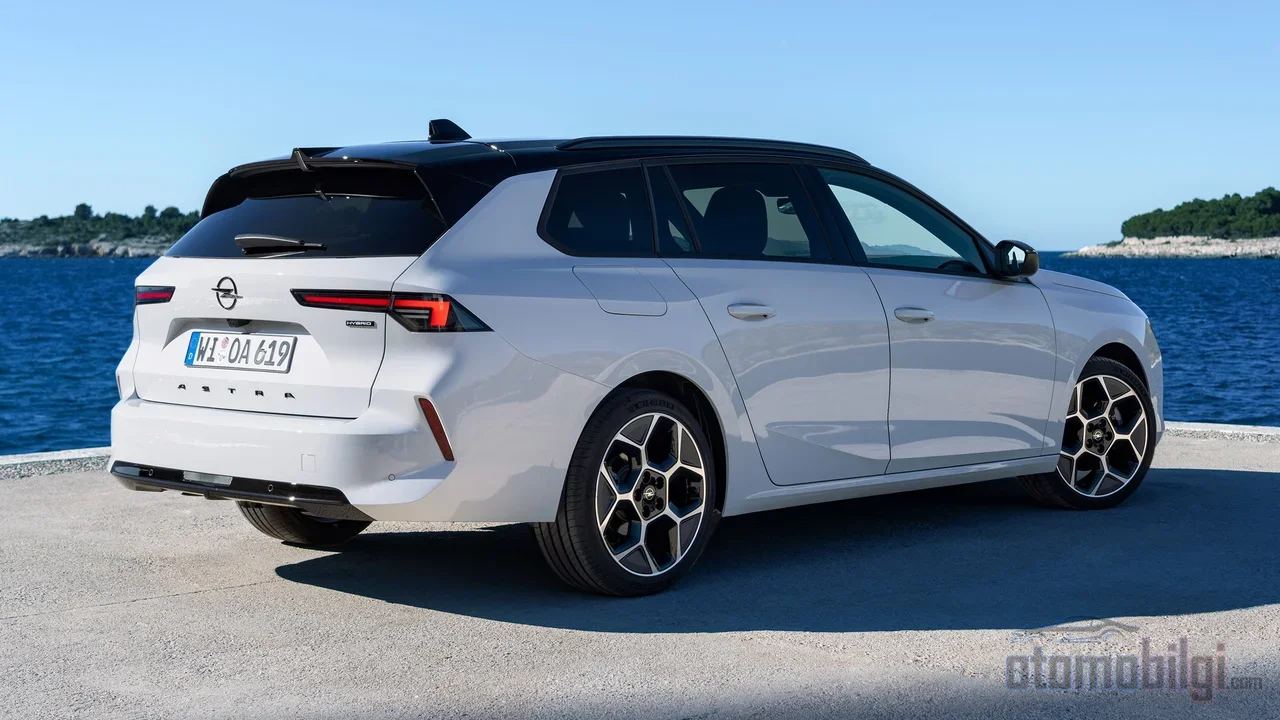
The car deserves a brief mention, because behind that criticized price tag there is a new body, even at entry level. The facelifted Astra made its world premiere at the Brussels Motor Show on January 9, 2026; the announcement had come earlier, in December 2025. At the front, the narrowed Vizor panel and, for the first time on the Astra, the illuminated Opel Blitz logo stand out. On the wheels side there are new 17-18 inch designs - offered, of course, not with the entry version's steel wheels, but as the luxury of the top trims. Kontur White and Klover Green were added to the color palette.
The practical figures are impressive: 1,339 liters of cargo volume in the hatchback with the seats folded, and 1,634 liters in the Sports Tourer. In the cabin, the steering wheel is fully covered in vegan material; the optional RenewKnit seat upholstery is made from recycled materials. These are elements that have become normalized by today's segment expectations, but the Astra's consistency in keeping them standard on every trim deserves credit.
Official Price Table: From February 2026 to Today
The Germany prices of the facelifted Astra announced in February 2026 clearly show where the entry level sits. All VAT included:
| Version | Starting price |
|---|---|
| Astra Hybrid (145 hp) | 32,990 euro |
| Astra 1.5 Diesel (130 hp) | 34,640 euro |
| Astra Electric (58 kWh, 156 hp) | 37,990 euro |
| Astra Sports Tourer Electric | 39,490 euro |
| Astra Plug-in Hybrid (196 hp) | 38,460 euro |
| Astra Electric Start (October 2026) | 36,490 euro |
| Astra Start (October 2026) | 31,890 euro |
What stands out in the table is that the two October additions have pulled the lower end of the range somewhat further down. Especially on the electric side, the 1,900-euro reduction is part of the emphasis Stellantis is placing on small and affordable electric vehicles in Europe. Even so, the entry price of the electric Astra sits considerably above the hybrid entry price; meaning "affordability" still carries a completely different meaning depending on which powertrain you choose.
The Astra's Price Against Its Rivals
The value debate only makes sense when compared against rivals. There is comparative data from the US market, which sketches the segment context even without a direct euro-dollar match: The 2026 Volkswagen Golf GTI S starts at $34,590, while the lowest MSRP of the 2026 Toyota Corolla is $24,620. The dollar equivalent of the Astra's hybrid/diesel entry band sits in almost the same zone as the GTI; against the Corolla, it is roughly $10,000 higher. For someone who has been watching this business for years, a compact once positioned as a Corolla rival sitting in the same price band as a Golf GTI performance version at its entry price is not a familiar sight.
The market as a whole is moving in this direction too. As of 2026, no new vehicle in the US has a starting price below $20,000 anymore; the average price of a compact car has risen to $27,904 - an annual increase of 2.6 percent. The Astra starts roughly $7,000 above this average. Being a German compact above the average is not a sin in itself; the question is whether this premium is deserved given the steel wheels and spartan cabin offered in the entry trim.
Stellantis's Pricing Strategy: The Distance Between List Price and Reality
This picture cannot be separated from Stellantis's general stance. The company announced in early 2026 that it had reset its business model, and this reset brought roughly €22.2 billion in charges. The message was "alignment with customer preferences." In October 2026, it was reported that the company was placing emphasis on small and affordable electric vehicles in Europe; but it should be noted that in the same reports, some analysts attributed the sales increase more to dealer inventory restocking than to consumer demand.
The price itself is also a matter of debate. As of October 1, Stellantis moved to a minimum advertised price (MAAP) practice; meaning dealers can no longer advertise below the listed price. The background to this is striking: the company's vehicles were subject to discounts more than three times deeper than the average car. In short, the list price had long been perceived as above market value, and the company is trying to correct this on the advertising front. This is partly why the Astra's entry price is questioned so much: the gap between the figure in the catalog and the figure that leaves the showroom door has become, in the customer's eyes, a matter of trust.
What Did We Used to Mean by Entry Level?
For those who have long watched the change, there is a comparison that should sit well: in the past, a compact's entry version, though cheap, still felt like a sensible car; a basic but functional package. Today, that same logic starts to wobble when combined with the $35,000 band. The manufacturer's defense - that the battery grew while the price stayed fixed, the range extended, and Intelli-Seats are standard at every level - carries valid points. But the other side's question is also legitimate: On a €31,890 car, steel wheels are standard while a fully vegan-wrapped steering wheel is offered alongside seat fabric made from recycled materials - a sign that priorities have shifted.
One of the questions readers ask most is what the electric version's 454 km WLTP range actually means in real-world use. WLTP figures come from a laboratory cycle; they drop in highway-heavy use and hold up in city driving. The 55.4 kWh usable capacity is a balanced point for this class; adding the V2L function also adds practical value. In other words, with the lower entry price, the electric Astra is for the first time making a genuine price-value argument in the segment. On the hybrid and diesel side, that conversation has not yet begun.
Verdict: Steel Wheels for $35,000 - Worth Paying For?
Astra Start is one of the most concrete steps in Stellantis' effort to pull price tags downward. On the electric side, the €1,900 discount and the extended range represent real progress. But with the entry prices of the hybrid and diesel exceeding the $35,000 band in dollar terms, this is not consistent with the compact class's historical position. Keeping signature technologies like Intelli-Lux out of the entry level risks leaving that level as nothing more than a catalog front. Entry-level equipment used to be a byword for cheapness; now it is turning into an illustration of expensiveness. How Opel will correct this imbalance in later equipment updates will be the real point of curiosity for those following this segment.
Sources
- Opel Astra Start: New Entry-level Trim for the Compact-Class Bestseller from 31.890 Euro - Stellantis Media
- Sharper, Bolder, More Modern: New Opel Astra is Ready to Order - Stellantis Media
- Brussels Motor Show 2026: New Opel Astra Celebrates Its World Premiere - Stellantis Media
- Opel Astra Electric Gets New Entry-Level Version - ElectricCarsReport
- The new Opel Astra goes on sale with more range but the same price - ArenaEV
- 2026 Opel Astra Revealed: Facelift Brings a Light Bar and Smarter Headlights - Yahoo Autos/Motor1
- Opel's New Astra Start Base Trim Comes With Hub-Capped Steelies - autoevolution
- Stellantis Resets its Business to Meet Customer Preferences - Stellantis
- Stellantis bets on small affordable EVs for European comeback - Reuters
- Why Stellantis Is Stopping Dealers From Advertising Rock-Bottom Prices - WSJ
- New-vehicle prices reach 2026 high - CBT News
- 2026 VW Golf GTI S pricing - Edmunds
- 2027 Toyota Corolla vs 2026 VW Golf R - CarsDirect