BYD Shark Enters the Front-Wheel Drive Pick-up Market at £47,290
Share This Page
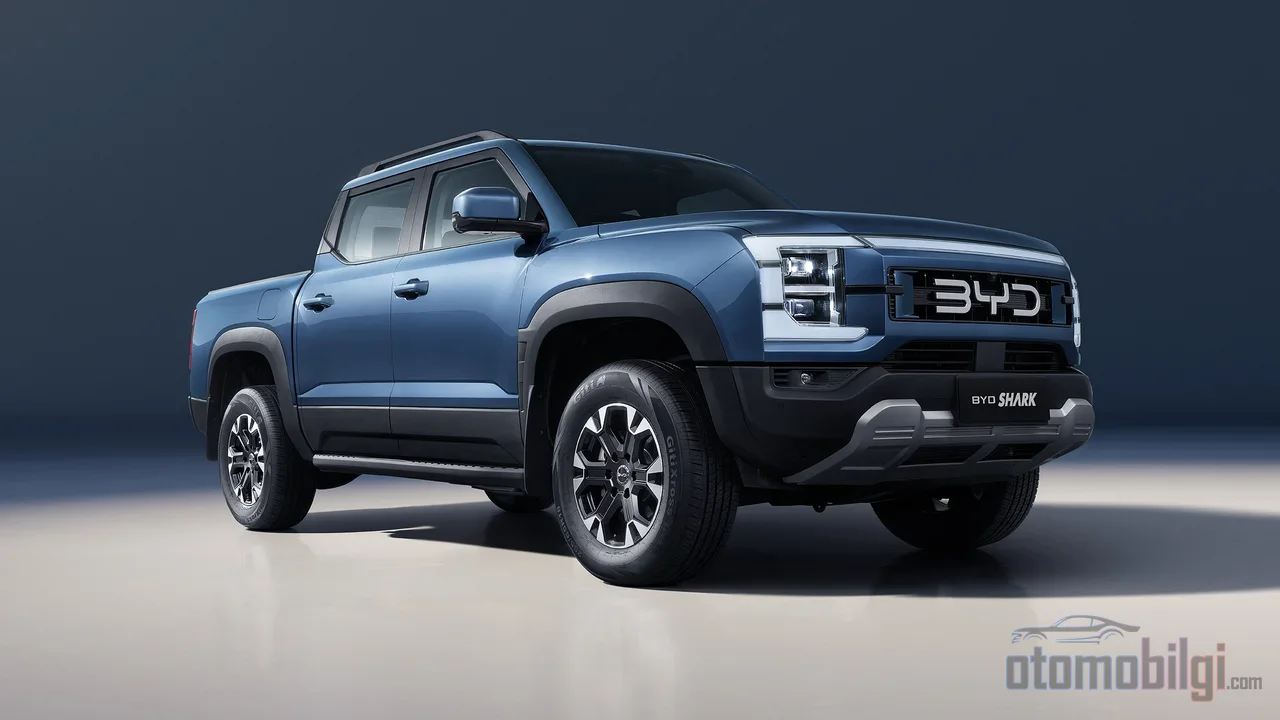
BYD has launched its first pickup model, the Shark, for sale in Europe. With an entry price of £47,290 including VAT in the UK, the double-cabin plug-in hybrid is now open for orders with a total WLTP range of 419 miles and a launch calendar spread across three months, stepping into one of Europe's most crowded segments. In this article, we put its price, technical equipment, position against its rivals, and rollout strategy on the table.
Highlights
- £47,290 entry price, sold in a single trim level in the UK
- 430 hp and 650 Nm of torque from the dual-motor DMO hybrid system
- 55 miles of electric range, 419 miles of total WLTP range
- UK orders opened on July 8, 2026, with deliveries in the fourth quarter of the year
- 2,500 kg braked towing capacity, 790 kg payload capacity
How much is the BYD Shark and when is it delivered?
The price set for the UK market, including VAT, is £47,290. This figure corresponds to roughly 63 thousand dollars, and BYD sells the model with a single trim level; much like the simplified pricing policy we have become accustomed to on the electric side in recent years, adapted to the pickup. For buyers who have long had to climb the ladder of trim levels in the pickup market, this is an approach as striking as the technical data itself.
Orders opened on July 8, 2026, and the first deliveries are planned to begin in the fourth quarter of the year. For those who want to do the math, BYD is offering a financing campaign with a representative 2.9% APR, valid for orders placed between July 10 and December 31, 2026. Whether the more sharply-tuned Performance variant, sold in the Australian market and producing 469 horsepower with its 2.0-liter engine, will come to the UK remains unclear for now.
The stage of the European launch also carried a separate message: the model made its European debut at the Goodwood Festival of Speed. Considering that this festival has long been dominated by classic sports cars and hypercars, a Chinese manufacturer exhibiting its pickup there is a small but meaningful sign summarizing how segments and players are shifting.
What are the technical specifications of the BYD Shark?
The Shark comes with DMO architecture, which BYD calls "Super Hybrid," carried into the pickup segment. To put it simply, we are looking at a plug-in hybrid double-cabin pickup: a 1.5-liter turbocharged petrol engine combined with one electric motor at the front and one at the rear. Total output is 430 horsepower (436 PS), while torque is 650 Nm. The 0-100 km/h acceleration time is 5.7 seconds. These are figures that, even for a pickup, would have been hard to imagine years ago; on the performance maps of old diesel double-cabs, only supercars would have entered this territory.
On the range side, the 32.2 kWh Blade Battery comes into play; this capacity is the largest battery in its class. According to WLTP measurement, the electric range on a full charge is approximately 55 miles. With a full tank and a full battery, the total range is 419 miles WLTP is stated. BYD is not perfect on the charging infrastructure side either, but it offers an adequate solution: with 55 kW DC fast charging, it takes about 21 minutes to fill the battery from 30 percent to 80 percent. In other words, daily use largely runs on electricity, while the petrol engine provides flexibility on long journeys; this is precisely why the plug-in hybrid formula is the most sensible adaptation for a pick-up.
Load carrying and equipment
Those doing the business-side math are met with a balance sheet like this: 2,500 kg braked towing capacity, 790 kg maximum payload and 1,200 liters of load volume. As for the cabin, BYD has placed a serious technology package in the area where the pick-up segment used to make do with crude plastic:
- 15.6-inch rotating touchscreen and 10.25-inch digital instrument panel
- Wireless CarPlay and Android Auto, head-up display
- Dynaudio sound system with 12 speakers
- Heated and ventilated front seats, vegan leather upholstery
- 6.6 kW V2L (vehicle-to-load) feature
- Four different driving modes for sand, mud, snow and gravel
The dimensions are just as deliberate: 5,457 mm length, 1,971 mm width, 1,925 mm height and a 3,260 mm wheelbase. That means a body slightly longer and taller than the Ford Ranger. Thanks to its dual-motor structure, the Shark is an electric all-wheel drive (AWD) vehicle; I deliberately emphasize this distinction because it can cause confusion when reading the segment's data sheets.
How competitive is the BYD Shark against the Ford Ranger PHEV?
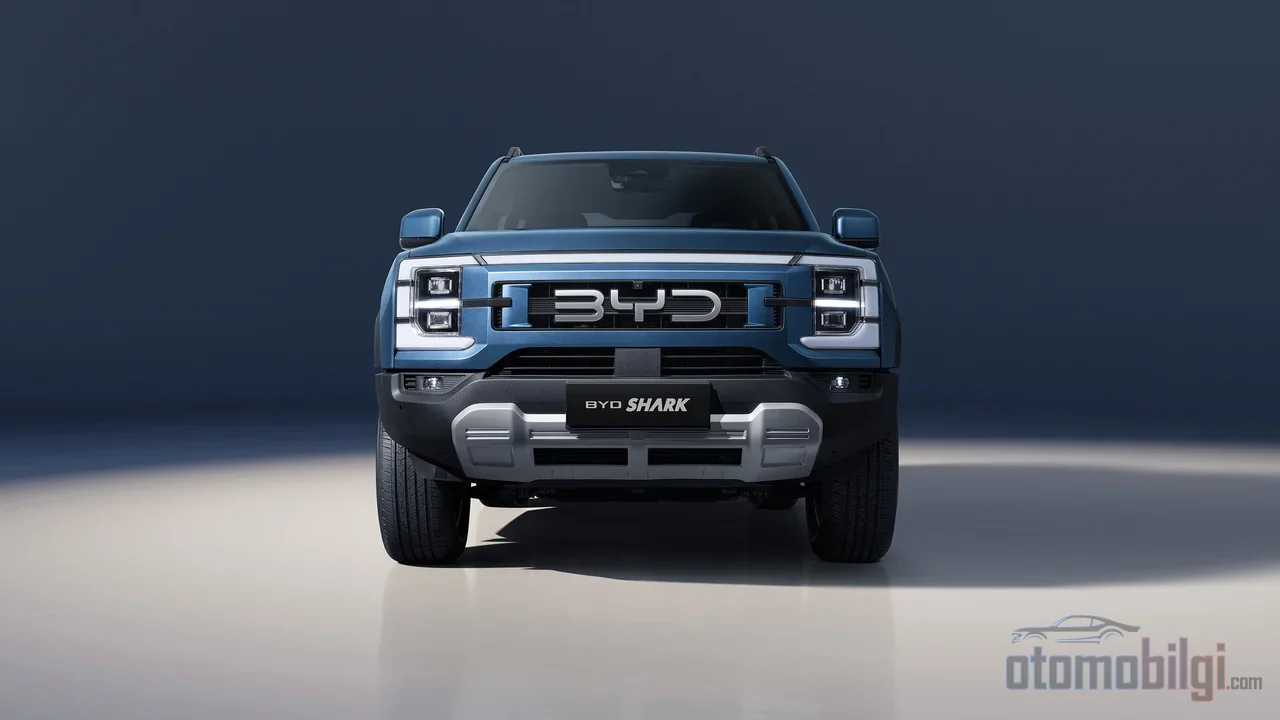
The real accounting in the pick-up market is done through direct rival comparisons, and the reference point here is the Ford Ranger PHEV. When we put the numbers side by side, BYD's intention becomes clear: while the Shark pulls ahead in range and power, it prices itself just above the Ranger's entry-level PHEV.
| Feature | BYD Shark | Ford Ranger PHEV |
|---|---|---|
| Power | 430 hp | 277 hp |
| Electric range | ~55 miles | 27 miles |
| Price (including VAT) | £47,290 | Under £49,000 |
| Payload | 790 kg | Advantageous |
The table is short but expressive. The difference in electric range creates a practical distinction, especially for weekday commuting and urban use: nearly double the electric range means the battery covers most of the daily rotation. On the Ranger side, there are assessments that the payload is stronger; this is a nuanced aspect of the plug-in hybrid pick-up debate. Load and range cannot always peak at the same time on the same sheet of paper.
If we broaden the performance dimension, the picture becomes even more interesting: it came up in April 2026 that the uprated Shark 6 Performance variant in Australia is more powerful than the Ford Ranger Raptor. Although it is not yet clear whether this variant will come to Europe, it shows that BYD is also targeting the upper limits of the segment.
How will the European launch schedule work?
BYD's official statement points to a three-stage rollout plan. The first step is the Shark's, over the next three months its launch in selected European markets. The UK is positioned as the leading market of this process; orders are already open, with deliveries starting in the fourth quarter of the year. The second step is broader in scope: in the first half of 2027 a wider distribution across Europe is targeted.
This phased approach is a realistic strategy from a manufacturer that knows the pick-up segment does not touch every market in Europe with the same weight. The pick-up is a niche segment in Western Europe, while northern and central Europe and some eastern markets have a much more solid customer base. BYD's choice to first solidify its position in selected markets and then expand the network is the classic method of concentrating resources in the right place.
The place of the Shark in BYD's growth strategy in Europe
The Shark should not be read as an isolated product move. BYD aims to double its European sales network by the end of 2026 and is pursuing a long-term localization strategy; plans for new factories and local products on the continent are also on the table. On the UK side, the dealer network will be expanded from 75 to 90 locations by September 2026, and the brand plans to launch six new models this year. In this picture, the Shark is not one of the six launches but a milestone showing which segments the brand is ready to expand into.
The momentum on the sales side also strengthens the context. In January 2026, BYD reached 18,242 new vehicle registrations in Europe, achieving nearly threefold growth; it is reported that it overtook Tesla in the electric vehicle market. Cataloguing a plug-in hybrid pick-up in the midst of such a rise is a move to broaden the product range and reach different customer profiles. The assessment by Stella Li from BYD's management team that the plug-in hybrid pick-up market is expanding rapidly is the official face of the confidence in this segment.
As someone who has been following this industry for more than thirty years, I would like to add this: the three-part strategy of Chinese manufacturers in Europe, progressing first with price, then with product, and now with segment expansion, is working much faster than the phased market entry plans I saw at the start of my career. The Shark is that speed carried over to the pick-up.
Is the BYD Shark ready for Europe?
On paper, yes: a strong hybrid system, the largest battery in the segment, impressive range, a modern cabin, and nearly twice the electric range compared to its rival. The price sits just above Ford's entry-level PHEV; this is a bold but reasonable positioning for a comparison. The question of balance in payload capacity and the fact that widespread distribution in Europe is left to 2027 are two points to watch. With deliveries starting in the fourth quarter, real-world usage data will solidify this picture.
Sources
- New BYD SHARK brings ground-breaking Super Hybrid power to pickups - BYD UK Media
- BYD SHARK Dual Mode Off-Road Plug-in Hybrid - BYD UK
- BYD SHARK Dual Mode Off-Road Plug-in Hybrid - BYD EU
- Models - BYD Media
- BYD's pickup priced from $63,000 in UK with 56 miles EV range - Electrek
- The BYD Shark pickup is coming to the UK – Top Gear
- BYD aims to double European sales network by end-2026 – Reuters
- BYD Sales Surge in Europe, Outpacing Tesla – WSJ
- BYD Already Beat Ford's Ranger Raptor On Power – Carscoops
- BYD Shark, A Plug-In Hybrid Ford Ranger Rival – InsideEVs