Volvo EX50 to Bring EX60 Technology at a More Affordable Price in 2027
Share This Page
The long-awaited move in Volvo's electric lineup is taking shape: The EX50 will fill the gap between the EX40 and the EX60, bringing the brand's new SPA3 platform - meaning the 800-volt architecture - into a noticeably more affordable price band for the first time. Production is expected to start in spring 2027, with sales appearing at dealers in the fall of the same year; the model is said to replace the EX40 in the North American market. You can tell that Volvo is planning this seriously from the fact that the new plant in Slovakia, near Košice, will have begun its first operations in September 2026.
Highlights
- The EX50 is a new electric crossover expected to enter production in spring 2027; sales are projected to begin in fall 2027
- With the SPA3 platform, the 800-volt architecture and the cell-to-body battery structure move into a more accessible price band
- The starting price in the U.S. is expected to be below $50,000 and above $40,000
- The range expectation is over 300 miles (approximately 480 km)
- Production is expected to take place most likely at the Košice plant in Slovakia
What is the Volvo EX50 and what gap does it fill?
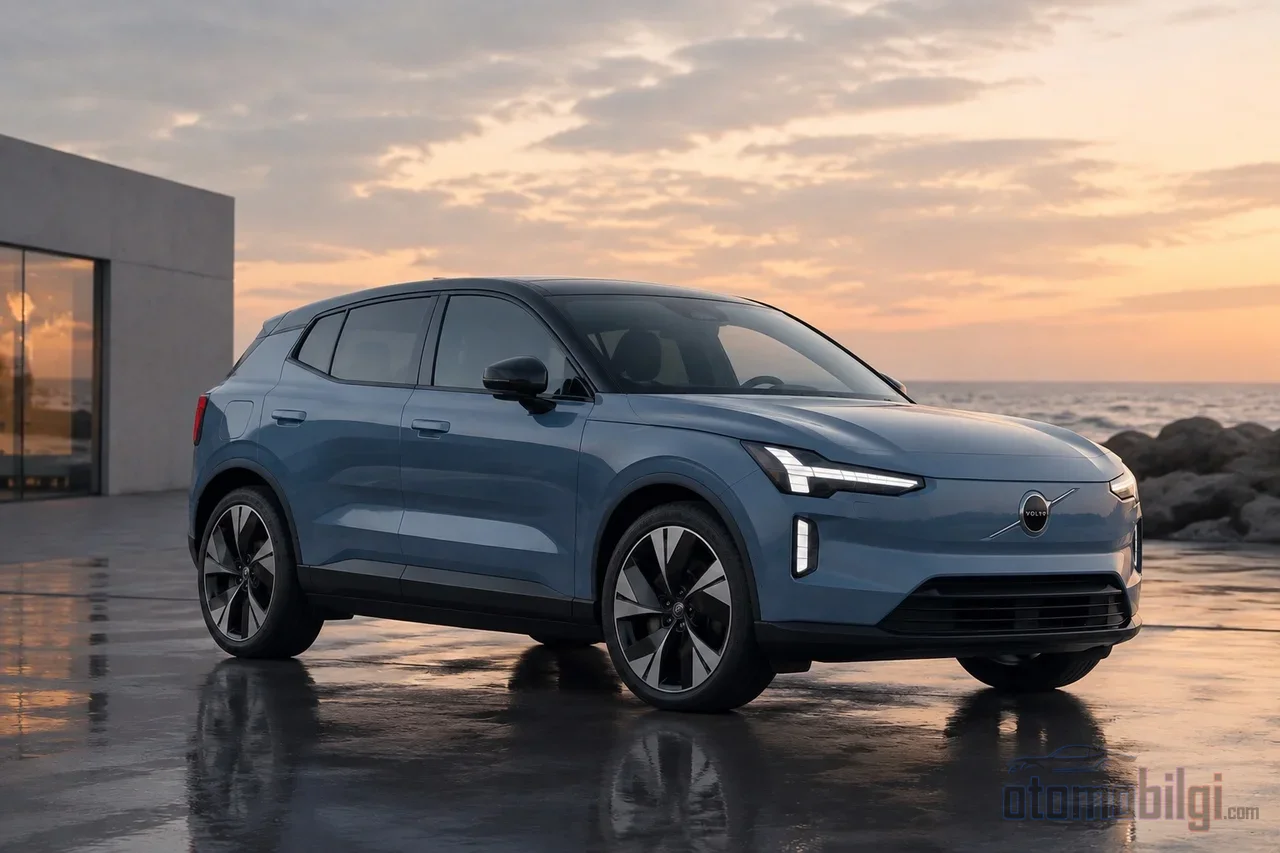
It is worth recalling Volvo's current electric lineup. The EX40 has formed the entry point of the lineup for years as the brand's compact electric vehicle; the EX60, unveiled last January, is positioned a class above as the carrier of the new-generation technology. The EX50 will be a model sitting right between these two: longer and taller than the EX40, and noticeably more affordable than the EX60. The industry knows this category well, having spent some time in it; it is precisely the middle of a brand's lineup, where the most sales are expected.
It is known that the model carries the internal codename V326. According to published details, it will be the direct successor to the EX40 in the U.S. market. This can be read as Volvo's way of rearranging its lineup base: retiring the model carried by its oldest electric platform and passing its duty to a technologically more current vehicle. The fact that the EX30 has been discontinued for the U.S. market on this side of the Atlantic makes the EX50's weight at the entry level all the more significant.
What does the SPA3 platform and 800-volt architecture bring?
The EX50's real story is not what's under the hood, but the platform underneath. SPA3 is Volvo's software-defined architecture and it carries three technical elements: an 800-volt electrical structure, a cell-to-body battery layout in which the cells are integrated directly into the body, and a centralized software architecture. We saw this trio in the EX60; the EX50 bringing the same package to a lower price point is the real technical headline.
The everyday benefit of the 800-volt architecture is charging time. Compared with conventional 400-volt systems, it carries less current at the same power, which reduces cable losses and makes much higher charging powers possible. The EX60 can add 340 km of range in 10 minutes at a 400 kW DC charging station; the fact that Volvo's own sources list this figure as 270 km stems from different definitions of measurement conditions and the charging curve. As a member of SPA3, the EX50 is also expected to offer a similar charging capability, but a model-specific official figure has not yet been announced.
On the battery side, there is no official data yet; technical publications project 83 kWh for the base pack and 95 kWh for the top pack. The same projections calculate the peak charging power of the large battery at 370 kW, which is above Volvo's current record. As for the motor options: for the single-motor version, rear-wheel drive with around 300-350 horsepower is discussed, and for the dual-motor version, power in the vicinity of 500 horsepower. All of these are not official data, but expectations derived from platform logic; until confirmation comes from Volvo itself, it is best to read them with caution.
Pricing strategy: the target of staying under $50,000
The price expectation for the EX50 summarizes the model's real commercial claim. The starting price in the US is expected to be above $40,000 but below $50,000. For comparison: the 2026 EX40 starts at $56,545 including shipping; while the EX60 is in a band of roughly $58,000-62,000. So while the EX50 remains significantly cheaper than the EX40, it will carry a technologically newer platform. Such an equation is rarely seen in the electric vehicle market; usually technology drops and prices rise.
The architect of this pricing is Volvo's cost calculation, and the Kosice plant stands at the center of that calculation. An investment of approximately $1.3 billion is mentioned for the new facility, and the annual capacity was planned as 250,000 vehicles. A factory built from scratch and designed solely with next-generation electric platforms in mind provides a cost advantage compared to aging lines; this is a rule the industry has applied for decades. It was reported that the Ghent plant is also waiting for a share of production, and there are reports that electric production is increasing at Torslanda. The widespread expectation is that the EX50 will be the first vehicle to come out of Kosice.
Technology shared with the EX60: how much of it will trickle down to the EX50?
When the EX60 was introduced in January 2026, it clearly showed the direction of Volvo's technological step: range of up to 810 km, a range target of up to 400 miles (approximately 640 km), a central computing platform called HuginCore, a Google Gemini-powered voice assistant, an 11.4-inch digital gauge, and a curved 15-inch touchscreen. Production has begun; customer deliveries are expected to start in 2027. The EX50 is expected to share a significant portion of this package: wireless CarPlay and Android Auto, the Google app ecosystem, an AI-powered voice assistant, and Bose or Bowers & Wilkins sound system options are on the list of expectations.
Let us add a note from the editor's perspective: the level at which this technology trickles down will be the real variable determining the price tag. Volvo has two options in hand; either it transfers the EX60's technology downward as-is and sacrifices profit margin, or it partially simplifies the hardware level. Current signs point toward the first option, but it is unlikely to become clear before 2027.
When will the EX50 go on sale and where will it be produced?
The timeline works out like this: production is expected to begin in the spring of 2027, with sales starting at dealers in the autumn of the same year, meaning by the end of 2027. The model's official unveiling is also anticipated in the spring of 2027. A measured approach is needed here: Volvo has not yet officially confirmed the EX50. On the other hand, the industry press treats the model as an almost certain launch, and the production schedule of the brand's new factory tells the same story.
The latest development on the production side came in September 2026: Volvo began its first operations at its new electric vehicle plant in Valaliky, near Kosice in Slovakia, and test production started at the end of September. The facility, planned with an annual capacity of 250,000 vehicles, is expected to be home to the EX50. The fact that the investment amount is cited with varying figures between 1.25 and 1.3 billion dollars can be explained by differences in exchange rates and how the investment items are counted; it does not change the essence.
Competitor analysis: Tesla Model Y and the premium compact class
The most frequently mentioned rival in the EX50's positioning is the Tesla Model Y; the price target below $50,000 puts the EX50 in direct confrontation with the best-selling vehicle in this class. The expanded list includes the Genesis GV60, Mercedes' electric GLB, and the Audi Q4 E-Tron. The EX60's battlefield is a bit higher up: the BMW iX3 and Mercedes' corresponding models. In other words, while Volvo challenges the premium electric class up top with the EX60, it is descending into the volume market down below with the EX50; a classic pincer strategy, and an effective one when executed well.
| Model | Positioning | Expected price | Technology |
|---|---|---|---|
| EX50 | Middle of the range, close to entry level | In the $40,000-50,000 band in the US | SPA3, 800 volts, cell-to-body battery |
| EX40 | Current entry model, to be replaced by the EX50 in the US | Starting at $56,545 in 2026 | Previous-generation platform |
| EX60 | Premium mid-class | Approximately $58,400-62,000 | SPA3, 400 kW charging, up to 810 km of range |
Those who lived through the old playbook will find the table familiar: in the first wave of such vehicles, every manufacturer first showcased the technology in expensive models; now the stage of bringing this technology down to the masses is beginning. This is exactly what Volvo is doing with the EX50, and it is nothing unfamiliar in terms of the automotive industry's thirty-year habit. We watched the same play with diesels, then hybrids, and now with BEVs.
Unknowns and points to be read with caution
The picture does have its missing pieces. Volvo has not yet officially announced the EX50; some of the published details are based on industry sources, and alternative scenarios are also being discussed among technical publications about whether the model could turn out to be a renaming of the EX40 or an extensive facelift. Battery capacities, motor power, and charging figures are at the expectation level. On the range front, a value of over 300 miles is projected, while the 400-mile range target belongs to the EX60; there is no confirmed upper limit for the EX50.
Ultimately, the EX50 is a key piece in Volvo's electric strategy: the first model to bring the platform proven in the EX60 down to the runner's price band. With the Košice factory coming into operation, the production infrastructure is ready; what remains is the official launch and the clarification of prices. Spring 2027 will show whether Volvo's plan truly matches that plan.
Sources
- Volvo EX50 - a bigger, cheaper entry-level EV
- The new, electric Volvo EX60 with class-leading range - Volvo Cars
- Volvo Cars starts production of EX60 - Volvo Cars
- Volvo's New EV Factory Begins Work Ahead of 2027 Production
- Volvo EX50 name emerges as Ghent awaits crucial production decision
- 2028 Volvo EX50 Review, Expert Ratings, Pricing, and Trims
- The Volvo EX40 Will Get Replaced by a New, Taller EV
- Volvo's New EX50 Will Be A Sub-$50000 Tesla Model Y Rival
- Volvo EX60 Boasts 400-Mile Range, Fast DC Charging
- What Volvo's 800V Charging Means for Your Next Electric SUV