Volvo EX60 Falls Far Behind Its US Production Target
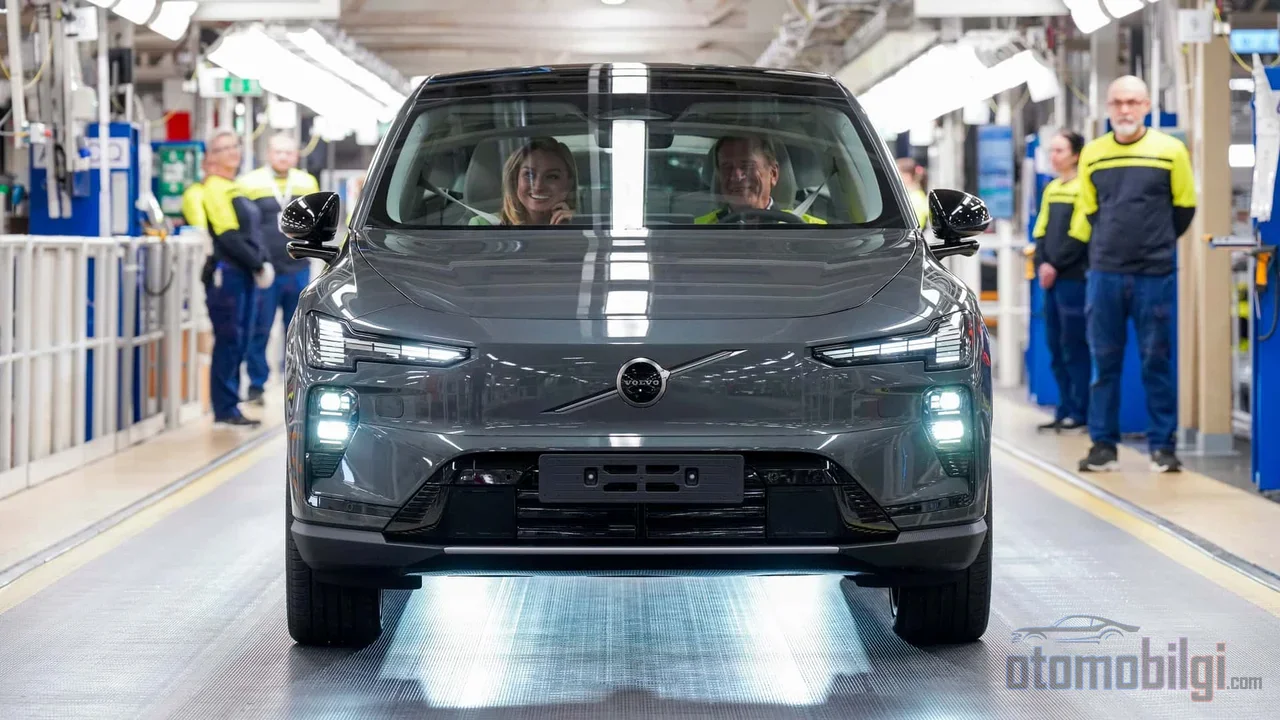
Share This Page
The EX60, unveiled by Volvo in January 2026, EX60, has fallen far short of the 2026 target set for the US market: against a production target of 2,000 units per week, the plant is currently producing only one tenth of that target, and the majority of US deliveries have slipped to the second half of 2027. The problem is not in the software or the vehicle; it lies on the production line, in the newly implemented body manufacturing methods proving more challenging than expected. Below, I examine the scale of the delay, its causes, and the EX60's place in Volvo's electric lineup with concrete figures.
Key Highlights
- 2026 US target 7,000 units; roughly 10% of the current production target level.
- Weekly production target 2,000 vehicles; US deliveries largely postponed to the second half of 2027 .
- The cause of the bottleneck is the megacasting and cell-to-body production methods; no quality or safety issues have been reported.
- US starting price approximately $60,000, and in Germany 62,990 euros.
- Volvo is allocating the limited production for the remainder of the period in favor of Europe .
Why has EX60 production fallen behind?
The picture on launch day looked quite optimistic. When Volvo presented the EX60 to the world on January 21, 2026, it planned to launch first in Europe, then in the US, and projected selling around 7,000 units in the US this year. The figure was not hearsay: it was a number above the combined US sales of the EX30 and EX90 last year. On a global scale, the Torslanda plant in Sweden needed to produce 2,000 vehicles per week to reach the 40,000 sales target.
In reality, the line is currently hitting only one tenth of this target. Almost no vehicles are going to the US distributor; the number of EX60s reaching dealers is very limited, and dealers are not expecting significant volume this year. It has been reported that shipments will resume early next year with allocated vehicles, but no deliveries will be made to the US for the remainder of 2026. In short, the EX60 will remain a rare vehicle in the US until the second half of 2027.
The delayed start of production is a separate irony; customer deliveries were expected to begin in the fall of 2026 for the P10 AWD Electric version. The vehicle also arrived with a technically ambitious framework: an 83.0 kWh battery and approximately $60,000 US starting price places it directly in the middle of the crowded and saturated luxury electric SUV segment. In Germany, the starting price was announced as 62,990 euros.
The source of the bottleneck: mega casting and cell-to-body integration
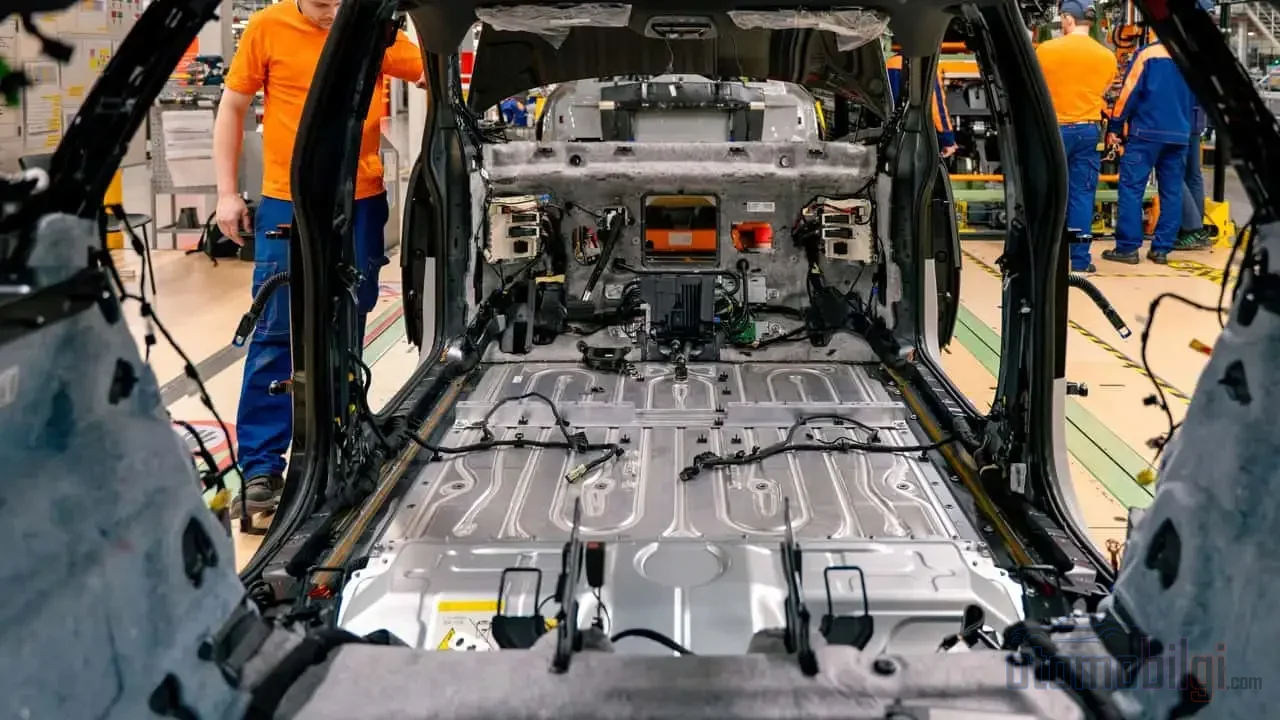
In recent years, the most frequently cited cause of delays in the automotive industry was software; this time the situation is different. The problem lies in the production methods used for the first time in the EX60. Volvo deployed for the first time in this model the megacasting technique, which casts the rear section of the vehicle as a single piece, along with the cell-to-body approach, which integrates battery cells directly into the body structure. These two methods, which promised efficiency on paper, turned out to be more complex than expected on the factory floor.
The main challenge is perfectly integrating the battery system into the cast body structure. The tolerances of cast parts, the assembly of the battery pack, and the precision of the joints represent a new learning curve for a line accustomed to the conventional body-battery separation. Similar bottlenecks are being experienced in electric motor production. An important detail: it is stated that the delay is not related to vehicle quality, safety, or product performance - meaning the issue is with the line, not the product.
The gap between target and actual
| Indicator | Target | Actual |
|---|---|---|
| 2026 US sales | Approximately 7,000 units | Only a very limited number of vehicles arrived |
| Weekly production (Torslanda) | 2,000 units | Approximately 10% of the target |
| US deliveries | Autumn 2026 | Second half of 2027 |
| Remaining 2026 US shipments | Continuous flow | No shipments throughout the year |
Why is Europe prioritized, and what will US dealers do?
Limited production capacity always creates a political allocation problem at car companies. Volvo appears to have made a clear choice in this dilemma: for the rest of 2026 and the first half of 2027, production has been restricted in Europe's favor. This is a logical choice - the launch started in Europe, the majority of orders are coming from this continent, and keeping the first deliveries in the capitals is a defensible move in terms of brand reputation.
On the US side, the picture is more fragile. Dealers are being told that a significant number of allocated vehicles will arrive in early next year, but this carries the implication that the main volume will not arrive until the second half of 2027. During this period, a buyer in the US wanting to own an EX60 faces a narrow choice: buy one of the few remaining eliminated vehicles immediately, or wait another year and a half. Both are forced decisions; there is no middle path.
Demand side is strong, on the contrary
The interesting part of the story is that despite the production turmoil, demand is not weak. In Europe, orders exceeded expectations; Volvo had announced that it was considering raising its production plan in April 2026. So the problem is on the supply side, not demand. While supply shortage inflates the order book, the fact that the brand has not so far had to pull the model or step back from its target is a consolation in itself.
Posts are circulating in community forums claiming that order intake has been temporarily halted or that deliveries have been delayed by a few weeks. Such claims carry no official confirmation; there is also no official press statement from Volvo about the production delay. Therefore, all the figures in the article are based on industry reports and publications relaying those reports, not on the brand's official statements.
The gap in Volvo's US electric strategy
To understand the EX60's delay, one needs to look at the state of Volvo's US electric lineup. The small EX40, was removed from the US and Canada due to low demand; EX30 It was reported that it will also withdraw from the US electric market after the 2026 model year. Thus, the brand's electric burden in the US fell on the EX60, whose production is stalled - while both are being withdrawn, the most strategic model stumbled.
The EX60 is positioned as the electric equivalent of the XC60, which became Volvo's best-selling vehicle of all time in 2025. That is why expectations are high for a model carrying the same name. Volvo's strategy update in September 2026 is also ambitious: 13 new models by 2030, raising the EBIT margin from the 3.5% level of 2025 to above 8%, and doubling market share. The company targets 200,000 annual retail sales in the US - considering the EX60 is thought to be the key model for these goals, the production problems appear as the most serious obstacle not just to a single vehicle, but to the entire plan.
There is also reassuring news: Volvo has officially confirmed it will move XC60 production to the Ridgeville factory in South Carolina by the end of 2026; with this move, the goal is to increase the site's annual capacity of 150,000 vehicles by more than two-thirds. The growth of this facility, where the EX90 is also produced, shows the weight of local production in Volvo's US targets. But this growth does not solve the EX60's problem - the casting line is still in Torslanda, and so is the bottleneck.
It used to be software that caused delays, now it is the casting line
For someone who has spent more than thirty years in this industry, the picture is familiar but has changed shape. A few years ago, software problems delayed the launches of electric models; now production physics and metallurgy have come into play. Mega casting is a technology that promises waste reduction and savings in part count; but there is no way to shorten the learning process when it is commissioned for the first time in a factory. It took Tesla years to mature this method; it should come as no surprise that everyone following it experiences a similar curve.
The real risk is that Volvo is going through this transition precisely at a time when demand is at its peak. When orders exceed expectations and dealers have no vehicles in hand, in the long run this can push customers toward rival brands. The US luxury electric SUV market is already saturated; staying on your feet in this market with limited supply is a tough gamble from the start. Volvo's advantage is that the problem is not with the product - if demand still lingers on the shelves when the line learns and raises capacity, the rest of the business can recover. But there is a year and a half to get through for that.
Summary of the picture for the buyer
For a reader considering buying the EX60 in the US, the practical takeaway is clear: throughout 2026 there will be almost no vehicles at dealers, a significant number of allocated vehicles arrive in early next year, and broader availability extends into the second half of 2027. Placing an order during this period is possible; however, buyers who are not flexible about the delivery date may need to consider alternatives. For readers in Europe, the situation is conversely comfortable: since the limited production has been directed to that continent, deliveries are flowing relatively smoothly. The fact that the delay is not related to quality or safety at least makes the waiting process worry-free - the issue is not what the vehicle is, but how quickly it can leave the factory.
Sources
- New Volvo EX60s Could Be a Rarity in the U.S. Until Late 2027 - Car and Driver
- Volvo EX60 production snags will starve U.S. dealers of EVs - Automotive News
- Volvo EX60 US Deliveries Delayed By Production Issues - Motor1
- Volvo Cars unveils its EX60 electric SUV - Reuters
- Volvo Cars plans 13 new models by 2030 - Reuters
- Volvo Cars brings production of global best-seller XC60 to its South Carolina plant - Volvo Cars
- All-New Volvo EX60 product page - Volvo Cars
- Volvo's EX60 Defies Expectations With 40,000 Units - InsideEVs
- Volvo EX60 Manufacturing Difficulties - autoevolution