Ferrari's First EV, the Luce, Will Start at $560,800 in the US
Share This Page
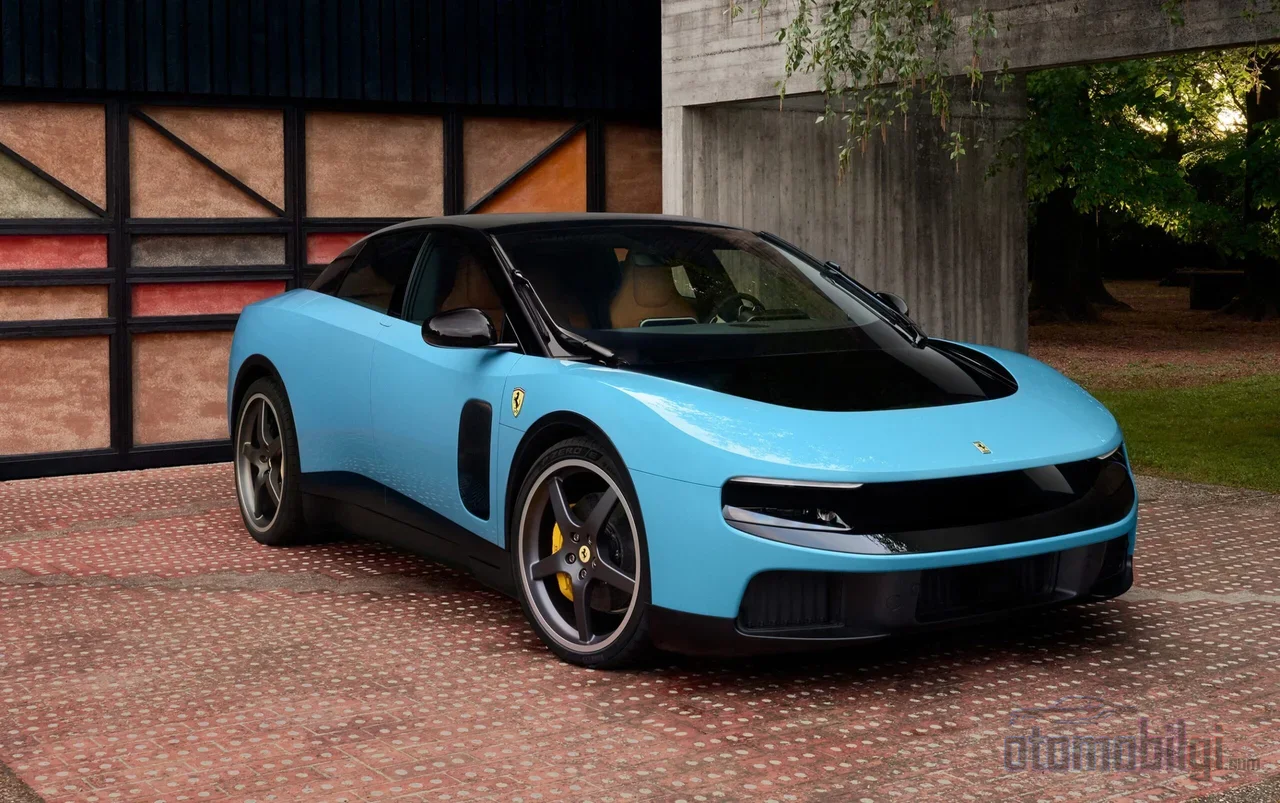
Ferrari's first series-production electric vehicle, the Luce, will start at $560,800 in the US market. The figure comes in below market expectations following the world premiere in Rome, while placing the vehicle above both the Rolls-Royce Cullinan and its own internal combustion cousin, the Purosangue, at the starting price. Deliveries are planned for the second quarter of 2027. Below you will find what this price means, the answer to why expectations were so high, and where the vehicle stands in its segment.
Highlights
- US starting price: $560,800, deliveries in the second quarter of 2027
- European price announced at the Rome premiere: €550,000
- Four motors, total 1,035 hp, 800V architecture, 122 kWh battery
- 0-100 km/h in 2.5 seconds, WLTP range of 529 km
- The entire run of approximately 500 units from 2026 production sold out in less than two months
Why was the Ferrari Luce US price confirmed rather than announced below expectations?
When the Luce was unveiled in Rome on May 25, 2026, Ferrari only gave the European price: €550,000. At the exchange rate that day, this figure corresponded to roughly $640,000, and expectations for the US price formed around that conversion. Published estimates were circulating around $600,000; some reports went as high as the $645,000-647,000 range.
The $560,800 figure confirmed on October 22 came in about $50,000 to $80,000 below that expectation. While this gap looks surprising, it actually comes down to simple tax math. European prices include VAT; in Italy the rate is 22%. Subtract that tax and the Luce comes to about €450,800 in Italy, which at the current rate is roughly $506,000. In other words, the US price is about $55,000 above the pre-tax Italian price. Part of the difference also comes from the 15% US customs tariff applied to EU-built vehicles; Ferrari passed this burden on to customers last year by partially raising US prices.
One important detail should also be added: the $560,800 does not include options and delivery fees. Ferrari has not yet published option prices, and it would be realistic to assume that no customer in this class will take their car with the base version. The tags of actually delivered cars will climb well above the base price depending on the options list and bespoke requests.
Where does the Luce stand among its rivals?
In terms of starting price, the Luce holds the position of the most expensive standard-production SUV/crossover in the US market. It leaves behind both the Rolls-Royce Cullinan and Ferrari's own V12 family car, the Purosangue. For someone who has followed this market for many years, it is a thought-provoking picture: The British brand's nine-seat icon now sits beneath an Italian electric vehicle.
| Model | Starting Price | Note |
|---|---|---|
| Ferrari Luce | $560,800 | US price, confirmed on October 22, 2026 |
| Rolls-Royce Cullinan | $441,350 | 2026 model year |
| Ferrari Purosangue | ~$429,000 – ~$525,000 | Varies by source, with differences across model years |
The wide range in the Purosangue line stems from price lists based on different model years and different calculation methods; it is wise to read the comparison with caution. Still, the main conclusion is clear: At its starting point, the Luce sits above both of its rivals. For those who want to broaden the number of rivals, there is a starker comparison: the Lucid Air Sapphire, which comes to about $250,000 and exceeds 1,200 hp, could be bought twice for the same money. Ferrari says such comparisons miss the essence of the matter; for the money paid for the Sapphire, you do not get the Maranello crest, graduated torque management, or a collector ecosystem. But it must be acknowledged that the price/performance debate feeds on precisely this point.
What you get for $560,800: technical picture
Although the price tag looks steep, the Luce's technical content is built in line with the logic of its class. The car produces a total of 1,035 hp through a layout with one motor on each wheel. An 800V architecture, a 122 kWh battery sourced from SK On, and charging power of up to 350 kW form the backbone of the technical side.
- 0–100 km/h: 2.5 seconds; top speed above 310 km/h
- WLTP range: 529 km; EPA range of approximately 280 miles expected in the US
- Weight: 2,260 kg
- Ferrari's first five-seater; a three-person rear bench and the brand's largest trunk to date (approximately 21 ft³)
- 21-speaker sound system
- Warranty: 3 years unlimited mileage limited and powertrain; battery 8 years/100,000 miles; 7 years of free maintenance
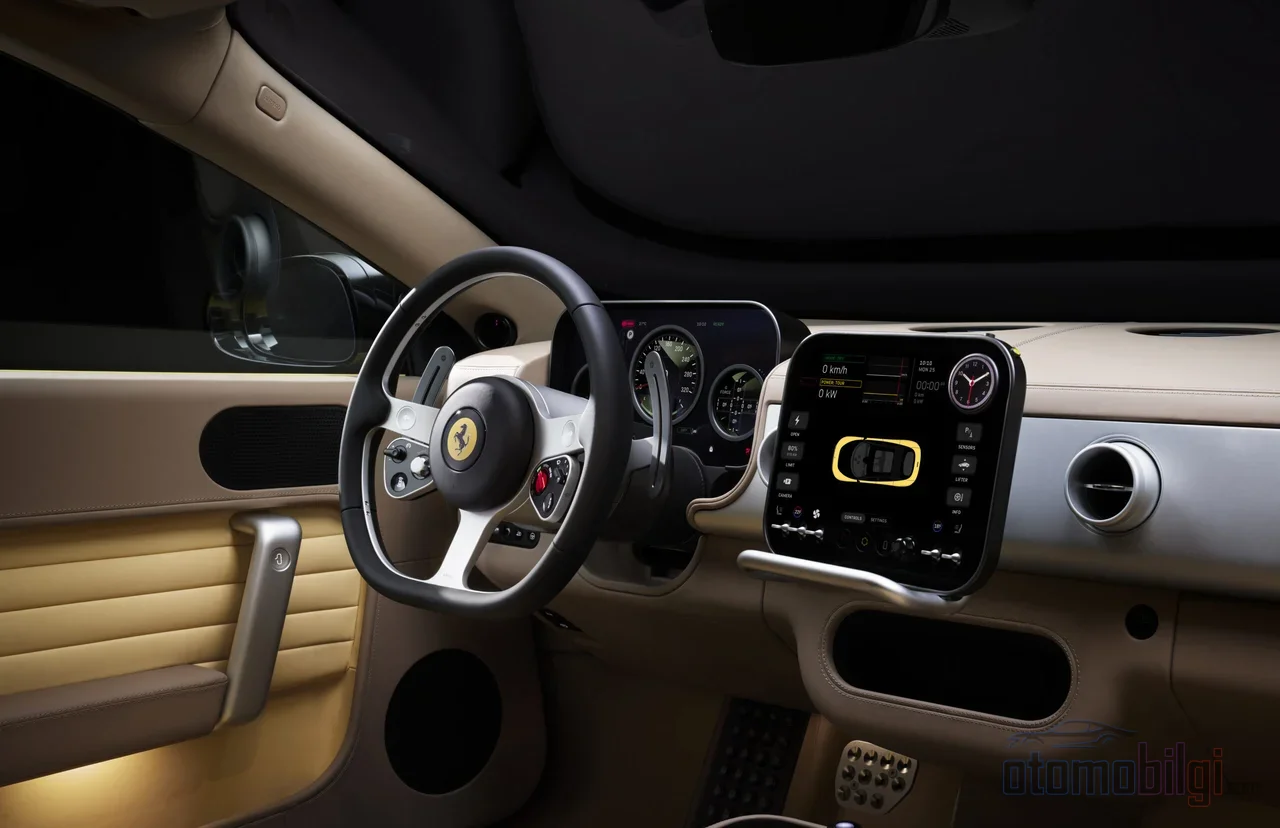
The interior and exterior design were shaped in collaboration with Jony Ive's LoveFrom and Marc Newson. On the driving side, the classic Ferrari paddles serve a different purpose: the left paddle controls regenerative braking, while the right paddle manages the five-stage torque setting. This can be read as an effort to blend the electric car's driving character with a mechanical interface; Italian brands have long been leaning in this direction.
The demand side: 500 units sold out in two months
The design received considerable criticism online; after the premiere, Ferrari shares dropped sharply, then recovered. What followed such a cold reception for the company's first EV was contradictory: all approximately 500 units produced for 2026 sold out in less than two months. China's demand was reported to be decisive in this sellout. At Monterey Car Week, the first production chassis found a buyer at charity auction for a figure of around $40 million; this can be seen as an early indicator of the car's pull on the collector side.
This picture should be read with caution. Some of the first EV orders may come from brand loyalty and allocation logic; Putting an electric model in front of a customer who wants to keep their place in Ferrari's limited V12 queue is not an unfamiliar practice in the industry. The real test is left for the 2027-2028 period, after the first wave of collector cars has been delivered. By then, the nature of demand will become clear, namely whether the genuine user or portfolio logic prevails.
Its place in the three-stage launch and electrification strategy
Ferrari launched its first electric car not as a one-off gala but through a three-stage unveiling process; the world premiere was held in Rome in the spring of 2026. This phased approach is also an indication of how the company wants to feed new technology to a public it has long been accustomed to. CEO Benedetto Vigna found himself publicly defending the 550,000 euro price tag immediately after the launch; it is clear he wanted to give the impression that the price is proportionate to the technology the vehicle offers.
Viewed from a strategic framework, Luce is not a trial balloon for Ferrari but the beginning of a permanent product line. For the first time, a five-seat class with a large trunk and fully electric enters the company's lineup. In the past, when Ferrari's practical car came to mind, extreme models like the GTC4Lusso would come to mind; now this need is met by an EV, and at an even higher price band. No matter how fast the transition is, the whole market sees Maranello's decision not to remain indifferent to the electric era.
The risk on the marketing side must not be forgotten either. Some luxury rivals had canceled their EV projects out of concern that wealthy buyers would not pay similar money for an electric model. Ferrari, however, played the opposite game: it tagged a polarizing design and a four-door body at $560,800 and sold out its annual production. By the first result, this calculation held; but the measure of lasting success will become clear in the second and third order years, after the first delivery wave has passed.
What does the price being announced before the autumn unveiling mean?
The fact that deliveries point to the second quarter of 2027 while the price has already been given can be seen as an ordinary timing issue on Ferrari's side; but on the market side it carries several messages at once. First, confidence in the company's demand strength: announcing the price early is the choice of a manufacturer that wants to close the rumor cycle and start the order process. Second, arriving below expectations also works as a maneuver that eases pressure on the stock after the premiere. The price tag in the US is now settled; the remaining uncertainty lies in options and in the actual cost of the delivered cars.
For those who have been following this business for years, the real lesson is this: Ferrari is entering the electric era by testing the limits of its brand power. The first price figure shows that Maranello did not back down in this test. An EV that leaves an established symbol like the Cullinan behind in its base price would have been considered exaggerated if voiced five years ago; but today it becomes a verified price list item. This is how the speed of change is measured.
Sources
- Ferrari Luce EV starts at $560,800 in the US, $80K less than expected
- Ferrari's Controversial Luce EV Starts At $560,800
- Ferrari Luce - Ferrari.com
- Ferrari bets on generational tech shift with Luce five-seat EV - Reuters
- Luce: Ferrari CEO defends price tag - CNBC
- 2027 Ferrari Luce: What We Know So Far - Car and Driver
- 2027 Ferrari Purosangue Review, Pricing, and Specs - Car and Driver
- Ferrari Purosangue vs. Rolls-Royce Cullinan Comparison - TrueCar
- 2026 Rolls-Royce Cullinan vs 2026 Ferrari Purosangue - Driving.ca