Ringbrothers Billie: The 650 HP Pontiac GTO Restomod
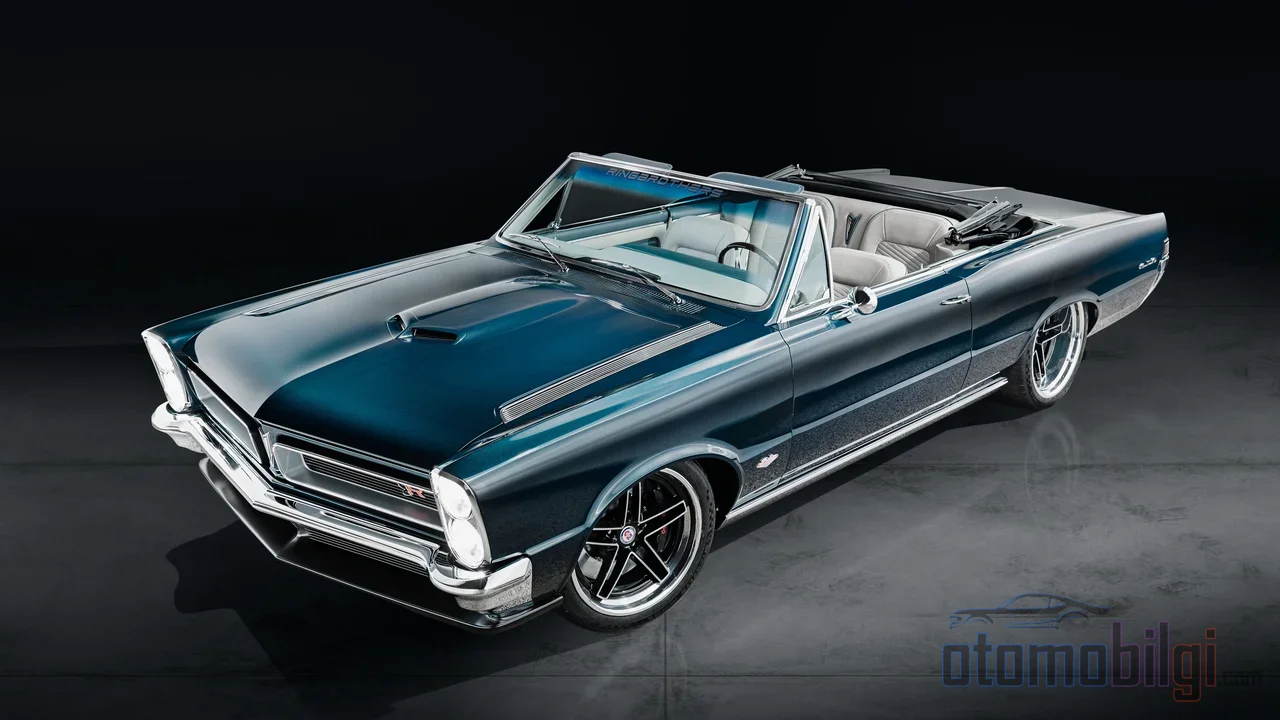
The doors of the 2026 SEMA Show opened today in Las Vegas, and the most talked-about vehicle at Ringbrothers' booths is a restomod that looks at first glance like an ordinary 1965 Pontiac GTO convertible: Billie. For those who have followed this field for years, the real story lies beneath the apparent simplicity; because this car is the product of a build process exceeding 5,500 hours, a carbon fiber body widened by five inches, and a modern crate engine.
So how does taking a GTO and dropping Chevrolet's supercharged LT4 into it become a tribute without upsetting Pontiac purists? The answer is hidden in the car's origins.
Billie Is Not Actually a GTO: A Tribute Born from a Tempest
The car's foundation is a 1965 Pontiac Tempest convertible. This body, which had previously been converted into a GTO, was rebuilt as a tribute to an old GTO belonging to the customer's mother. So Billie is a family memory reinterpreted with modern technology; not the sacrifice of a numbers-matching original car.
The name comes from here, too. The customer initially wanted to name the car Goat; Ringbrothers suggested Billie as a nod to the billy goat nickname the GTO has carried for years. For a workshop so well-versed in Pontiac culture, the naming could not have been more natural.
Highlights
- Supercharged 6.2-liter LT4 V8: 650 hp at 6,400 rpm, 650 lb-ft of torque at 3,600 rpm
- The body was widened by a total of 5 inches while preserving the classic lines; the hood, doors, and rear quarter panels are carbon fiber
- A Bowler 10-speed automatic transmission, Roadster Shop Fast Track Stage III chassis, 6-piston Brembo brakes
- The build time exceeded 5,500 hours; 19x11 and 20x13-inch HRE/Ringbrothers wheels
- The reveal took place at the SEMA Show, which opened on November 3, 2026
The 6.2-Liter LT4: A Choice That Will Upset Purists but Delight Its Owner
The engine bay is the most debated part of the project. The Chevrolet Performance LT4, sourced from Wegner Motorsports, is a 6.2-liter supercharged crate engine; it produces 650 hp at 6,400 rpm and 650 lb-ft of torque at 3,600 rpm. The power is sent to the rear wheels through a Speartech-controlled Bowler 10-speed automatic transmission.
The workshop's reasoning for the choice is simple: the customer wanted reliable power. There is no detail mimicking a Pontiac block, but the engine block has been painted Pontiac Blue; the supercharger cover and accessory drives are black anodized, and the coil packs have been moved behind the firewall for aesthetic reasons. In other words, even a Chevrolet heart is presented with as much Pontiac spirit as possible.
On the reliability front, the chassis also breaks away from the old world: a Roadster Shop Fast Track Stage III chassis, Fox coil-over springs, and 6-piston Brembo brakes. At its feet are co-produced HRE/Ringbrothers G-Code wheels; 19x11 inches at the front and 20x13 inches at the rear, wrapped in Michelin Pilot Sport Cup 2 tires.
| Component | Detail |
|---|---|
| Engine | Wegner Motorsports LT4, 6.2-liter V8, supercharged |
| Power / Torque | 650 hp (6,400 rpm) / 650 lb-ft (3,600 rpm) |
| Transmission | Bowler 10-speed automatic, Speartech controller |
| Chassis | Roadster Shop Fast Track Stage III |
| Brakes | 6-piston Brembo |
| Wheels | HRE G-Code, 19x11 front / 20x13 rear |
Why Was the Body Widened 5 Inches?
Although Billie's silhouette looks stock at first glance, the secret of the broad shoulders is mathematical: the body was widened by five inches in total, meaning 2.5 inches on each side. Billet grilles placed on either side of the carbon fiber hood push the front fenders outward, while the carbon fiber doors and rear quarter panels were spaced out by the same distance.
The use of carbon fiber is not limited to the hood and doors; the lower front and rear bumper sections are made of the same material. The hood carries an enlarged scoop for the engine's air needs and billet-aluminum inlets. At the rear, a single-piece machined billet-aluminum taillight panel, redesigned taillight bezels, and custom-made bumpers complete the look. The philosophy Mike Ring summarized is striking: it took a lot of work for the car to look the same.
In the color palette, the custom-mixed Billie Goat Blue takes center stage; balanced with black details and chrome trim. The Billie 6.2 Liter emblems on the fenders and the Raised by Ringbrothers script on the front panel put the signature on it. For the exhaust, 2.5-inch stainless steel was preferred over 3-inch piping; the goal was not maximum power, but a cruiser that doesn't rattle the rear valance, just as the owner wanted.
Cabin: From Espresso Machine to Gear Shift Knob
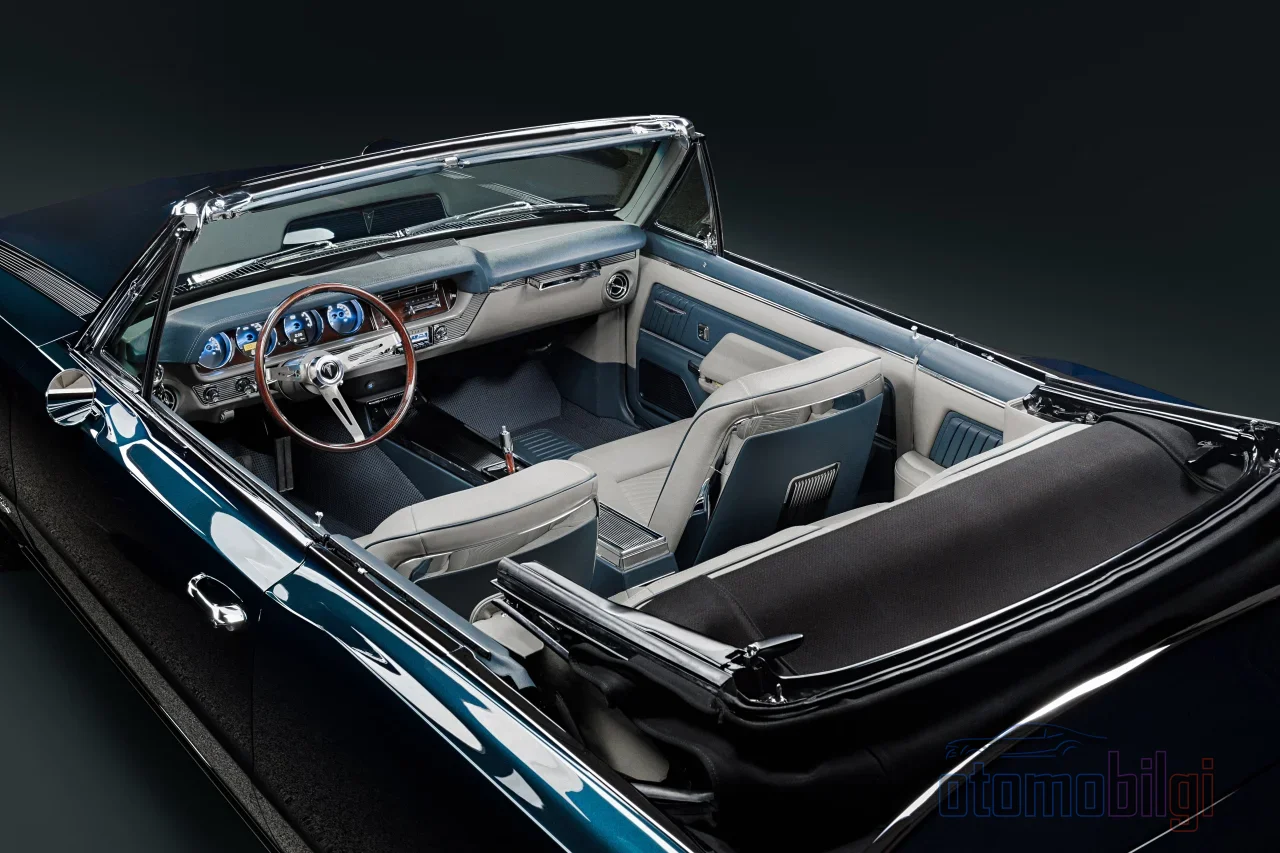
The interior continues the disciplined simplicity of the exterior, but the details are much more personal. The front seats in gray and blue leather upholstery were taken from a 1965 Ford Galaxie; reinterpreted with machined chrome rear panels reflecting GTO-style wings.
The dashboard was moved forward about four inches and down two inches; the reason is practical, to fit a Vintage Air climate unit behind it. The panel is covered in light gray leather, while the top pad is blue and, unlike the original, integrated into the panel. Dakota Digital gauges, a Gentex auto-dimming interior mirror, and a rosewood steering wheel blend modern use with a classic look.
The most unusual detail is in the gear shift knob: inspired by the conical handle of the EMC espresso machine in Mike Ring's office; the handle was drilled and a stem made from rosewood. The original radio has gained Bluetooth support while retaining its stock appearance. The power-operated top is equipped with an EZ-ON Auto Tops system with Twillfast RPC Black fabric.
The GTO's Place in Muscle Car History
There is a reason for this reverence toward the Pontiac GTO. The GTO was born in 1964 as a performance-focused option package for the Tempest; with a 389 cubic inch, that is, a 6.4-liter V8. The widely accepted view is that this car was the first generation to popularize the muscle car segment and the first true American muscle car.
Comparing with the era's measurements clarifies just how radical Billie is: The standard 1966 GTO engine produces 335 hp, while the Tri-Power and Ram-Air options could push it up to 360 horsepower. Talking about 650 horsepower for the 1965 model year was simply not possible. Reaching that power today would push the original architecture well beyond its limits; Ringbrothers' solution was a modern crate engine.
Ringbrothers' Line and the Purist Debate
Billie is not the shop's most ambitious build. Compared to radical projects like the LT4-powered Rolls-Royce Paramount or the Enyo, a 1948 Chevy pickup converted into an open-wheel race car, Billie looks relatively restrained; yet the company's expertise in refining classic muscle car lines makes itself felt in this project as well. Additionally, Ringbrothers is bringing the return of the RECOIL Chevelle, first unveiled at SEMA 2014, to the show this year.
The debate, however, is inevitable. While the Tempest basis ensures that a genuine GTO is not modified, the choice of a Chevrolet engine is a move expected to draw backlash from purists. The shop asking on social media whether this choice should have been made instead of a numbers-matching original GTO clearly shows both sides of the debate.
Conclusion: Stock in Appearance, Legendary in Craftsmanship
To summarize Billie: a restomod based on a 1965 Pontiac Tempest, built as a tribute to mom's GTO, powered by a supercharged LT4 engine producing 650 hp and 650 lb-ft of torque, with a 10-speed automatic transmission, a carbon fiber body widened by five inches, and more than 5,500 hours of work. The visible return on 5,500 hours of labor is modest; but those who have been through the grind know that the hardest job is precisely this: building a car in which everything that changed goes unnoticed.