Michelotto Revives the Ferrari 308 with a Group 4 Tribute
Share This Page
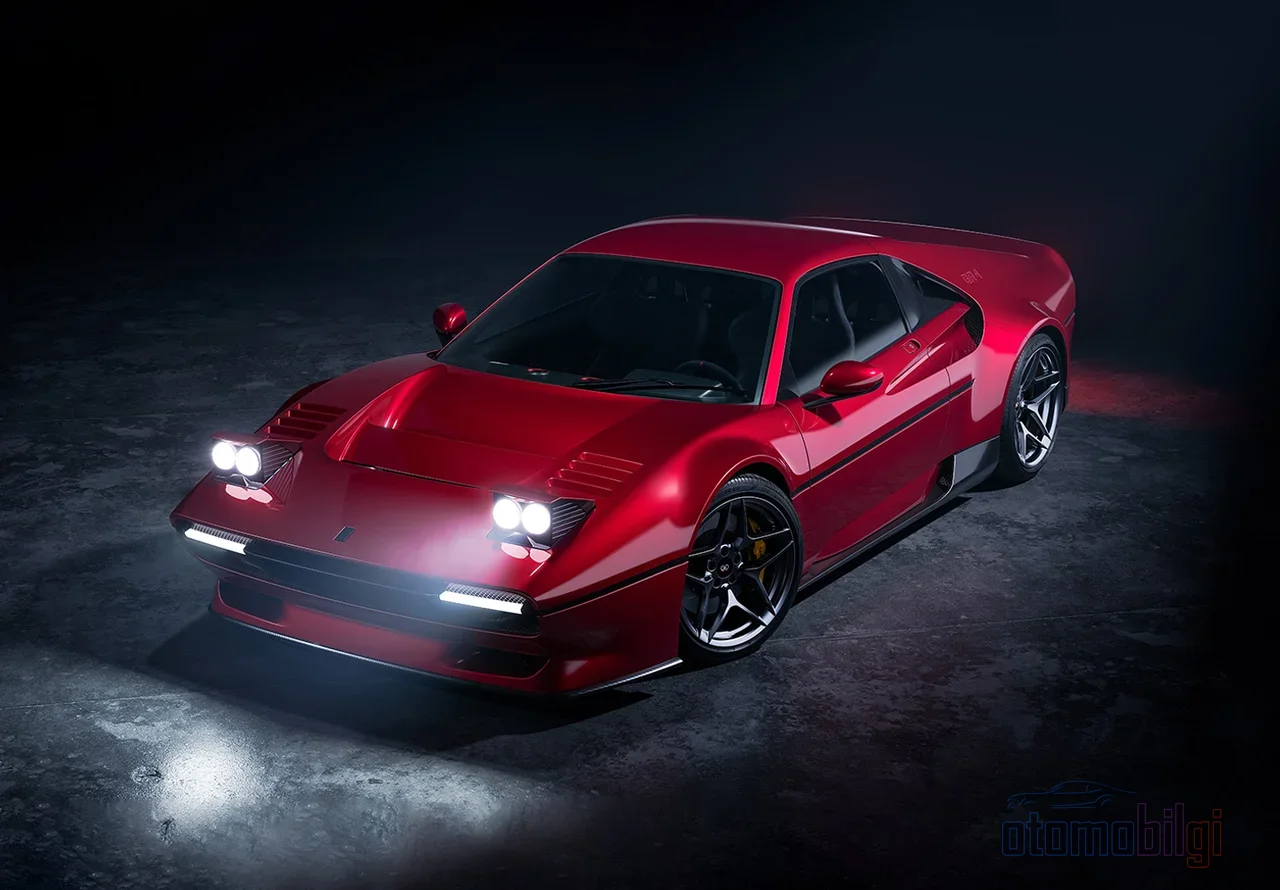
The Michelotto Gruppo 4 Tributo is a modern tribute from Padua-based Michelotto to the Ferrari 308 Grup 4 legend that left its mark on rally stages thirty years ago: With its 3.4-liter naturally aspirated V8 engine, 380 horsepower, 950-kilo weight and dog-leg manual gearbox, it is a ground-up-built sports car that carries the classic formula into the present day without compromise. This is not a restomod; it is a re-engineered, new vehicle that stands on its own feet, with a tubular chassis and a full carbon body.
Highlights
- A 3.4-liter naturally aspirated V8, 380 hp at 8,250 rpm, 37 kgm of torque
- A weight of 950 kg - 140 kg lighter than the original 308
- Only a five-speed dog-leg manual gearbox, rear-wheel drive
- A tubular chassis made of elliptical-section tubing, with a full carbon fiber body
- The world premiere was held on October 10, 2026 in Padua; pricing and sales date have not yet been announced
What is the Gruppo 4 Tributo, and where was it unveiled?
The vehicle's world premiere took place on October 10, 2026, in the courtyard of Palazzo Moroni in Padua. The project, whose engineering, development and construction were undertaken by Michelotto Group, stands as a tribute to the company's founder Giuliano Michelotto and to the path he opened half a century ago. A young company is also involved: AC Motorsport stands out as a supporting party to the project; the company's founder, Francesco Calzavara, worked within Michelotto for two years before founding his own venture. In other words, this vehicle can be read as a handshake between the experience of the Padua workshop and a new generation nourished by that very experience.
The timing is no coincidence either. 2026, the 50th anniversary of the 308 GTB's Group 4 homologation. of the year. The project also celebrates the half-century of the 308 GTB and the road leading to the 50th anniversary of FIA history - that is, of the Group B era. also celebrates the road leading to the anniversary. Rebuilding a car that was born fifty years ago for homologation purposes, in an era when homologation has lost its meaning - there is an inherently emotional reckoning in this undertaking.
Is this a restomod, or a new car?
The clear line needs to be drawn here: the Gruppo 4 Tributo is not a restored and updated version of a classic 308. The vehicle is built from the ground up on a tubular chassis made of specially produced elliptical-section tubing. The body is entirely carbon fiber; lightweight alloy components are machined (billet) parts. The panels, meanwhile, are made of composite material. Technically speaking, then, what you have is a new structure carrying the proportions of a car from fifty years ago, yet with every centimeter produced by today's methods.
This distinction is not an empty play on concepts. In a restomod approach, the old body and chassis inevitably inherit the limits of the original. Here, by contrast, the engineers are free from start to finish: the center of gravity, torsional rigidity and safety structure were designed with 2020s calculations, not 1970s ones.
Technical specifications: 380 hp, 950 kilos and a dog-leg gearbox
At its heart is a 3.4-liter naturally aspirated V8 with two valves per cylinder. Power reaches 380 horsepower at 8,250 rpm; torque is listed as 37 kgm (approximately 269 lb-ft). In the turbo era these figures may look modest; but the side that completes the equation is weight. The car weighs 950 kg - 140 kg lighter than the original 308. When 2.5 kg per horsepower is combined with an atmospheric engine and firm road holding, the result is the kind of direct response that most modern cars do not offer.
Power is delivered through only one option: a five-speed dog-leg manual gearbox and rear-wheel drive. In the dog-leg layout, first and second gears sit on the same plane; so the second-to-third shifts, the most frequent in racing, can be made in a single motion. Once a necessity, this layout is now a sign of fidelity. Anyone looking for an automatic is not a potential customer for this car; and Michelotto has left no door open for them.
| Feature | Value |
|---|---|
| Engine | 3.4-liter atmospheric V8, two valves per cylinder |
| Power | 380 hp @ 8,250 rpm |
| Torque | 37 kgm (approximately 269 lb-ft) |
| Transmission | Five-speed dog-leg manual, rear-wheel drive |
| Weight | 950 kg |
| Chassis | Tube chassis made of elliptical-section tubes |
| Body | Full carbon fiber |
| Premiere | October 10, 2026, Padua |
How faithful is the design to the original 308?
The body closely follows the overall form and dimensions of the original 308. A low nose, black grille, horizontal daytime running lights and pop-up headlights; the vents in the hood and fenders recall the classic silhouette. The traces of its rally heritage are more obvious: widened fenders, large air intakes behind the doors, star-pattern wheels and Pirelli tires. At the rear, a wide clamshell panel, four circular taillights, a carbon diffuser and dual exhausts complete the picture.
Inside, however, the prototype takes a more restrained approach than the exterior showmanship: a flat carbon fiber dashboard, a large screen in front of the driver, physical buttons, a gated gear lever and carbon fiber racing seats. There are criticisms that the interior remains more modest compared with the elegance of the exterior form; but no one complains about its functionality. Finding where to strike the balance while trying to bring the interior layout of a racing car from half a century ago into the present is probably the hardest decision.
What was the original 308's rally heritage?
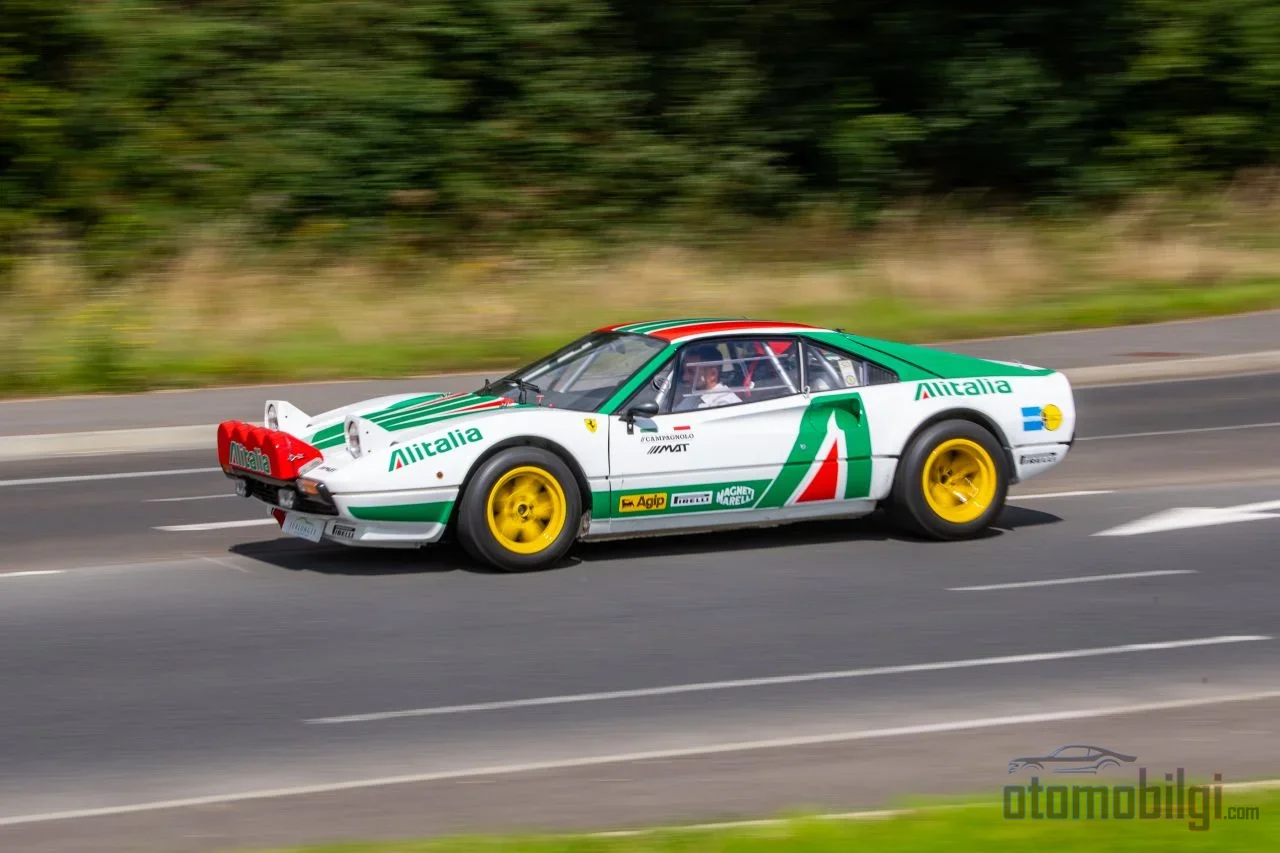
Giuliano Michelotto pursued the idea of turning the 308 GTB into a rally car from 1977 onward; his goal was to compete with the Lancia Stratos, the king of that era. Having also won over Enzo Ferrari, he brought the wide-fendered Group 4 version to life in the late 1970s; his Padua workshop built 11 examples of this version from the chassis up. Between 1978 and 1985, a total of 15 Group IV and Group B 308 GTB rally cars left the workshop; on the Group B side, the official count stands at four cars.
The brightest moment of these cars came when Jean-Claude Andruet finished second at the 1982 Tour de Corse in the Pioneer-liveried 308 - the only time a Ferrari took to a WRC podium. The same vehicle class also won the 1981 Tour de France Automobile. The Group B version arrived in 1983; but interestingly, the Group IV cars had actually been more comprehensively re-engineered: structural roll-cage, composite body, dog-leg gearbox, new brakes and suspension, high-compression engine. The final examples, with full Kevlar bodies and mechanical injection, reached figures of around 300 horsepower / 800 kilos.
When will it go on sale, and how much will it cost?
Michelotto has not announced a sale date or a price for now. The production count is also being kept behind closed doors. The only thing known is that each car will be built with a bespoke tubular chassis, a bespoke V8 and a full carbon body - meaning it will proceed not with series-production logic, but essentially as order-based workshop work. Each example that emerges will inevitably be completed like a small and personal project. Following a tradition that was limited to fifteen cars fifty years ago, this proportion is not surprising.
Price speculation is already circulating; but without an official announcement, it would be wrong to take any of the figures at hand as certain. How serious Padua is about this is clear: the party in a hurry is not Michelotto, but the legacy being invoked.
Assessment: What does Michelotto want to do with this project of respect?
This project is not an attempt to rival current Ferrari models; it is a kind of inventory of the losses the industry has caused. The naturally aspirated engine is gone, the manual gearbox has become a museum piece, and lightness, in the parlance of safety legislation, is now a luxury. Michelotto gathers all of these in a single body, rebuilding the homologation logic of the 1970s with today's workshop capabilities. Those comparing it with Ferrari's current models find the design of this 308 interpretation almost flawless - if not an exaggerated statement, then certainly an observation of the kind the brand's own designers will take note of.
My personal view is that the true significance of the Gruppo 4 Tributo lies not in the figures but in the decision. A company paying such a laborious tribute to the founder of the workshop bearing its old name and to the fifteen rally cars he produced with his own hands shows that the automotive world can still carry meanings beyond gift-shop platitudes. The story that began in Padua fifty years ago has entered a new chapter in the same city. Time will tell how many copies this chapter will produce.
Sources
- Fifty years after the homologation of the legendary 308 Gruppo 4 – Michelotto Group (official)
- Michelotto Gruppo 4 Tributo - AC Motorsport
- This New Italian Sports Car Is The Closest Thing To A Modern Ferrari 308 - CarScoops
- Michelotto's Gruppo 4 Tributo rebuilds the 308 rally recipe - Autonext
- V8, Manual Gearbox, Carbon Body: Meet The Modern 308 - CarBuzz
- Michelotto Gruppo 4 Tributo: A V8-Powered, Gated-Manual Homage - Hemmings
- Girardo & Co.'s guide to the Ferrari 308 GTB Michelotto Group IV and Group B rally cars
- Behold Michelotto's forgotten 5th Group B-spec Ferrari 308 GTB - Classic Driver