Renault and Peugeot Converted Their Group B Classics to EV
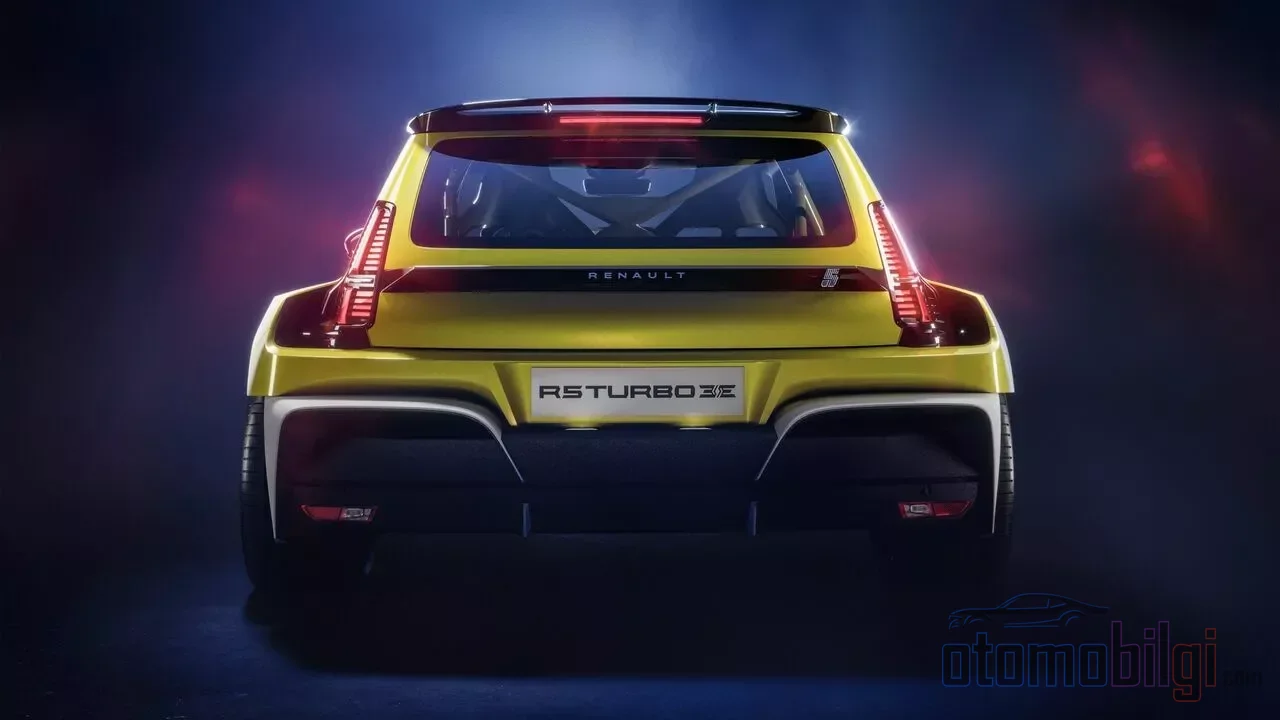
When Group B was shut down in 1986, what remained behind was a nostalgia belonging to the most undisciplined and most unforgettable era of automotive history. Forty years later, two French brands have unleashed the two legends of that era - the Renault 5 Turbo and the Peugeot 205 T16 - onto the scene, this time with batteries and electric motors, within the same season. Renault's 5 Turbo 3E is now a reality approved for production; and Peugeot's E-T16 Concept is the most talked-about concept of the October 2026 Paris Motor Show. The two vehicles draw from the same heritage, but the paths they follow are quite different.
In this article, we examine the two approaches under the same comparison framework, in terms of powertrain, design language, and faithfulness to the legacy. The question is simple, but the answer is not: Which one carried the spirit of Group B better into the electric age?
The Electric Revival of Two Legends: The Story Today
On the Renault side, the process is the product of a longer preparation. The 5 Turbo 3E first appeared in 2022 as a retro concept, was transformed into a limited-production supercar version in 2025, and is now open for orders. Peugeot introduced the E-T16 Concept at the Paris Motor Show, held between October 12-18, 2026; the vehicle was unveiled in the year marking exactly the 40th anniversary of the 205 T16's final World Manufacturers' Championship. and was brought onto the stage that year. There is also a valuable piece of insider information: Peugeot's management has confirmed that the concept could turn into a production model by 2027.
To put the context into a framework: In Paris, the Renault Group exhibited 50 vehicles under the same roof with its Renault, Dacia, and Alpine brands, while Stellantis previewed six of its nine concepts ahead of the show. So these two Group B revivals are no coincidence; they are the intersection point of the concept strategies of the two groups.
Highlights
- Peugeot E-T16 Concept: three electric motors, 816 hp, 0-100 km/h in 2.5 seconds
- Renault 5 Turbo 3E: dual motor, 555 hp, rear-wheel drive, 1,450 kg
- Renault limited to 1,980 units, starting price €160,000, first deliveries in 2027
- Peugeot's CEO confirmed that the E-T16 could turn into a production model by 2027
- Both vehicles reach 15-80% / 10-80% capacity in about 15 minutes with fast charging
Powertrain: Rear-Wheel Drive or Tri-Motor AWD?
The Renault 5 Turbo 3E has chosen to stay faithful to the character of the original R5 Turbo - and its Maxi Turbo evolution: rear-wheel drive. Built on an aluminum tubular chassis developed by Alpine, the vehicle features a floor-mounted 70 kWh battery and dual electric motors; the system output is announced as 555 hp (410 kW), and the torque, as the total value delivered to the wheels, as 4,800 Nm. Acceleration from 0-100 km/h is under 3.5 seconds, and top speed is 167 mph. The weight distribution is 43/57% - the balanced form of a classic rally car with the motor sitting at the rear. At 1,450 kg, the vehicle is one of the lightest examples in its class.
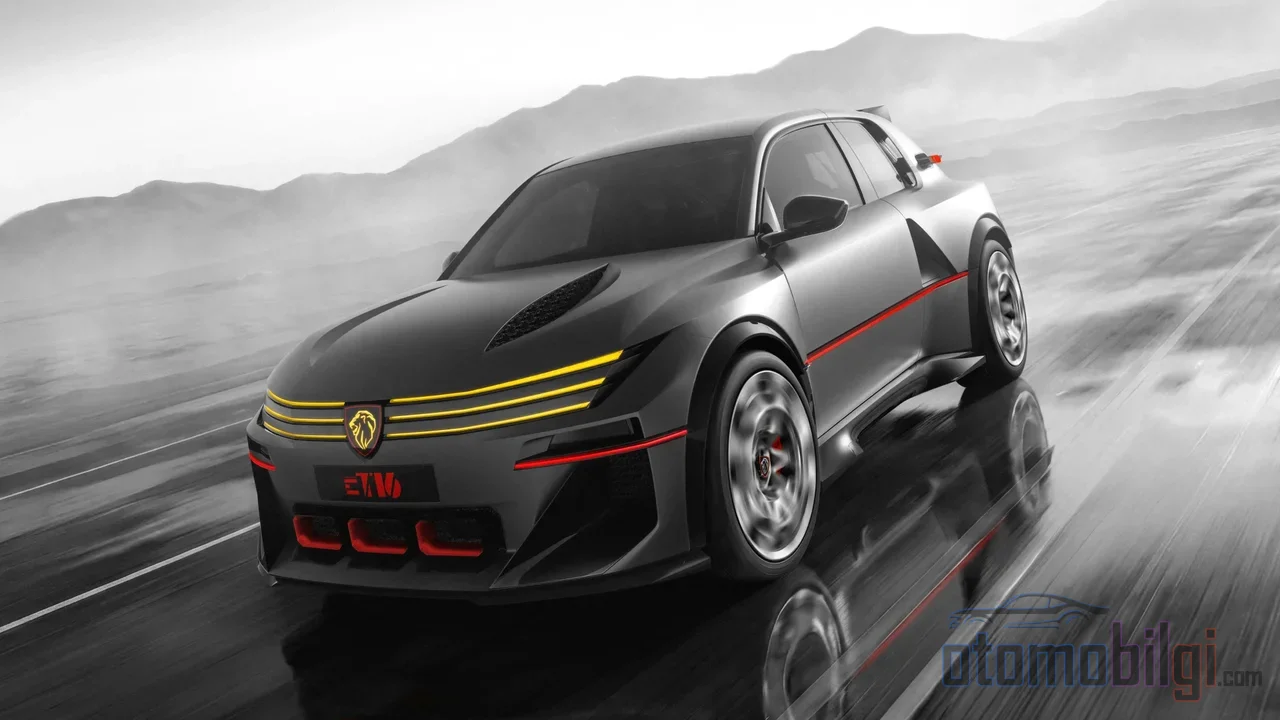
The Peugeot E-T16, on the other hand, displays a more aggressive stance with its numbers. The three electric motors - one at the front, two at the rear - produce a total of 816 hp (600 kW) - meaning this is the most powerful vehicle in Peugeot's history. 0-100 km/h in 2.5 seconds; 0-300 km/h completed in 16 seconds. An 85 kWh battery, an 800-volt architecture and torque-vectoring AWD summarize the technical identity. WLTP range is 248 miles; It is stated that the Performance mode is tuned to last three laps of the Nurburgring Nordschleife at full throttle. Weight has not been officially announced, but a power-to-weight ratio of under 2 kg/hp points to around 1,632 kg - that is, roughly 180 kg heavier than the Renault.
| Specification | Renault 5 Turbo 3E | Peugeot E-T16 Concept |
|---|---|---|
| Power | 555 hp (dual motor) | 816 hp (three motors) |
| Drive | Rear-wheel drive (RWD) | Torque-vectoring AWD |
| Battery / architecture | 70 kWh | 85 kWh, 800 volt |
| 0-100 km/h | < 3.5 sec | 2.5 sec |
| Weight | 1,450 kg | Not announced (~1,632 kg estimated) |
| Fast charging | ~15 min (15-80%) | ~15 min (10-80%) |
| Status | Approved for production | Concept |
Design Language: Modernized Retro or a Preview of the Future?
Here, two approaches clearly diverge. Renault has unveiled a flagship model that builds a bridge between the classic R5 Turbo and the new-generation R5 E-Tech: the silhouette and proportions are familiar, the interpretation is contemporary. Peugeot, on the other hand, positions the E-T16 not merely as a piece of nostalgia, but as an aggressive preview of the new E-208 hatchback coming in 2027. It has been announced that the three-slot full-width LED headlight and taillight graphics will become the signature of all future Peugeots.
Peugeot's reading of its heritage is still extremely careful. The Winchester Matte Grey color comes from the original 205 T16's paint; the 205's characteristic glasshouse band, red stripes and boxy taillights have been preserved. The spoiler at the rear that resembles cat ears and the fully opening rear body section - which reveals the mechanical components when opened - reinforce the show-car side.
Interior Differences
The contrast inside is even more striking. Since it is a production vehicle, the Renault comes with a conventional steering wheel and a cockpit with openR dual digital displays derived from the R5 E-Tech; six-point harnesses and a central rally handbrake are details that remain within series production. Peugeot, however, displays full concept radicality with the Hypersquare steering and Steer-by-Wire system inspired by the 9X8 Le Mans racer, topped off with a 21-inch ultra-wide digital display. Peugeot itself admits that the Hypersquare's lack of an airbag limits its production chances.
Fidelity to the Heritage: Where Does the 1980s Spirit Stand?
The 1980 Renault 5 Turbo was the first French production car to carry a turbocharged gasoline engine; even 160 hp was an ambitious figure for its time. On the Peugeot front, the 205 T16 won the 1985 and 1986 World Rally Championships in the hands of Ari Vatanen, Timo Salonen and Juha Kankkunen, becoming one of Group B's last champions. These two names seem to preserve their characters in their electric transformations as well: Renault represents the original's driving identity with rear-wheel drive, while Peugeot carries the rally spirit of the 205 T16 with four-wheel drive.
The common ground is surprisingly broad: both vehicles feature a vertical hydraulic handbrake, two seats, reinforced bucket seats, a colorful roll cage, a three-door body, wide fenders, aggressive bumper intakes, a large diffuser and a rear spoiler. On the wheels, Renault chose 20 inches, Peugeot 21 inches; wider tires are used at the rear. The practical distinction: While the Renault has a normal trunk, the Peugeot's opening rear body exposes its mechanics to daylight.
The essence of the loyalty criterion lies here: Renault follows a modernized retro approach - rebuilding the old with today's technology. Peugeot carries the character lines of the 205 but conceives the car as a vehicle that will guide the brand's future design language. One moves forward looking at the past, the other carries the past along while looking to the future.
Production, Price and Availability: Which Is Real, Which Is a Promise?
This is where the comparison diverges most clearly. The Renault 5 Turbo 3E is limited to 1,980 units - the number is a salute to the birth year of the original R5 Turbo - and with a starting price of €160,000 it is open for orders in Europe, the UK, the Middle East, Japan and Australia. First deliveries will be made in 2027. Production is carried out in France with Alpine's expertise.
For the Peugeot E-T16, however, there is yet no price or production count. However, the brand management's confirmation that it could turn into a production model by 2027 takes the concept beyond being a showcase ornament and ties it to a concrete roadmap. The overall reaction at the Paris Show is considered to be decisive in this decision. On the show front, there is also a circulating assessment that the E-T16 was chosen as the best concept car, but since this is single-source information, it should be treated with caution.
Conclusion: Who Carried the Group B Spirit Better into the Electric Age?
Viewed from a forty-year perspective, the answer is not as sharp as one might think. The numbers favor Peugeot: 816 hp, 2.5-second acceleration and three-motor torque vectoring are ahead of Renault's figures. But on the Renault side there is a purchasable, homologation-approaching, 1,450 kg real automobile; with its lightness and rear-wheel-drive character, it offers a purer promise on the driving front.
There is no wrong answer here. Renault represents production realism, Peugeot represents concept radicalism. The Group B of the 1980s was an adventure where the rulebook fell short; today's revival is a more measured game - one side on the production line, the other in the showcase. Whether Peugeot will put the E-T16 on the road in 2027 will determine the second act of this competition. For now, the electric Group B showdown continues with two different philosophies of the French automotive industry.
Sources
- New Renault 5 Turbo 3E - Renault UK
- E-T16 Concept - Peugeot UK
- Peugeot E-T16 Concept: An Icon Reinvented - Stellantis Media
- Renault And Peugeot Revived Group B Rally Legends As EVs, But Which Did It Better? - CarScoops
- Wild Peugeot E-T16 concept revives a Group B rally car - Motoring Research
- 2026 Paris Motor Show: Renault Group's new models - Renault Group
- Tri-motor Peugeot E-T16 - Top Gear
- Peugeot E-T16 Concept (2026) - NetCarShow