Ford Unveiled the New Mustang Dark Horse SC for NASCAR
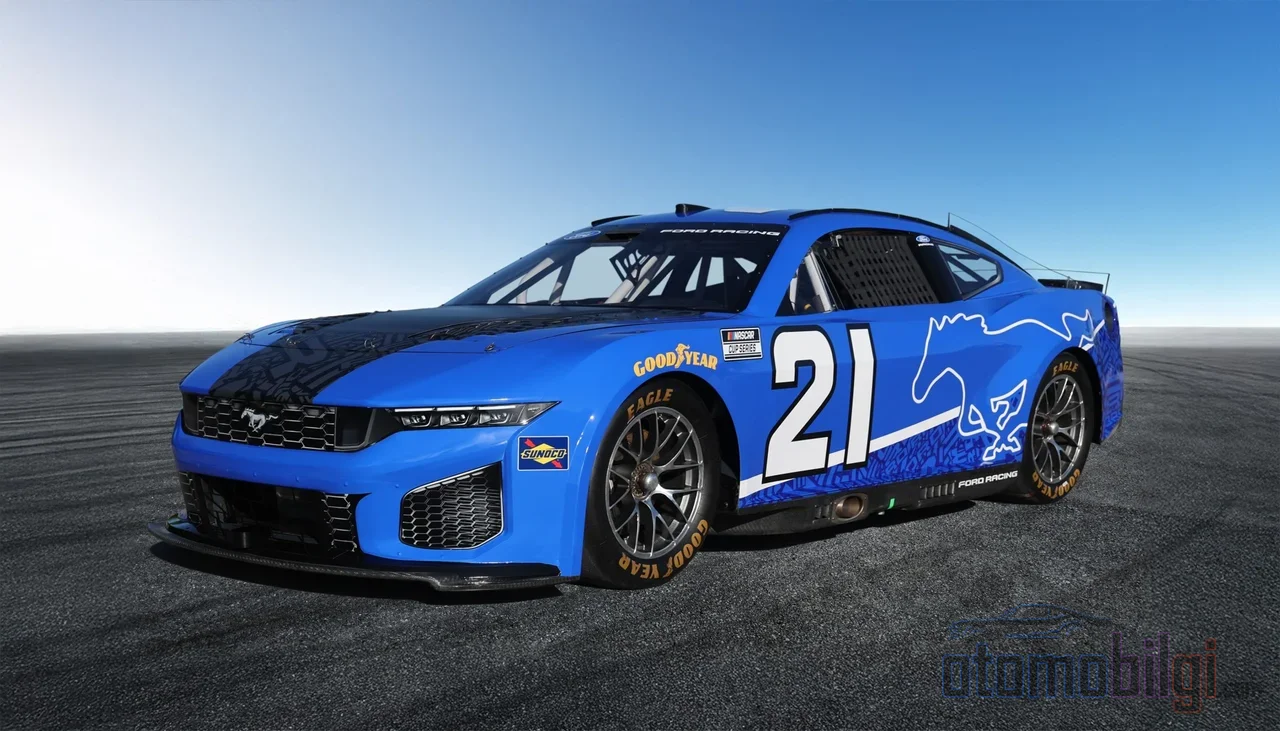
The Motorsports Hall of Fame of America inside Daytona International Speedway was hosting an unusual crowd on the evening of November 11, 2026: Under Ford's Veterans Day Classic event, the new Mustang Dark Horse SC body it prepared for the 2027 NASCAR Cup Series was unveiled from behind the curtains for the first time. The car, which will debut at the 2027 Daytona 500, represents Mustang's third body evolution in NASCAR. So why did Ford change a formula it was winning with?
The answer is both simple and subtle: Within the Next Gen package, aerodynamic efficiency has become decisive, especially on intermediate ovals, in the face of competition led by the Toyota Camry XSE. Ford's answer was to carry the strongest Mustang in the showroom onto the silhouette of the race track.
Highlights
- The new Cup Series body was introduced at Daytona on November 11, 2026
- Race debut in the series: February 21, 2027, the 69th Daytona 500
- The body is based on the production Dark Horse SC, a supercharged 5.2-liter V8 producing 795 hp
- Teams using it: Team Penske, RFK Racing, Front Row Motorsports and Wood Brothers
- Since 2019, the Mustang has taken 80 victories and three championships in the Cup Series
Why the Reveal Happened Now
Ford Racing's official unveiling date for the 2027 Mustang was November 11, 2026. The venue choice was no coincidence: The Motorsports Hall of Fame of America inside Daytona International Speedway was at the heart of the Proud to Honor Veterans Day Classic event, and the reveal was timed to coincide with it. The new body's first race outing will begin with the Clash at Daytona on February 13, 2027, within the framework of Speedweeks; the main target is the 69th on February 21, 2027: the Daytona 500.
In fact, this reveal was the second act of a story that began in January. Ford had announced on its live broadcast of January 16, 2026 that the Dark Horse SC would be used in NASCAR from 2027. The January announcement did not include the design itself; now both the silhouette and the technical rationale have become clear.
What Changed in the Design: Differences Clear from the Front
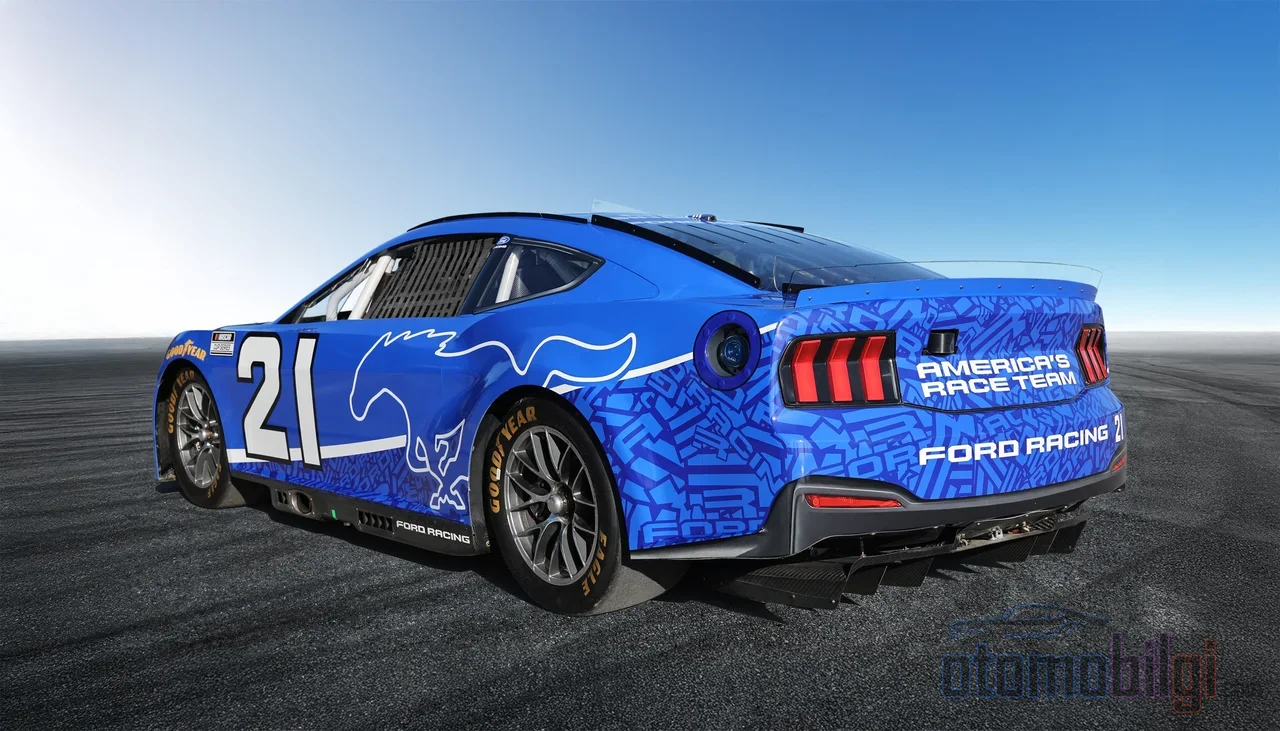
Those who followed the Dark Horse body competing in the Cup Series since 2024 will notice that the new car was developed almost entirely at the front end. The new front design, which Ford describes as an aggressive nose, was developed to optimize aerodynamics. The logic explained by Ford Racing's global director Mark Rushbrook is twofold: on the road car this shape serves more cooling, while on the race car it serves more downforce.
The tangible differences compared to the previous Dark Horse body can be listed as follows:
- Revised grille openings; on the race car this area is handled with a decal, that is, a sticker
- Reshaped bumper surfaces
- Flatter front fender lines
- Removal of the gray headlight surround
This is not an entirely new race car. The Next Gen platform and the series' regulated naturally aspirated V8 engine continue as they are; what Ford has on its hands is an update at the body panel level. Just like the transition from Fusion to Dark Horse in 2024: back then, the front bumper leading edge had also been made lower and flatter. This time Ford did not publish comparative downforce figures or wind tunnel results; we have to note "not disclosed by the manufacturer" for concrete aerodynamic gains.
Connecting the Road Car: What the Dark Horse SC Offers
The production model from which the NASCAR version takes its name, the Mustang Dark Horse SC, was introduced in January 2026 and positioned as the most powerful and most advanced Dark Horse to date. Under the hood sits a 5.2-liter Predator V8; fed by an Eaton TVS R2650 supercharger, this supercharged unit produces 795 hp and 660 lb-ft (approximately 895 Nm) of torque. The engine's internal structure is largely the same as the unit producing 815 hp in the GTD. Power is sent through a Tremec TR-9070 seven-speed dual-clutch transmission; the optional Track Pack brings carbon-ceramic brakes and carbon-fiber wheels along with it.
For comparison: the standard Dark Horse produces 500 hp and 418 lb-ft of torque with its 5.0-liter Coyote V8. The SC closes the gap not only with the supercharger, but also with engineering carried over from the GTD. The production model opens for orders in spring 2026, with deliveries starting in the summer; a dealer listing in the US market shows the price as $103,490 MSRP.
| Specification | Mustang Dark Horse SC (production) | NASCAR Cup version |
|---|---|---|
| Engine | 5.2L Predator V8, Eaton TVS R2650 supercharger | The series' regulated naturally aspirated V8 |
| Power | 795 hp | Not disclosed by the manufacturer |
| Torque | 660 lb-ft (approximately 895 Nm) | Not disclosed by the manufacturer |
| Transmission | Tremec TR-9070 7-speed dual-clutch | Next Gen platform layout |
| Platform | Series-production Mustang | NASCAR Next Gen |
| 0-100 km/h | Not disclosed by the manufacturer | Not disclosed by the manufacturer |
The critical point here is: the NASCAR car does not use the production model's flashy supercharged V8. The Cup Series engine regulations already make that impossible. The Dark Horse SC's role on the racing side is an aesthetic and aerodynamic reference; the link between the showroom and the track is the framework that keeps the brand story alive.
What the Camouflaged Tests in Charlotte Were Telling Us
The introduction coincided with a period when the preparation process had already intensified. On October 13, 2026, the camouflaged 2027 Mustang was seen at a NASCAR-Goodyear tire test at Charlotte Motor Speedway. Front Row Motorsports' number 38 Ford took part in the test, and the car ran alongside representatives from Chevrolet and Toyota in the 2027 intermediate aero package work. Ford confirmed that the car used the 2027 body, and that the camouflage was applied to hide the design.
This joint test format is the nature of the Next Gen setup: body manufacturers conduct tire and aero development in sessions where all three brands work at the same track. For Ford especially, aerodynamic efficiency in the low-drag ovals stands out as the gap that needs to be closed against the Toyota Camry XSE. That is largely the very reason the new body exists.
Which Ford Will Kim Race With in 2027
Ford's Cup Series operation rests on four teams: Team Penske, RFK Racing, Front Row Motorsports and Wood Brothers. The driver lineup is on the move, too: From 2027 onward, Ryan Preece will drive RFK Racing's No. 6 Ford Mustang. On the Front Row side, Noah Gragson is continuing his journey with the multi-year extension he signed in 2026. Joey Logano and Ryan Blaney, meanwhile, are not hiding their appetite to drive the new car at Daytona; the duo are the two main architects of the Mustang's success story in recent years.
The 2026 season also passed with team headlines in the Ford camp: Haas Factory Team and Rick Ware Racing moved to the Chevrolet ranks. The scene will be a bit more crowded in 2027, because Dodge is returning to the Cup Series after 15 years. The Dark Horse SC will share the grid both with the familiar Toyota and Chevrolet rivals and with this new old face.
The Mustang's NASCAR Record and the Dark Horse SC's Place
The Mustang became a full-time entrant in the Cup Series in 2019, replacing the Fusion, and has since amassed three championships with 80 wins: Joey Logano reached the top in 2022 and 2024, Ryan Blaney in 2023. It has won twice each in the Daytona 500, Southern 500, Coca-Cola 600 and Brickyard 400. In 2024 it switched to the Dark Horse body; The Dark Horse SC is the natural continuation of that line, not a radical break.
The short answers to frequently asked questions are also clear: the new body is not an entirely new chassis, but a continuation of the Next Gen platform. The production car's supercharged engine is not used in NASCAR. The first race is the Daytona 500 on February 21, 2027. The teams running it are Team Penske, RFK Racing, Front Row Motorsports and Wood Brothers.
Conclusion: A Cautious but Meaningful Move
For someone who has been watching this business for thirty years, what Ford is doing follows a familiar pattern: drawing new cards for a winning hand, but not overturning the table. While the Dark Horse SC strengthens the link between the strongest Mustang in the showroom and the silhouette on the track, on the technical side it targets the fine aerodynamic gains the Next Gen rules allow. In the past, body changes carried big claims and inflated pre-season expectations; now such updates are data-driven, measured steps. Indeed, the camouflaged Charlotte tests are a reminder that this work began long before Daytona's flashy presentation, at the desks of engineers collecting tire and aero data. When the Daytona 500 starts in February 2027, the nose design's downforce promise will face the stopwatch for the first time.