From Lydden Hill to Lohéac: The Legendary Circuits of Rallycross
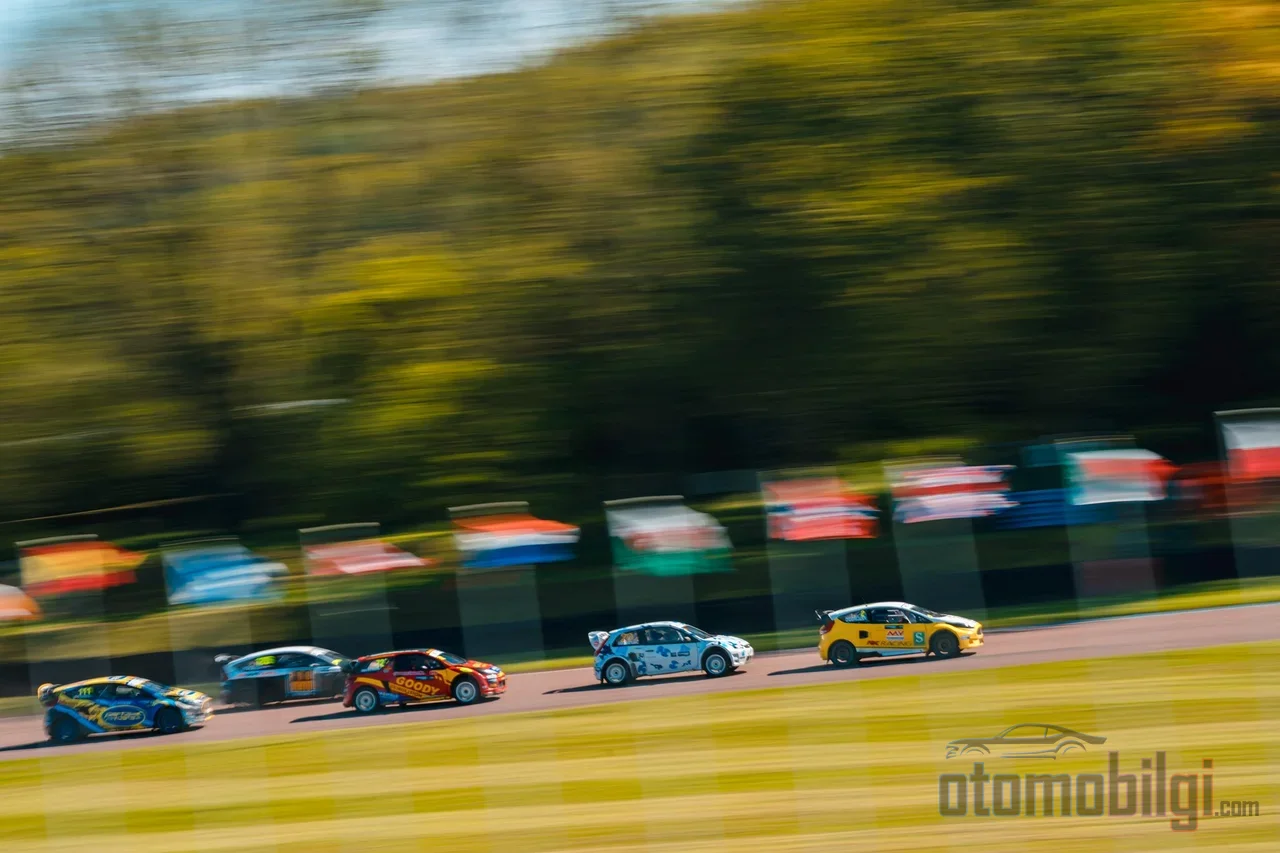
Imagine a circuit: so short that a lap takes less than a minute and a half, so chaotic that six cars can enter the first corner side by side, and so tactical that the winner can be not the fastest driver, but the smartest one who plays their joker lap best. This is the beating heart of Rallycross, and there are a few legendary circuits that shape the pulse of this sport: Lydden Hill in England, Lohéac in France, Holjes in the Swedish forests, and Mettet in Belgium. So what makes these circuits different from each other, and how does the joker lap strategy change at each one? Let's go on a world tour.
Lydden Hill: The Soil Where It All Began
When Rallycross is mentioned, the first place that comes to mind is definitely not a coincidence. This circuit in the Kent countryside was founded in 1955 by Bill Chesson and the Astra Motor Club; asphalt was laid in 1962, and by 1965 the layout was complete enough to host Formula Three races. The original aim was a one-mile circuit, but when the asphalt ended at a corner called Devil's Elbow, the result was a short but characterful track. Today it still holds the title of the shortest road racing circuit in England.
The real historic moment, however, came on 4 February 1967: Rallycross was born exactly here. TV producer Robert Reed, race organizer Bud Smith and Bill Chesson brought their collaboration to life; Vic Elford won the opening race in a Porsche 911. Imagine being able to watch races today at a circuit that witnessed the very first seconds of a sport... It is a bit like football fans watching a match on the pitch where the first game was ever played.
The numbers are interesting too: The full circuit is 1.609 km with 4 corners; the rallycross layout drops down to 1.400 km. The elevation difference is 31 meters, and the longest straight is about 170 meters. Between 1973 and 1996 it hosted a total of 23 rounds of the Embassy/ERA and FIA European Rallycross Championships; and between 2014 and 2017 the FIA World Rallycross Championship came here. Among the winners of that era are legends such as Andreas Bakkerud, Petter Solberg and Mattias Ekstrom. After 2017 the circuit was reprofiled: a wide, loose-surfaced opening corner was added, along with a bump in the first half of the lap. In 2022 Nitro Rallycross held its first race outside North America here, and it has already been announced that the RallyX series will return to this historic track in 2027.
Highlights
- Rallycross was born at Lydden Hill on 4 February 1967; the first winner was Vic Elford.
- Holjesbanan, with 1.210 meters and 10 corners, is one of the most spectacular circuits on the calendar.
- Lohéac's rallycross layout is 1.096 meters; its asphalt circuit is 2.022 meters.
- Mettet offers an RX track mixing gravel and asphalt; its main circuit is 2.310 km.
- In the FIA's new World Cup format, every race features two mandatory joker laps.
Holjes: Magic Weekend in the Heart of the Forest
In Sweden's Värmland region, deep in the Finnskogen forests, there is a village: Holjes. This settlement, whose population is smaller than the number of competitors, turns into one of the most popular stops on the rallycross calendar every year. Holjesbanan, meaning Holjes Motorstadion, offers a 1,210-meter layout with 10 corners. This makes it slightly shorter than Lydden Hill's RX layout but far more twisty; it is described as a track that is as spectacular as it is fast.
The track's real superpower lies not in the asphalt, but in the grandstands: Holjes' passionate crowds are legendary. The Magic Weekend held there, with its festival-style fan zone events, is truly the Rock Festival of rallycross. One year, the Euro RX round ran with a massive 68-car entry - that number is an incredible crowd for a short-format championship.
The strategic significance of the 10 corners is huge: on tracks with long straights, it usually makes sense to take the joker lap on the straight to minimize the penalty. At Holjes, however, because there are so many corners, where the joker route is placed can change the rhythm of a lap from start to finish. Falling even one second behind on a tight track can make sticking with the car ahead impossible - much like taking the wrong lane in city traffic and regretting it afterwards.
Lohéac: France's Rallycross Capital
The Circuit de Lohéac in France's Ille-et-Vilaine region is 1,096 meters long in its rallycross layout. That makes it the shortest track on our list - a layout where the cars are almost constantly in corners, with no room to breathe. The facility also has a separate asphalt circuit: a 2,022-meter layout. This dual structure shows that the facility is a living center not just for rallycross, but for different disciplines as well.
What is interesting about Lohéac is this: even though its length is clearly recorded, detailed information about the track's signature corner and spectator layout is not so easy to find. Perhaps that is one way the track preserves its magic - you have to go there and discover it for yourself. The fact that ticket sales for the 2026 season are already open is the most tangible proof that the facility remains vibrant.
Mettet: The Delicate Balance Between Gravel and Asphalt
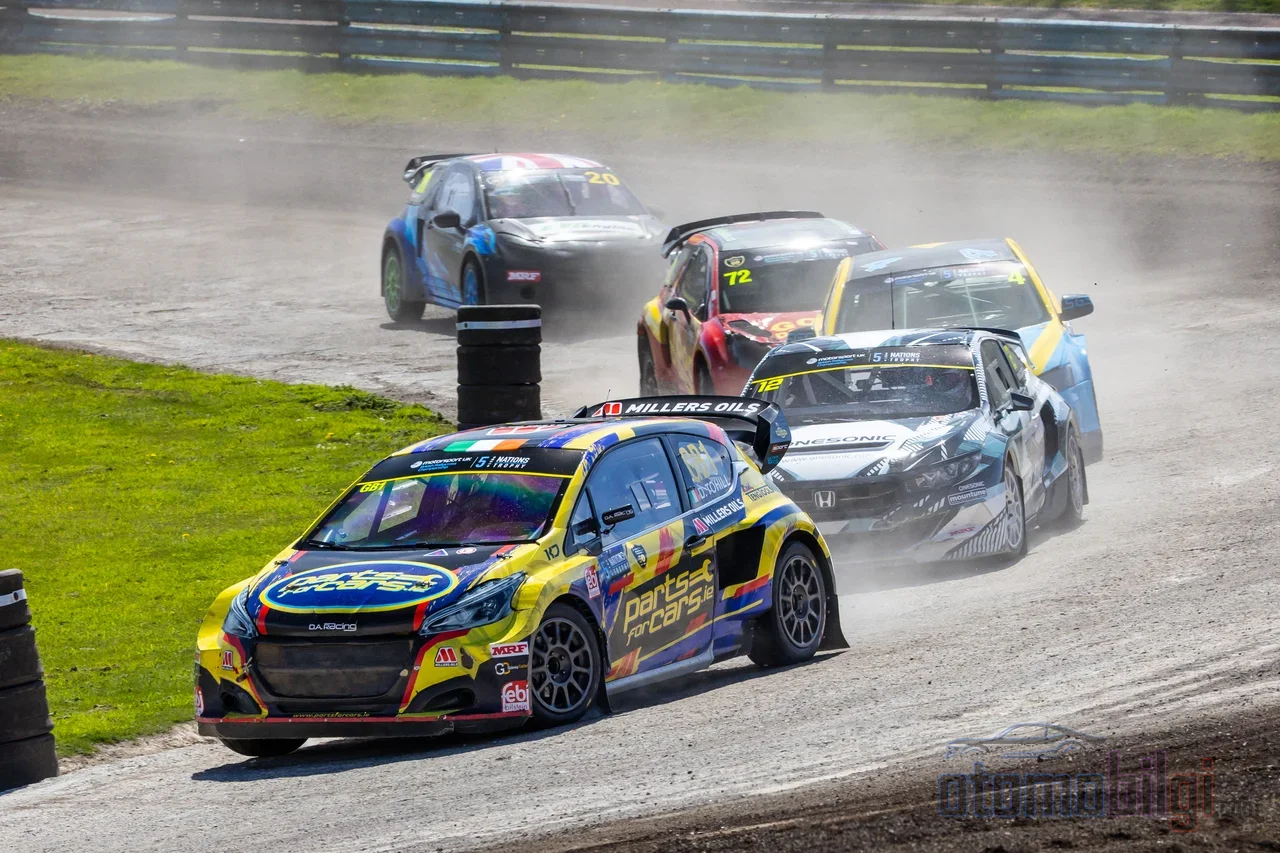
In Belgium's Wallonia region, 20 km southeast of Charleroi, lies the Circuit Jules Tacheny Mettet. The main track is 2,310 km long, but rallycross here does not use the full circuit - it uses a special RX layout mixing gravel and asphalt. This mix completely changes the character of the track: a car that relies on braking points on asphalt searches for a completely different balance on the gravel section. For drivers, it is like doing two different sports within the same lap.
Since 2015, Mettet has hosted the World Rallycross Championship's Belgium/Benelux round. The track is also open for trackdays; meaning that on an ordinary weekend it is even possible to do laps on this RX layout in your own car. In this new era where the European Championship has returned, the value of such multi-surface tracks seems set to rise even further.
The Joker Lap: A Chess Move That Changes Depending on the Track
Now let's come to the most critical topic of our tour: the joker lap. The basic definition is simple - an alternative route designed to be slower than the main line on track, and every driver must take it once per race. In the classic format of a 4-lap qualifying and 6-lap semi-final/final battles, this single mandatory joker is the heart of strategy. Why? Because tracking who takes their joker and when is as important as winning the race. Holding position while waiting for the rival ahead to take their joker, or quite the opposite, taking it early to find clean air - every track shapes this decision differently.
Mattias Ekstrom is one of the biggest advocates of this concept; in his view, the joker lap is one of the best ideas for modern motorsport, where the time gaps ahead are very small. There is no disputing its merit: in rallycross, a short and aggressive format raced with contact, the joker is the last trump card against the leader getting away. But critics are not few either - even adapting this tactic to Formula 1 is being seriously discussed in fan debates. A sport developing strategy against its own rule is, in my view, a sign of how clever a format it is.
New-Generation Tracks and Formats: Where Do They Diverge from the Classics?
2026 is a turning point for rallycross. The FIA has turned the top category into the FIA European Rallycross Championship; in the six-round series, drivers race in the classic format with RX1 class cars. In contrast, the newly announced FIA Rallycross World Cup charts a completely different path: 8-car semi-finals and finals, two mandatory joker laps per race, and a new Superpole format. So joker strategy turns from a single trump into a game with double trumps - who finishes their two jokers first, who saves them for the final moment, that is the new riddle.
The tracks themselves are evolving too. The track type defined by the FIA for the World Cup is relatively short - typically between 1 and 1.5 km - and contains various challenging obstacles. This range actually embraces Lydden's 1.4 km RX layout, Holjes' 1,210 meters, and Lohéac's 1,096 meters; so the classics are not far from the new standard at all. Lydden's re-profiling work after 2017 - the widened opening corner and the bump added to the first half of the lap - is a typical modern track update made to improve the flow and the joy of watching. The classics are not dying; they are passing the torch to the needs of the new generation.
There is also the matter of measurement: track lengths vary depending on recognition. Lydden's full track is 1.609 km but the RX layout is 1.400 km; Mettet's 2.310 km figure is the measurement of the main asphalt circuit, not the rallycross layout. There is no single standard length in rallycross; each facility builds its own layout. That is precisely the essence of this sport - every track is a masterpiece, each carrying its own signature.
Know the Tracks, Read the Race in Advance
| Track | RX Length | Character |
|---|---|---|
| Lydden Hill (United Kingdom) | 1.400 km | 4 corners, 31 m elevation difference, the birthplace of the sport |
| Holjes (Sweden) | 1.210 km | 10 corners, in the forest, a massive crowd of spectators |
| Lohéac (France) | 1,096 km | The shortest RX layout on the list, with a separate 2,022 m asphalt circuit |
| Mettet (Belgium) | A mixed gravel-asphalt RX layout | Dual-surface character, open to trackdays |
Let's sum up: rallycross's legendary circuits - four distinct characters, each testing the joker lap tactic in completely different ways. At Lydden Hill, short straights and history take center stage; at Holjes, the number of corners and the crowd's energy; at Lohéac, compactness; and at Mettet, the dual-surface balance is what matters. Perhaps the most honest answer to the question "what is rallycross" is this: a race format run on closed, short circuits and on surfaces mixing asphalt and dirt, where contact is allowed, based on laps, and drowning in strategy through the joker lap. If you start counting who takes the joker and when while watching the next race, know that you have well and truly stepped into the world of these circuits.
Sources
- Lydden Hill Race Circuit
- Lydden Hill Race Circuit in Kent - The Home Of Rallycross
- World RX of United Kingdom - Red Bull TV
- Höljesbanan
- Magic Weekend returns as 68-car field heads to Höljes - FIA Rallycross
- Circuit de Lohéac (Rallycross) - Laptrophy
- Circuit Jules Tacheny Mettet
- RX Circuit of Mettet, Belgium - Mettet-XP
- FIA sets bold new course for rallycross from 2026 - FIA
- What you need to know about rallycross - Red Bull Türkiye